
Vegetarian Kimbap Recipe
The vegetable roll sits at the top of every kimbap shop menu in Korea, and the ham, tuna and cheese versions are all variations on it.
Jump To Recipe
The Roll That Taught Me To Use Less Rice
My first kimbap looked like a burrito. I had spread the rice the way I spread butter, generously and to the edges, laid the fillings in a heap in the middle and rolled, and the seaweed gave up about two thirds of the way round. What was left was a fat, split log that fell into its parts the moment the knife went in. I assumed the fix was more pressure and a sharper knife, and for a while I made tighter, uglier burritos.
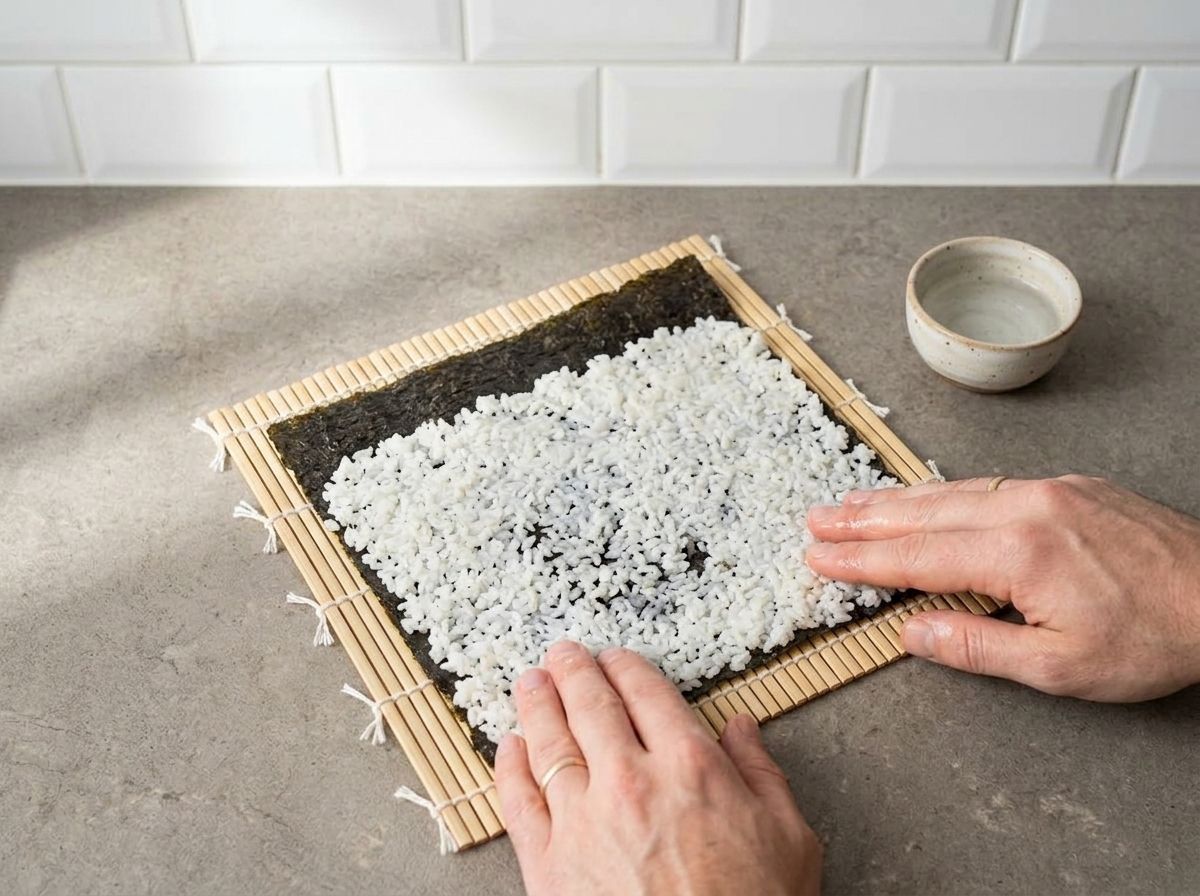
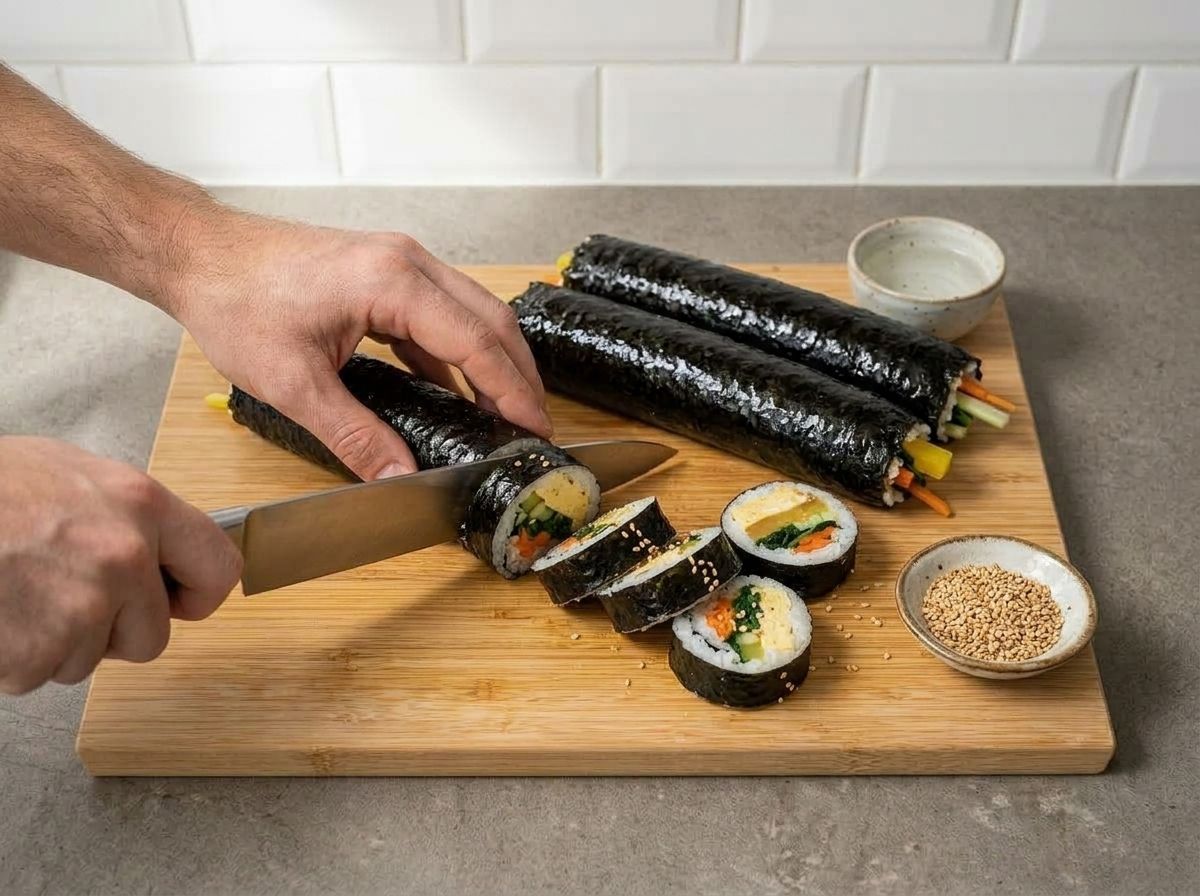
The fix was less rice. A quarter of what I had been using, spread so thin that the seaweed shows through in places, with a bare strip left at the far edge. The roll suddenly closed with room to spare, the fillings sat in the center instead of squeezing out of the ends, and each slice was a neat wheel of color with a proper ratio of filling to rice. Every kimbap shop in Korea does this and it took me an embarrassing number of rolls to notice.
This is the plain vegetable roll, the one my Korean friends call the default. Egg, yellow pickled radish, spinach, carrot and cucumber, seasoned separately and rolled while the rice is still just warm. It is the roll I pack for a train journey, and the pickled radish is the reason I never leave it out.
The story
Kimbap Is Not Korean Sushi
The comparison is the first thing anyone outside Korea reaches for and the thing Koreans most dislike hearing, and the argument about it is older than the name. Korea was harvesting and eating gim, the roasted laver that wraps the roll, long before anyone rolled rice in it: the 15th-century geography Gyeongsang-do Jiriji records seaweed production, and Joseon-era texts describe bokssam, cooked rice wrapped in a sheet of gim and eaten on the first full moon of the lunar year for luck. That is a wrap, not a roll, but the pairing of rice and seaweed is unarguably Korean and centuries old.
The roll is more complicated. Through the Japanese occupation of 1910 to 1945, Koreans used the Japanese word norimaki for rolled seaweed rice, and the word kimbap first appears in print in 1935, in the Dong-A Ilbo newspaper, describing a roll made the Japanese way but filled with Korean things: pickled radish, seasoned spinach, egg. After liberation the Japanese word was dropped along with a great deal else, and kimbap became the name. So the technique of rolling with a bamboo mat almost certainly came across the strait, and the dish that came out of it did not.
What makes it not sushi is everything except the shape. Sushi rice is seasoned with vinegar, sugar and salt, and its fillings are mostly raw. Kimbap rice is seasoned with toasted sesame oil and salt, so the whole roll is nutty and savory rather than sharp, and every filling is cooked or pickled and seasoned on its own before it goes in. The roll is brushed with sesame oil on the outside. It is eaten with the fingers, at room temperature, without soy sauce or wasabi, and usually with a few extra slices of the same yellow pickled radish that is inside it.
It is also, in a way sushi never was, everyday food. Kimbap is what Korean parents rolled at dawn for a school outing, what went into the dosirak lunchbox, and what the bunsik snack shops of the 1990s turned into fast food at a thousand won a roll, sold beside tteokbokki so you could dip one in the sauce of the other. The vegetable roll, yachae kimbap, is the base model on every one of those menus. Ham, tuna mayonnaise, cheese and bulgogi are all listed as additions to it, which is why a vegetarian kimbap needs no adaptation and no apology. It is the original roll, with egg and pickled radish doing the work they have done since the 1930s.
What to buy
Ingredient Notes
Seaweed sheets (gim)
Buy sheets labeled for kimbap, sometimes gimbap-yong gim, from a Korean or large Asian grocery. They are plain roasted laver, unseasoned and a little thicker than Japanese sushi nori, and the thickness is what lets them take warm rice and wet fillings without splitting. Sushi nori works in a pinch but tears more easily. Do not use the small salted, oiled snack seaweed; it dissolves. Keep the packet sealed, because gim that has been open for a week goes limp and will not roll cleanly. One standard sheet makes one roll.
Short-grain rice
The rice has to be sticky enough to hold a roll together, which means Korean or Japanese short-grain, sold in the US as sushi rice or by brands such as Nishiki, Kokuho Rose and CJ. Medium-grain Calrose works. Jasmine, basmati and any long-grain rice will not, however well you season them: the grains stay separate and the roll falls apart under the knife. Cook it fresh for this; day-old rice from the fridge has lost the surface starch that makes the grains cling.
Yellow pickled radish (danmuji)
The one filling that is not negotiable. Danmuji is daikon pickled sweet and sour and dyed yellow, and it gives kimbap its crunch and its acid, the note that stops a roll of rice and sesame oil from tasting flat. Korean markets sell it pre-cut into long kimbap strips in the refrigerated aisle, which is the easiest form; a whole pickled radish cut into pencil-thick lengths is the same thing. Japanese takuan is the closest substitute. Pat the strips dry before rolling, because their brine is what makes a roll leak.
Eggs
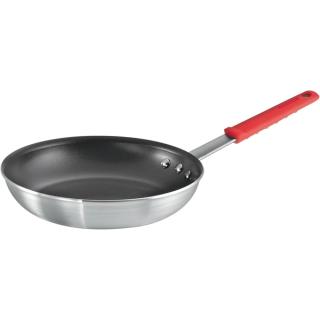
Cooked as one thick sheet, jidan, and cut into strips, rather than scrambled. Beat them with a pinch of salt and cook them slowly in a non-stick skillet over medium-low heat until just set, then flip once; high heat browns and toughens them. Three eggs make a sheet thick enough to cut into four strips of about half an inch. For a vegan roll leave them out and use strips of seasoned fried tofu or avocado in their place, and the rest of the recipe is unchanged.
Spinach
Blanched, squeezed and seasoned with garlic, sesame oil and salt, the same sigeumchi namul that goes into japchae and bibimbap. Squeeze it harder than feels reasonable: the water you leave in it is the water that softens the seaweed from the inside. Bunch spinach with stems gives long strands that lie neatly along the roll; baby spinach works but bunches up. Perilla leaves or crisp lettuce are the traditional swaps if you want a fresh leaf instead.
Toasted sesame oil
The seasoning of the whole roll. A tablespoon goes into the rice with the salt while it is warm, a teaspoon into the spinach, and the finished rolls are brushed with a little more before slicing, which gives them their sheen and their smell. Use the dark toasted kind, and a Korean brand if you can find one, since Japanese sesame oils are milder. This is where the flavor lives; there is no sauce to rescue an underseasoned kimbap later.
Carrot and cucumber
Color and crunch. Cut the carrot into fine matchsticks and cook it for two minutes with a pinch of salt so it bends around the roll rather than poking through the seaweed. Cut the cucumber into pencil-thick strips with the watery seeds scraped out, salt it for ten minutes and pat it dry, or it weeps into the rice. Braised burdock root (ueong) is the classic extra, sold pre-seasoned in strips beside the danmuji; it is sweet, earthy and usually soy-seasoned, so it is the one filling here that carries gluten.
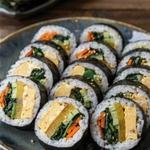
Vegetarian Kimbap
Korean seaweed rice rolls filled with egg, yellow pickled radish, seasoned spinach, carrot and cucumber, the rice seasoned with sesame oil and salt. Four rolls, about eight pieces each, for lunchboxes, picnics and snack plates.
Ingredients
Equipment
As an Amazon Associate I earn from qualifying purchases, at no extra cost to you.
Instructions
- 1
Cook the rice
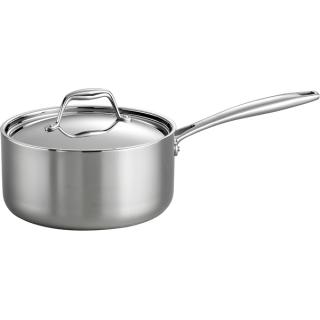
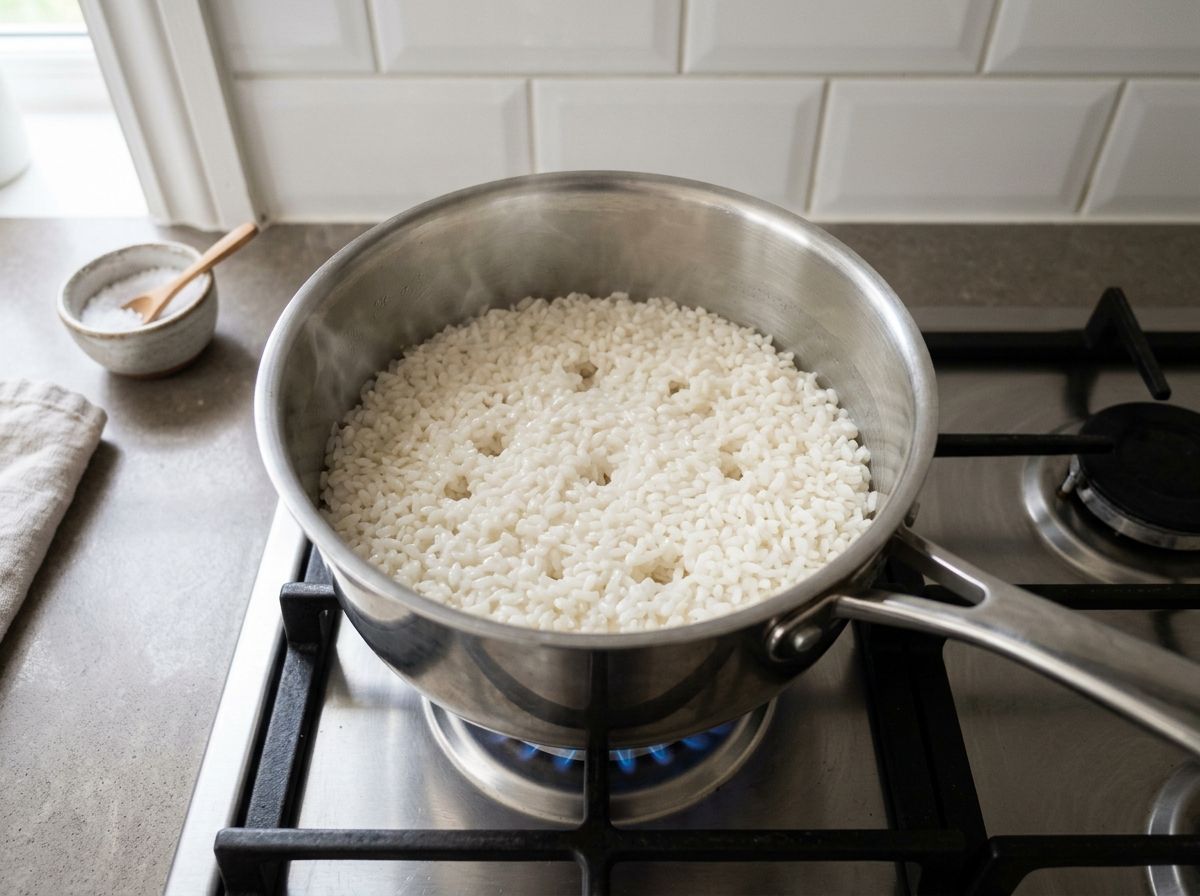
Rinse the rice in a saucepan under cold water, swirling and draining three or four times until the water runs nearly clear. Add the 1 3/4 cups of fresh water, bring to a boil uncovered, then cover, turn the heat to its lowest and cook for 12 minutes. Turn off the heat and leave the lid on for 10 minutes; do not lift it.
- 2
Season the rice
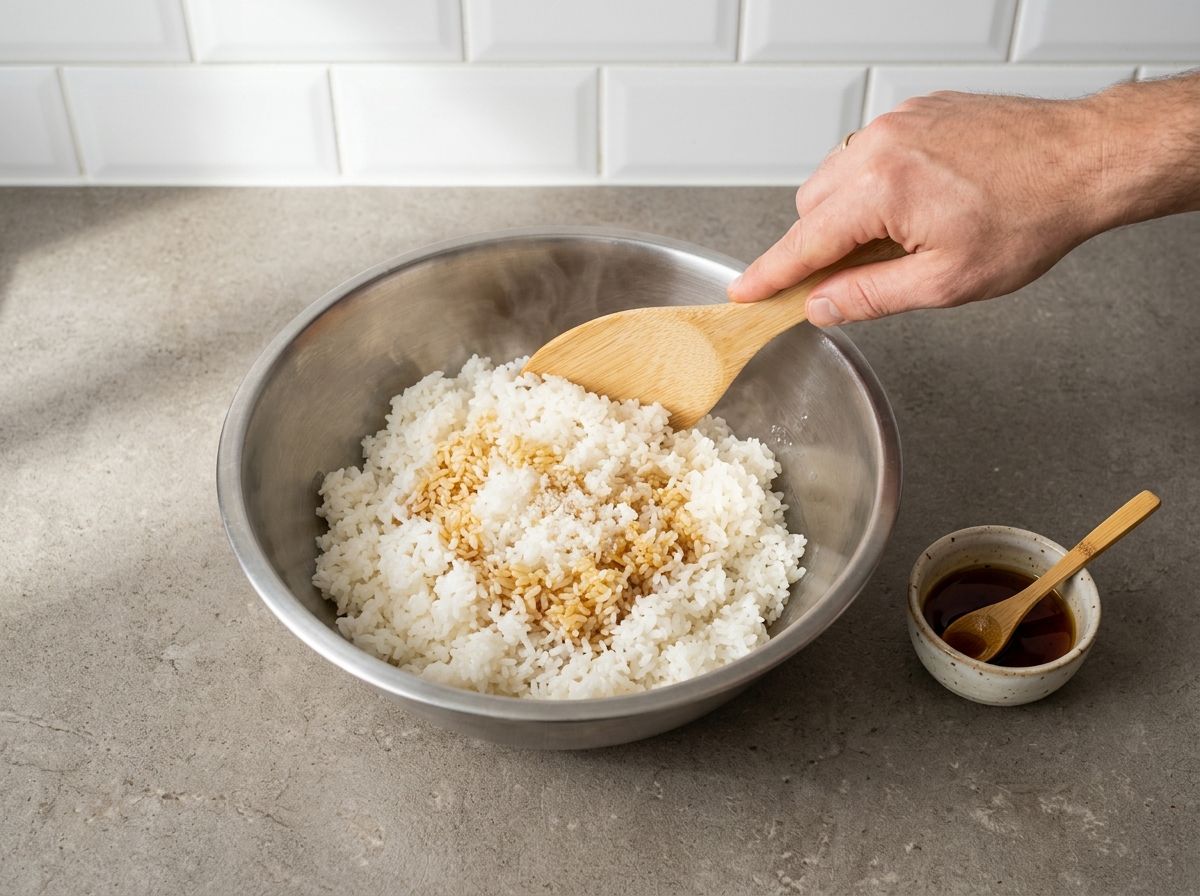
Turn the hot rice out into a wide bowl. Drizzle over 1 tablespoon of the sesame oil and sprinkle on 1 teaspoon of the salt, then fold with a rice paddle or spatula in cutting strokes until every grain is glossy, without mashing it. Leave it uncovered to cool until it is just warm to the touch while you make the fillings.
- 3
Blanch and season the spinach
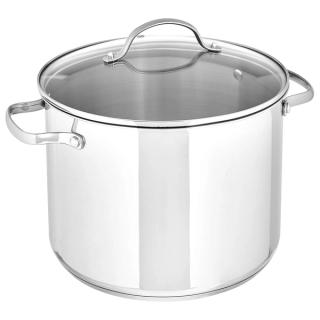
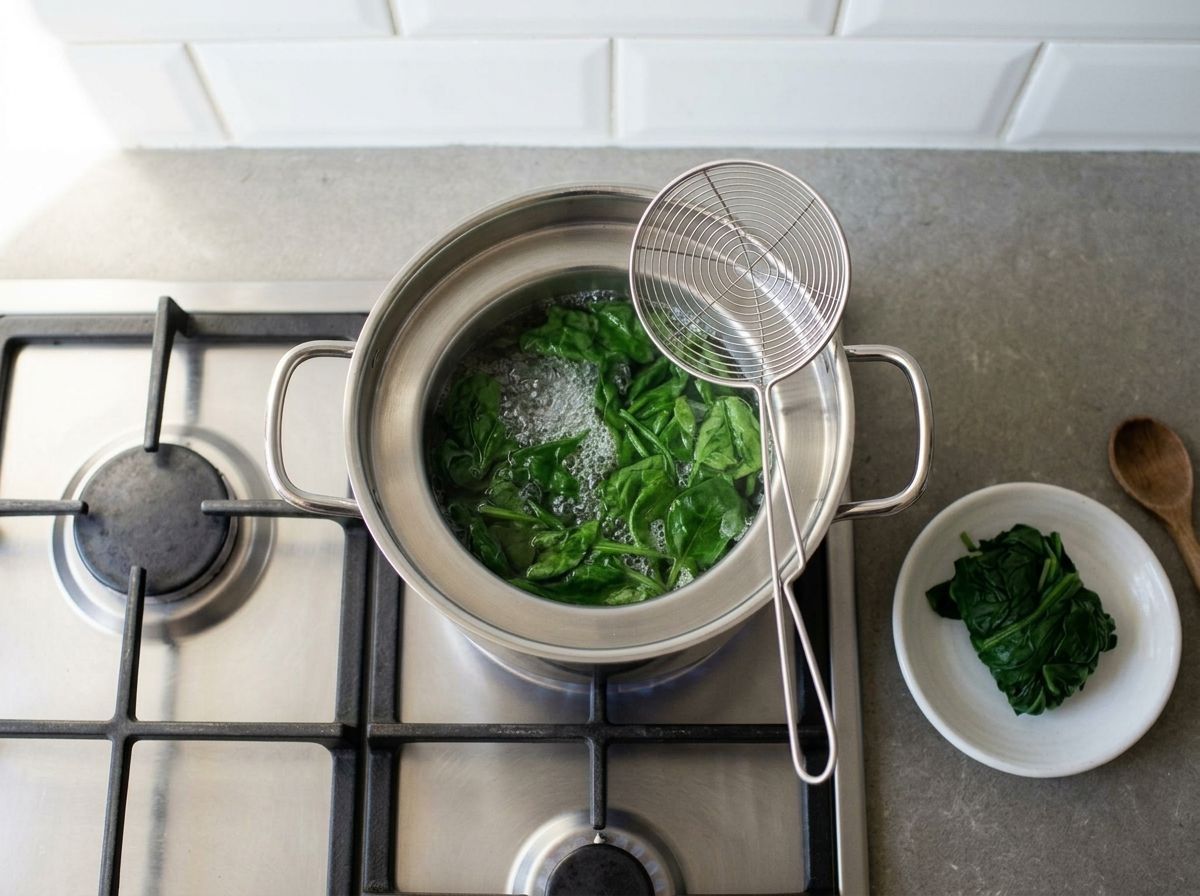
Bring a large pot of water to a boil with a pinch of salt. Drop in the spinach for 20 to 30 seconds until just wilted, lift it out into a bowl of cold water, then squeeze it hard in your fists until it stops dripping. Toss the bundle with the garlic, 1 teaspoon of the sesame oil and a pinch of salt.
- 4
Make the egg sheet
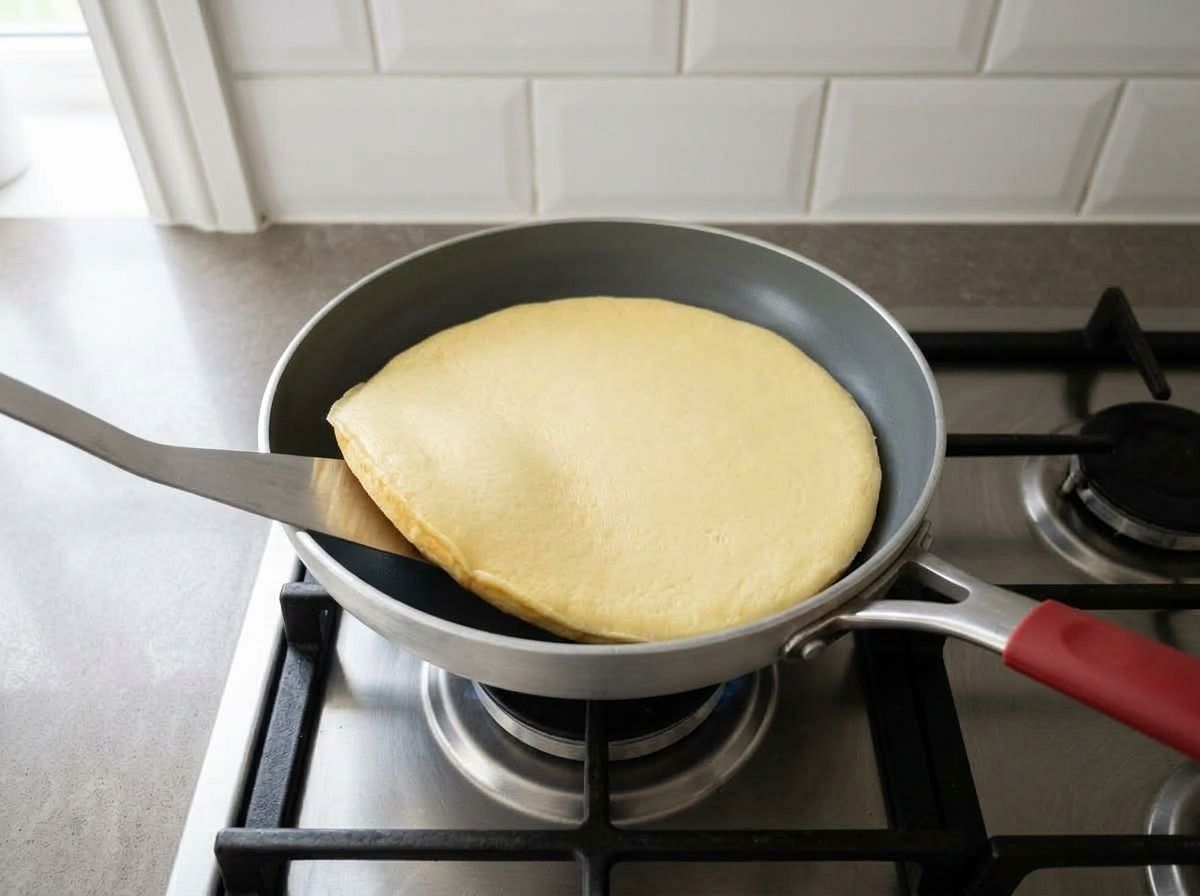
Beat the eggs with a pinch of salt. Heat 1/2 tablespoon of the vegetable oil in a non-stick skillet over medium-low heat, pour in the eggs and let them set slowly without stirring, 3 to 4 minutes, until only the surface is wet. Flip the sheet, cook for 30 seconds more, and slide it onto a board. Once cool, cut it into strips about 1/2 inch wide.
- 5
Cook the carrot
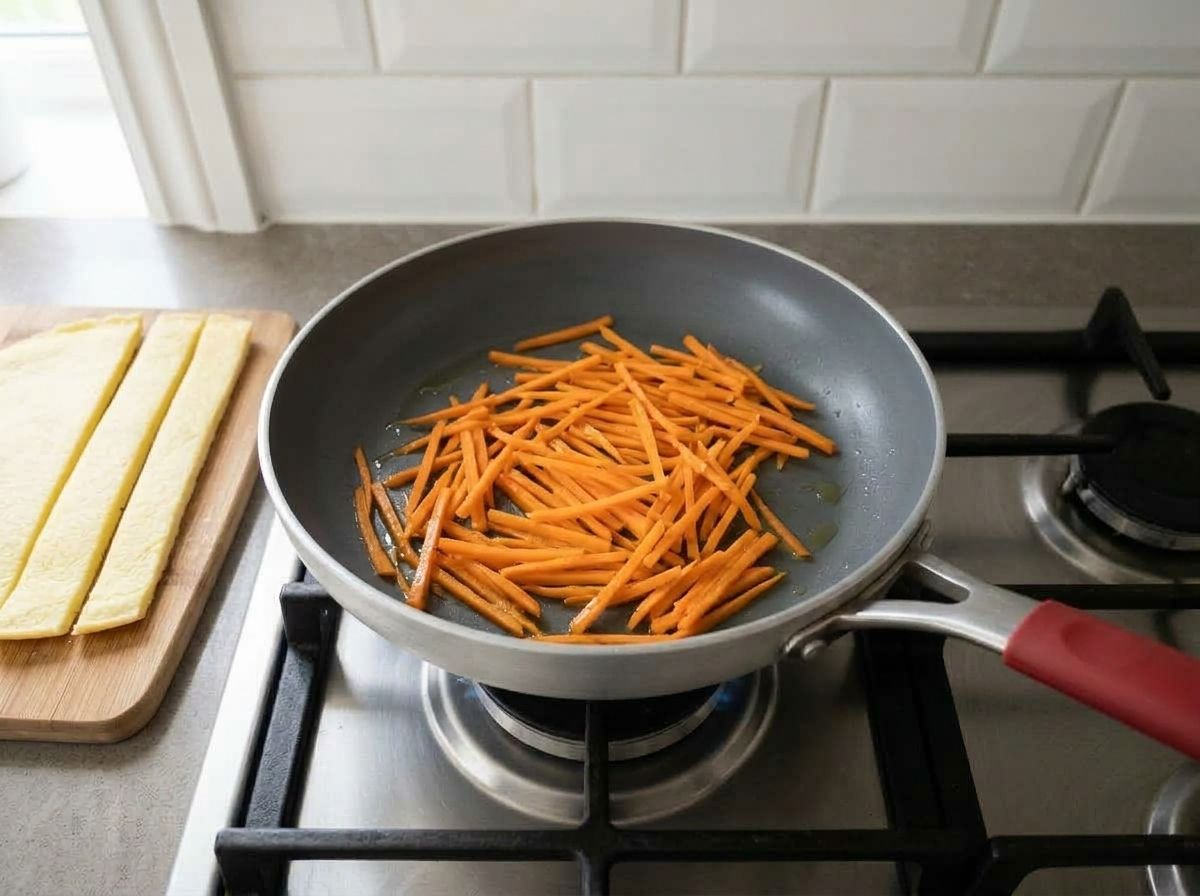
Wipe out the skillet, add the remaining 1/2 tablespoon of vegetable oil over medium-high heat and cook the carrot matchsticks with a pinch of salt for about 2 minutes, tossing, until they bend without snapping but are still bright orange. Tip them onto the board beside the egg.
- 6
Prepare the cucumber and radish
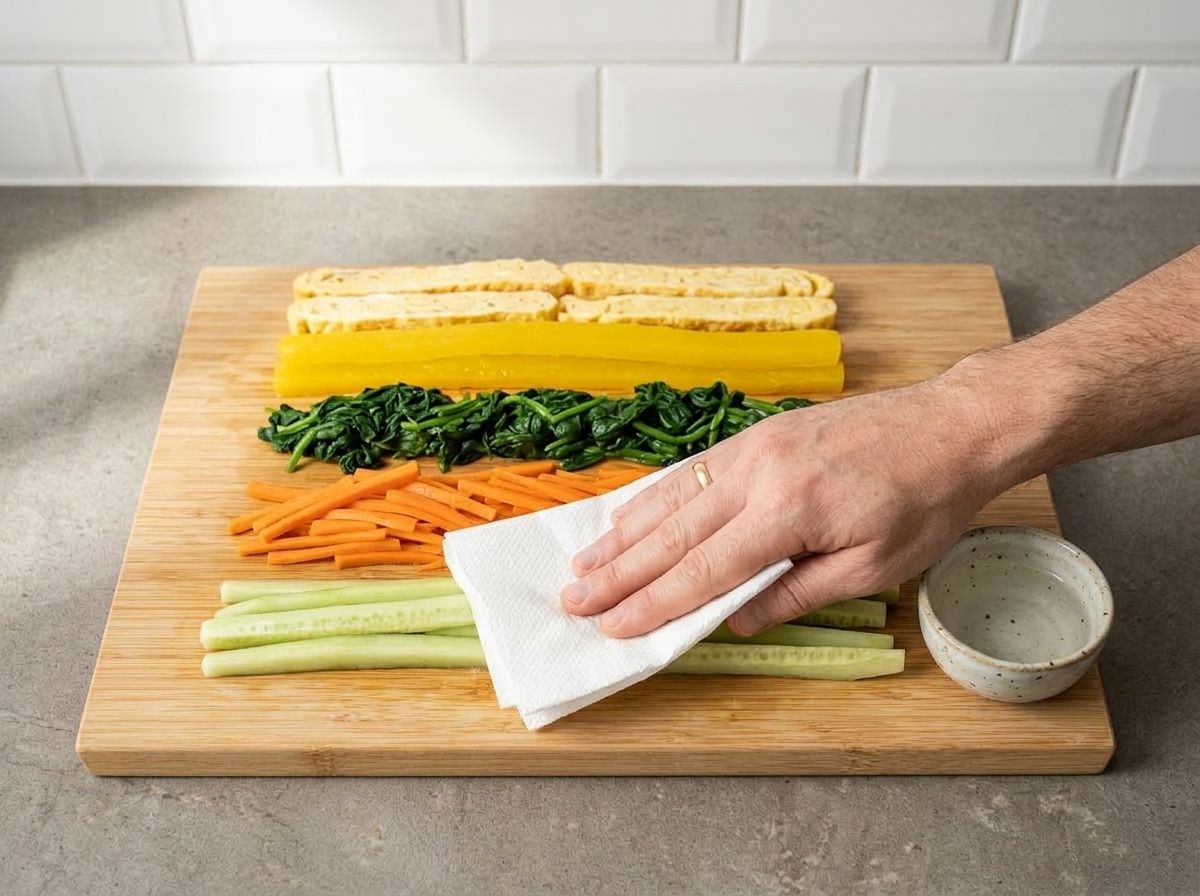
Toss the cucumber strips with 1/4 teaspoon of the salt and leave them for 10 minutes, then pat them dry with a paper towel. Drain the pickled radish strips and pat them dry too. Line up every filling on the board in its own row: egg, radish, spinach, carrot, cucumber, and the burdock and perilla if using.
- 7
Spread the rice on the seaweed
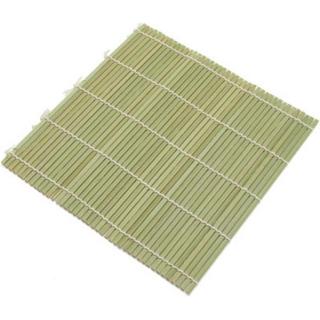
Lay a sheet of seaweed shiny side down on the bamboo mat with a long edge toward you. Wet your fingertips in a bowl of water with a few drops of sesame oil, take about 3/4 cup of the rice, a quarter of it, and press it out into a thin, even layer across the sheet, leaving a bare strip about 1 inch wide along the far edge. It should be thin enough that the seaweed shows through in places.
- 8
Lay the fillings
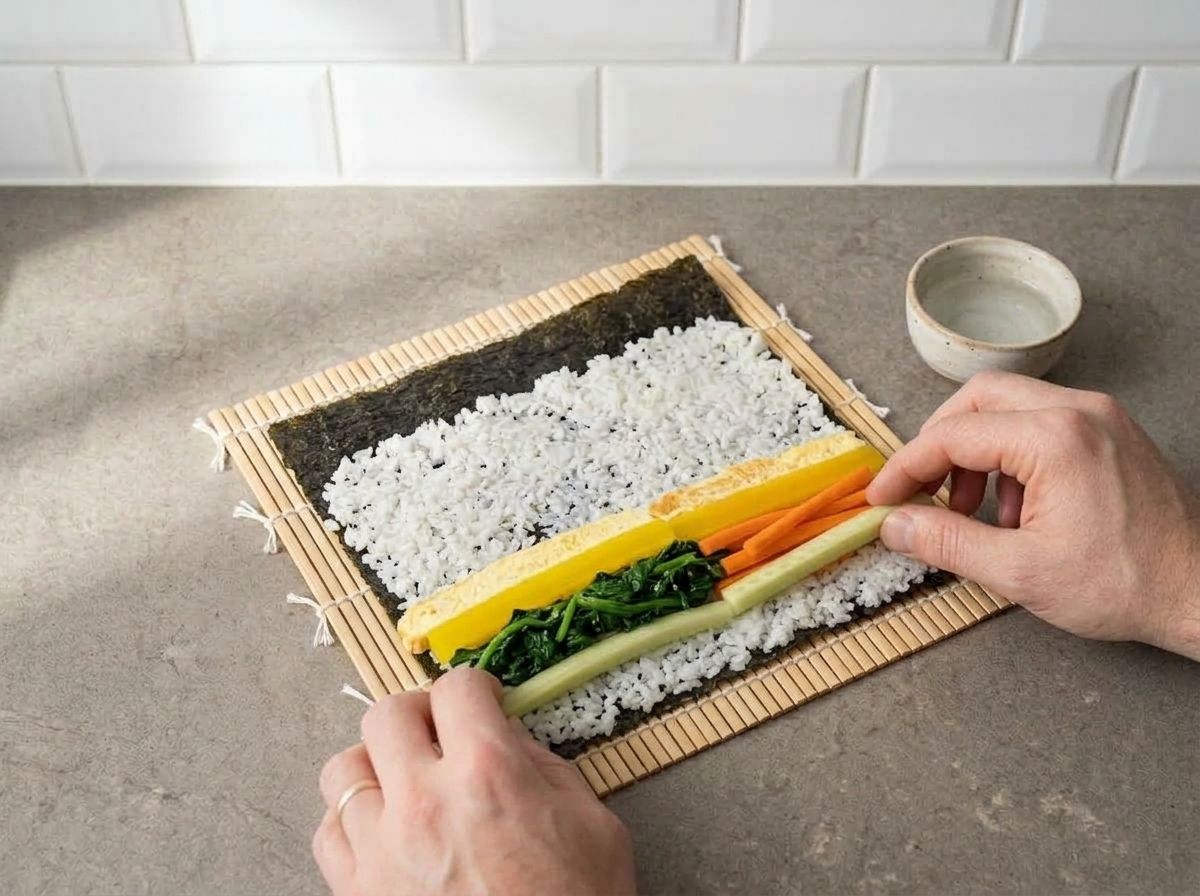
Across the rice, about a third of the way up from the near edge, lay one strip of egg, one strip of pickled radish, a quarter of the spinach in a long line, a quarter of the carrot and one or two strips of cucumber, side by side and touching, with the ends reaching the sides of the sheet. Add a strip of burdock or a perilla leaf under them if you are using either.
- 9
Roll it
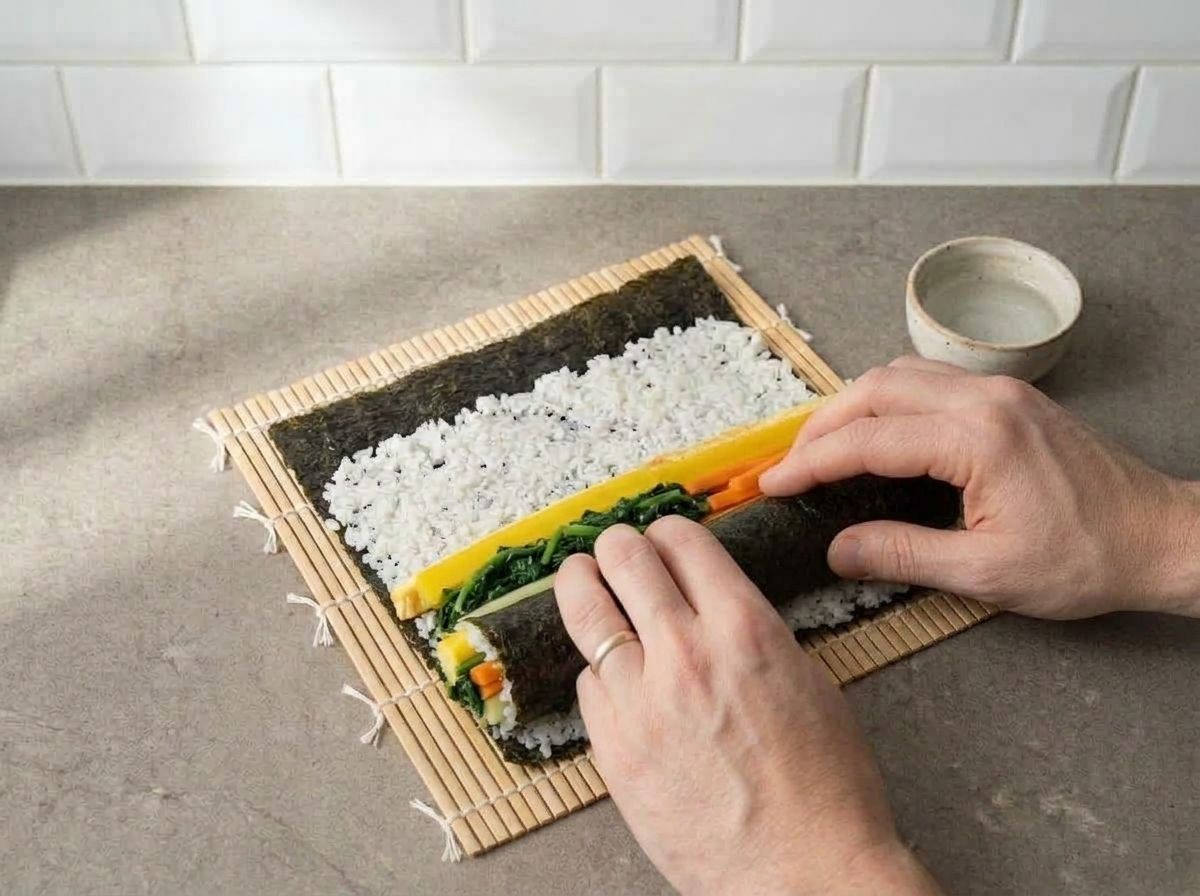
Lift the near edge of the mat with your thumbs while your fingers hold the fillings in place, and fold the seaweed over so the near edge lands just beyond the fillings. Squeeze firmly along the length through the mat, then keep rolling, tugging the mat forward and squeezing after each turn, until the bare strip closes the roll; a few grains of rice pressed onto it will seal it. Set the roll seam side down, roll the other three the same way, and brush the outsides with the remaining sesame oil.
- 10
Slice and serve
Wipe a sharp knife with a little sesame oil and cut each roll into 8 pieces about 3/4 inch thick, using a gentle sawing motion rather than pressing down, and wiping the blade every few cuts. Arrange the slices cut side up, scatter the sesame seeds over them and serve at room temperature, with extra pickled radish alongside.
Notes
Vegan kimbap: leave out the eggs and lay in strips of seasoned fried tofu or a quarter of an avocado per roll. Nothing else changes.
Keep a small bowl of water with a few drops of sesame oil beside the mat and wet your fingertips before each handful of rice. The rice then spreads instead of sticking.
Rice has to be fresh and just warm, not fridge-cold and not hot. Cold rice will not hold a roll and hot rice splits the seaweed.
Mayak kimbap, the mini market version: halve the seaweed sheets, use a third of the rice, fill with only carrot, spinach and pickled radish and dip in soy sauce with a little mustard.
Nutrition Facts
4 servings · 328 g per serving
- Calories
- 454 kcal
% Daily Value*
- Total Fat
- 17.3 g22%
- Saturated Fat
- 3.3 g16%
- Sodium
- 977 mg42%
- Total Carbohydrate
- 62.9 g23%
- Dietary Fiber
- 4.4 g16%
- Sugars
- 1.8 g—
- Protein
- 12.4 g25%
Recipe from veggierecipes.blog
When it goes wrong
Troubleshooting
The roll falls apart when I slice it
Three causes, usually together: too much rice, a loose roll, and a dry knife. Use about three quarters of a cup of rice per sheet, spread thin enough that the seaweed shows through, with an inch of bare seaweed left at the far edge to seal. Squeeze the roll firmly through the mat after the first fold and again once it is closed, and let it rest seam side down for a few minutes so the seaweed softens and grips. Then slice with a sharp knife wiped with sesame oil, in a sawing motion rather than pressing down, and wipe the blade between every two or three cuts.
The seaweed tore while I was rolling
The rice was too hot, or too wet. Hot rice steams the seaweed from underneath and it splits along the grain, so let the seasoned rice cool until it is only just warm to the touch before you spread it. Wet fillings do the same from the inside: squeeze the spinach hard, pat the pickled radish and salted cucumber dry. If the tear has happened, patch it with a few grains of rice and roll on; the seam ends up underneath and the slices hide it.
The rice sticks to my fingers more than to the seaweed
Keep a small bowl of water with a few drops of sesame oil beside the mat and wet your fingertips before every handful of rice. Dry fingers pick rice up; damp oiled fingers push it flat. Press rather than smear: pat the rice out in a thin even layer, working from the center to the edges. If the grains are gluing themselves into lumps, the rice is still too hot.
It was soggy by lunchtime
Moisture got in, or air did not get out. Every filling has to be dry before it goes in, and the finished roll should be left whole and wrapped tightly in foil or parchment, then sliced where it is eaten. A sliced roll sitting in a box lets the cut faces dry while the seaweed underneath goes soft. Never wrap a roll while the rice is still warm; the steam has nowhere to go but the seaweed.
The rice went hard and dry overnight
The fridge did that; cooked short-grain rice sets like this whenever it is chilled, and there is no way to stop it. Kimbap is a same-day food, made in the morning for the afternoon and kept at room temperature for a few hours, not a make-ahead one. If you do have to refrigerate a roll, do what Koreans do with yesterday's kimbap: slice it, dip each piece in beaten egg and fry it in a little oil until golden on both sides. It is called kimbap jeon and it is better than it has any right to be.
It tastes bland, like plain rice in seaweed
The seasoning is in the parts, so each part has to carry its share. A teaspoon of salt and a tablespoon of sesame oil for a cup and a half of raw rice is the minimum, folded in while the rice is warm. The spinach needs its own garlic, sesame oil and salt, the carrot a pinch of salt as it cooks, the egg salt in the beating. Then brush the outside of the roll with sesame oil and serve extra pickled radish alongside. If all of that is in place and it still tastes flat, the pickled radish was left out, and it cannot be.
Before you serve
Serving & Storage
Kimbap is eaten with the fingers, at room temperature, and it needs nothing poured over it. In Korea it comes with a few extra slices of the yellow pickled radish on the side and, if you are lucky, a cup of tteokbokki sauce to dip the pieces into, which is the classic snack shop pairing. Our vegetarian tteokbokki makes exactly the sauce for that. Kimchi on the side is the home version. For a fuller lunchbox, a boiled egg and a few pieces of fruit is how a Korean mother packs it.
Sesame seeds over the sliced rolls are the only garnish. A little mustard mixed into soy sauce is a dipping sauce for mayak kimbap, the thumb-sized Gwangjang Market rolls filled with only carrot, spinach and pickled radish; if you want to try that version, cut the sheets in half, use a third of the rice, and roll them thin. Soy sauce and wasabi belong to a different dish.
Making it ahead
The fillings are the make-ahead part. Cook the egg, spinach and carrot the evening before and keep them covered in the fridge, and cut and salt the cucumber and drain the radish in the morning while the rice cooks. Roll no more than a few hours before eating, with rice that has been cooked that day; rice from the fridge will not hold. Whole rolls wrapped tightly in foil keep at room temperature for four or five hours, which is a school day or a train journey, and are best sliced where they are eaten. Brush them with sesame oil before wrapping and the seaweed stays glossy rather than drying out.
Storing leftovers
Kimbap does not keep well and Koreans do not pretend it does. Refrigerated rolls are safe for a day but the rice turns hard and the seaweed chewy, so eat them as kimbap jeon, sliced, dipped in beaten egg and pan-fried until golden, or drop the slices into a hot pan for two minutes a side without the egg. Do not freeze whole rolls: the cucumber and radish turn to water and the rice crumbles. The one thing that freezes is the cooked spinach, in a flat bag, for the next batch.
Still wondering
Frequently Asked Questions
Is kimbap vegetarian?
The standard vegetable roll, yachae kimbap, is: egg, pickled radish, spinach, carrot and cucumber in seasoned rice, which is this recipe. Ham, imitation crab, fish cake and tuna are additions sold under their own names, so a plain kimbap from a Korean shop is usually vegetarian but worth asking about, since some shops put a strip of ham in the basic roll. Vegans drop the egg and use seasoned fried tofu or avocado.
Is kimbap gluten free?
As written, yes: rice, seaweed, egg, vegetables, pickled radish and sesame contain no gluten, though it is worth reading the danmuji label, since a few brands add wheat-based seasonings. The optional braised burdock is seasoned with soy sauce and is the one filling to leave out or replace with a tamari-braised version.
How many rolls does this make, and can I scale it?
Four full rolls of about eight pieces each, which is one roll per person for lunch or two rolls between three or four people as a snack. It halves cleanly with two eggs instead of three. Doubling is easy on the fillings but cook the rice in two batches or a rice cooker, because three cups of rice in one saucepan cooks unevenly, and roll in two rounds so the second batch of rice is still warm when you get to it.
More Korean Dishes and Packable Lunches

Made this?