
Vegan Japchae Recipe
Published · Updated
Japchae went its first two hundred years without a noodle or a strip of beef in it, so the vegan version has a better claim to the name than the one on most restaurant menus.
Jump To Recipe
I Cooked It In One Pan For Years And It Was Always Brown
For a long time my japchae was a one-pan stir-fry: everything into the wok in order of cooking time, sauce over the top, noodles in last. It tasted fine and it looked like a bowl of brown. The carrot was the color of the onion, the onion was the color of the soy sauce, and the spinach had disappeared somewhere in the middle. Whenever I ate japchae in a Korean restaurant it was a different dish: every vegetable kept its own color and its own bite, and the noodles were seasoned all the way through instead of wearing a coat of sauce.
The difference is the separate-pan method, and I put off learning it because it sounded like washing six pans. It is one pan. You cook each vegetable for a minute or two, tip it into a bowl and put the next one straight in; the skillet never gets washed, the whole sequence takes less time than the noodles take to boil and cool, and the mushrooms go last so their soy glaze does not stain anything. The other habit I had to unlearn was treating the sauce as a dressing. The noodles get fried in it until they have drunk it up, and the vegetables only get salt. That is where the seasoning lives.
This is the version I make now, for a Tuesday and for the holiday table, and nobody has yet asked where the beef went.
The story
Japchae Went Two Hundred Years Without A Noodle
The name gives it away. Jap means mixed and chae means vegetables, and for the first two centuries of its recorded life that is all japchae was. The dish is usually dated to the court of King Gwanghaegun in the early 1600s, where a courtier named Yi Chung is said to have prepared it for a palace banquet. The king liked it enough to promote him to the post that ran the treasury, and the story has stuck to the dish ever since: a rich, showy plate of finely cut vegetables, each one cooked on its own and then combined.
The earliest written recipe, in the 1670 cookbook Eumsik dimibang, bears this out. It lists more than a dozen vegetables and mushrooms, cucumber, radish, bracken and bean sprouts among them, cut fine and cooked separately. No noodles. Japchae was a vegetable dish first, and a luxury because of the labor in it rather than because of anything expensive on the plate.
The glass noodles arrived late and from outside. Dangmyeon, the chewy, translucent noodle made from sweet potato starch, is a Chinese technique, and the first factory producing it in Korea opened in 1919 in Sariwon, in what is now North Korea. Within a decade or so the noodles had moved into japchae and taken it over, to the point that most people today would describe japchae as a noodle dish with some vegetables in it rather than the other way around. The beef came in over the same period, as Korean home cooking took on more meat through the twentieth century.
Which is why the vegan version needs less explaining than it looks like it does. Take out the beef and the shredded egg garnish and you are left with the noodles, the vegetables and a soy, sugar and sesame sauce, which is japchae as most Koreans have eaten it for a century, and close to the dish as it was invented three hundred years before that.
What matters is the technique the palace cooks were showing off, and it survives intact: every vegetable cut fine, cooked separately so it keeps its own color and texture, and combined at the end. The five colors on the plate, green, red, yellow, white and black, follow the obangsaek scheme that runs through Korean celebration food, which is why japchae still turns up at Chuseok, Seollal, birthdays and weddings. Mushrooms carry the black. The beef was never doing anything the shiitake cannot.
What to buy
Ingredient Notes
Sweet potato glass noodles (dangmyeon)
Look for the words sweet potato starch on the packet. The noodles are grayish brown, brittle and about the thickness of spaghetti when dry, and turn translucent and springy when boiled. Nothing else behaves the same way: mung bean glass noodles are far thinner, cook in a fraction of the time and go soft rather than chewy, and rice vermicelli dissolves in the sauce. Korean brands such as Ottogi, Wang and Chung Jung One are in any Korean or large Asian grocery and increasingly in the international aisle. They are naturally gluten free, which matters if you make the tamari swap.
Shiitake mushrooms
They do the job the beef did: something dark, savory and chewy in among the vegetables. Fresh shiitake sliced thin and seared hard until the edges brown, then glazed with a spoon of soy and sugar, taste more of meat than most meat substitutes do. Dried shiitake work too and taste deeper; soak 6 to 8 caps in warm water for 30 minutes, squeeze, slice and cook them the same way. King oyster mushrooms torn lengthwise into strands are the other classic vegan stand-in, closer to beef in texture and milder in flavor. Cremini are a distant third.
Spinach
Mature bunch spinach with the stems on is traditional and holds up better; baby spinach works but wilts in ten seconds and gives you less to squeeze. Whichever you use, the squeeze is the point. Blanched spinach holds a startling amount of water, and every drop you leave in it ends up as a puddle under the noodles. Wring it in your fists until it stops dripping, then season it on its own with garlic, sesame oil and salt, exactly as it is done for the side dish sigeumchi namul.
Soy sauce
Korean all-purpose soy sauce, jin ganjang, is the house choice, but Japanese Kikkoman is close enough and is what most Korean-American recipes assume. Do not use Chinese dark soy, which is thicker and sweeter and turns the noodles black, and not Korean soup soy, guk ganjang, which is far saltier and paler. For gluten free, tamari swaps one for one. The noodles absorb almost all of it, so this is the seasoning of the dish rather than a condiment on it.
Sugar
Two and a half tablespoons for 8 ounces of noodles looks like a lot on the page and is the correct amount on the plate. Japchae is a sweet and savory dish; the sugar balances the soy and gives the noodles their gloss. Brown sugar is usual and adds a little depth, white sugar works, honey is not vegan, and a tablespoon of Korean rice syrup or maple syrup in place of some of the sugar gives more shine. Cut it back and the dish tastes salty and flat rather than less sweet.
Toasted sesame oil
Dark, toasted, Asian-style sesame oil, not the pale cold-pressed kind sold as a cooking oil. It goes in three places: a little in the sauce, a little in the spinach, and a tablespoon over everything at the very end. The last one matters most, because sesame oil loses its aroma with heat, and the raw drizzle is what you smell when the platter comes to the table. Korean brands are stronger than Japanese Kadoya, so start with a little less if you are using one.
Bell pepper and carrot
Modern additions, both, and they are there for color as much as flavor: japchae follows the Korean five-color scheme, and the red comes from these two. The yellow traditionally comes from shredded egg yolk, which this version drops, so if you want the full set use half a red and half a yellow pepper. Cut both into matchsticks no thicker than the noodles so they cook in a minute and disappear into the tangle rather than sitting on top of it.
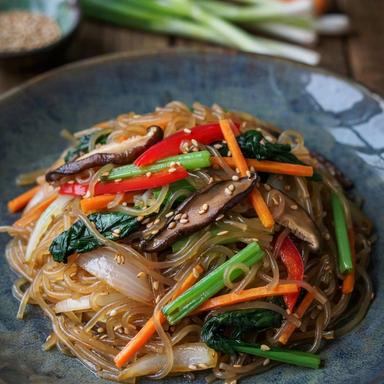
Vegan Japchae
Chewy sweet potato glass noodles fried in a soy, sugar and sesame sauce, tossed with seared shiitake and separately cooked spinach, carrot, onion and pepper. Vegan, gluten free with one swap, and on the table in 45 minutes.
Ingredients
Equipment
As an Amazon Associate I earn from qualifying purchases, at no extra cost to you.
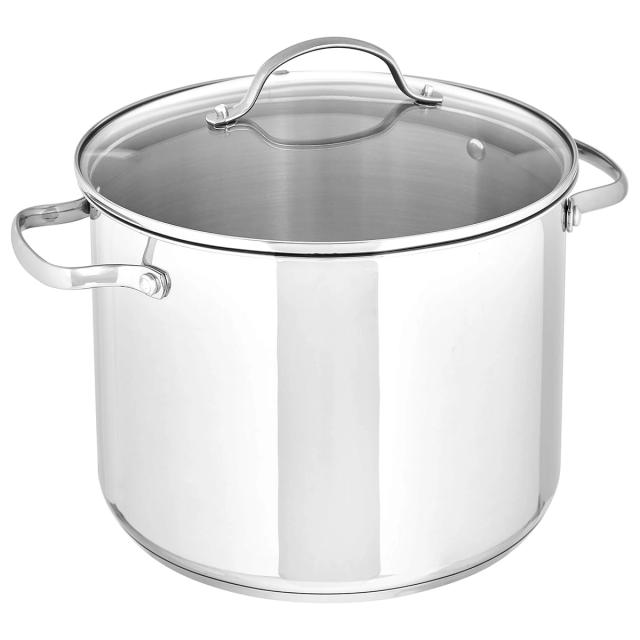
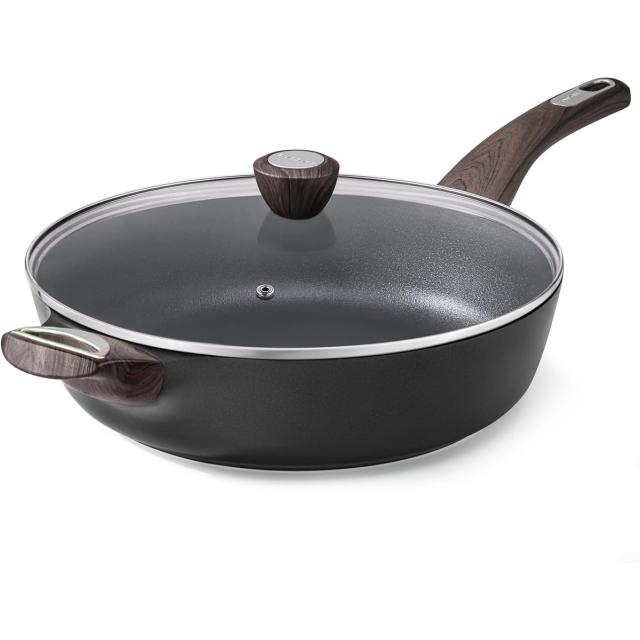
Instructions
- 1
Mix the sauce
In a small bowl stir together 4 tablespoons of the soy sauce, 2 tablespoons of the brown sugar, 1 1/2 tablespoons of the sesame oil, two thirds of the minced garlic and the black pepper until the sugar has dissolved. Keep the remaining 1 tablespoon of soy sauce and 1/2 tablespoon of sugar aside for the mushrooms, and the remaining garlic for the spinach.

- 2
Blanch and season the spinach
Bring a large pot of water to a boil with a teaspoon of salt. Drop in the spinach and push it under for 20 to 30 seconds, until it has just wilted, then lift it out with a slotted spoon into a bowl of cold water. Keep the pot boiling for the noodles. Squeeze the spinach hard in your fists until it stops dripping, cut the bundle once through the middle, and toss it with the remaining garlic, 1/2 teaspoon of sesame oil and a pinch of salt.

- 3
Boil the noodles
Add the noodles to the same boiling water and stir for the first minute so they do not stick. Boil for 6 to 7 minutes, until they are translucent and chewy with no white core when you bite one. Drain, rinse under cold water for a few seconds to wash off the surface starch, and drain again well. Cut the pile in half with kitchen scissors, then toss the warm noodles in a large bowl with 2 tablespoons of the sauce so they cannot glue together while they wait.

- 4
Cook the onion and carrot
Heat 1 tablespoon of the vegetable oil in a large skillet over medium-high heat. Add the onion with a pinch of salt and cook for 2 minutes, until the edges turn translucent but it still has bite. Add the carrot and cook for 1 to 2 minutes more, until it bends but still snaps. Tip both into a second large bowl.

- 5
Cook the pepper and scallions
Put the red pepper and scallions into the same skillet with a pinch of salt and cook for 1 minute, tossing, until the pepper has lost its rawness but is still bright. Add them to the bowl of vegetables.

- 6
Sear and glaze the mushrooms
Add the last tablespoon of vegetable oil, raise the heat to high and spread the shiitake in a single layer. Leave them alone for 2 minutes until the undersides brown, then stir and cook for 2 minutes more. Add the reserved tablespoon of soy sauce and half tablespoon of sugar and cook for 30 seconds, tossing, until the mushrooms are glossy and the pan is dry. Add them to the vegetables.

- 7
Fry the noodles in the sauce
Lower the heat to medium. Add the noodles and all of the remaining sauce to the skillet and toss with tongs for 2 to 3 minutes, until the noodles have absorbed the sauce, turned an even glossy brown and nothing is left pooling on the bottom of the pan.

- 8
Toss everything together
Return the hot noodles to the large bowl with the vegetables, add the seasoned spinach, the remaining tablespoon of sesame oil and most of the sesame seeds. Toss with tongs or clean hands until every strand is coated and the vegetables are spread through the tangle. Taste, and add a splash more soy sauce for salt or a pinch of sugar for balance.

- 9
Serve
Pile the japchae onto a platter, scatter the last of the sesame seeds over the top and serve warm or at room temperature, on its own or over steamed rice.

Notes
Gluten free needs one swap: tamari for the soy sauce. The noodles are already sweet potato starch.
Dried shiitake instead of fresh: soak 6 to 8 caps in warm water for 30 minutes, squeeze, slice thin and cook them the same way. They taste deeper.
Cut everything to the thickness of the noodles. Matchstick carrot, thin-sliced onion and pepper strips cook in a minute or two and disappear into the tangle instead of sitting on top.
For the full five colors, use half a red and half a yellow bell pepper; the yellow stands in for the egg garnish this version leaves out.
Nutrition Facts
4 servings · 251 g per serving
- Calories
- 456 kcal
% Daily Value*
- Total Fat
- 19 g24%
- Saturated Fat
- 2.8 g14%
- Sodium
- 1602 mg70%
- Total Carbohydrate
- 68.1 g25%
- Dietary Fiber
- 4.1 g15%
- Sugars
- 11.3 g—
- Protein
- 5.8 g12%
Recipe from veggierecipes.blog
When it goes wrong
Troubleshooting
The noodles clumped into a rubbery block
Sweet potato starch noodles come out of the water coated in starch, and as they cool that starch sets like glue. The fix is timing: rinse them for a few seconds under cold water the moment they are drained, cut them, and toss them with two tablespoons of the sauce while they are still warm. A bowl of naked noodles left on the side for ten minutes is a block. If it has already happened, drop the block back into hot water for thirty seconds, drain it and dress it immediately.
The noodles are bland and the vegetables are salty
The sauce was poured over at the end. A dressing coats; it does not season. Dangmyeon only takes on flavor while it is hot and hungry, so the noodles have to be fried in the sauce until they have absorbed it and the pan is dry. The vegetables then need only a pinch of salt each, because they sit inside seasoned noodles. Get this order right and the dish tastes of itself all the way through instead of at the surface.
There is a puddle at the bottom of the platter
Water got in somewhere, and there are three usual doors. The spinach was not squeezed hard enough, the mushrooms were crowded and steamed rather than seared, or the noodles came out of the skillet with liquid still in the pan. Wring the spinach until it stops dripping, sear the mushrooms in a single layer over high heat and leave them alone for the first two minutes, and keep the noodles moving until the pan bottom is dry. Japchae should be glossy, never wet.
The noodles broke into short pieces and went mushy
Boiled too long, or boiled and then left sitting in the hot water. Dangmyeon has a window: at six minutes they are chewy with a faint chalky core, at seven they are done, at ten they are soft, and they keep softening in the hot sauce afterwards. Set a timer, bite one at six, and drain when the core has gone but they still fight back. Cutting them with scissors is a different thing and deliberate: long noodles are lucky in Korea, but a full-length dangmyeon cannot be eaten politely, so halving them is standard.
It tastes like sweet soy sauce and nothing else
Something is missing from the finish. Japchae is built on soy and sugar, but it reads as flat if the garlic went in cooked, the sesame oil went in early, or the mushrooms never browned. Raw garlic in the sauce and in the spinach gives it bite, a tablespoon of sesame oil added off the heat gives it aroma, a generous quarter teaspoon of black pepper gives it edge, and browned shiitake give it the savory depth the beef used to supply. If it still tastes one-note, a teaspoon of rice vinegar, which is not traditional, wakes it up.
It went hard and stiff in the fridge overnight
That is the starch setting again, and it is normal; Koreans reheat japchae as a matter of course. Warm it in a skillet with a splash of water for two or three minutes, or covered in the microwave, and the noodles turn springy again. Do not eat it straight from the fridge expecting the texture it had on the day. Cold japchae is fine as a salad, but it is a different dish.
Before you serve
Serving & Storage
In Korea japchae is a banchan, a shared side, and at a holiday table it sits among a dozen other dishes with a bowl of rice per person. Piled over rice as japchae-bap it becomes a one-bowl dinner, and that is how this version is portioned: four generous mains, or six to eight as a side among other dishes. It is served warm or at room temperature rather than hot, which makes it the easiest thing on a party table, and it belongs next to anything Korean: tteokbokki, kimchi, a plate of pan-fried tofu or a bowl of soup.
Finish the platter with toasted sesame seeds and nothing else. A little shredded egg yolk is the traditional garnish and a few threads of red chili are common, but neither is needed, and a squeeze of lime or a handful of cilantro, which some Western recipes suggest, pulls it toward Thailand. Leave it Korean.
Making it ahead
Japchae is a make-ahead dish by design; it is what the celebration cook prepares in the morning for the afternoon. Every component can be cooked up to a day ahead and kept separately in the fridge: the seasoned noodles, the vegetables, the spinach, the mushrooms. Toss them together an hour before serving and let the platter come to room temperature. Fully assembled japchae also keeps, but it is better tossed fresh, because the spinach softens and the colors run into each other after a night together. Do not dress the noodles more than a day ahead; they take on salt over time.
Storing leftovers
Airtight in the fridge for 3 to 4 days. The noodles firm up as they cool, so reheat in a skillet over medium heat with a tablespoon of water, tossing until they loosen and turn glossy again, about 3 minutes, or covered in the microwave in 1-minute bursts. Do not freeze it: sweet potato starch noodles go spongy and weep water when they thaw, and the vegetables turn limp. Leftover japchae makes an excellent filling for kimbap, or for gimmari, the seaweed rolls stuffed with japchae and deep fried that are sold beside tteokbokki at every snack stall.
Still wondering
Frequently Asked Questions
Is japchae vegan?
Not as it is usually served: the standard version has thin strips of marinated beef and a shredded egg garnish. Everything else in it, the noodles, the vegetables and the soy, sugar and sesame sauce, is plant-based, so this recipe leaves those two out and uses shiitake for the savory depth. If you avoid refined sugar processed with bone char, use an organic or unrefined sugar, and use maple or rice syrup wherever another recipe calls for honey.
Is japchae gluten free?
The noodles are, since sweet potato starch contains no gluten, and so is everything else except the soy sauce. Swap tamari for the soy one for one and the whole dish is gluten free. Check that the sesame oil and sesame seeds carry no wheat warning if you are cooking for celiac disease.
How many does this feed, and can I double it?
Four as a main over rice, six to eight as a side. Doubling works with two changes: boil the noodles in two batches or a very large pot so they cook evenly, and fry them in the sauce in two rounds, because a pound of noodles in one skillet steams rather than fries and never dries out.
More Korean and Asian Weeknight Dinners

Made this?