
Vegan Mapo Tofu Recipe
Published · Updated
The meat in the original was only ever a seasoning, which is why this version does not need anything standing in for it.
Jump To Recipe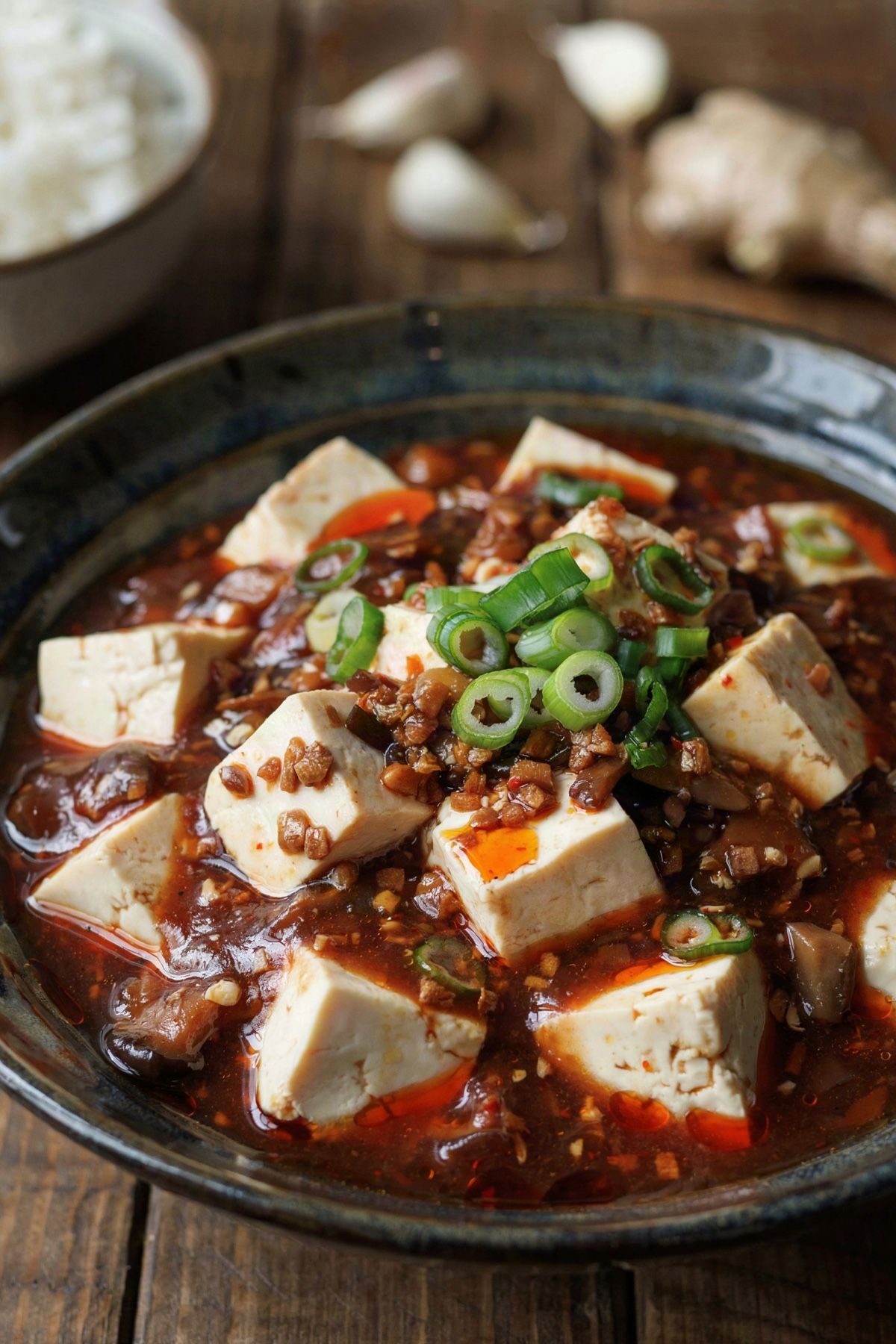
I Spent Years Adding More Things To This
I made bad vegan mapo tofu for a long time, and I made it worse every time I tried to fix it. The logic seemed sound: the original has meat, mine does not, so something has to fill the gap. So in went more mushrooms. Then walnuts for richness. Then a spoonful of miso for depth, then some soy curls, and at one point, and I am not proud of this, a little peanut butter.
What I ended up with was a competent brown mushroom stew with chili in it. It was fine. It was not mapo tofu, and I could not work out why, because I was using the right paste and the right peppercorns and following the technique reasonably well.
The thing that fixed it was reading how little meat is in the original. A quarter pound, for four people, cooked until it is crisp and basically invisible. I had been treating it as a major ingredient and replacing it accordingly, when in the actual dish it is closer to a garnish. Once I dropped to four ounces of shiitake and browned them properly, the doubanjiang came forward and the dish clicked into focus in a way none of the additions had managed.
The other thing I got wrong for years was the pepper. I bought it pre-ground, kept it in a cupboard for eighteen months, and quietly concluded that the numbing thing was exaggerated. It is not exaggerated. I just had dust.
The story
Mapo Tofu Was Never About The Meat
Mapo tofu was invented in Chengdu around 1862, in a small restaurant near the Wanfuqiao bridge, the Bridge of Ten Thousand Blessings. The cook was the widow of a man named Chen Chunfu, and her face was marked by smallpox scars. Her customers called her Chen Mapo: ma for pockmarked, po for old woman. The dish took her nickname and kept it, which is why a world-famous recipe is named after a woman's scarred face.
Her customers were porters who carried rapeseed oil across the bridge. The story that gets retold is that they brought their own oil and bought tofu on the way, and she cooked it for them. Whether or not that detail is literal, the economics behind it are not in doubt. This was food for laborers, and meat in a laborer's dish in 1862 Sichuan was a seasoning, not a component. The quantity in the traditional recipe is still tiny: around a quarter pound for four people, minced fine and fried until it is crisp and dark.
That is the fact this recipe is built on, and it is worth stating plainly because it contradicts how most vegan mapo tofu gets written. The meat is not the flavor engine. The flavor engine is doubanjiang, a paste of broad beans and chilies fermented and aged for months, sometimes years. Mapo tofu is structurally a fermented bean dish that happens to contain a little meat. Take the meat out and nothing load-bearing leaves with it.
So the common approach, which is to replace the meat with a large quantity of mushrooms, walnuts or textured soy protein, solves a problem the dish does not have. Worse, it creates one. A quarter pound of minced pork disappears into the sauce as texture. Half a pound of mushrooms does not disappear into anything. It brings its own flavor, its own water, and it turns a chili bean dish into a mushroom dish wearing a Sichuan coat. The fix is not a better substitute. The fix is to use less of it.
The other half of the dish is in its name. Sichuan cooking calls this flavor profile mala, which is two words: ma is the numbing tingle of Sichuan peppercorn, la is chili heat. Most versions cooked outside China deliver the la and lose the ma entirely, and the reason is mechanical rather than cultural. The compound responsible for the tingle, hydroxy-alpha-sanshool, is volatile. It fades from pre-ground pepper within weeks and it cooks off if you add the pepper early with the other aromatics. Ground fresh and scattered on at the end, off the heat, it is unmistakable. Done any other way it is simply absent, and half the dish's name stops meaning anything.
There is a further wrinkle worth knowing if mapo tofu has ever tasted flat to you in a restaurant. The version that traveled furthest is not the Sichuan one. Chen Kenichi, the Japanese-Chinese chef, popularized mabo dofu across Japan in a sweeter, gentler register with the numbing dialed right down, and that is the version many people meet first. It is a legitimate dish in its own right. It is just not this one.
None of which makes a meatless version a modern concession. Buddhist temple kitchens in Sichuan have cooked zhai, or vegetarian, versions of the province's dishes for as long as the dishes have existed, working around meat as a matter of doctrine rather than preference. A vegan mapo tofu is not a substitution exercise. It is a dish returning to a form it has always also had.
What to buy
Ingredient Notes
Pixian doubanjiang
The one ingredient with no substitute. Look for Pixian on the label, written as a place name, or the characters for it on the jar. It is a coarse, dark reddish-brown paste of fermented broad beans and chilies, aged for months, and it is salty enough that it seasons the whole dish on its own. Two cautions for vegans specifically. First, jars sold as ready-made mapo tofu sauce very often contain chicken extract or pork, so read those rather than assuming. Second, doubanjiang itself contains wheat flour, so it is vegan but not gluten free. Lee Kum Kee's toban djan is the widely stocked fallback: milder, saltier, and noticeably less complex, so start with the same amount and taste.
Silken or soft tofu
Silken is correct here, not firm, and this is not a texture preference. The dish is built on tofu that has gone slippery and absorbent enough to carry sauce all the way through. Firm tofu holds its cubes beautifully and stays exactly as bland in the middle as it started. Use the block-form silken sold in water rather than the shelf-stable carton kind if you can find it, since the carton sort is softer still and harder to keep intact.
Whole Sichuan peppercorns
Buy them whole and red. Green Sichuan pepper is a different spice, sharper and more citrus-like, used elsewhere in the region's cooking but not here. To check freshness, chew one: it should smell brightly of citrus peel and leave your lip genuinely buzzing within about thirty seconds. If it just tastes woody and dusty it has nothing left to give and no quantity will fix it. Pre-ground is the single most common reason a homemade mapo tofu has no numbing at all.
Douchi, fermented black beans
Whole salted black soybeans, sold dry in bags or tubs, and not the same product as the thick black bean sauce in a jar. They are packed in salt, so rinse them briefly and chop them roughly before they go in. A small amount does a lot: they supply the deep savory back note that makes the sauce taste aged rather than merely spicy.
Fresh shiitake mushrooms
Four ounces for four people, which will look like too little if you have made vegan mapo tofu before. It is deliberate, and it matches the weight of meat in the traditional recipe almost exactly. Chop them small, about a quarter inch, and brown them hard in a dry-ish pan until the edges are genuinely crisp and dark. Dried shiitake, soaked and squeezed, work well too, and the soaking liquid can replace some of the stock.
Sichuan chili flakes
Coarse, bright red, and moderately hot rather than fierce. Korean gochugaru is the closest substitute that most people can actually buy, and it behaves similarly in oil. Cayenne is not a substitute: it is far hotter by volume and brings none of the fruitiness, so the same spoonful will make the dish painful without making it taste more like itself.
Garlic greens or scallions
The traditional finish is garlic greens, the long flat leaves of young garlic, scattered on at the very end so they keep their snap. They are seasonal and hard to find in most places, and scallion greens are the accepted stand-in. Either way they go on off the heat. Cooked into the sauce they turn olive and sullen and stop doing the job.
Vegan Mapo Tofu
Silken tofu in a fiery Sichuan sauce of fermented broad bean paste, black beans and freshly ground Sichuan pepper, with crisp shiitake in place of the pork.
Ingredients
Equipment
As an Amazon Associate I earn from qualifying purchases, at no extra cost to you.
Instructions
- 1
Blanch the tofu
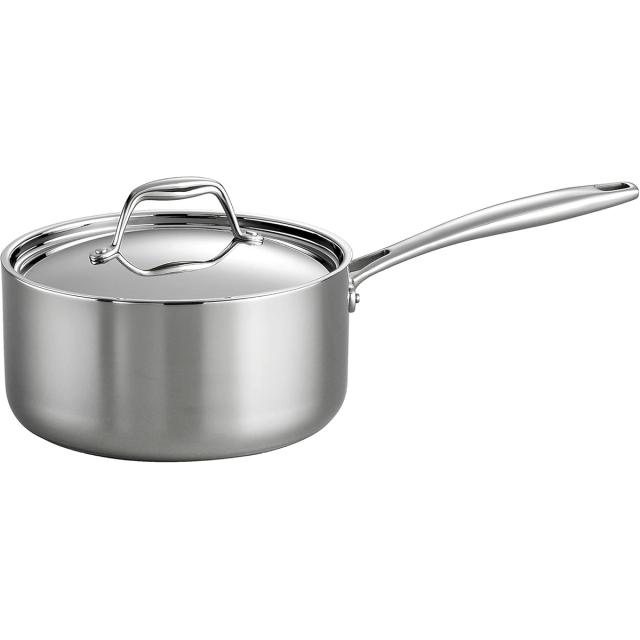
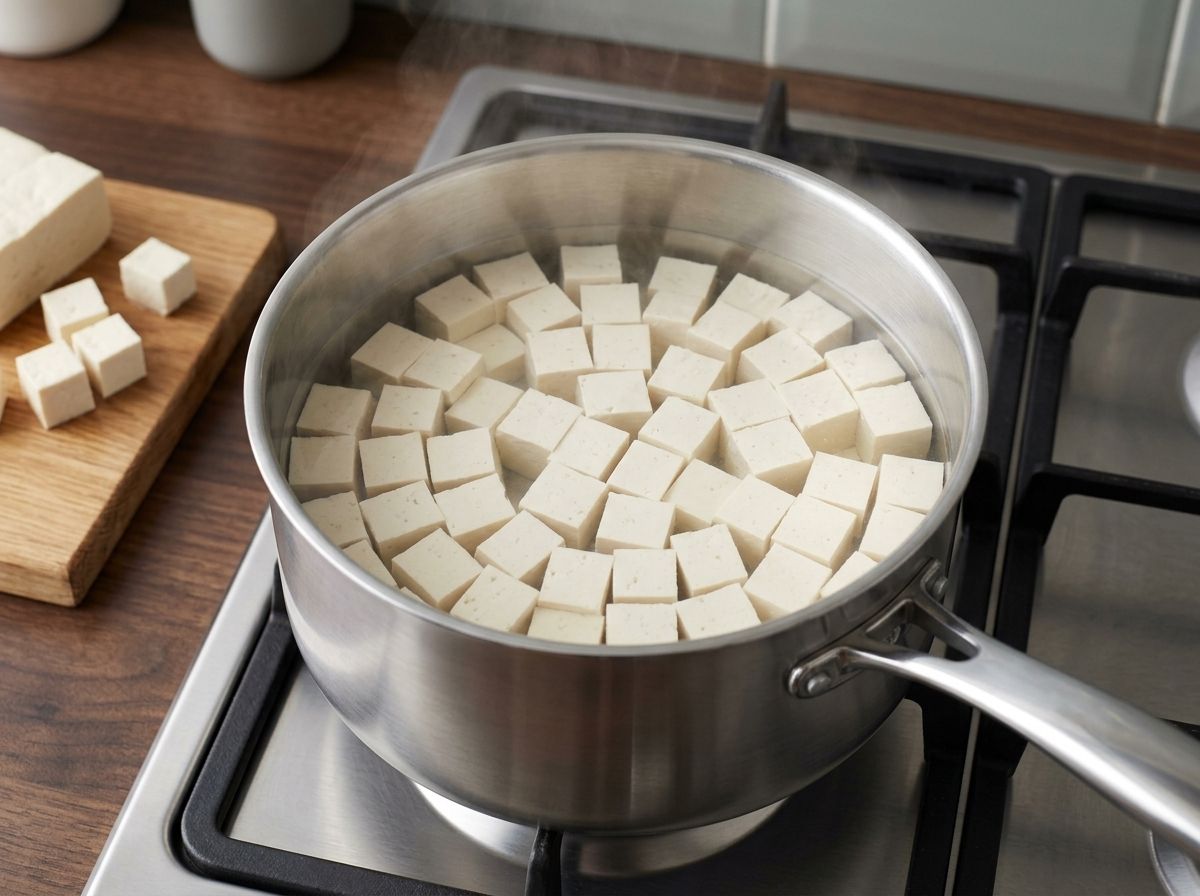
Cut the tofu into three-quarter-inch cubes. Bring a saucepan of water to a bare simmer, stir in the salt, then turn off the heat and slide the tofu in. Leave it for 5 minutes. This firms the curd and takes the raw soy edge off it, and skipping it is why tofu breaks up later. Drain gently and set aside.
- 2
Toast and grind the Sichuan pepper
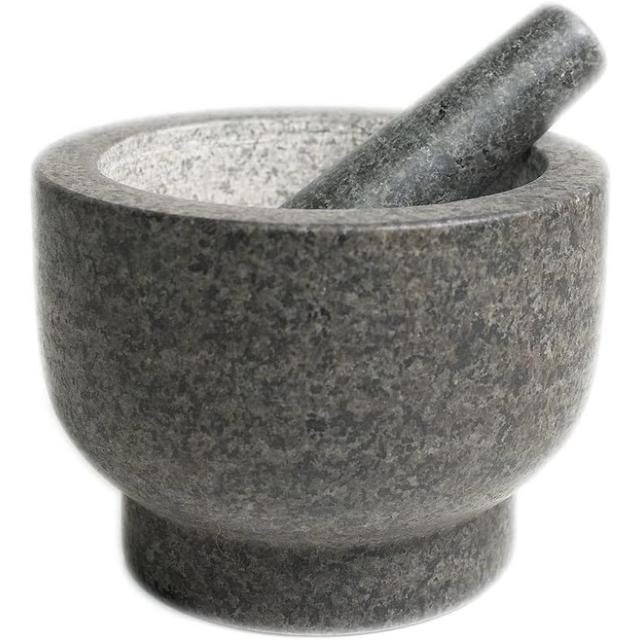
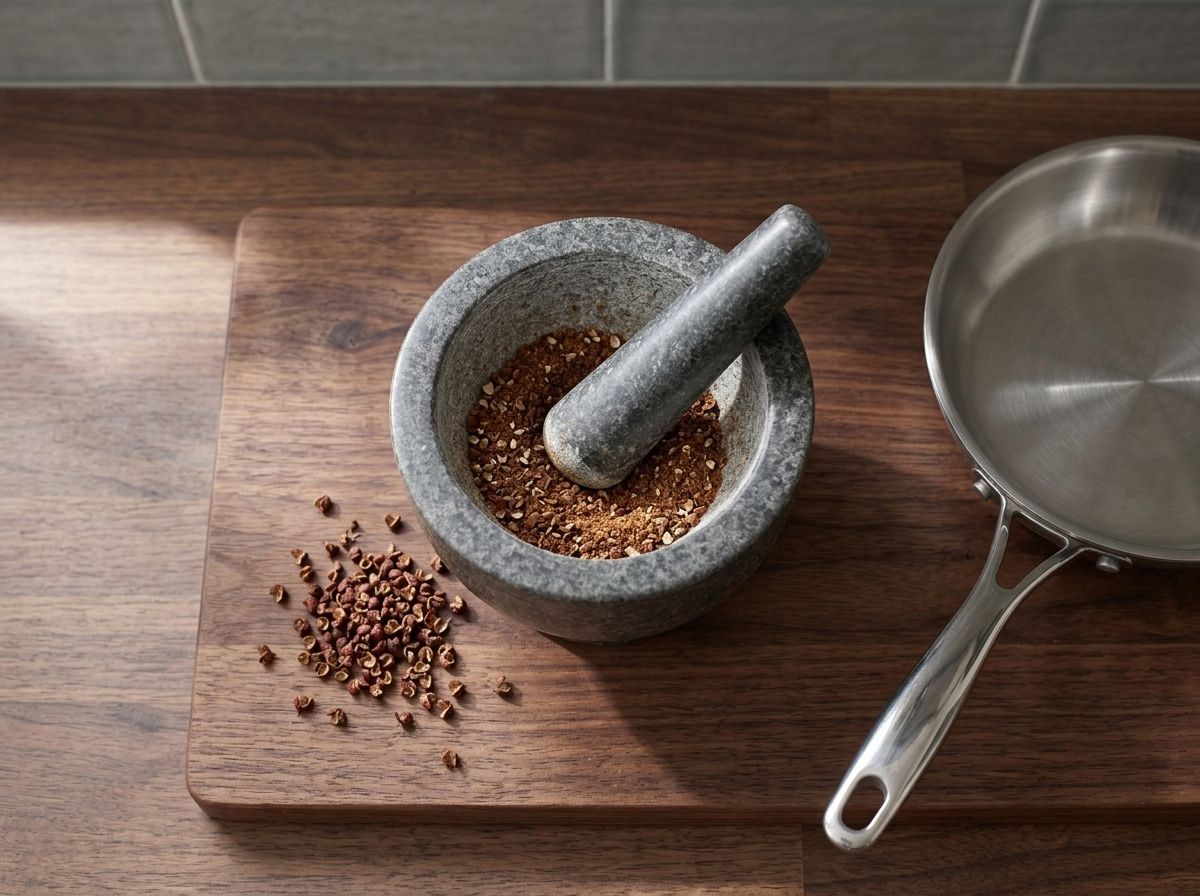
Toast the peppercorns in a dry pan over medium heat for 1 to 2 minutes, until they smell sharply citrusy. Tip them into a mortar and grind to a coarse powder. Set aside; this goes on at the very end, not into the pan.
- 3
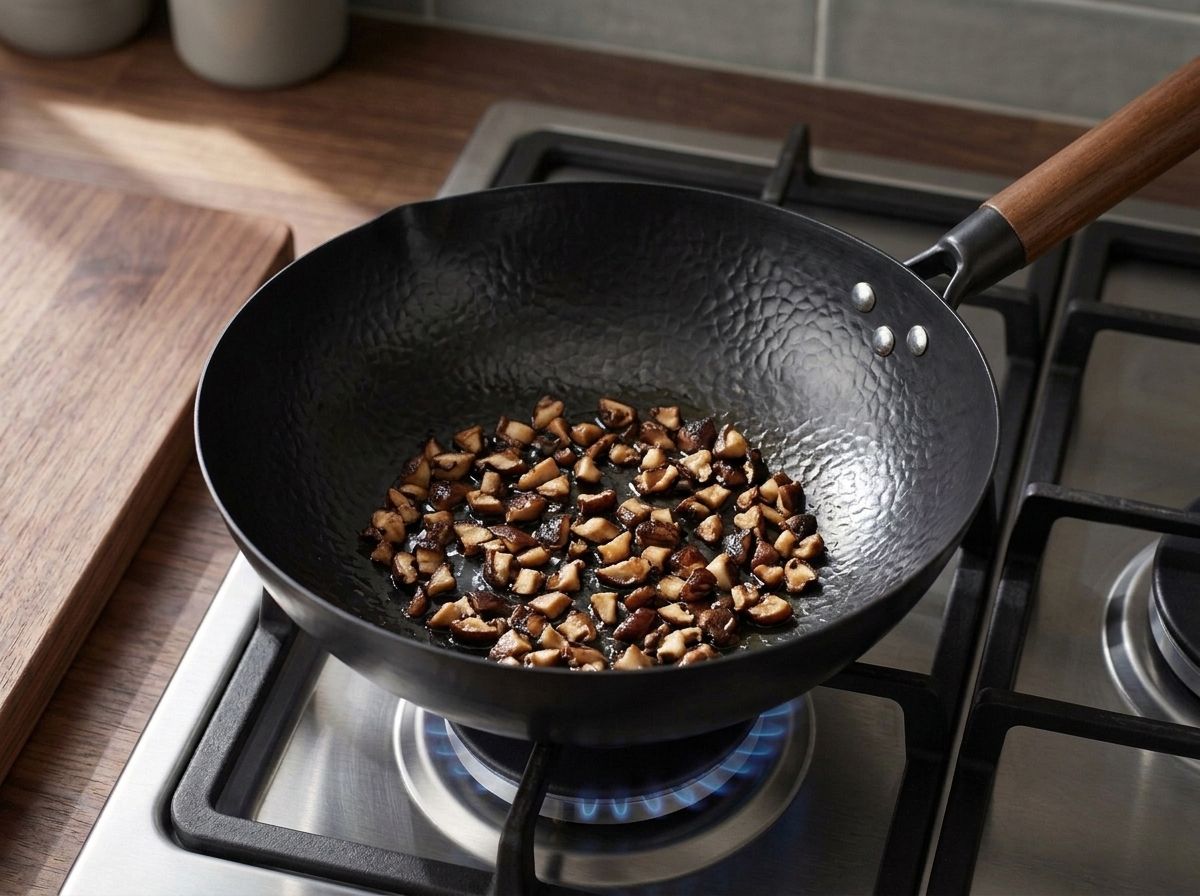
Brown the shiitake hard
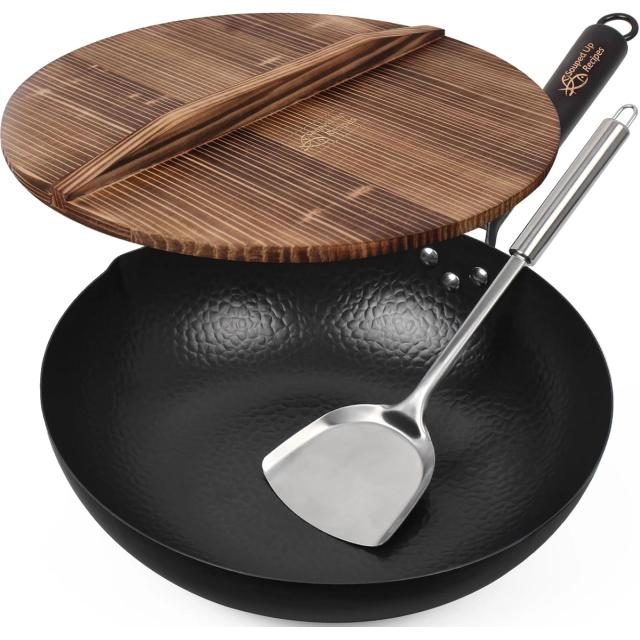
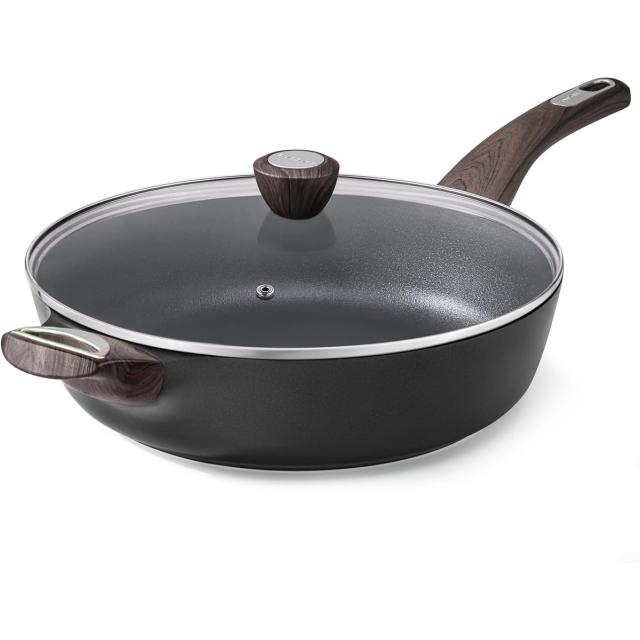
Heat 2 tablespoons of the oil in a wok over high heat. Add the chopped shiitake, spread them out, and let them sit for a minute at a time before tossing, for about 6 minutes total, until they are deeply browned and crisp at the edges. Scrape them into a bowl.
- 4
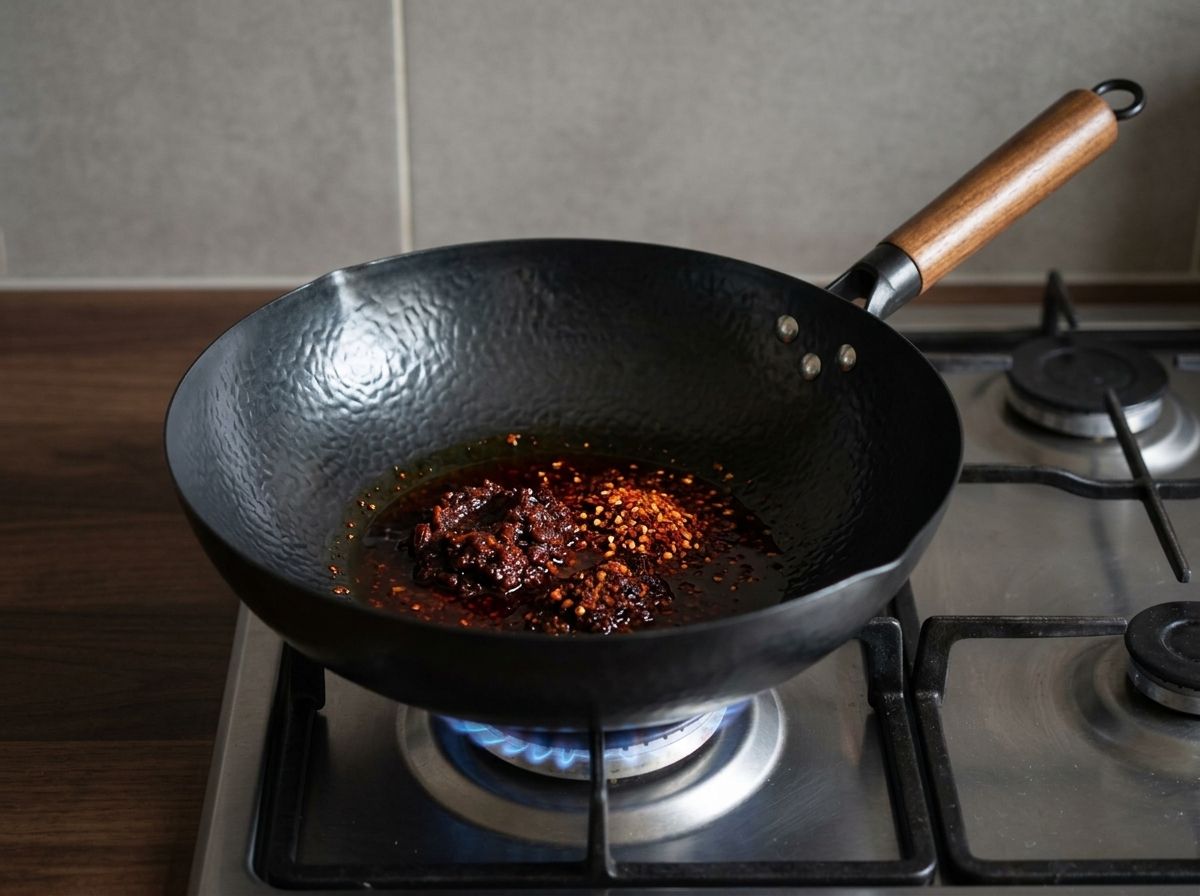
Fry the chili bean paste
Turn the heat down to medium and add the last tablespoon of oil, the doubanjiang and the chili flakes. Fry for 1 to 2 minutes, stirring, until the oil turns deep red and smells toasty rather than raw.
- 5
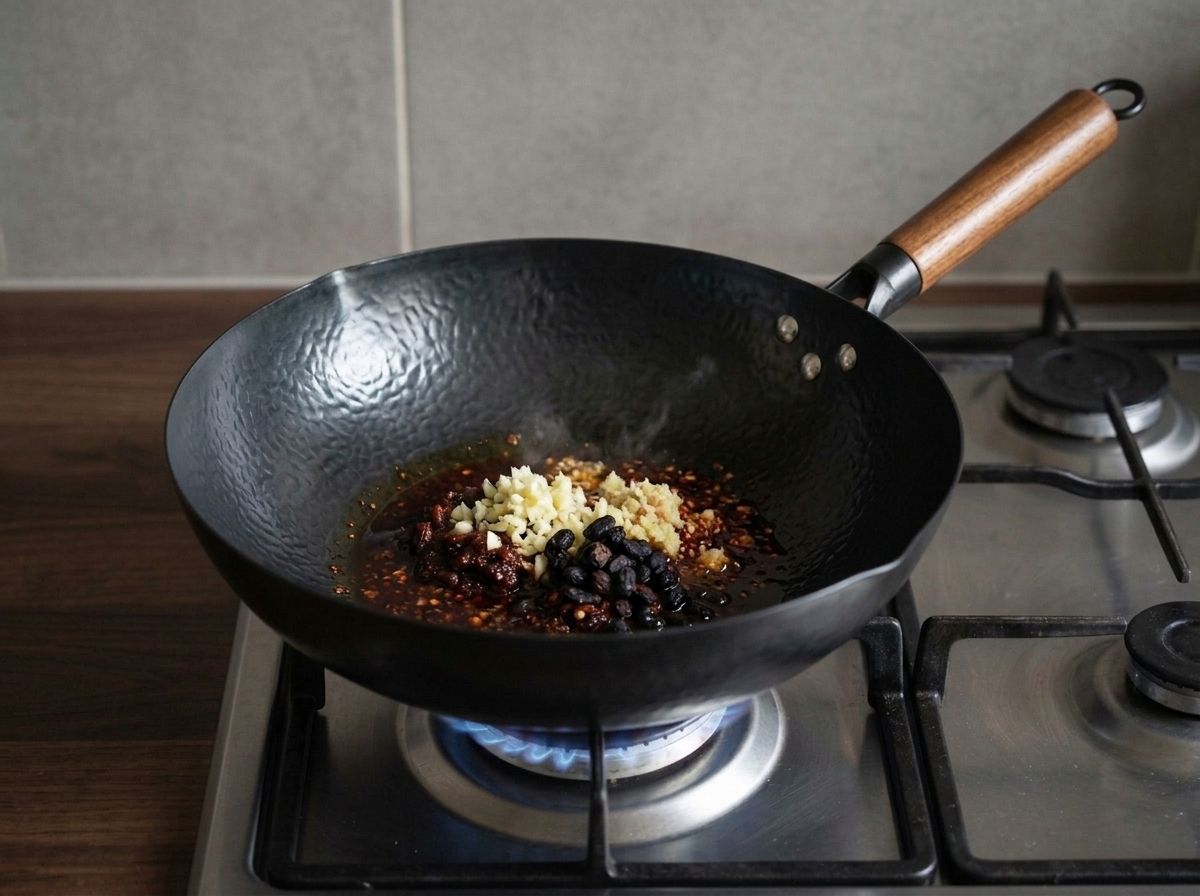
Add the aromatics
Add the garlic, ginger and rinsed douchi and fry for about 30 seconds, just until fragrant. Do not let the garlic color.
- 6
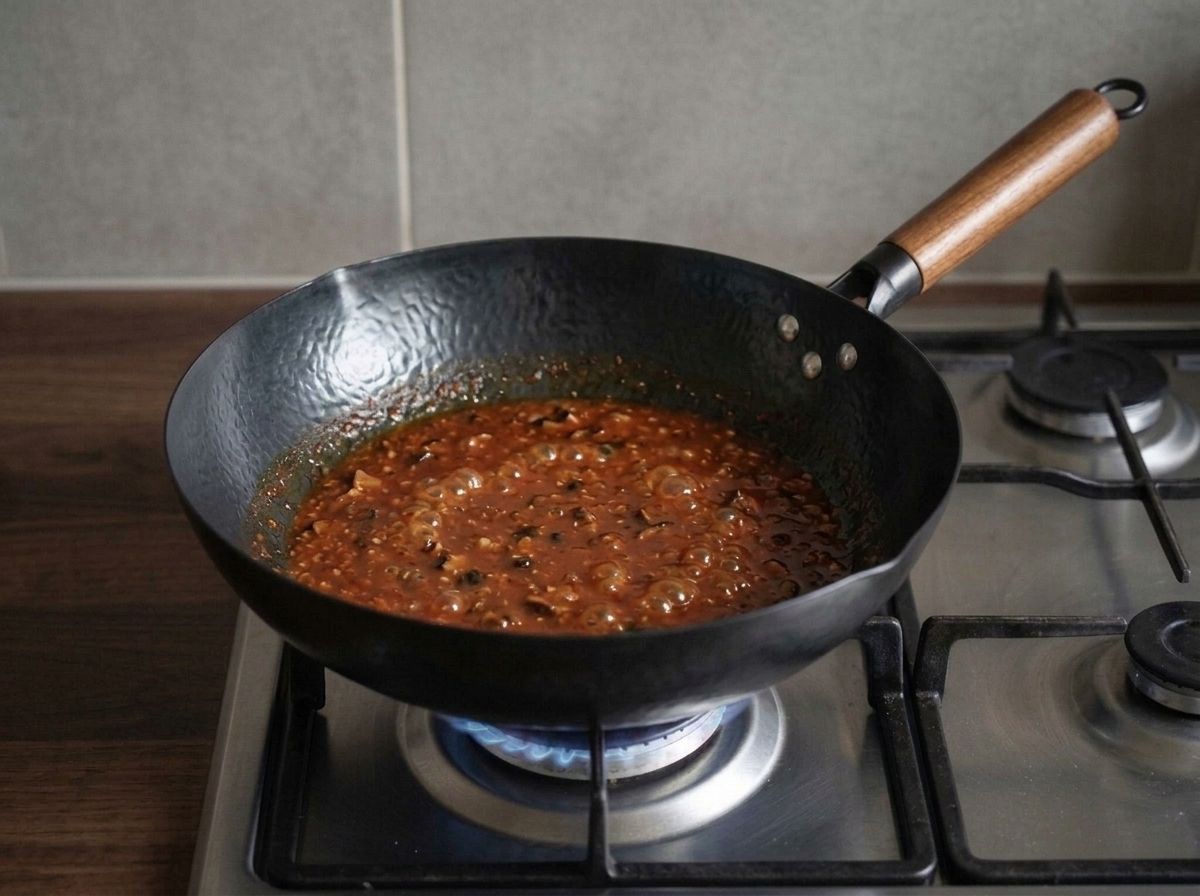
Build the sauce
Return the shiitake to the pan, then pour in the stock, soy sauce and sugar. Bring to a simmer and let it bubble for 2 minutes.
- 7
Slide in the tofu
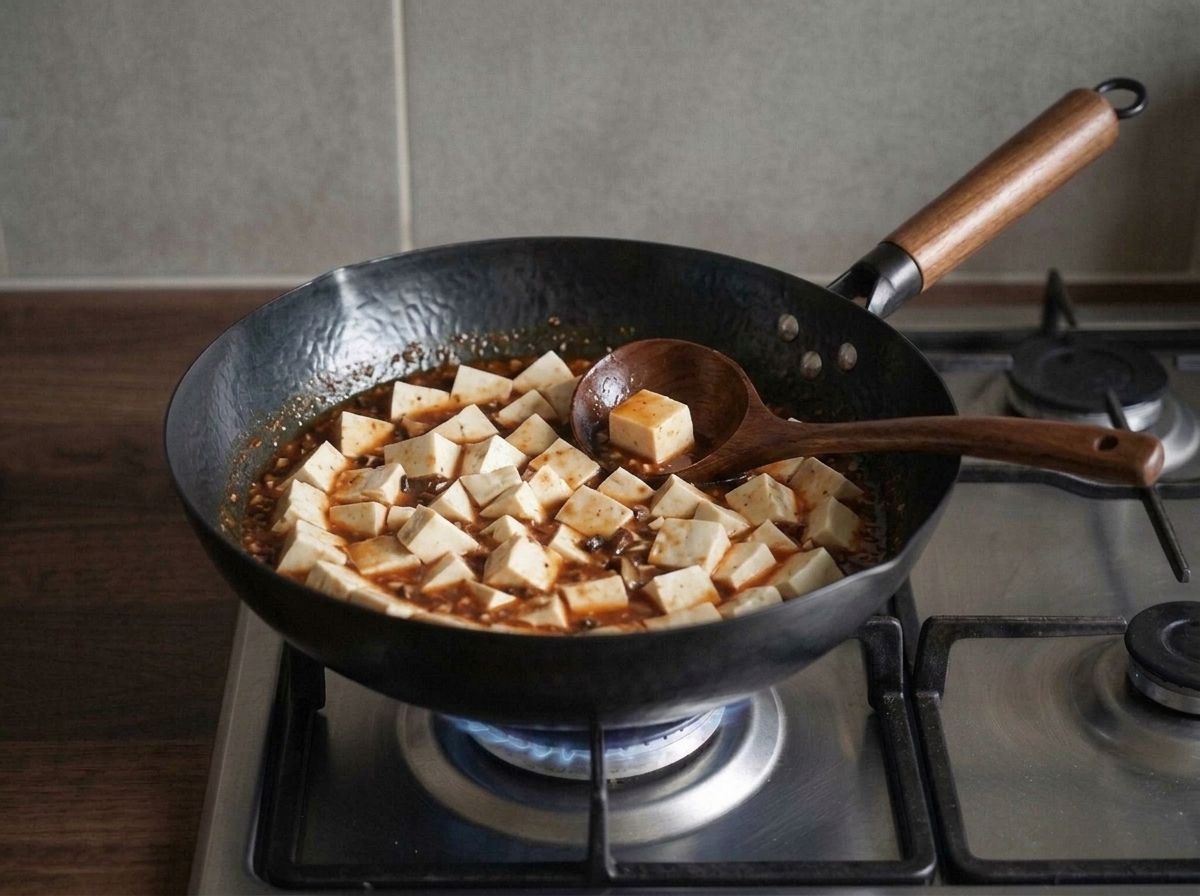
Add the drained tofu and simmer gently for 3 to 4 minutes. Do not stir: push the tofu with the back of a ladle, sliding underneath it, or shake the pan. Stirring will shred it.
- 8
Thicken in three stages
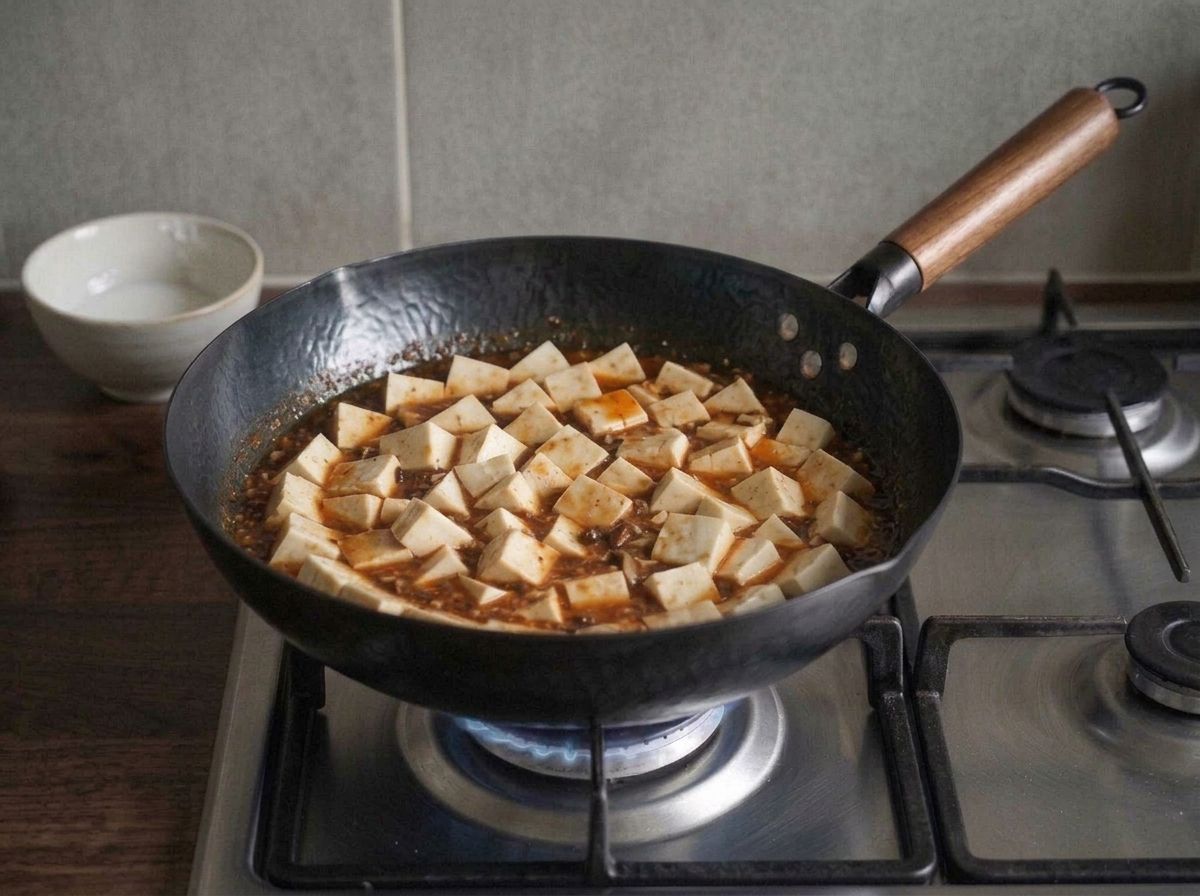
Stir the cornstarch and cold water together. Add one third, swirl the pan and let it return to a simmer for about 30 seconds until it thickens. Repeat twice more. Adding it in stages is what makes the sauce cling to the tofu instead of pooling underneath.
- 9
Finish off the heat
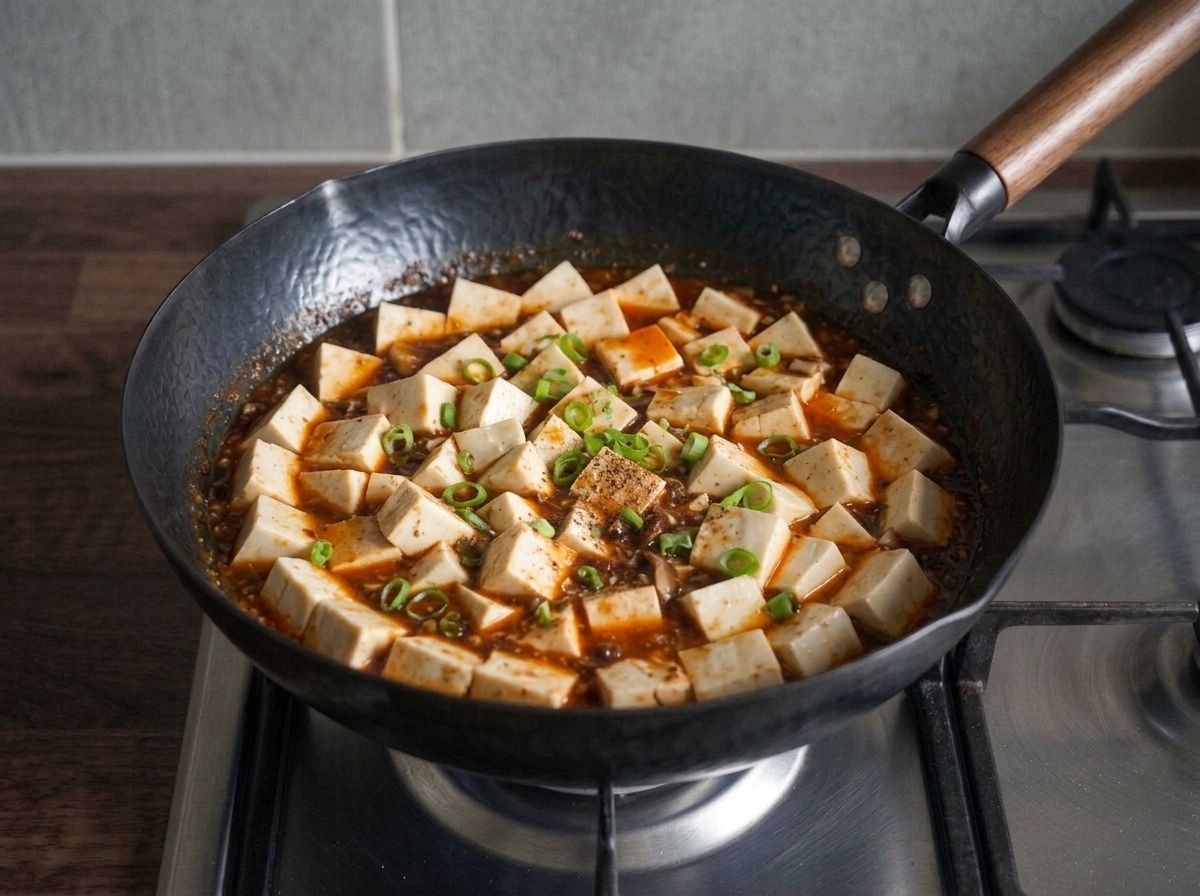
Take the pan off the heat. Scatter over the ground Sichuan pepper and the scallion greens, and add the chili oil if using. The pepper goes on now so the numbing survives.
- 10
Serve at once
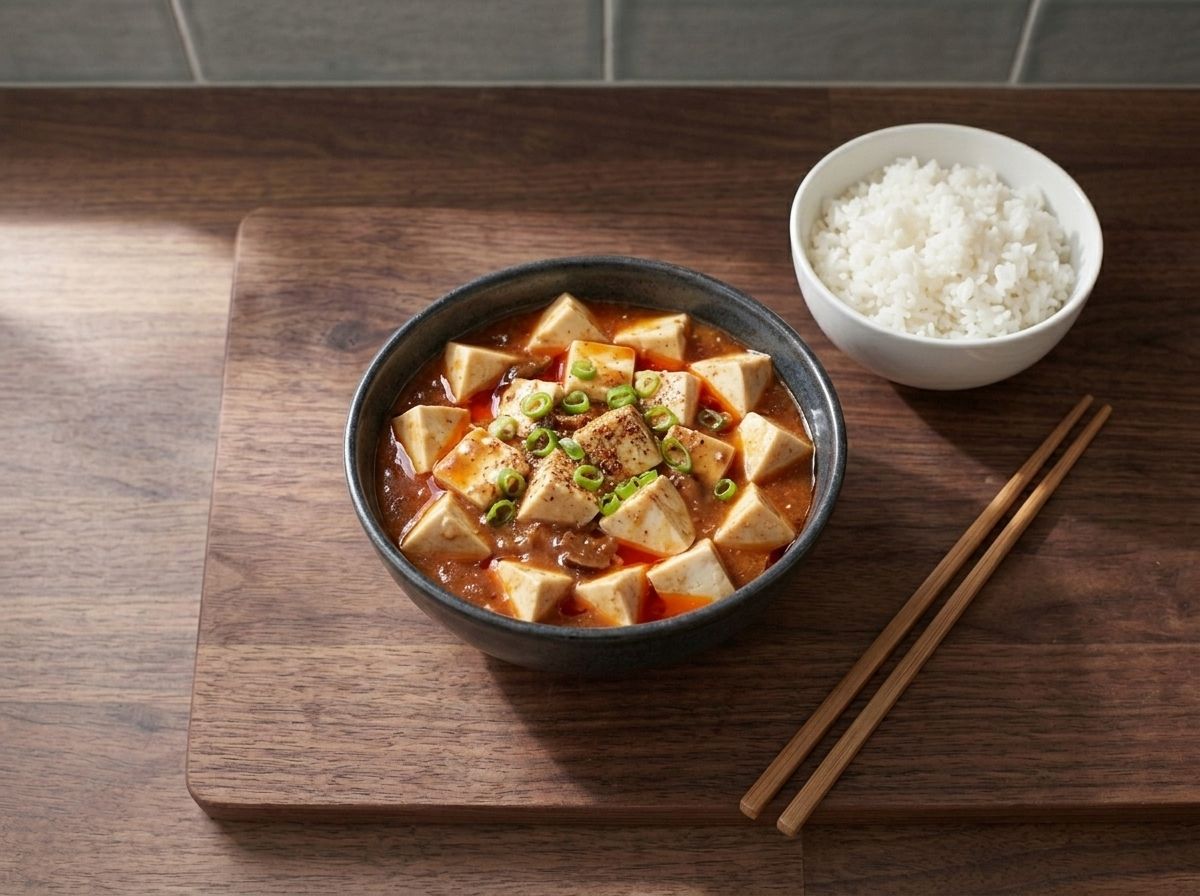
Spoon into a shallow bowl, red oil and all, and serve immediately with plenty of plain steamed rice.
Notes
The oil slick on top is correct. Do not skim it.
Doubanjiang brands vary a lot in salt. Taste before adding the soy sauce.
Halve the Sichuan pepper for a gentler tingle, but do not leave it out.
Serve with far more plain rice than looks necessary; the sauce is seasoned for it.
Nutrition Facts
4 servings · 270 g per serving
- Calories
- 223 kcal
% Daily Value*
- Total Fat
- 15.5 g20%
- Saturated Fat
- 1.4 g7%
- Sodium
- 987 mg43%
- Total Carbohydrate
- 15.1 g5%
- Dietary Fiber
- 2.4 g9%
- Sugars
- 4.3 g—
- Protein
- 8 g16%
Recipe from veggierecipes.blog
When it goes wrong
Troubleshooting
It came out tasting mostly of mushrooms
Too many mushrooms, which is the standard fault of vegan versions rather than a mistake you invented. Mushrooms bring their own strong flavor and a lot of water, and past about four ounces for four servings they stop reading as texture and start dominating. Cut back to the quantity here and brown them harder than feels necessary. The savory depth you are looking for comes from the doubanjiang and the douchi, not from volume of mushroom.
The tofu broke up into mush
Almost always one of two things. Either the salted blanch was skipped, which is the step that firms the curd before it ever meets the sauce, or the tofu was stirred. Once it is in the pan, do not stir: push it gently with the back of a ladle, sliding underneath rather than through. Shaking the pan works too. A spoon dragged through silken tofu will shred it in about four strokes.
The sauce is thin and pooled at the bottom
The cornstarch went in all at once. Mapo tofu is thickened in three separate additions, swirling and letting it come back to a simmer between each, and the reason is that starch added gradually to moving liquid builds a sauce that clings to the tofu, while a single dump sets into a layer that slides off it and puddles. It is the most skippable-looking step in the recipe and the one that most changes the result.
It is properly spicy but my mouth does not tingle
The ma is missing, and it is a question of when and what rather than how much. Pre-ground Sichuan pepper loses its active compound within weeks of grinding, and even fresh pepper cooks off if it goes in early with the garlic and ginger. Toast whole peppercorns, grind them just before serving, and scatter them over the finished dish after it comes off the heat.
There is a layer of red oil sitting on top
That is correct and you should leave it. A visible slick of chili-stained oil on the surface is what mapo tofu is supposed to look like, and it is doing work: it carries the chili and fermented bean flavors that are oil-soluble and would otherwise stay locked in the paste. Skimming it off makes the dish look tidier and taste noticeably duller. This is the entry people most often mistake for a fault.
It is too salty to eat
Doubanjiang and douchi are both preserved in salt and they are carrying nearly all the seasoning between them. The usual causes are salting the stock, adding soy sauce by eye rather than measuring, or a brand of doubanjiang saltier than the one this was written for. Also worth checking: mapo tofu is deliberately seasoned to be eaten with a lot of plain rice, so tasting it alone off a spoon will always read as too strong.
Before you serve
Serving & Storage
Mapo tofu is not a bowl of stew and it is not meant to be eaten on its own. In Sichuan it arrives as one dish among several, and the plain steamed rice on the table is not a side: it is the thing the dish exists to season. That is why the sauce tastes aggressive straight from the pan and exactly right the moment it goes over rice. Serve it in a shallow bowl with the oil still glossy on top, and give everyone considerably more rice than they think they want.
If you are building a fuller table around it, the Sichuan instinct is contrast rather than more of the same. Something cooling and plain works better than a second spicy dish: smashed cucumber in vinegar and garlic, blanched greens with a little sesame oil, or a clear soup. Beer helps more than wine does, and cold water helps least, because the numbing compound is fat-soluble rather than water-soluble.
Making it ahead
The sauce base can be made ahead and it improves for it. Cook everything up to the point before the tofu goes in, which is the fried paste, the aromatics, the mushrooms and the stock, then cool and refrigerate it for up to three days. On the day, bring it back to a simmer, add the blanched tofu and thicken. This is genuinely the better way to cook it for guests, because the last five minutes are the only part that needs attention.
What does not work is making the finished dish ahead. Silken tofu keeps releasing water into a sauce that has already been thickened, so a mapo tofu made in the morning is watery by evening, and no amount of extra starch fixes it once the tofu has started shedding. Blanch the tofu on the day too. Blanched tofu left overnight goes rubbery at the edges.
Storing leftovers
Leftovers keep for three days in the fridge and reheat acceptably, though honestly not brilliantly. Warm them gently in a pan with a splash of water or stock, pushing rather than stirring, and grind a little fresh Sichuan pepper over at the end. The numbing will have faded almost completely overnight and that is the part worth restoring, not the heat.
Do not freeze it. Silken tofu freezes into a sponge, which is a real technique in other dishes but ruins this one, and a cornstarch-thickened sauce separates and weeps on thawing. If you want mapo tofu in the freezer, freeze the sauce base without the tofu and blanch fresh tofu when you use it.
Still wondering
Frequently Asked Questions
Is doubanjiang vegan, and is this dish gluten free?
Pixian doubanjiang is vegan: it is broad beans, chilies, salt and wheat flour, fermented, with nothing animal in it. The wheat flour is why the dish is not gluten free as written. Two separate things to watch, though. Jars labeled mapo tofu sauce or mapo seasoning are a different product and frequently contain chicken or pork extract, so those need reading. And for a gluten-free version you need both a wheat-free chili bean paste, which does exist but is not common, and tamari in place of the soy sauce. Swapping only the soy sauce is not enough.
Can I make it less numbing without wrecking it?
Yes, down to a point. Halve the Sichuan pepper to half a teaspoon and it stays recognizably itself while reading as a warm buzz rather than a full tingle. Going to zero is a different decision: ma is half of mala and half of what the dish is, and without any you have made a spicy fermented bean braise, which is pleasant but is not mapo tofu. If you are cooking for someone who dislikes the sensation, leave it out of the pan and put the ground pepper on the table so people can add their own.
Will this taste like the mabo dofu I have had at Japanese restaurants?
No, and it is worth knowing before you cook it. Japanese mabo dofu descends from this dish but was deliberately softened when it was popularized there in the twentieth century: sweeter, thicker, much less numbing, and frequently made from a boxed sauce. If that is the version you grew up with, this one will arrive hotter, saltier and stranger, with a tingle the other does not have. Both are real dishes. This is the Chengdu one.
More Tofu Dishes Worth Cooking Properly
Made this?