
Agedashi Tofu Recipe
Published · Updated
Crisp potato starch outside, custard soft inside, sitting in a kombu and shiitake broth that Japanese temple kitchens were making long before restaurants started putting fish flakes on top.
Jump To Recipe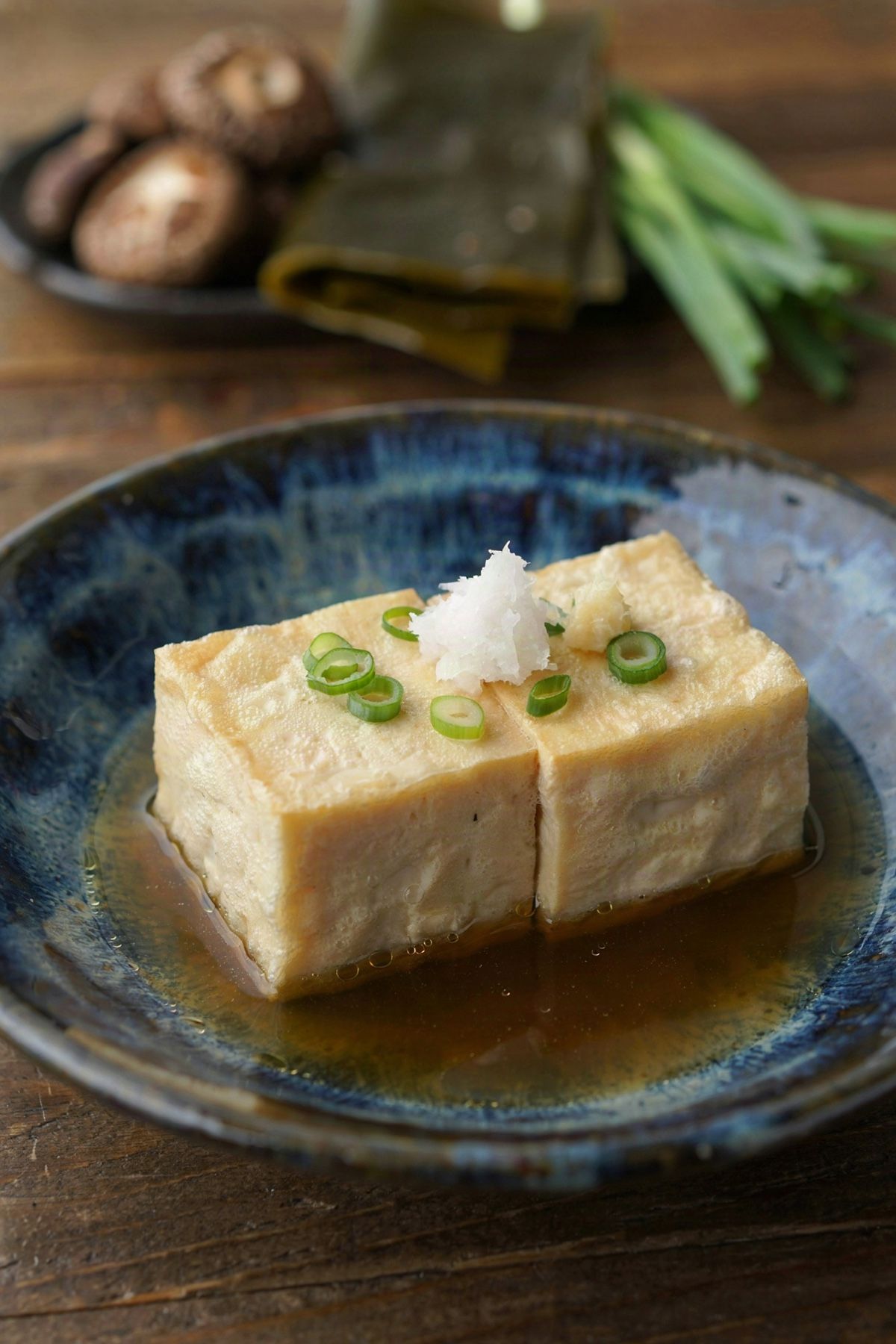
I Spent Years Making This With The Wrong Tofu
There is a small izakaya I used to go to where agedashi tofu was the first thing I ordered every time, before I had even looked at the rest of the menu. So I started making it at home, with the extra-firm tofu that was already in my fridge, because tofu is tofu. What I produced was fine. Crisp cubes, good broth, nothing wrong with it. It also had nothing to do with the thing I was trying to make, and it took me an embarrassingly long time to work out that the problem was never my frying.
Soft tofu, drained gently and not pressed, is the whole recipe. The inside stops being a piece of protein and starts behaving like a savory custard, and suddenly the thin shell around it has a job. The other thing I changed the same evening was pouring the broth around the base instead of over the top, which I had been doing for no better reason than that it looked generous.
It is now the only deep-fried thing I will make on a weeknight. The frying is four minutes of actual attention, the broth steeps while I do something else, and the grating takes as long as it takes. For a dish I associate with going out, it asks for remarkably little.
The story
Agedashi Tofu Is Older Than The Fish Flakes On Top
The name is literal. Age (揚げ) means deep-fried, and the dashi in it is 出し, the sense of being turned out and served, which happens to be a homophone of 出汁, the stock it arrives in. Japanese is full of these. Say it ah-geh-DAH-shee, hard g, no weight on the last syllable.
The dish has a paper trail. It appears in Tofu Hyakuchin, a collection of one hundred tofu recipes published in 1782 and popular enough to spawn sequels. The author is printed as Seikyodojin Kahitsujun, thought to be the pen name of Sodani Gakusen, a seal engraver from Osaka. The version recorded there is called agenagashi, and it is close to what we still do: tofu cut into pieces, deep-fried, then simmered in a dashi broth, in that case thickened with arrowroot. What it does not have is the garnish. No grated daikon, no ginger, no scallion, none of the things a modern plate is built around.
Running alongside that was shojin ryori, the Buddhist temple cooking that had been working without fish or meat for centuries. Temple kitchens needed a stock and could not use bonito, so they built one out of kombu and dried shiitake. Tofu Hyakuchin is often credited with moving tofu from everyday food to something cooks took seriously, and the temple kitchens had been treating it that way the whole time.
Which puts the vegetarian question in a different place than most recipes put it. The two things that make a restaurant agedashi tofu unsuitable for vegetarians are both late additions: bonito in the dashi, and a pinch of katsuobushi over the top at the pass. Take them out and you have not substituted your way to an approximation. You have the older dish.
It is not a downgrade in savoriness either, which is the thing people assume. Kombu is loaded with glutamate and dried shiitake with guanylate, and the two together taste far more savory than the sum of them apart. Bonito works the same trick with a third compound, inosinate. The vegan broth is not a weaker version of the fish one. It is the other half of the same chemistry.
What to buy
Ingredient Notes
Soft or silken tofu
This dish is a texture contrast and almost nothing else, so the inside has to read as custard against the shell. Japanese recipes use kinugoshi, the silken kind, or a soft momen. Extra-firm turns agedashi tofu into fried tofu cubes in broth, which is a perfectly good thing to eat and is not this dish. Buy the soft block packed in water rather than the shelf-stable carton, which is looser and harder to handle. Medium-firm is the honest compromise for a first attempt.
Potato starch
Three starches get used for this and they are not interchangeable. Potato starch, katakuriko, is what Japanese kitchens reach for: it fries into a thin shell that shatters, and it holds that crispness in liquid longer than the alternatives. Cornstarch is the usual substitute and works, but it softens faster once the broth reaches it, so get it to the table quickly. Plain flour is the one to avoid. It goes bready and heavy and dulls the point of the dish.
Kombu
Buy it as flat dried sheets, and do not wash it. The pale bloom on the surface is mannitol, which carries a lot of the savoriness, so wipe it with a barely damp cloth and stop there. The other rule is heat. Kombu turns slippery and faintly bitter if it boils, so it comes out of the pan before the surface breaks.
Dried shiitake
The other half of the broth, and the half people leave out. Kombu on its own tastes clean and a little thin. Whole dried shiitake steeped alongside it add the depth that makes the broth taste like it came from a restaurant kitchen. Buy whole caps rather than pre-sliced, which tend to be lower grade and go papery, and keep the soaking water, because that is the dashi.
Mirin
Read the label on this one. Hon-mirin is brewed and sits around 14% alcohol. What usually shares the shelf with it is aji-mirin or mirin-style seasoning, which is glucose syrup, water, salt and flavoring. It will work, but it is sweeter and flatter, so start with a little less and taste. A broth this simple is exactly where you notice the difference.
Soy sauce
Japanese koikuchi is what the broth is balanced against. Chinese light soy is saltier and less sweet and will push the broth sharp. Tamari is a straight swap at the same quantity and makes the dish gluten free.
Daikon
Grated daikon, oroshi, is not decoration. It is there to cut the oil, and a plate of fried tofu without it starts to taste heavy by the third piece. Grate it on the fine side of a box grater and squeeze it gently in your hand before it goes on, or the water it gives up thins the broth.
Agedashi Tofu
Soft tofu in a thin potato starch shell, deep-fried until pale gold and served in a warm kombu and shiitake broth with grated daikon, ginger and scallion. Vegan, and ready in an hour with most of that spent steeping.
Ingredients
Equipment
As an Amazon Associate I earn from qualifying purchases, at no extra cost to you.
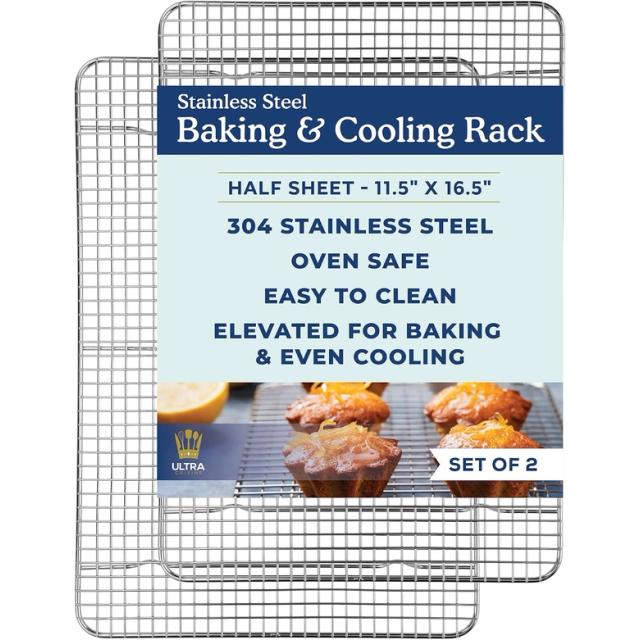
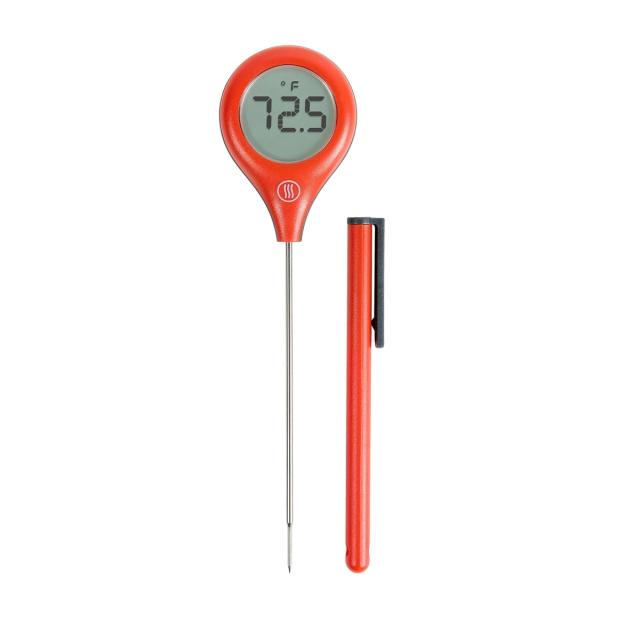
Instructions
- 1
Steep the dashi
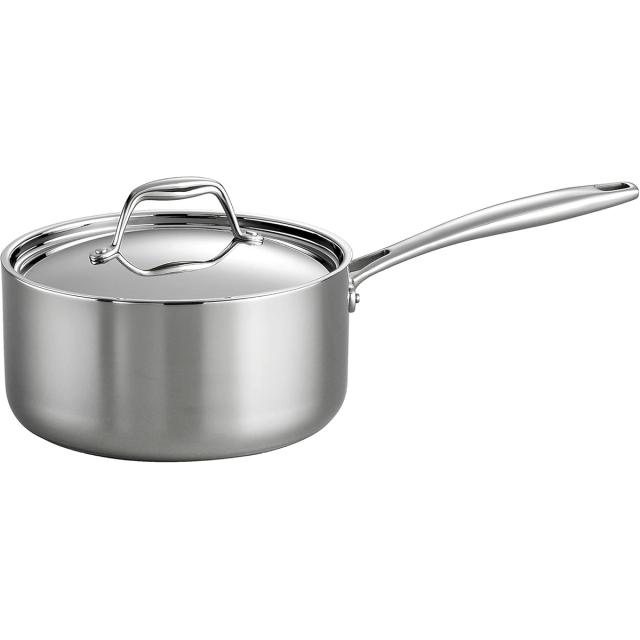
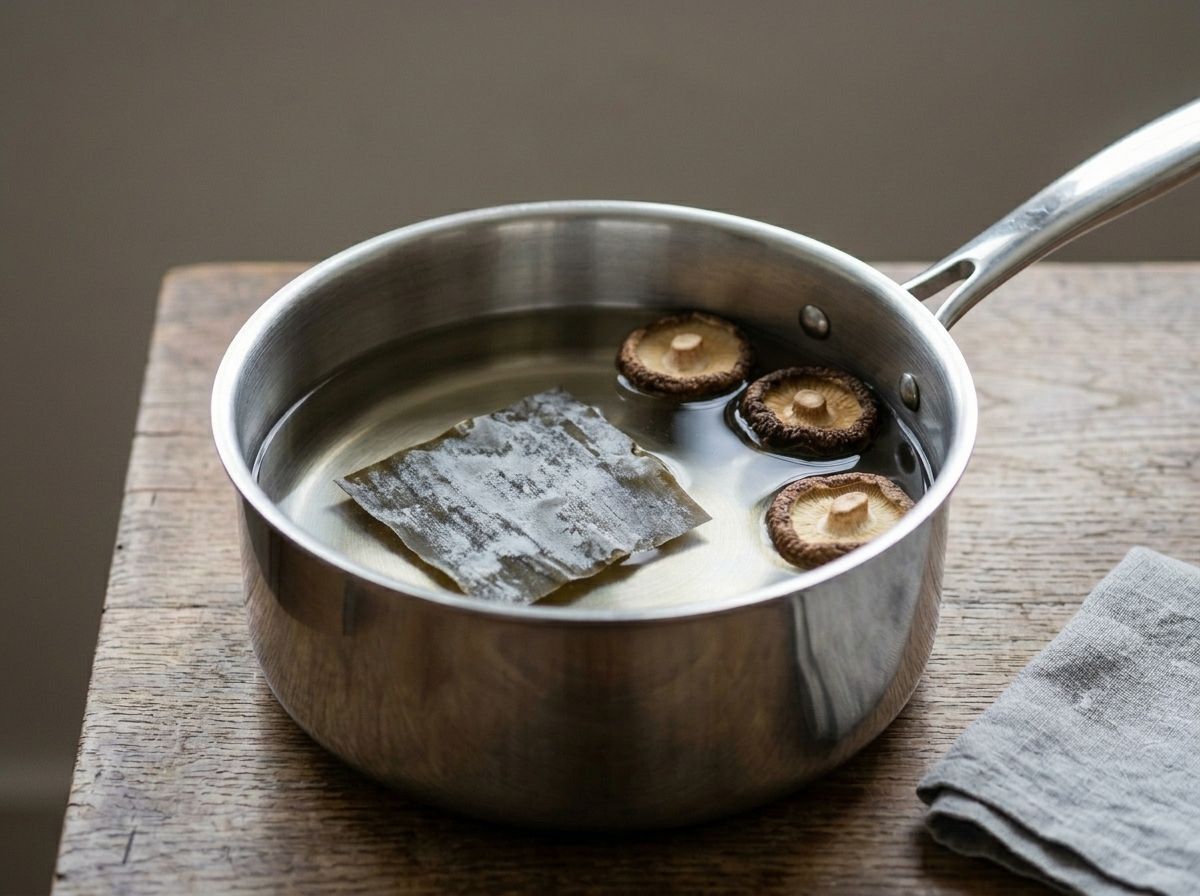
Wipe the kombu with a barely damp cloth, leaving the pale bloom on the surface where it is. Put it in a saucepan with the dried shiitake and 2 cups of cold water and leave it to steep for at least 30 minutes. A few hours, or overnight in the fridge, is better.
- 2
Drain the tofu
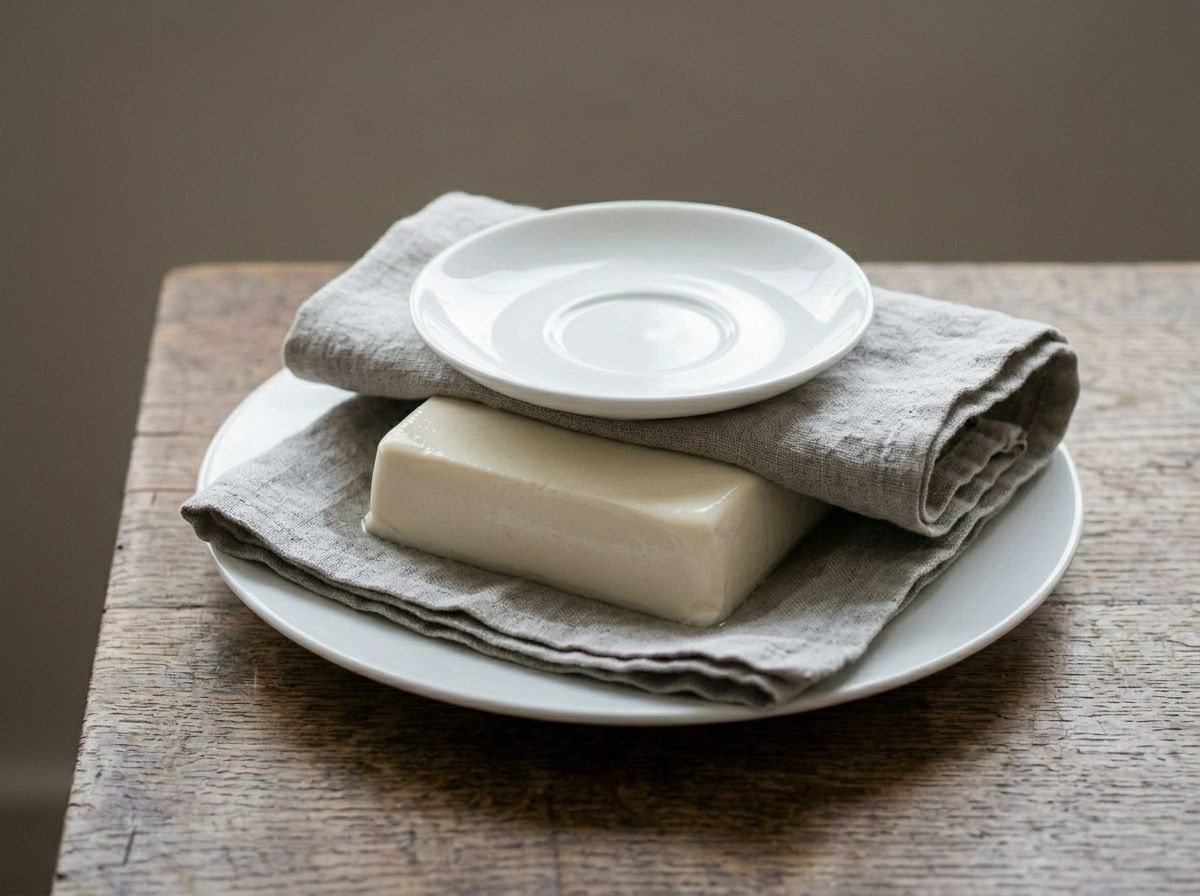
Open the tofu and set the block on a plate lined with a folded kitchen towel. Lay another towel over the top and rest a small plate on it, with no added weight. Leave it 15 minutes while the dashi steeps. It should end up damp rather than wet, and still springy.
- 3
Grate the daikon and ginger
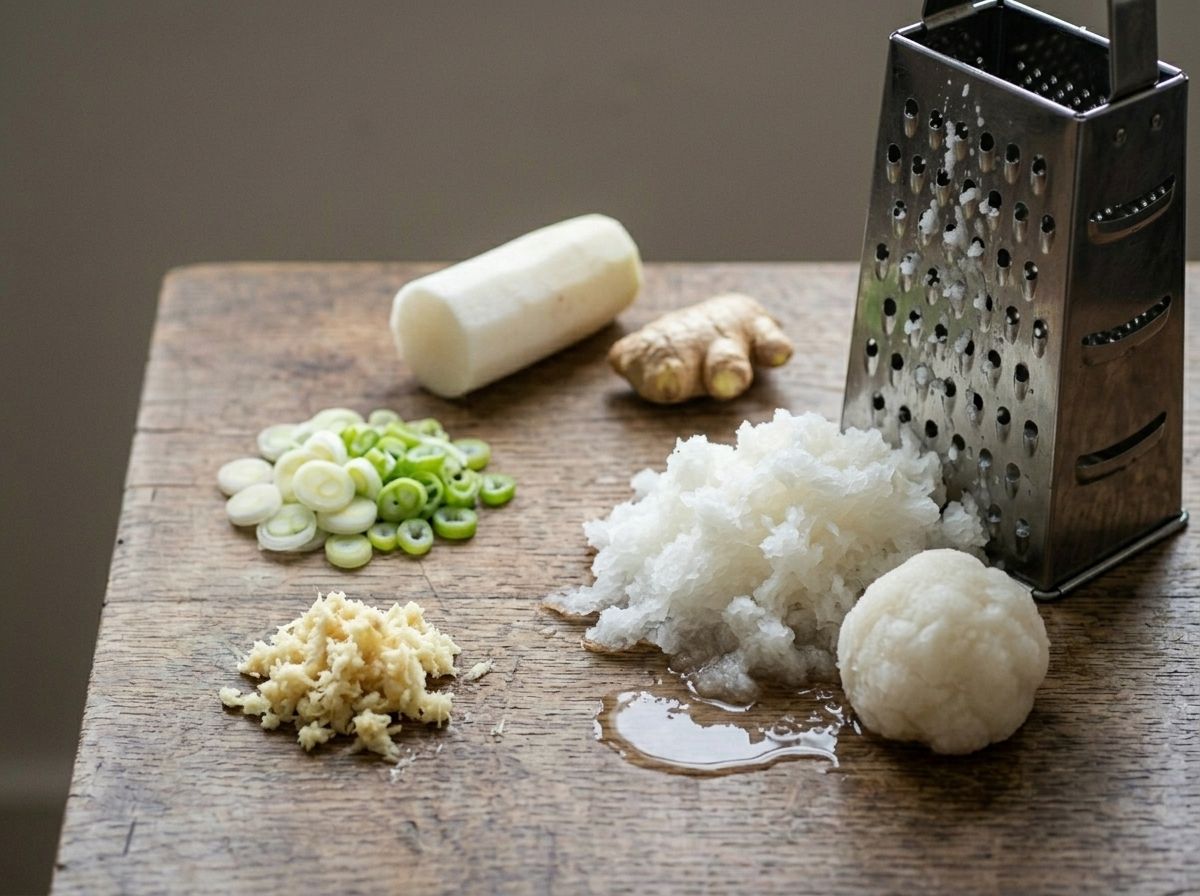
Peel and grate the daikon on the fine side of a box grater, then squeeze the gratings gently in your hand to shed the loose water. Peel and grate the ginger the same way. Slice the scallions thinly.
- 4
Finish the broth
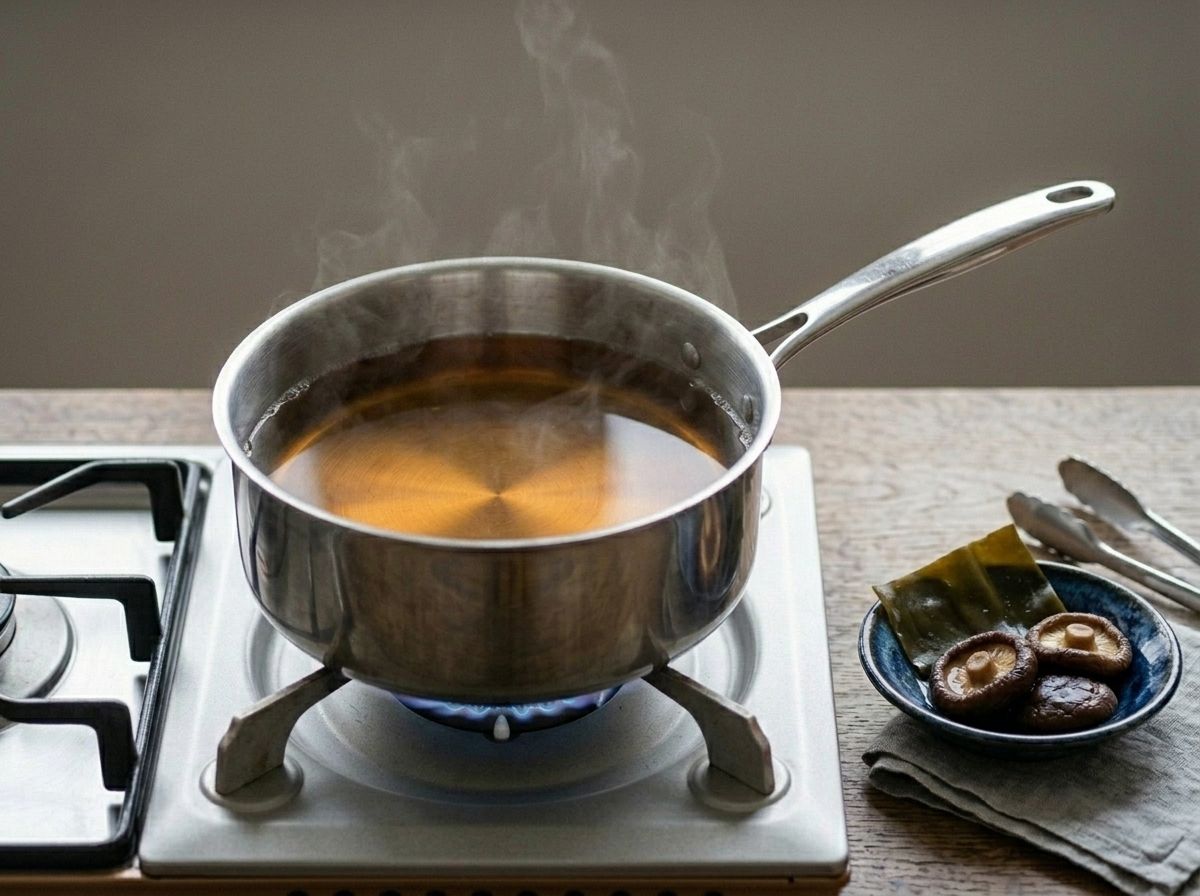
Bring the pan of dashi slowly up to just below a simmer, then lift out the kombu and shiitake before the surface breaks. Stir in the soy sauce and mirin and keep it warm over the lowest heat.
- 5
Heat the oil
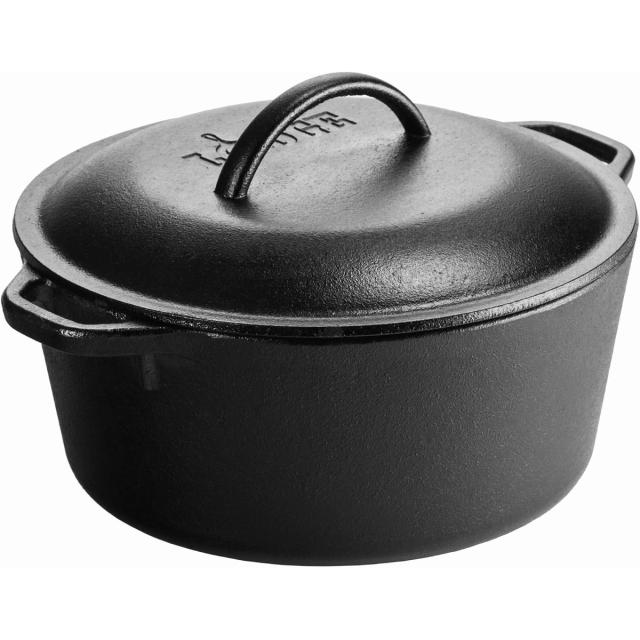
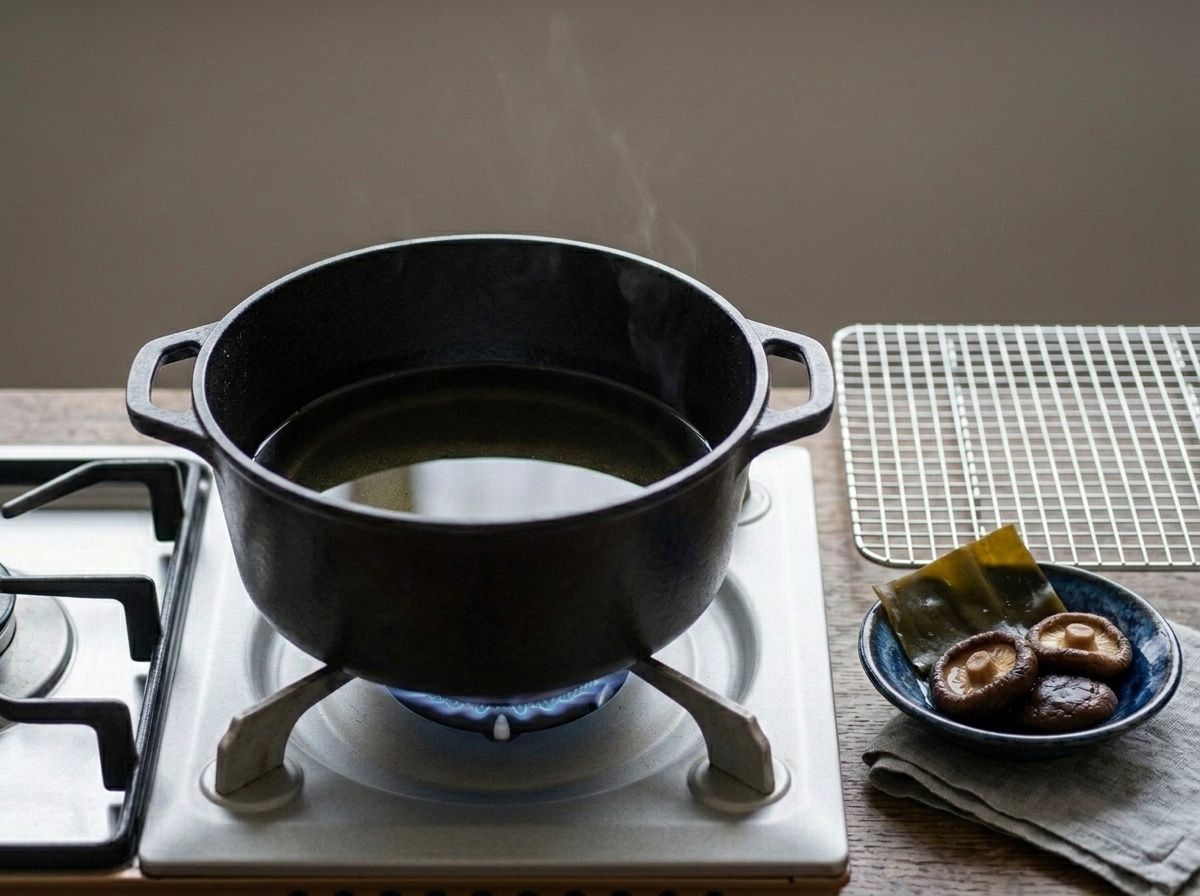
Pour the oil into a deep pot to a depth of about 1½ inches and bring it to 340°F. Set a wire rack next to the stove.
- 6
Cut and coat the tofu
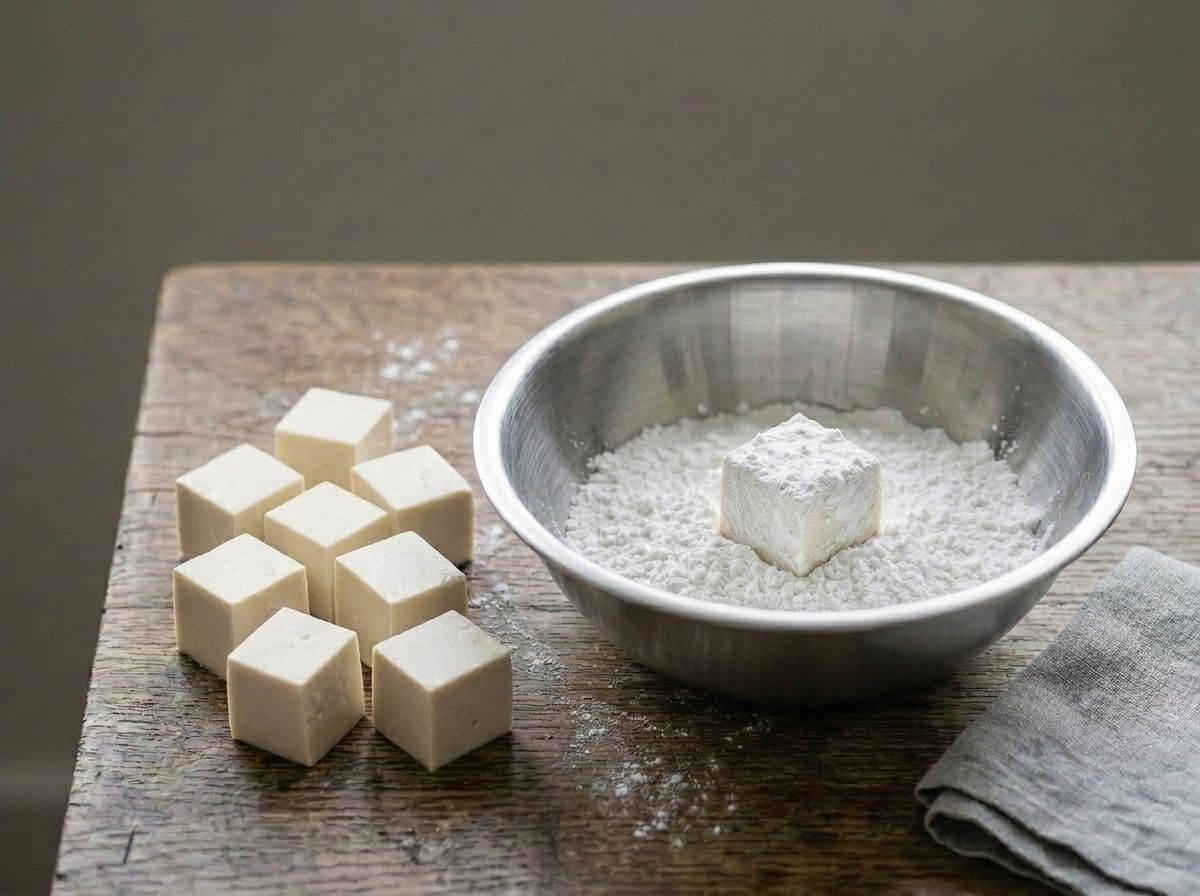
Cut the drained block into 8 cubes and pat the cut faces dry. Put the potato starch in a shallow bowl and roll one cube in it, tapping off the excess, then take it straight to the oil. Coat each piece only as you are about to fry it.
- 7
Fry until pale gold
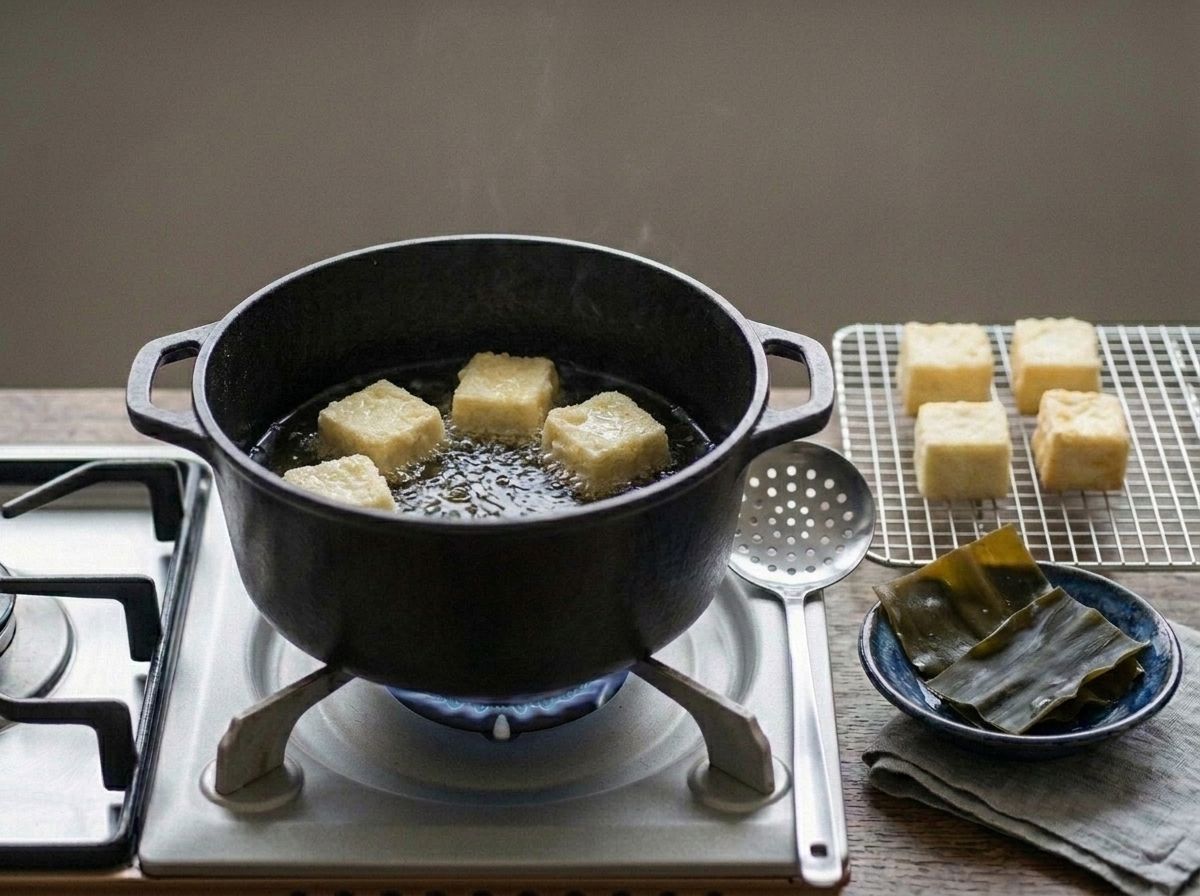
Lower 4 pieces into the oil with a slotted spoon and fry for 3 to 4 minutes, turning each one once, until the shell is set and pale gold rather than brown. Lift them onto the wire rack and fry the second batch, letting the oil come back to temperature first.
- 8
Pour the broth around, not over
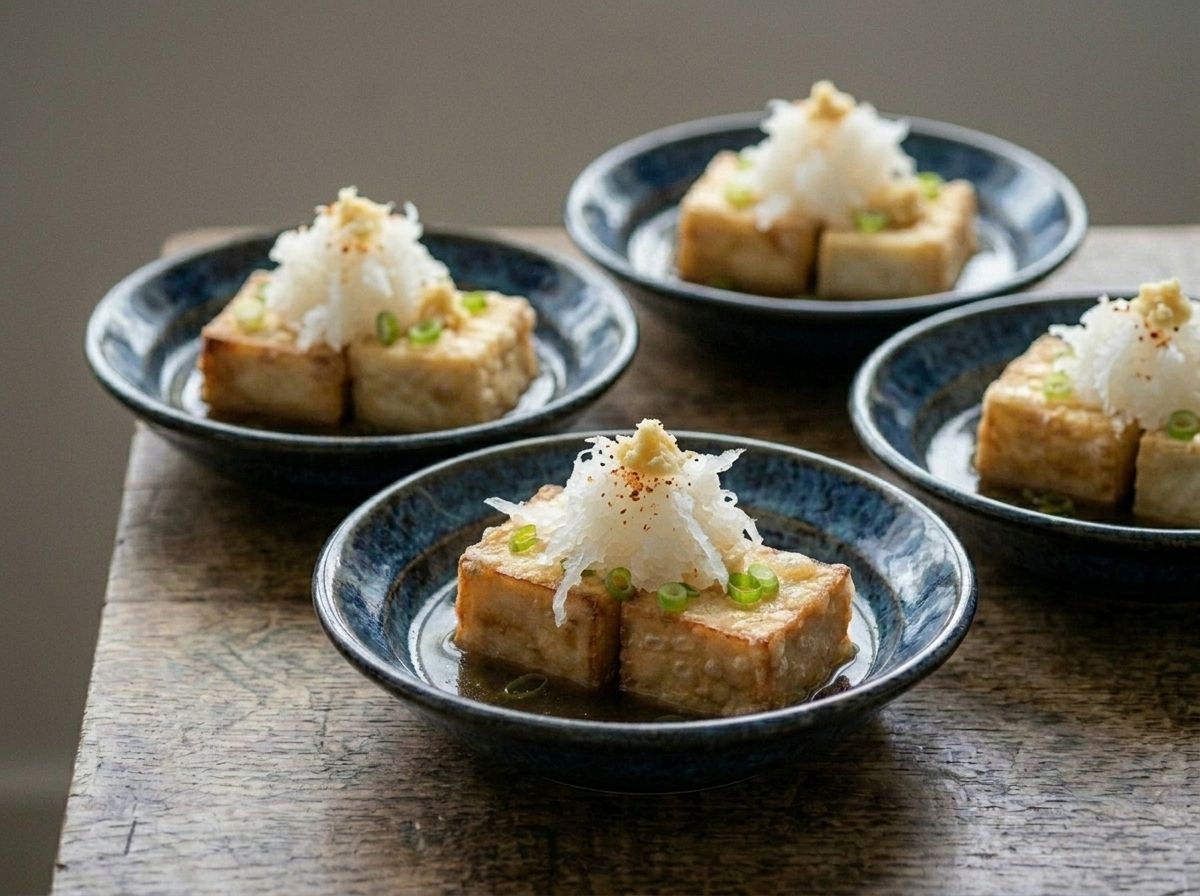
Divide the tofu between four shallow bowls. Pour the warm broth in around the base of the pieces so it comes about a third of the way up them, leaving the tops dry. Top each one with a mound of grated daikon, a little ginger and the sliced scallions, and add the nori and shichimi togarashi if you are using them. Serve immediately.
Notes
Tamari in place of soy sauce makes this gluten free. Check the mirin as well, most is fine, but a few seasoning blends list wheat.
Make the dashi double. It keeps 3 days in the fridge, freezes well, and it is the base for miso soup, so the second half is never wasted.
No thermometer: drop a wooden chopstick into the oil. A steady line of small bubbles up the sides means it is ready, a furious fizz means it is too hot.
Soft tofu is the point of the dish. Medium-firm is a reasonable compromise, extra-firm makes something else.
Nutrition Facts
4 servings · 305 g per serving
- Calories
- 233 kcal
% Daily Value*
- Total Fat
- 13.3 g17%
- Saturated Fat
- 1.2 g6%
- Sodium
- 881 mg38%
- Total Carbohydrate
- 22.5 g8%
- Dietary Fiber
- 1.8 g6%
- Sugars
- 5.9 g—
- Protein
- 7.5 g15%
Recipe from veggierecipes.blog
When it goes wrong
Troubleshooting
The oil spat and the tofu jumped when it went in
Water. Tofu that has only been lifted out of its packet is still carrying plenty of it, and water hitting 340°F oil leaves in a hurry. Drain the block for a full 15 minutes, pat the cut faces dry before the starch goes anywhere near them, and lower each piece in with a slotted spoon rather than dropping it.
The coating slid off into the broth
The starch went on too early. Potato starch against damp tofu turns to paste within a couple of minutes, and paste does not fry into a shell, it slumps off in sheets. Coat one piece at a time and put it straight into the oil. Do not set up a tray of coated cubes waiting their turn.
It was soggy by the time it reached the table
You almost certainly poured the broth over the top. Pour it around the base instead, so it comes maybe a third of the way up the pieces. What you are aiming for is a gradient rather than a uniformly crisp plate: shattering on top, and softened where the starch meets the liquid and drinks it up. That soft lower half is not the dish failing. It is the dish working, and it is the reason agedashi tofu is served in broth instead of beside it.
The tofu collapsed when I tried to turn it
Tongs. They concentrate all the pressure on two points, and soft tofu has no structure to spare. Use a spider or a slotted spoon and turn each piece once, not repeatedly. Cut the block on the plate you drained it on and slide the pieces off, rather than lifting them by hand.
The broth tastes salty and thin rather than savory
Usually one of three things. Kombu with no shiitake, which gives you a clean but hollow stock, because the depth comes from the two together and not from either alone. A steep that was cut short, when 30 minutes is the floor and a few hours is better. Or kombu that was allowed to boil, which pulls out a slick, faintly bitter edge that reads as thin. Fix the one that applies before you reach for more soy sauce, which is what most people do and which only makes it saltier.
The outside went dark before the inside was warm
The oil was too hot. Agedashi tofu wants 340°F, and it is meant to come out pale gold rather than the deep brown of karaage. Anything above about 375°F sets and colors the shell before the heat has reached the middle. Without a thermometer, drop in a wooden chopstick: a steady line of small bubbles up the sides is right, a furious fizz means wait.
Before you serve
Serving & Storage
In Japan this is izakaya food, ordered early alongside the first drink and shared. It arrives in a shallow bowl with the broth pooled underneath rather than poured over, usually two or three pieces a person, and it is a small plate rather than a main course. Treat it that way and it does what it is supposed to do: something hot and fried to start, cut through by the daikon, with a broth light enough to drink from the bowl at the end.
At home it goes well next to rice and a bowl of miso soup, which turns it into a light meal without much more work, especially since the dashi you have already made is the base for the miso soup. It also sits comfortably beside a bowl of ramen, though be aware you are then serving two broths, so keep the portions small.
Making it ahead
The dashi is the part that keeps. Make it up to 3 days ahead and refrigerate it, or freeze it in a jar, and it will be better for the longer steep rather than worse. Season it with the soy and mirin on the day. The grated daikon should be done within a few hours of serving, because it turns watery and faintly bitter as it sits.
The tofu cannot be fried in advance. There is no trick here and no oven that holds it. The shell is at its best for a few minutes and then it is on a slope, which is why this is a dish you fry with everyone already sitting down.
Storing leftovers
Honestly, it does not store well, and it is better to fry only what you will eat. Tofu left sitting in the broth in the fridge overnight comes out with no shell at all, just a soft skin. If you do have leftovers, keep the tofu and the broth in separate containers for up to 2 days. Reheat the tofu on a rack in a 400°F oven for about 8 minutes, which brings back some of the crispness, and warm the broth in a pan. A microwave steams it and you will get none of it back.
Still wondering
Frequently Asked Questions
Is agedashi tofu vegan?
The recipe on this page is. Agedashi tofu as it is normally served in a restaurant is not, and it is worth knowing why before you order it. Two things bring fish into the standard version: the dashi is usually made with katsuobushi, dried and smoked bonito, and the finished plate is often topped with a pinch more of the same flakes. Neither shows up in a menu description. If you are ordering out, ask what the broth is made from rather than whether the dish is vegetarian, because plenty of kitchens do not count bonito stock as either meat or fish.
Is agedashi tofu gluten free?
Five things go into this and only one of them is a problem. Tofu, potato starch, kombu and dried shiitake are all naturally gluten free. Soy sauce is the exception, because Japanese koikuchi is brewed from roughly equal parts soybeans and wheat. Swap in tamari at the same quantity and the dish is gluten free. If you are using bottled dashi or mentsuyu instead of steeping your own broth, read that label as well, since most of them contain wheat.
Can I make agedashi tofu in an air fryer?
Not in a way that gives you this dish, and it is better to say so than to hand you a version that disappoints. The shell here is potato starch gelatinized by contact with hot oil, which is what makes it shatter. An air fryer moves hot air instead, so the starch dries out and sets into a chalky skin. What you get is a decent piece of baked tofu in a very good broth. If you want to avoid a pan of deep oil, shallow fry instead in about half an inch of it, turning the cubes to catch each side.
Can I use bottled mentsuyu instead of making the broth?
Yes, and it is what plenty of Japanese home cooks do on a weeknight. The thing to watch is that mentsuyu is sold as a concentrate at different strengths, usually marked 2x, 3x or 4x, and the dilution is not always printed in English. For agedashi tofu you want it weaker than you would for a dipping sauce, so start at roughly 1 part mentsuyu to 4 parts water and taste it before it goes anywhere near the tofu. Read the ingredients as well, because most bottled mentsuyu is made with bonito. If that matters to you, look for a kombu-only bottle or steep the broth on this page, which needs 30 minutes and no attention.
More Japanese Bowls and Tofu Dinners
Made this?