
Meatless Baked Rigatoni Recipe
Published · Updated
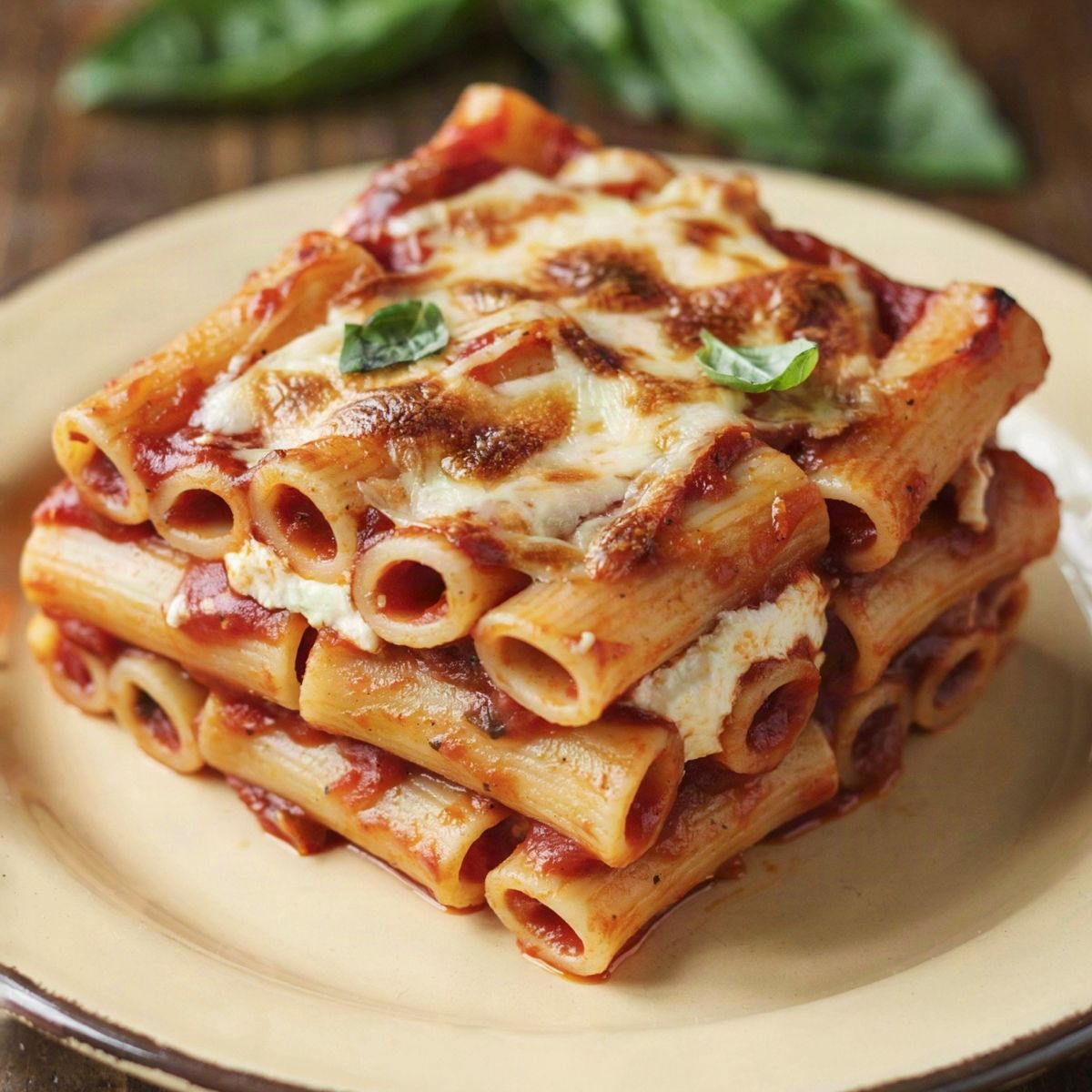
Browned mushrooms seasoned with fennel and chili do the job the sausage used to do, and pockets of melted mozzarella do the rest. Hearty, saucy and crisp at the edges.
Jump To Recipe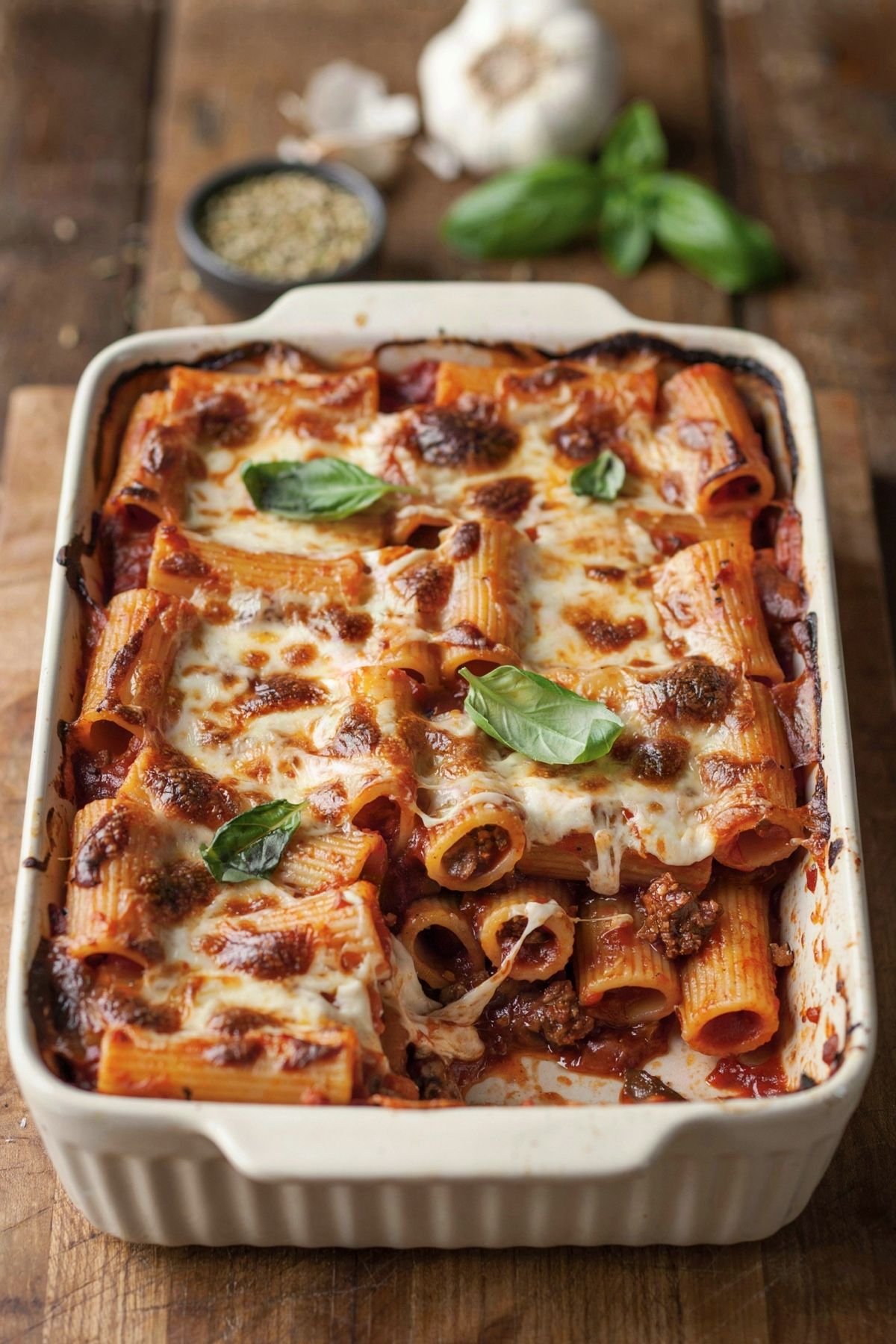
Why This Vegetarian Baked Rigatoni Wins Every Time
Whenever I’m in the mood for real comfort, nothing hits the spot quite like baked pasta, and this rigatoni version absolutely delivers. It’s the definition of crowd-pleasing: a rich, meaty-tasting tomato sauce, melted mozzarella and a top that browns and crisps at the edges.
The trick is the sauce. Most baked rigatoni gets its depth from Italian sausage, so this one borrows the sausage’s seasoning instead: mushrooms browned hard, then fennel seed and a pinch of chili. It is hearty enough that nobody at the table goes looking for the meat.
What I appreciate about this recipe:
It serves a crowd, the sauce can be made days ahead, and the mozzarella cubes buried in the middle melt into pockets you find with the spoon. Leftovers taste just as good (sometimes better) reheated the next day.
Go all-in with fresh basil on top and serve with warm garlic bread. That’s my idea of a perfect, comfort-centric meal.
The story
Rome Spent Fourteen Years Making Its Favorite Rigatoni With a Stand-In
The name is a description. Rigato means ridged, and the -oni ending makes it big: rigatoni are the big ridged ones. The grooves run the length of a wide tube cut square at both ends, and both features are there for the sauce. The ridges hold a coating on the outside, and the hollow is wide enough for chunky pieces to fall inside. That is why rigatoni turns up wherever an Italian sauce has something in it worth catching.
Rome made the shape its own. It is the trattoria pasta for carbonara and amatriciana, and for the dish Romans treat as the test of a serious kitchen: rigatoni con la pajata, made with the intestines of a milk-fed calf, still holding the milk that curdles and thickens the sauce as it cooks.
Then in 2001, at the height of the mad cow crisis, the European Union banned calf intestines from sale. Roman cooks did not drop the dish. They made it with lamb pajata instead and went on serving it under the same name until the ban was lifted in 2015. The dish was never really about the one ingredient. It was about what that ingredient did to the sauce.
Italian-American baked rigatoni works the same way. The version most people grew up with is made with sweet Italian sausage, and what they remember is less the pork than its seasoning. American sweet Italian sausage is defined by fennel seed, and the hot kind adds red pepper flakes, both carried over from the fennel-seeded sausages of southern Italy.
So this version keeps the seasoning and changes what carries it. Mushrooms pulsed to the size of crumbled sausage and browned until they stop steaming give the sauce its chew and its savory depth. Fennel seed and chili give it the taste. It is the move Rome made with the pajata, and it holds up for the same reason.
What to buy
Ingredient Notes
Rigatoni
Look for deep, rough ridges. Bronze-die pasta, labeled trafilata al bronzo, has a matte, dusty surface that holds sauce far better than the slick yellow kind. Mezze maniche, the short rigatoni, work and pack the dish more tightly. Penne and ziti work too, but both are narrower, so the mushroom pieces sit outside the tubes instead of falling in, and you get pasta with sauce on it rather than in it.
Cremini mushrooms
Cremini, sold as baby bella, hold less water and more flavor than white button mushrooms, so they brown sooner. Rinse them quickly just before chopping rather than soaking them. Portobellos work with the gills scraped out; left in, the gills turn the sauce a muddy gray-brown. Shiitake caps make it deeper still, up to a quarter of the weight, but discard their stems, which stay woody however long they cook.
Fennel seeds
This is the ingredient that makes the dish taste like the sausage version. Crush the seeds lightly under the flat of a knife or in a mortar so they split; whole seeds stay as hard little pellets and taste bitter when you bite one. Ground fennel works at half the amount. Fresh fennel bulb is not a swap: it brings a faint sweetness, none of the warmth, and more water for the pan to deal with.
Low-moisture mozzarella
Buy the firm block sealed in plastic, not the soft balls packed in water, which give their water to the dish. Cube half and shred half. The cubes, buried in the middle, melt into soft pockets that stretch when you scoop; the shredded half on top browns. Pre-shredded bags are coated in starch and melt grainy. For a smoky note closer to the sausage version, make half of it smoked mozzarella or scamorza.
Marinara and tomato paste
Taste the jar before you start, because it does much of the seasoning and a sweet sauce stays sweet. Tomatoes first on the label and no added sugar is the one to buy. Three cups is a full 24 ounce jar plus a little, so a 32 ounce jar is the easy buy. The tomato paste, fried until brick red, is what gives a jarred sauce enough body to cling to the mushrooms.
Vegetarian parmesan
Parmigiano Reggiano is never vegetarian, because its rules require calf rennet, and neither are Grana Padano or most Pecorino Romano. Look for a hard Italian-style cheese labeled vegetarian or made with microbial rennet. Half goes into the sauce as seasoning and half on top for browning, so do not skip it; extra salt will not replace the savory edge it brings.
Vegetarian Baked Rigatoni
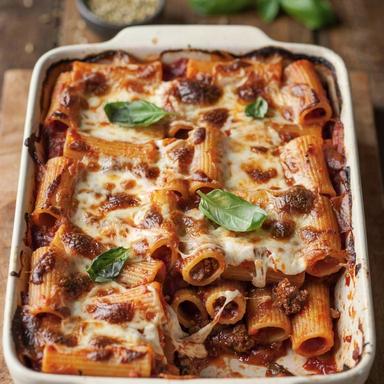
Rigatoni baked in a marinara built on hard-browned mushrooms seasoned with fennel and chili, with pockets of melted mozzarella in the middle and a browned, crisp-edged top.
Ingredients
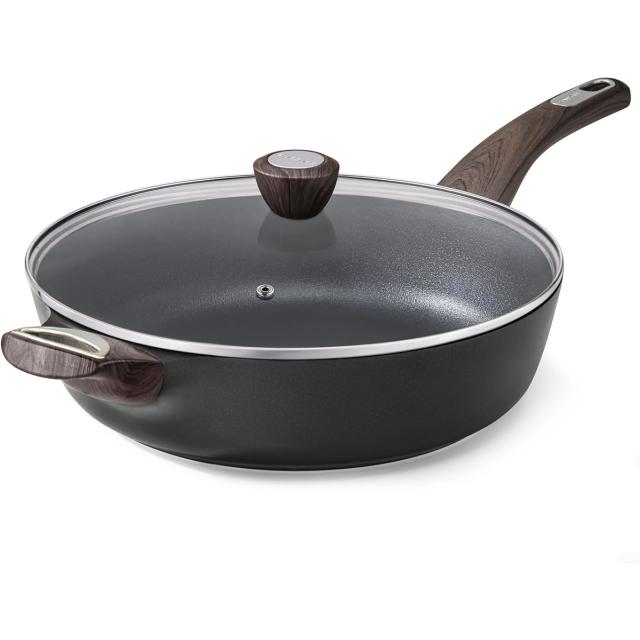
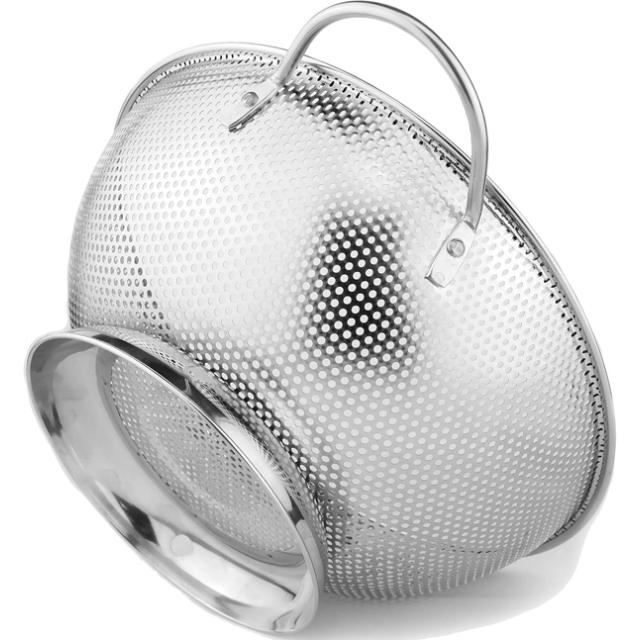
Equipment
As an Amazon Associate I earn from qualifying purchases, at no extra cost to you.
Instructions
- 1
Heat the oven and the water
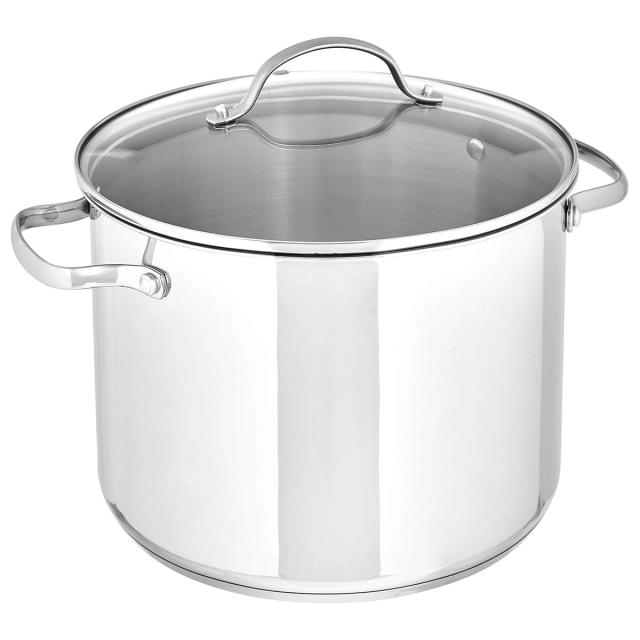
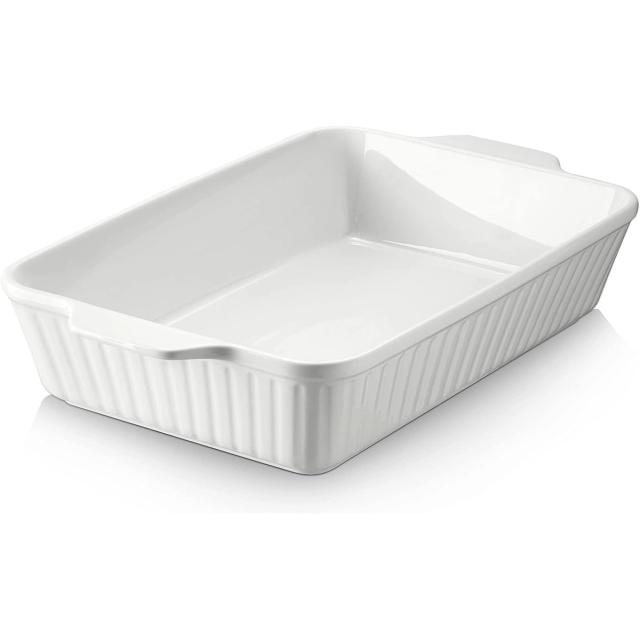
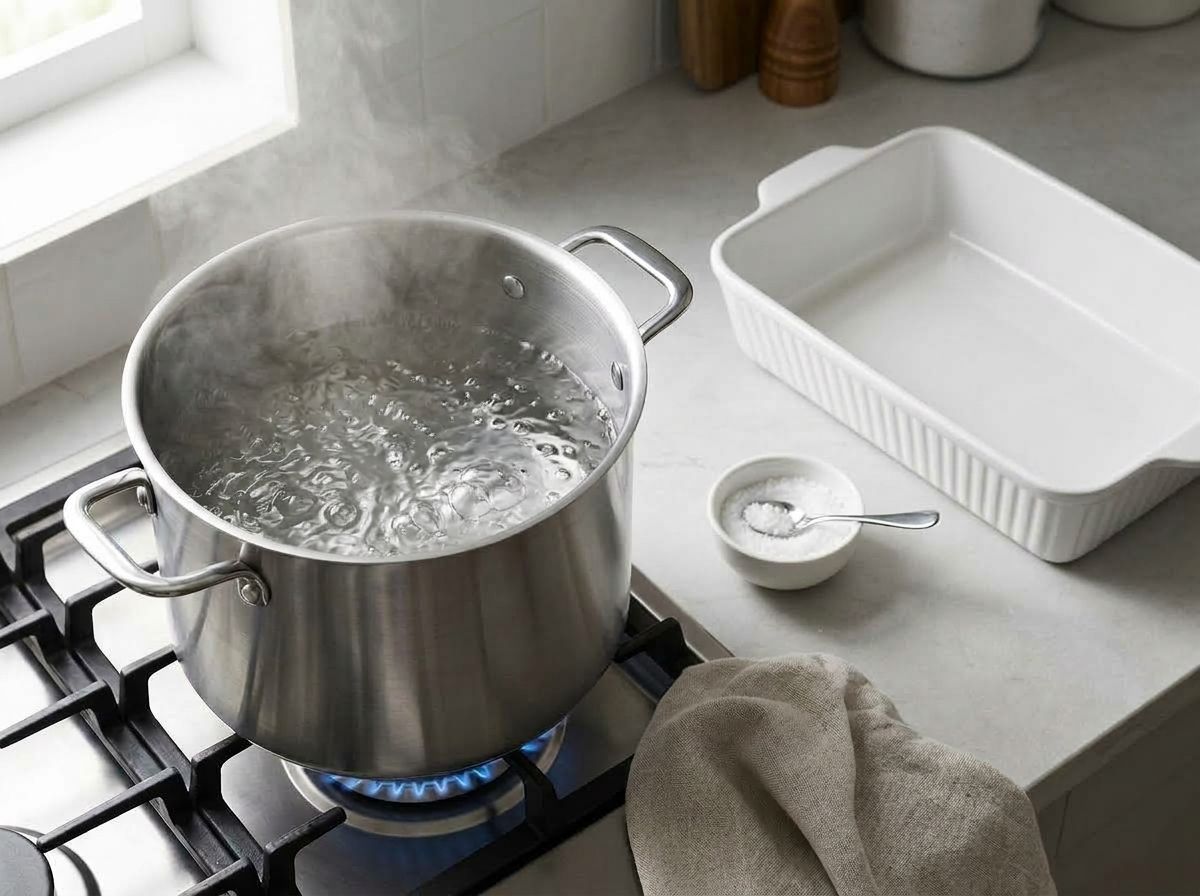
Heat the oven to 400°F (200°C) and lightly oil a 9×13 inch baking dish. Bring a large pot of water to a boil and salt it well, about 1 tablespoon for every 4 quarts. Start the water first: it takes longer to boil than the mushrooms take to chop.
- 2
Pulse the mushrooms
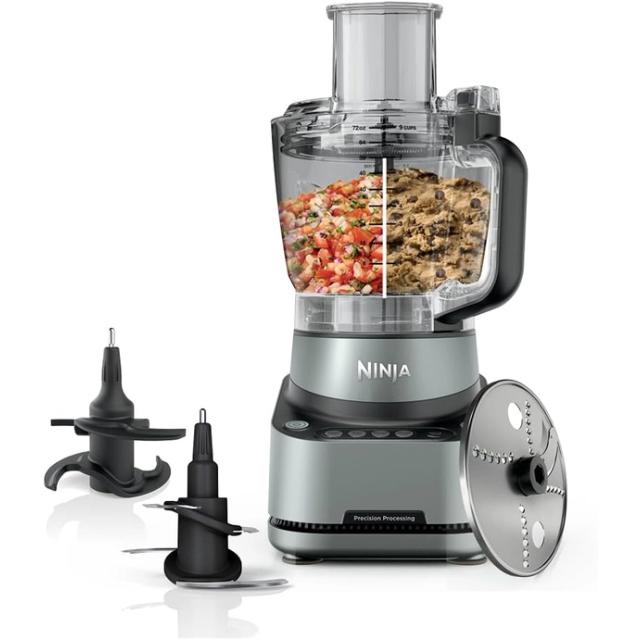
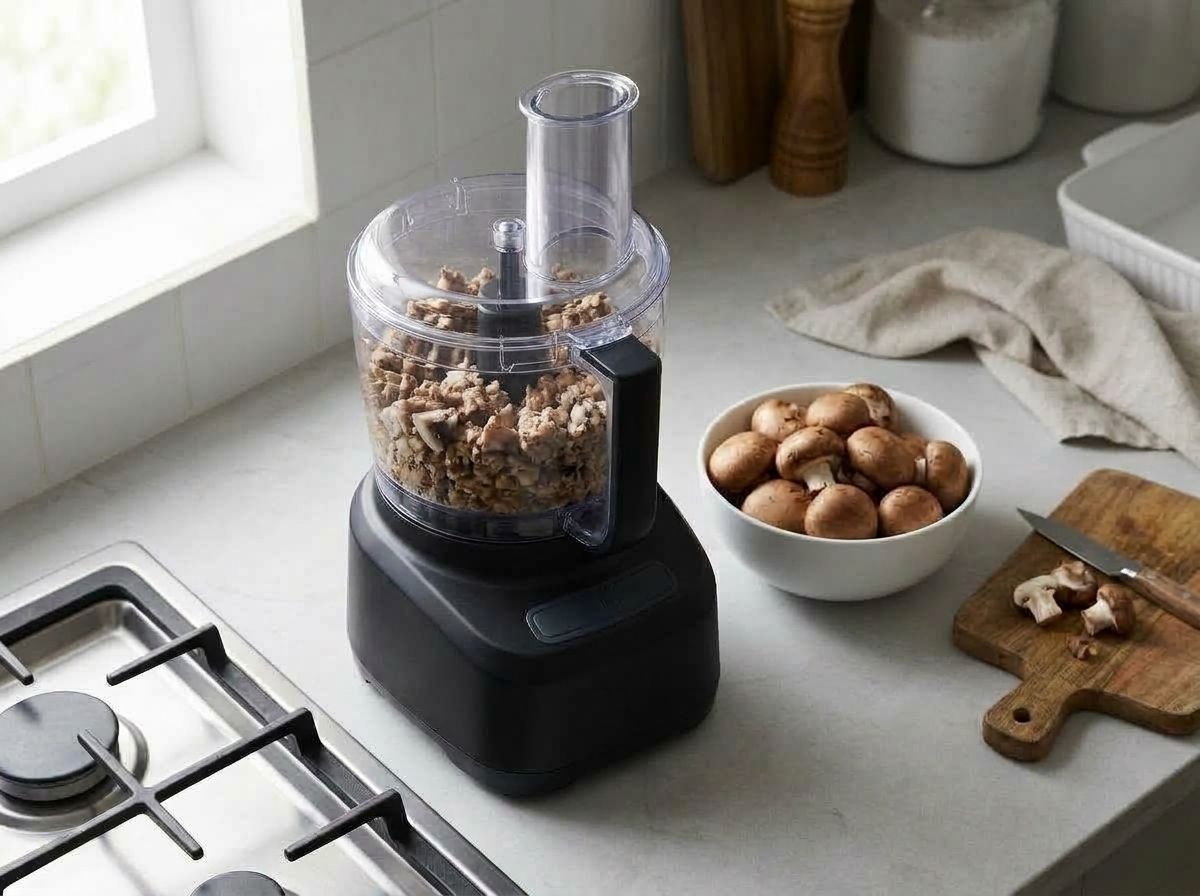
Trim the ends of the stems and pulse the mushrooms in a food processor in two batches, 8 to 10 short pulses each, until they are in pieces about the size of crumbled sausage. Stop before they go to paste. Uneven pieces, some larger than others, are what you want.
- 3
Brown the mushrooms hard
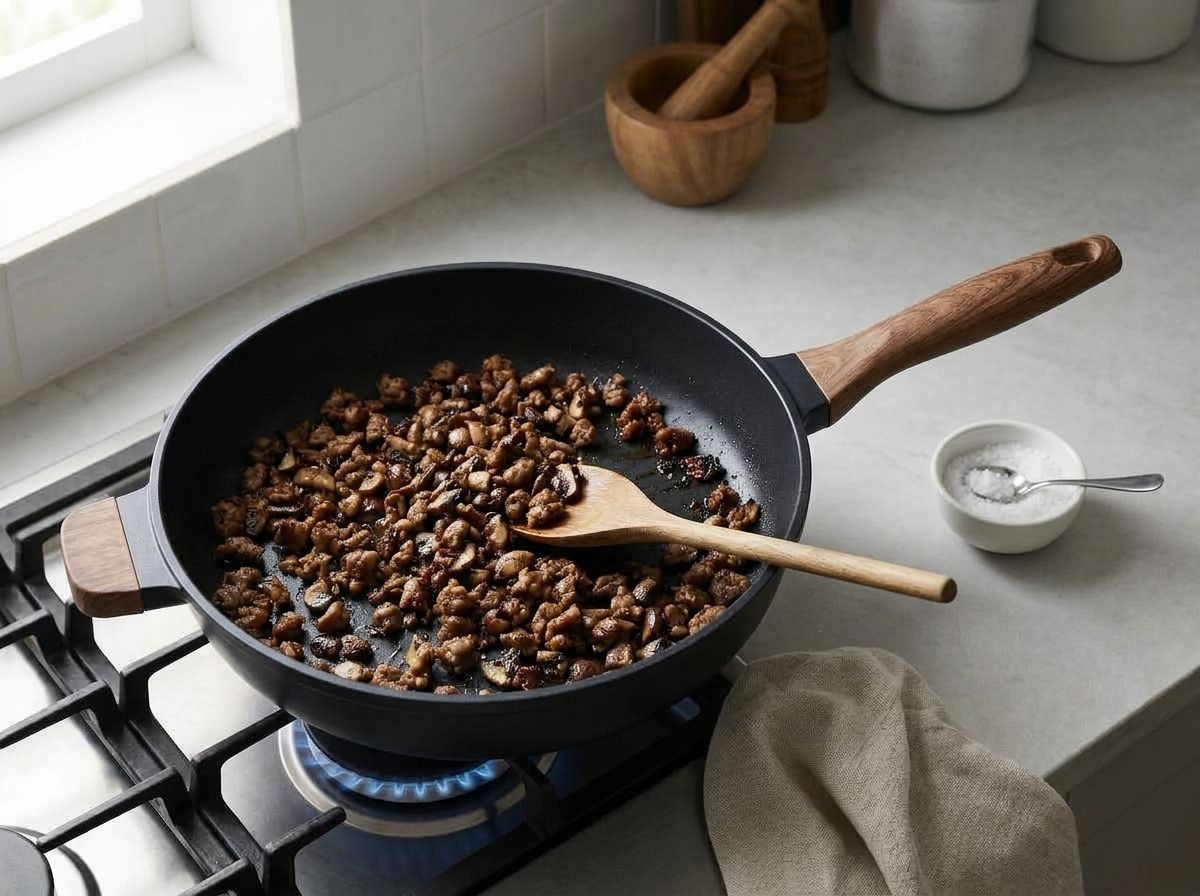
Heat the olive oil in a large skillet over medium-high heat. Add the mushrooms with ½ teaspoon salt and spread them out. They will throw off a lot of liquid. Keep cooking, stirring every minute or two, until it has boiled away and the pan starts to sizzle again, then let them sit and brown, 12 to 15 minutes in all. They are ready when they are deep brown and have shrunk by about two thirds.
- 4
Build the sauce
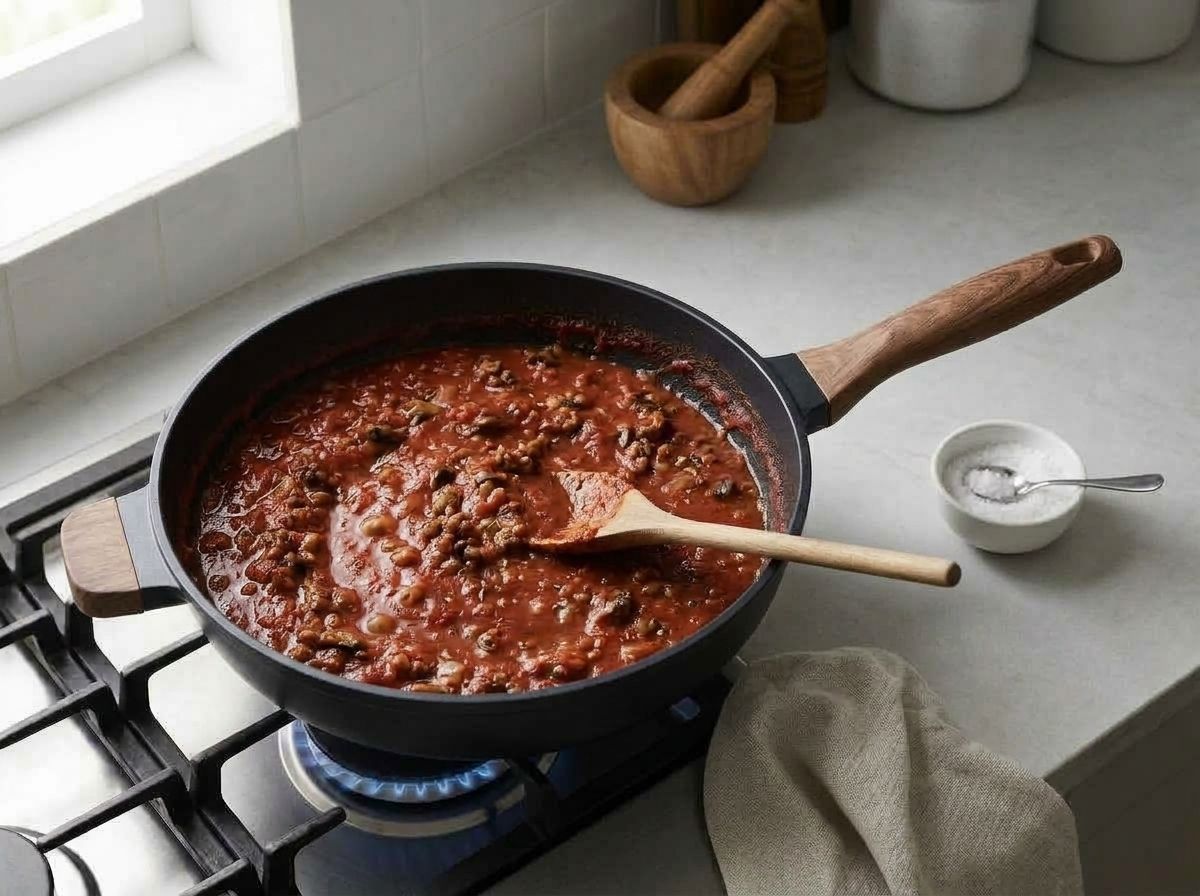
Turn the heat to medium, add the onion and cook for 5 minutes until soft. Add the garlic, fennel seeds, red pepper flakes and oregano and stir for 1 minute, until the fennel smells sweet. Stir in the tomato paste and cook it for 2 minutes, until it darkens to brick red. Pour in the marinara, scrape up the browned bits from the pan and simmer gently for 5 minutes. Taste, and season with salt and pepper.
- 5
Boil the rigatoni short
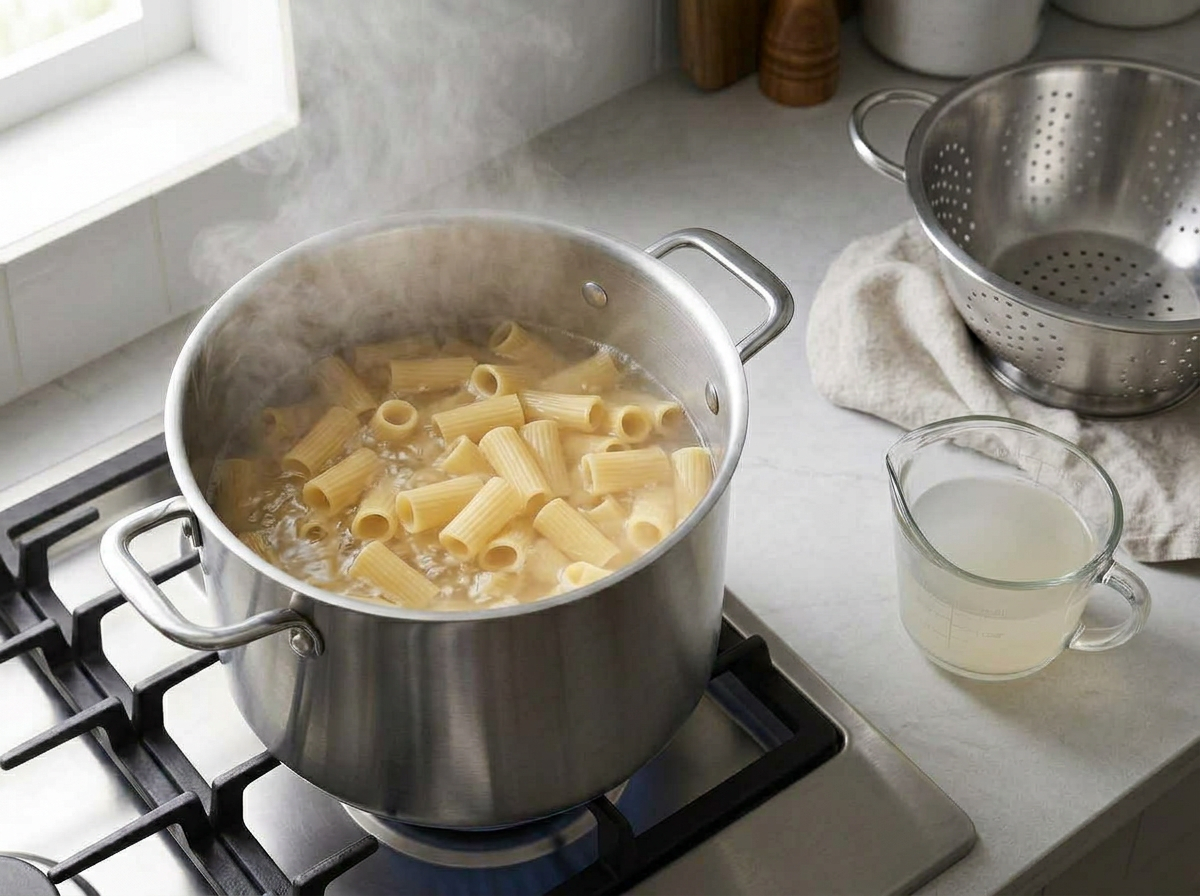
While the sauce simmers, cook the rigatoni for 3 minutes less than the package time for al dente. Bite one: the center should still be stiff and chalky. Scoop out 1 cup of the cooking water, then drain.
- 6
Toss the rigatoni in the sauce
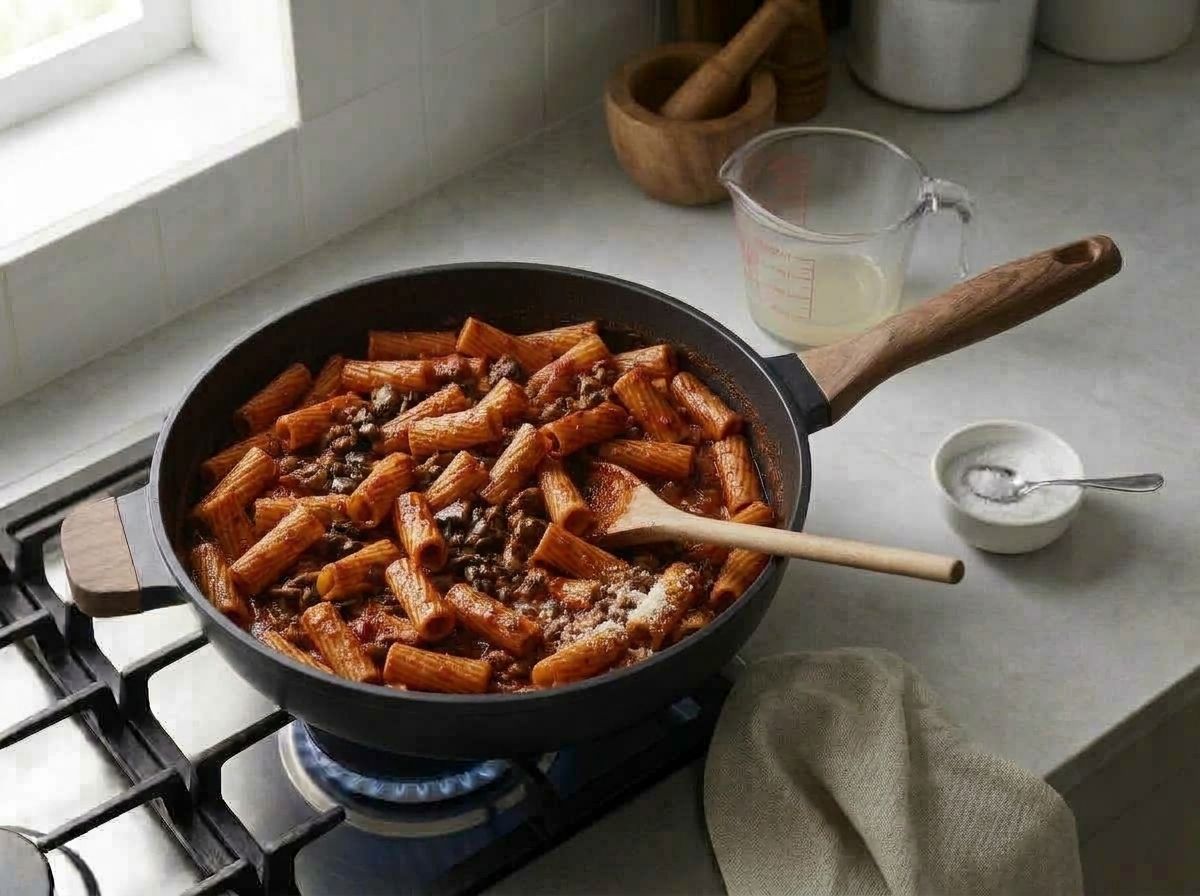
Tip the drained rigatoni into the skillet with the sauce and half the parmesan, or into a large bowl if the skillet will not hold it all. Toss until the sauce has worked its way inside the tubes, adding the reserved pasta water a splash at a time, usually about ½ cup, until it looks looser and wetter than a finished pasta should. The pasta drinks the rest in the oven.
- 7
Layer in the mozzarella
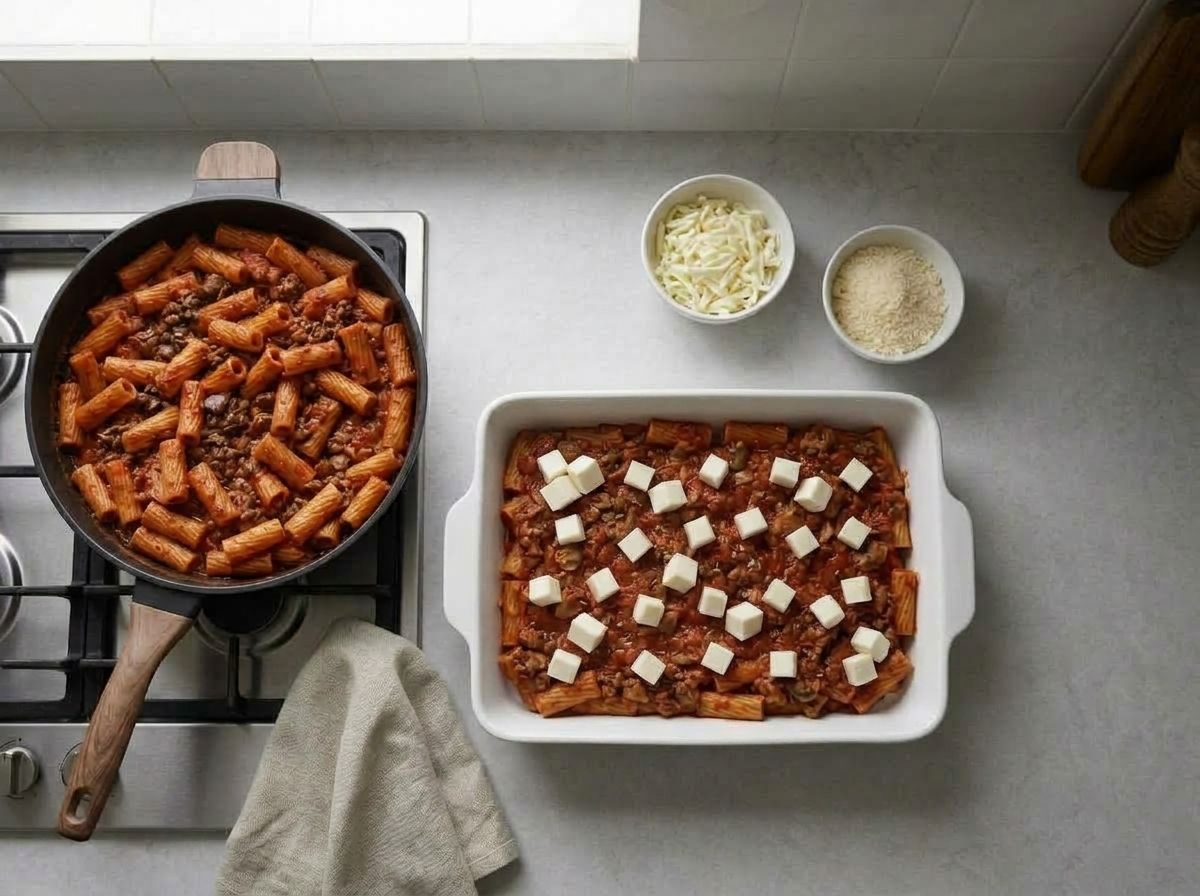
Spoon half the pasta into the baking dish and scatter the mozzarella cubes over it, then add the rest of the pasta, so the cubes sit in the middle and melt into pockets rather than browning. Scatter the shredded mozzarella and the remaining parmesan over the top. Stand a few rigatoni on end in the top layer if you like; their rims crisp in the oven.
- 8
Bake uncovered
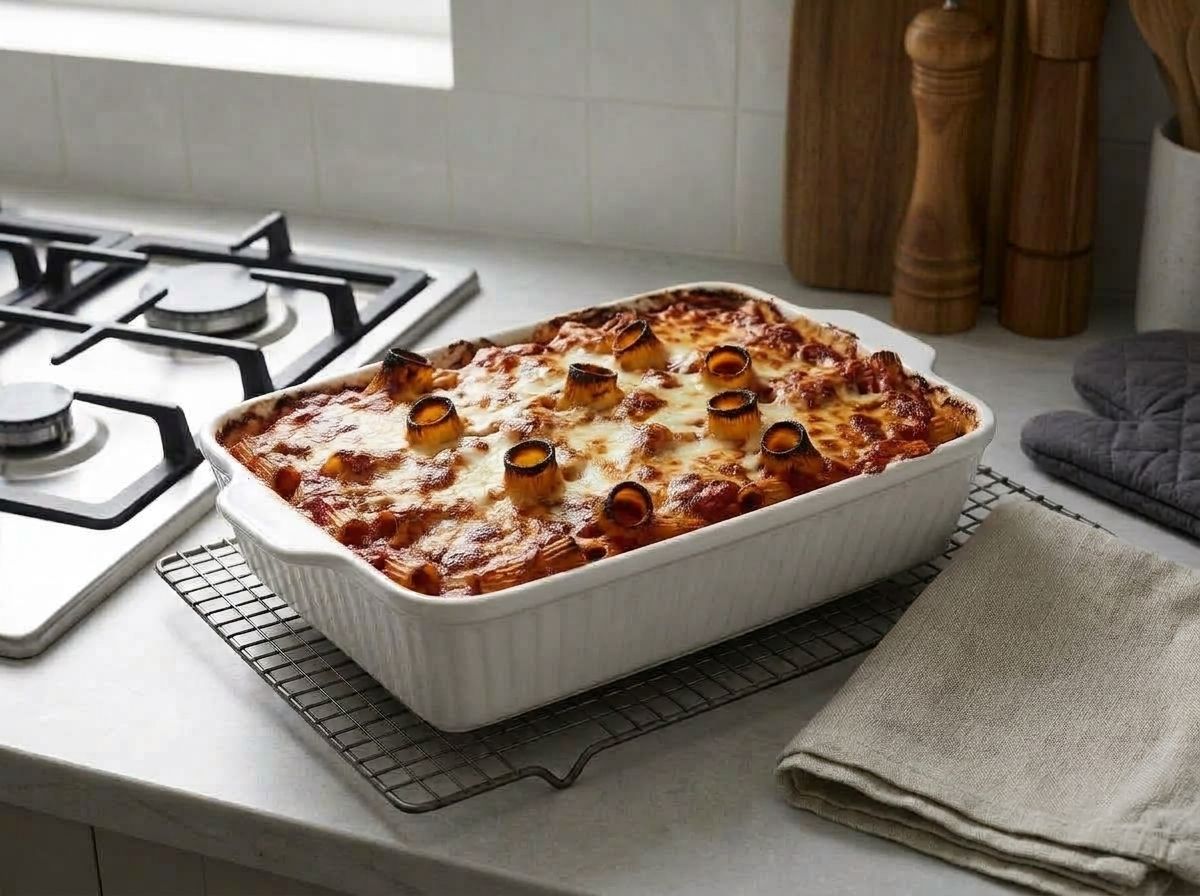
Bake uncovered for 20 to 25 minutes, until the sauce is bubbling at the edges of the dish, not only in the middle, and the cheese has browned in patches. A few tube ends on top will have crisped and caught, which is the part people reach for.
- 9
Rest, then spoon it out
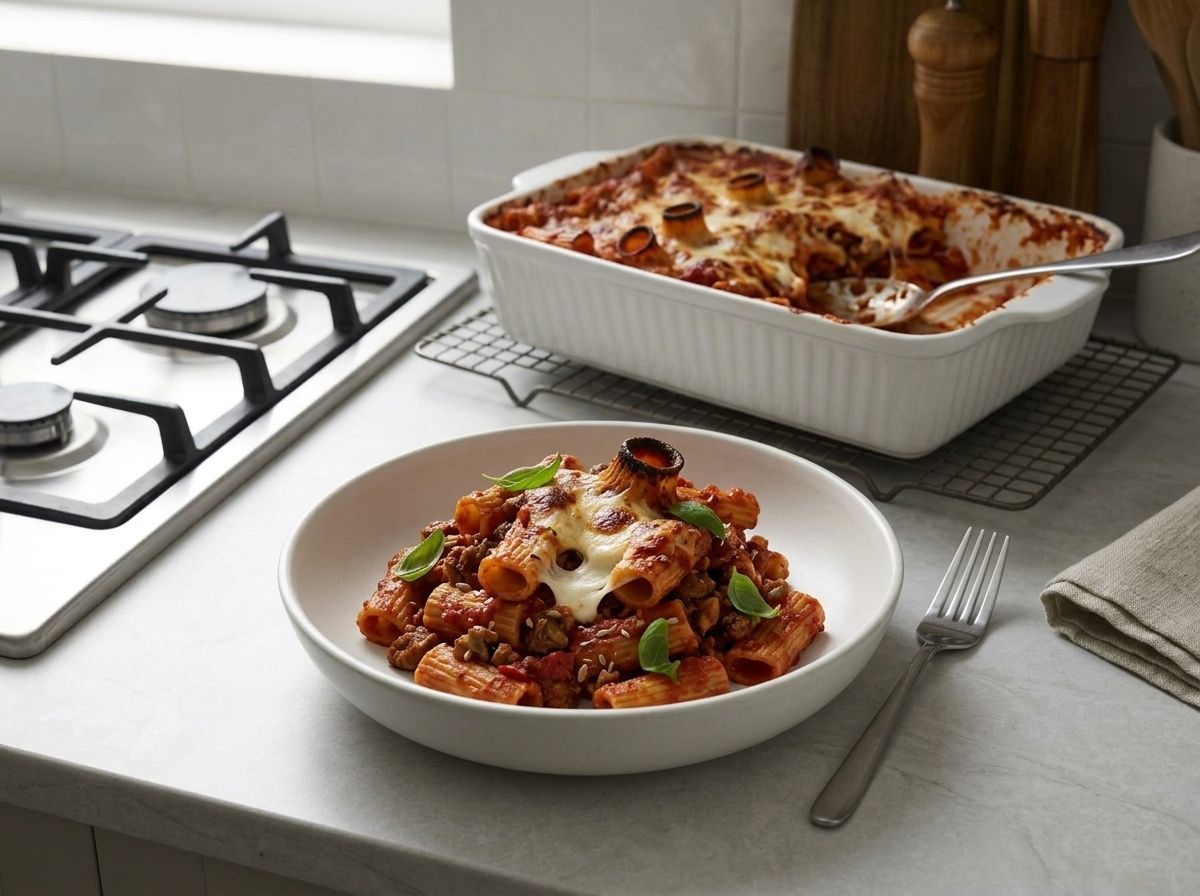
Let the dish stand for 10 minutes so the sauce thickens back around the pasta. Scatter with torn basil and serve it with a large spoon, scooping down to the bottom so everyone gets some of the melted middle.
Notes
Boil the rigatoni 3 minutes short of the package al dente. It cooks again in the oven, and rigatoni that goes in soft comes out split along its ridges.
If the top has melted but not browned by 25 minutes, run it under the broiler for 2 minutes and stay at the oven door.
Nutrition Facts
6 servings · 333 g per serving
- Calories
- 460 kcal
% Daily Value*
- Total Fat
- 16 g21%
- Saturated Fat
- 6.7 g34%
- Sodium
- 1226 mg53%
- Total Carbohydrate
- 57.9 g21%
- Dietary Fiber
- 5 g18%
- Sugars
- 9.4 g—
- Protein
- 23.4 g47%
Recipe from veggierecipes.blog
When it goes wrong
Troubleshooting
The mushrooms stayed gray and rubbery
They steamed instead of browning. A pound of chopped mushrooms in a small pan, under a lid or over medium heat sits in its own liquid, and nothing browns in water. Use your widest skillet over medium-high heat, keep going when the liquid appears, and wait for the sizzle to come back. Browning only starts once the pan is dry, which takes most of the 12 to 15 minutes.
It tastes like mushroom pasta, not baked rigatoni
Either the fennel went in whole or the mushrooms stopped short of brown. Crushed fennel seed toasted for a minute in the oil is the taste people remember from the sausage version; whole, it barely registers. Pale mushrooms taste earthy and wet, deep brown ones taste meaty. Then check the salt: underseasoned, the sauce tastes of mushroom first and everything else second.
The rigatoni split along the ridges and went flat
It went into the oven already cooked. Rigatoni has thin walls for its width, and once they soften they tear along the grooves and the tubes collapse, taking the hollows that hold the sauce with them. Boil it 3 minutes short of the package al dente and bite one: stiff and chalky in the middle is right. Twenty-five minutes in hot sauce finishes the job.
It was dry and tight by the time it reached the table
There was not enough liquid going in. The pasta keeps absorbing in the oven and an uncovered dish loses steam too, so it has to look too saucy when it goes in, looser than you would ever serve it. That is what the reserved pasta water is for. If the dish is already baked, spoon a little warm marinara over each portion.
There is an orange slick of oil across the top
The cheese baked past the point where the fat holds. Mozzarella browns, then breaks, and the fat runs out and picks up color from the sauce. Take the dish out when the top is browned in patches, not all over, and keep the cubes in the middle where the pasta insulates them. A heavy pour of olive oil in the sauce adds to it.
The tube ends on top went hard and crunchy
A few crisp, chewy rims are the point of an uncovered bake, and in Italy the browned top is the most fought-over part of a pasta al forno. Hard all over is different: those tubes had no sauce inside them. Toss until the sauce is inside the pasta, not just on it, and stand only a handful on end.
Before you serve
Serving & Storage
In southern Italy a pasta al forno is Sunday or feast-day food, and it is the first course rather than the whole meal. You do not have to eat it that way, but it explains what it wants next to it: something green and sharp, not more starch. Garlic bread is the American habit and it works. Better is broccoli rabe or broccolini sautéed with garlic and chili and finished with lemon, or a shaved fennel and orange salad, which picks up the fennel in the sauce. For wine, a Montepulciano d’Abruzzo, or Cesanese for a Roman nod.
Scoop it, do not cut it. This is not a casserole that holds a square and it should not be. It should slump a little on the plate, with the melted middle showing.
Making it ahead
The mushroom sauce is the part worth making ahead. It keeps 3 days in the fridge and 3 months in the freezer, and with it ready the dish is boil, toss and bake. You can also assemble the whole dish up to 24 hours ahead, covered in the fridge, then bake it uncovered for 30 to 35 minutes. Toss it with an extra ¼ cup of pasta water if you do, because the pasta keeps drinking in the fridge. Freezing it assembled works, but the half-cooked rigatoni comes out softer; freezing the sauce costs nothing.
Storing leftovers
Airtight in the fridge for up to 4 days. Reheat covered with foil and a few tablespoons of water at 350°F (175°C) for about 20 minutes, or in the microwave with a splash of water and a lid. Uncovered, the crisp tube ends go from chewy to hard. The mozzarella pockets will not stretch the way they did on the first night, which is the one thing reheating cannot bring back.
Still wondering
Frequently Asked Questions
Can I add vegetables?
Yes, up to about 3 cups, cooked, folded in when you toss the pasta with the sauce. Roasted zucchini, peppers or eggplant work best, because roasting has already driven off their water. Spinach works if it is wilted and wrung dry: a 10 ounce bag cooks down to less than a cup. Raw vegetables do not cook through in 25 minutes and water the dish down as they try. Use a little less pasta water to make up for the extra bulk.
Can I make it gluten-free?
Yes, with gluten-free rigatoni and one change: boil it 1 minute short of the package time rather than 3. Corn and rice pasta has no gluten holding it together, so it splits much sooner than wheat and cannot sit in sauce as long. Check the marinara label too, since a few jarred sauces are thickened with wheat.
Can I make it vegan?
The sauce already is: mushrooms, olive oil, tomato and seasoning. Swap the mozzarella for a vegan one sold for melting, and the parmesan for a vegan hard cheese or 3 tablespoons of nutritional yeast stirred into the sauce. Expect a paler top, because most vegan mozzarellas melt without browning; a 2 minute pass under the broiler helps.
More Cozy Baked Pasta Classics
Made this?