
Meatless Split Pea Soup Recipe
Published · Updated
A cozy bowl of split pea soup loaded with veggies, perfect for a nourishing and satisfying meatless meal.
Jump To Recipe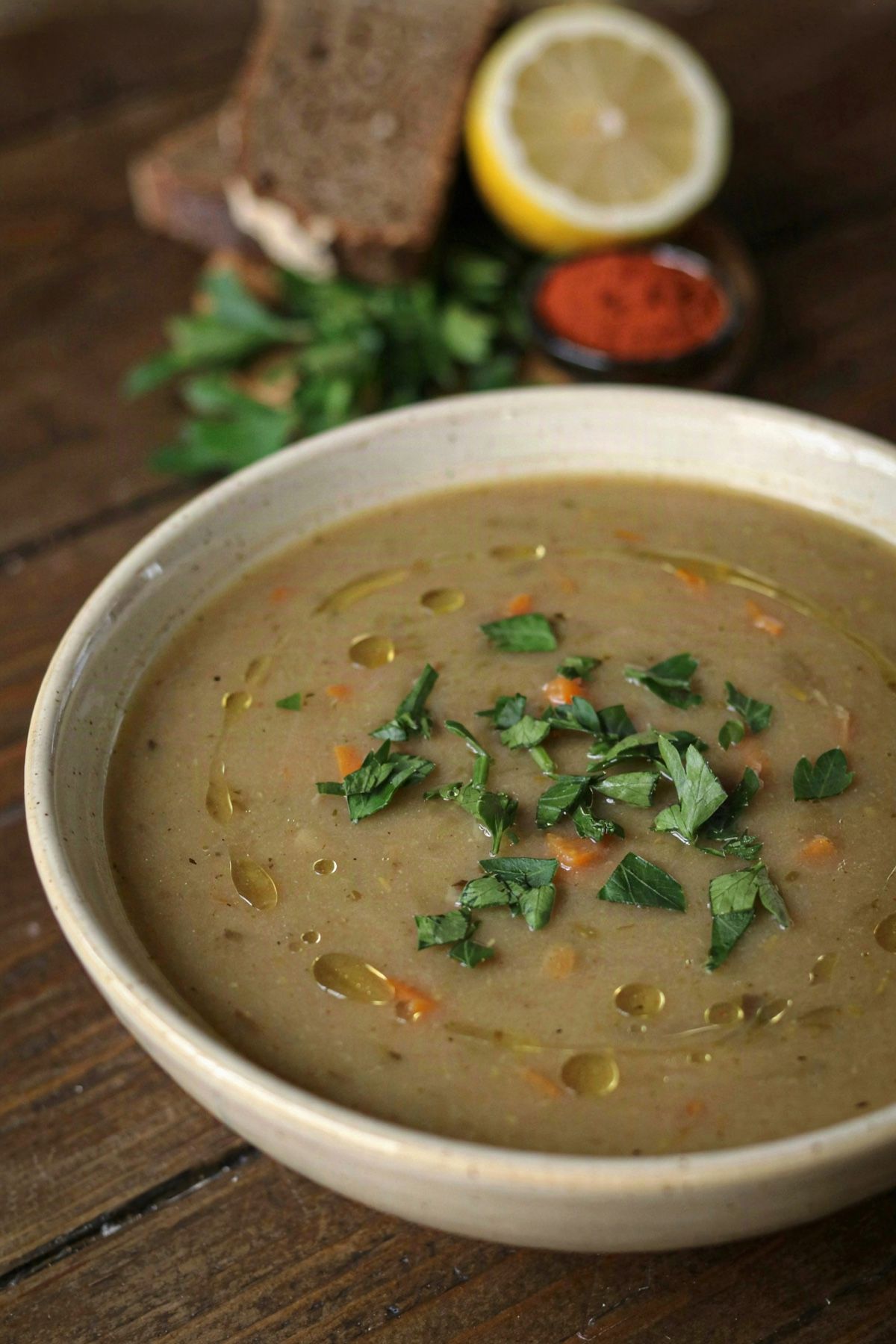
Why I Keep Coming Back to This Split Pea Soup
There’s something incredibly satisfying about making a big pot of split pea soup from scratch, especially when you know it’s 100% meatless but still robust enough to leave you feeling full and fueled.
The combination of split peas, carrots, celery, and onion is classic for a reason. You get a balance of creamy texture, subtle sweetness, and the thyme underneath it. What took me longest to work out was that the smoke a ham hock used to bring is not optional seasoning, it is the thing holding the bowl together, and smoked paprika does it without pretending to be meat.
What I especially value about this recipe:
- It uses basic, readily available ingredients.
- It’s packed with plant-based protein and fiber, keeping you full for hours.
- Leftovers reheat beautifully, sometimes it tastes even better the next day.
Personal tip: the tablespoon of lemon juice at the end is the step people skip and then wonder why their pea soup tastes heavy. Add it off the heat, taste, and only then decide about salt.
If you’re like me and want classic comfort with minimal fuss, this split pea soup delivers every time. Whether you eat it with crusty bread or just a big spoon, it’s a staple in my kitchen once the weather turns cool.
The story
Meatless Split Pea Soup Is the Older Recipe
Pea soup is roughly two and a half thousand years old. Aristophanes puts it in ‘The Birds’, and vendors in the streets of Athens sold it hot from the pot while the Greeks and Romans were cultivating the legume around 500 to 400 BC. The Greek version, etnos, was cheap food and everybody knew it. That is why it survived: dried peas kept through a winter in a sack, and before the potato reached northern Europe they were the storable protein a household could count on.
Medieval England ate the same thing as pease pottage, the pot the nursery rhyme is describing when it gets to ‘nine days old’. That pot was topped up rather than emptied, and for most of its life it held peas, water and an onion. Meat was what you added when you had it.
The pork arrived later and locally. Sweden has eaten ärtsoppa on Thursdays since the Middle Ages, and the salt pork went in because Thursday was the meat day before Friday’s fast. The Protestants scrapped the fasting rules in the 1520s and the soup stayed on Thursday anyway, where the Swedish armed forces still serve it five centuries later. The Dutch built snert around smoked sausage, Quebec turned yellow peas into soupe aux pois. Each is a regional addition to a dish that already existed.
So a vegetarian split pea soup is not a recipe with the ham hock taken out. The peas are the constant and the meat is the variable. What the pork contributed was smoke and salt, which is why this version uses smoked paprika and a spoon of tamari rather than pretending the gap is not there.
One footnote for anyone who has heard the soup called a London particular. The name went in the direction you would not expect. London’s yellow-green coal fogs were called particulars first, Dickens has a character explain the term in ‘Bleak House’ in 1852, and the soup was named after the weather. The fogs ended with the Clean Air Act in 1956. The soup kept the name.
What to buy
Ingredient Notes
Green split peas
Green and yellow split peas swap at the same weight and the same timings. Green is the default in the US and the UK, yellow in Scandinavia, the Netherlands and Quebec, and yellow tastes marginally earthier. Age matters far more than color. Peas over a year in the cupboard can simmer for two hours and stay chalky, and nothing about a dry pea shows you how old it is, so buy from a shop with turnover rather than using the bag from the back of the pantry.
Smoked paprika
This is the ingredient doing the ham hock’s job, so it is not the place for whatever paprika is open. Sweet or hot paprika adds color and no smoke at all. You want Spanish pimentón de la Vera, cold-smoked over oak, in the dulce grade. If you keep liquid smoke instead, use ½ teaspoon at the end in place of the paprika and taste before adding more. Chipotle powder works too, but brings heat with it.
Vegetable broth
Use low-sodium broth, or half broth and half water salted by you. A bowl of this comes out around 1,650 mg of sodium and almost all of it arrives in the carton. The soup reduces for over an hour, so whatever salt starts in the pot concentrates, and a broth that tasted fine from the spoon will be aggressive by the time the peas collapse.
Tamari
One tablespoon, nowhere near enough to taste of soy. It supplies the glutamates the pork used to, and its absence is most of why a meatless pea soup can taste correct and still seem unfinished. Tamari rather than soy sauce keeps the soup gluten free, since soy sauce is brewed with wheat. Use soy sauce if gluten is not a concern, or a tablespoon of white miso stirred in off the heat.
Lemon juice
Bottled is fine, nobody will taste the difference. When it goes in is the part that matters. Acid firms the pectin in a legume’s cell walls, so a squeeze at the start of the simmer can leave the peas separate and chalky ninety minutes later. Off the heat, at the end, after they have collapsed.
Fresh parsley (optional)
Flat-leaf, chopped just before it goes on, because parsley chopped in advance darkens and loses the point. Optional because the soup works without it, though a bowl of split pea soup is a uniform green-brown and parsley does more work here than garnishes usually do.
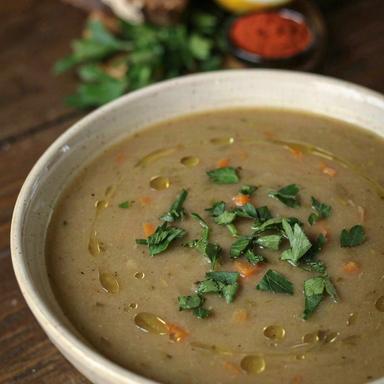
Hearty Meatless Split Pea Soup
Hearty vegetarian split pea soup, simmered low with carrots, celery and smoked paprika until the peas collapse, then finished with lemon.
Ingredients
Equipment
As an Amazon Associate I earn from qualifying purchases, at no extra cost to you.
Instructions
- 1
Rinse and sort the peas
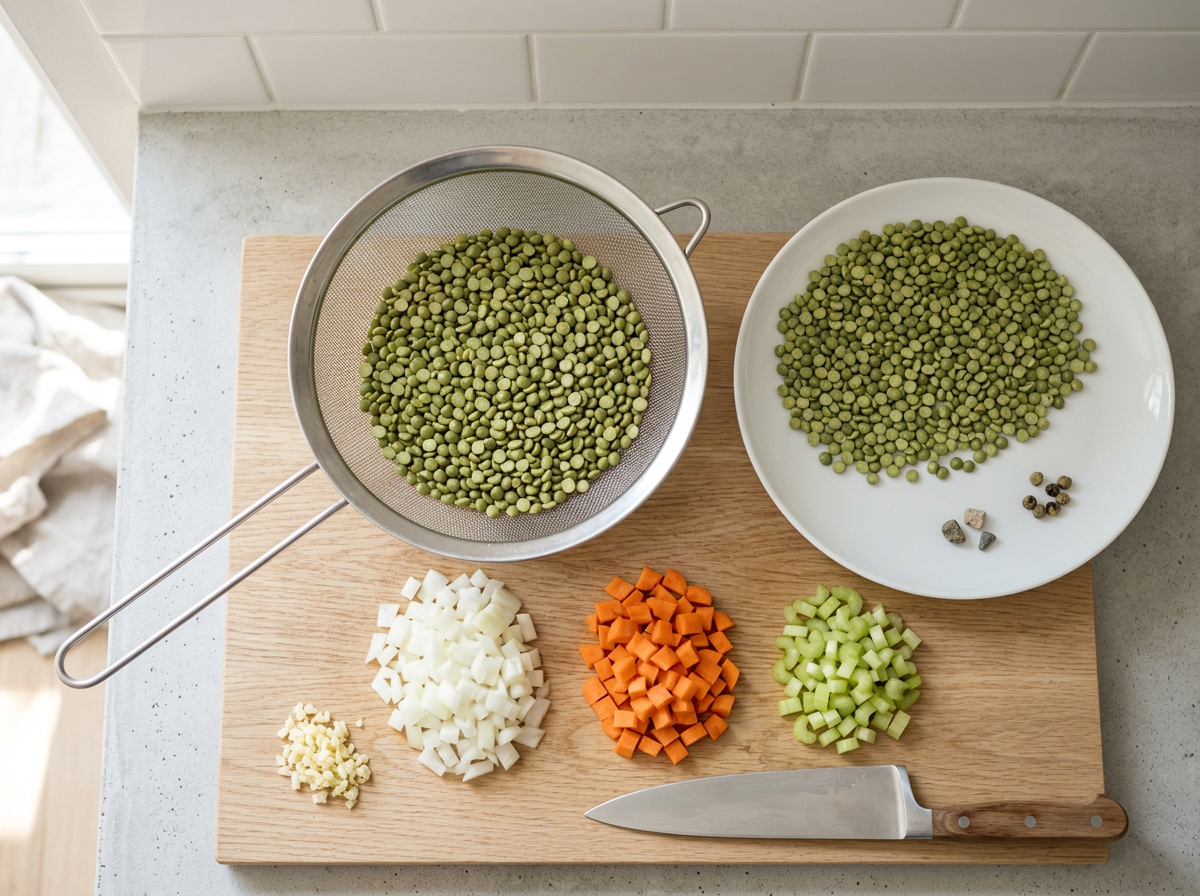
Rinse the split peas in a sieve under cold water, then spread them on a plate and pick out any grit or small stones. Chop the onion, carrots and celery into even 1 cm (½ inch) dice and mince the garlic.
- 2
Soften the vegetables
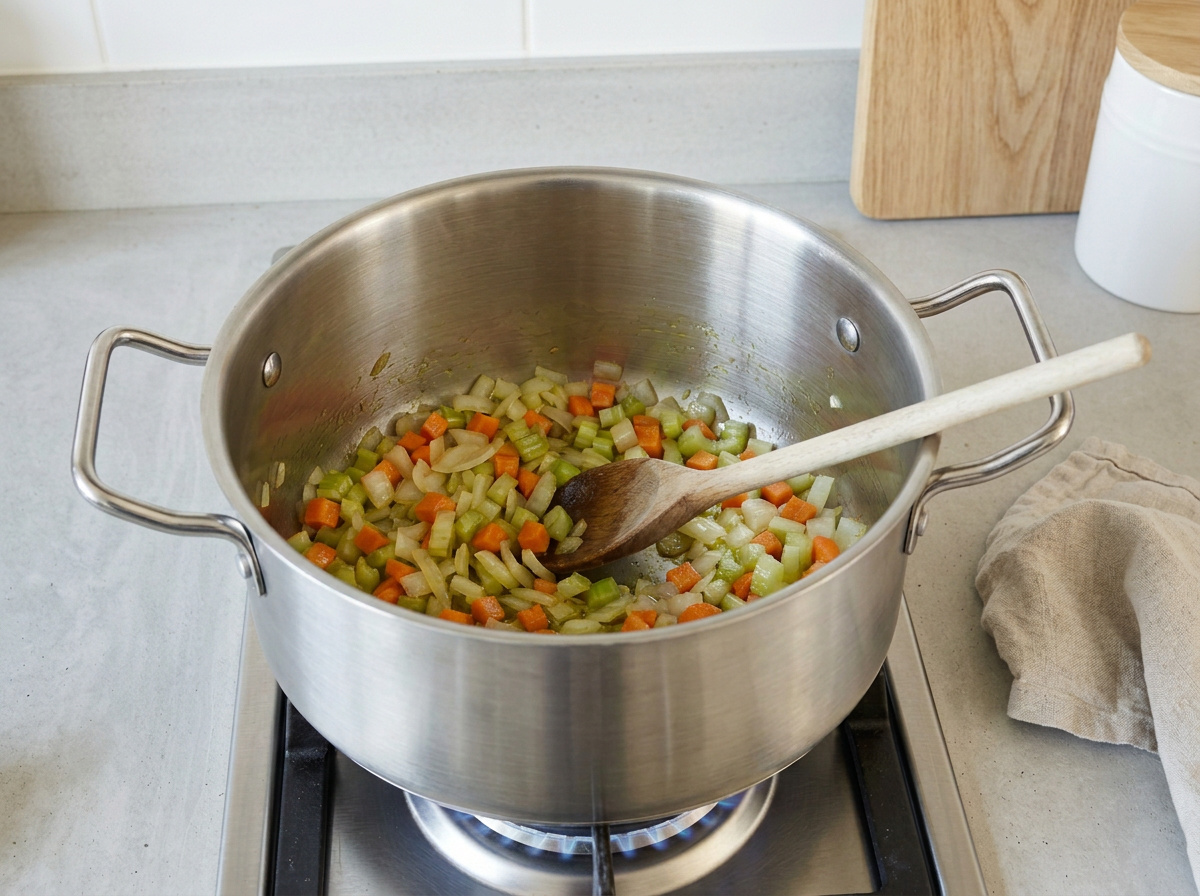
Heat the olive oil in a large pot over medium heat. Add the onion, carrots and celery with a pinch of salt and cook for 8 to 10 minutes, stirring now and then, until the onion is translucent and the celery has gone limp. Give it the full ten minutes, this is the only flavor the soup builds before the long simmer.
- 3
Bloom the garlic and paprika
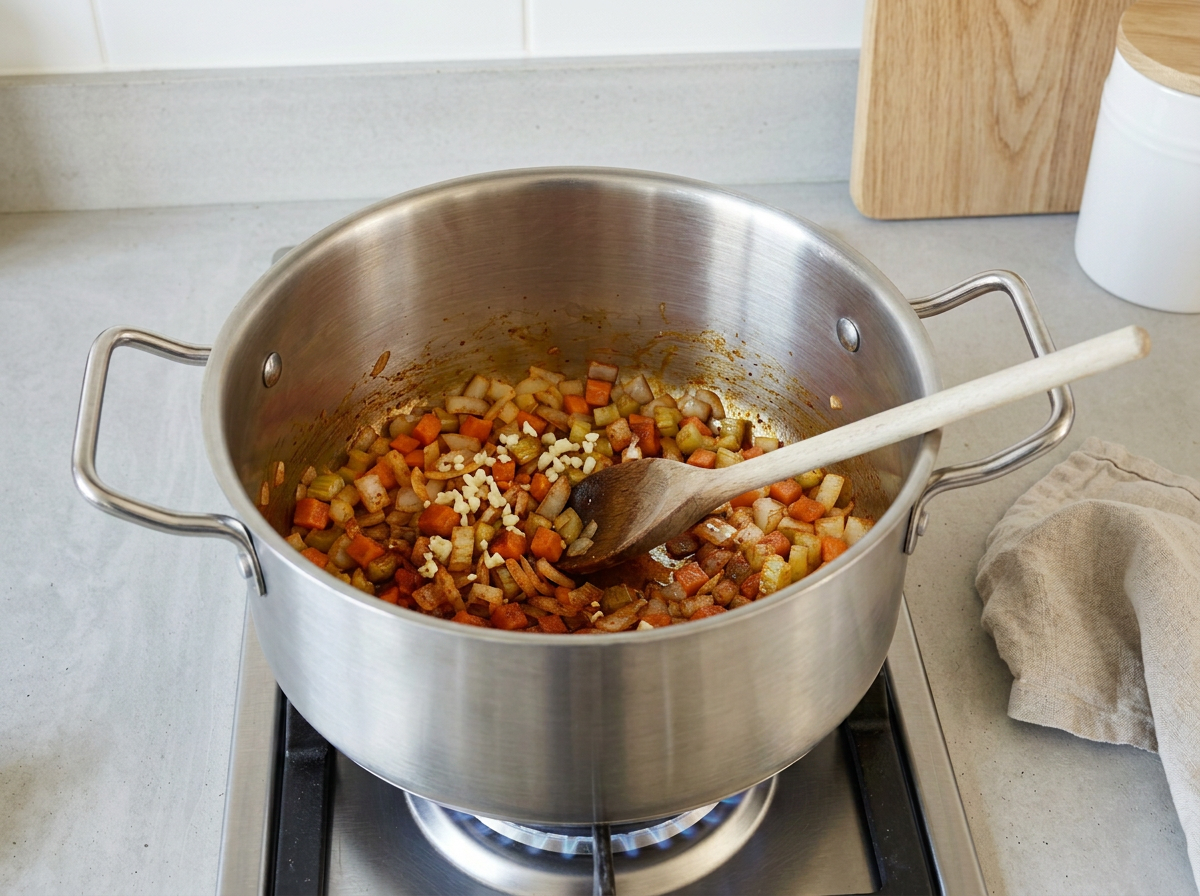
Stir in the garlic and smoked paprika and cook for 30 to 60 seconds, keeping everything moving. The paprika should smell warm and stain the oil red. Do not walk away, paprika scorches in under a minute and turns the whole pot bitter.
- 4
Add the peas and broth
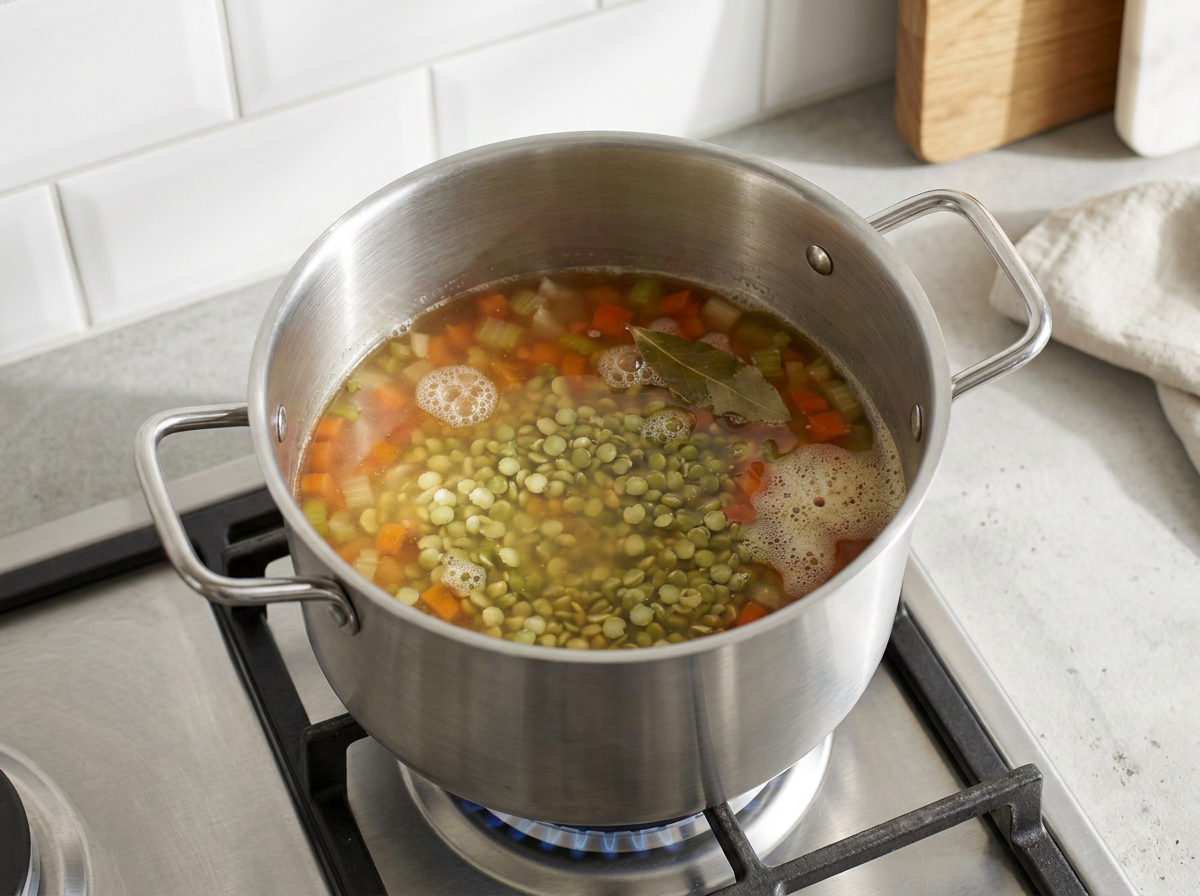
Add the rinsed split peas, vegetable broth, thyme, bay leaf and tamari. Bring to a boil and skim off any foam. Leave the lemon out for now, acid stops split peas softening.
- 5
Simmer low and scrape the bottom
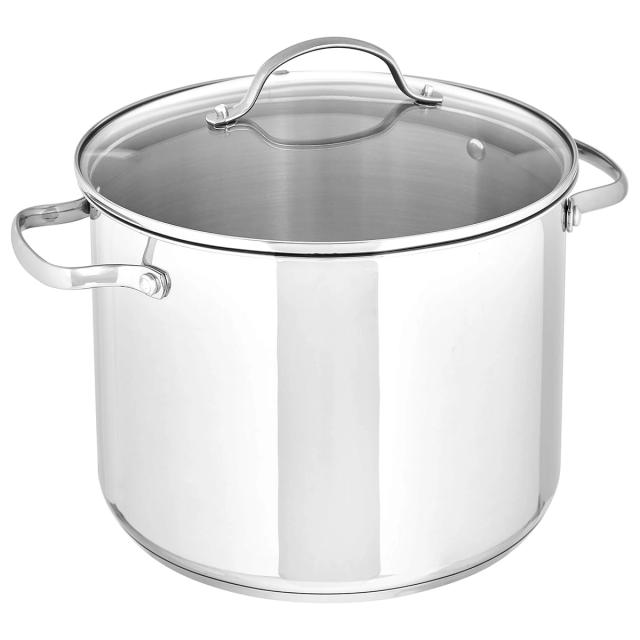
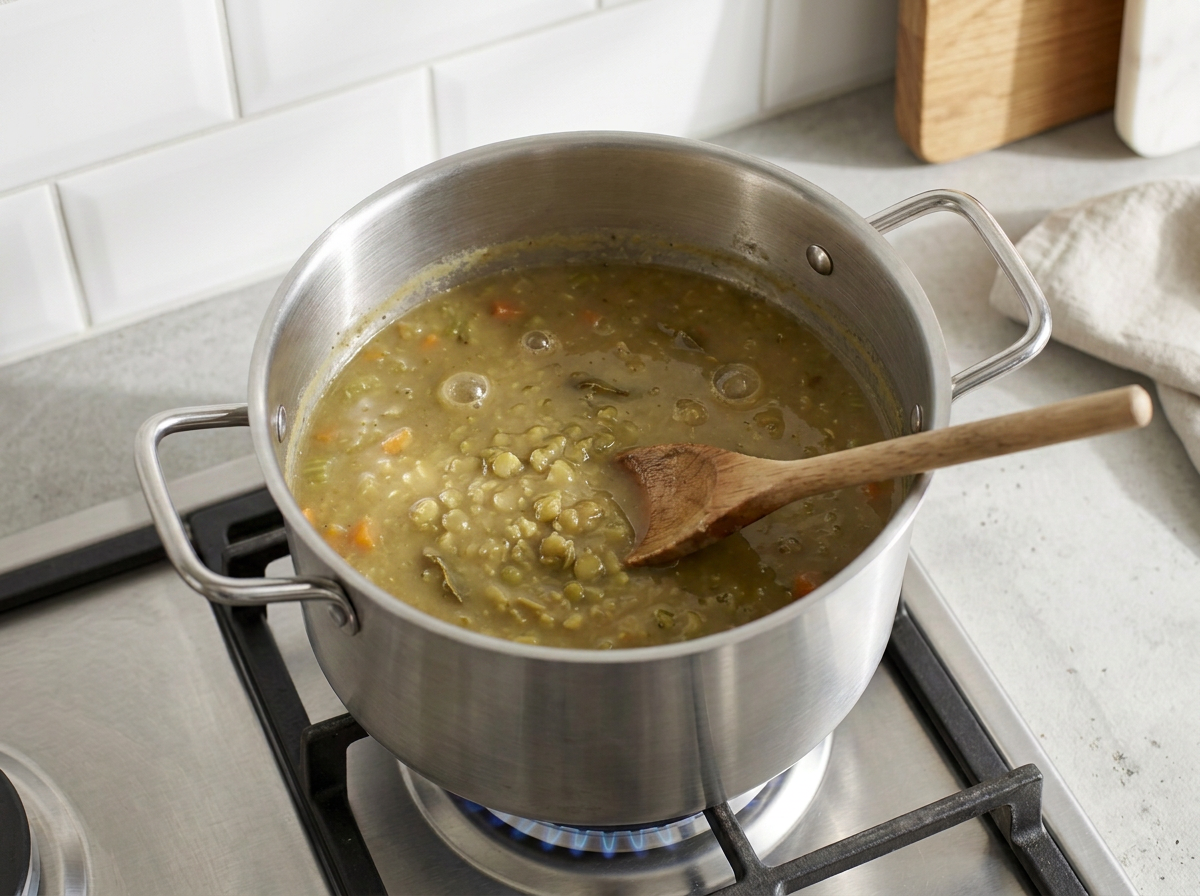
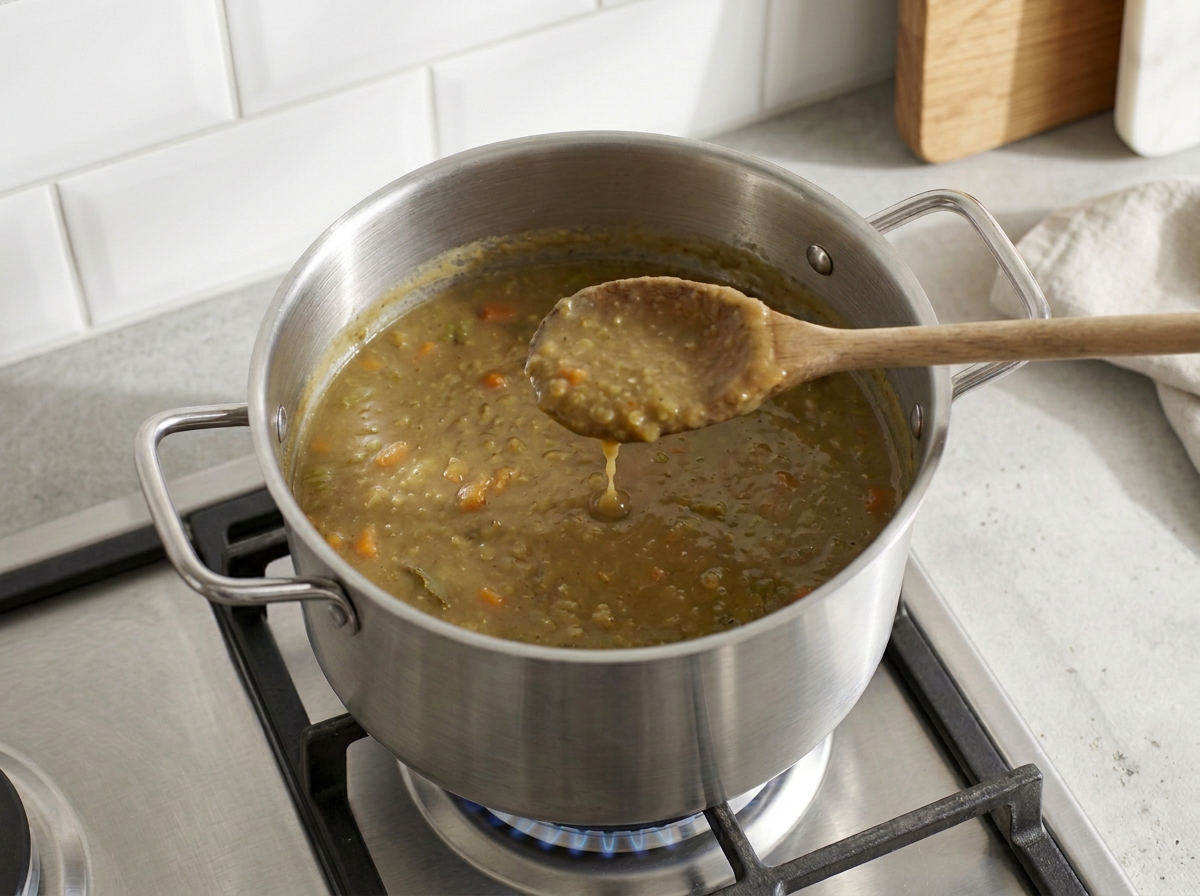
Reduce to the lowest simmer that still moves the surface and cook, partly covered, for 60 to 75 minutes. Every 15 minutes, drag the spoon flat across the base of the pot, because the peas sink as they break down and scorch there. Add a splash of hot water if it thickens faster than the peas soften.
- 6
Check the peas have collapsed
It is ready when a pea crushes to nothing against the side of the pot and the surface no longer separates into clear liquid. Peas still holding their shape at 75 minutes are old, so keep simmering and check every 15 minutes, adding water as needed.
- 7
Season and finish with lemon
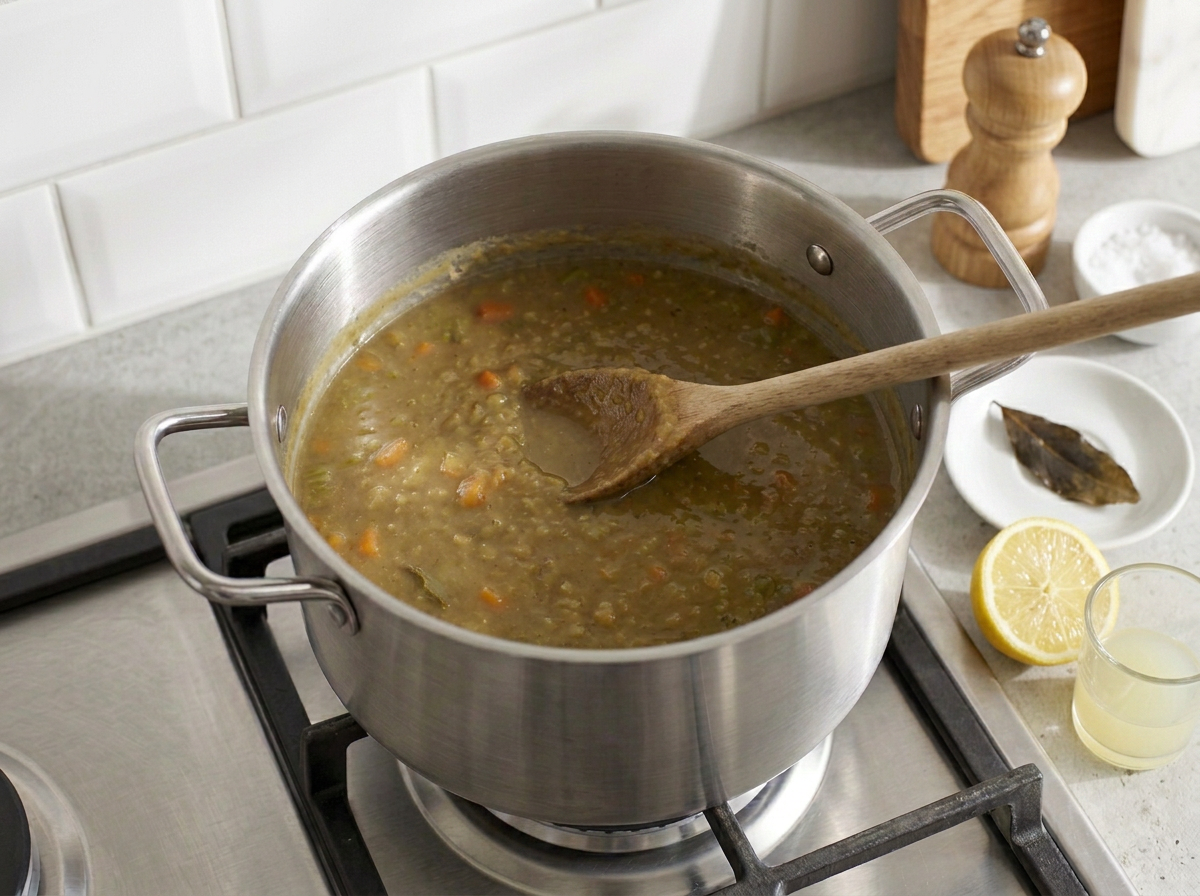
Fish out the bay leaf. Stir in the lemon juice off the heat, then taste and add salt and pepper in that order.
- 8
Ladle and garnish
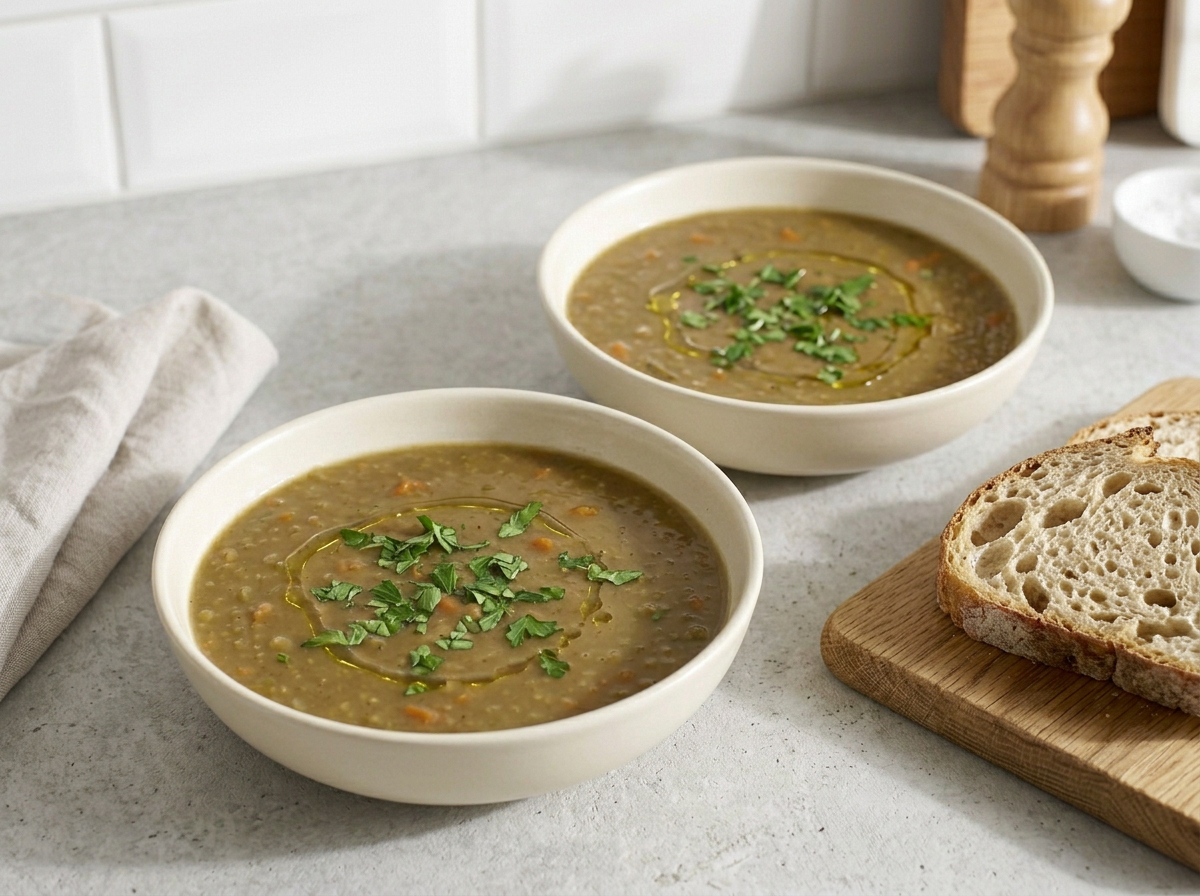
Ladle into warm bowls, scatter with parsley and finish each bowl with a thin drizzle of olive oil. Serve hot with crusty bread.
Notes
Split peas do not need soaking. They break down in the simmer.
For a smoother bowl, blend two ladlefuls and stir them back in. Blending the whole pot flattens it into purée and loses the carrot and celery.
The soup thickens as it cools. Loosen it with water or broth when reheating.
Nutrition Facts
6 servings · 461 g per serving
- Calories
- 342 kcal
% Daily Value*
- Total Fat
- 5.7 g7%
- Saturated Fat
- 0.8 g4%
- Sodium
- 1653 mg72%
- Total Carbohydrate
- 55.7 g20%
- Dietary Fiber
- 20.8 g74%
- Sugars
- 11.1 g—
- Protein
- 19.6 g39%
Recipe from veggierecipes.blog
When it goes wrong
Troubleshooting
The peas never softened, even after two hours
Almost always old peas, which stop rehydrating after a year or two and cannot be simmered back. Two other causes are worth ruling out: acid added early, lemon, vinegar or tomato, sets the pectin in the cell walls, and very hard tap water does a milder version of the same. If you are stuck with the peas you have, a small pinch of baking soda pushes them along. More than a pinch turns the soup soapy.
It came out thin, more like a broth with peas in it
Either it has not gone long enough or the lid stayed on. Split pea soup thickens because the peas disintegrate into the liquid, not because water boils off, so the fix is time rather than heat. Keep it at a low simmer with the lid ajar and give it another 20 minutes. To thicken it now, blend two ladlefuls and stir them back in.
It set into a solid block and I can stand a spoon in it
Normal and reversible. Split peas keep swelling for as long as they sit in liquid, so a pot that was right at dinner will be sliceable from the fridge. Thin it with hot water a bowl at a time over low heat, and taste again, because diluting flattens the salt and the lemon along with the texture.
There is a scorched crust on the bottom and the pot tastes burnt
The peas sink as they break up and catch on the base, which is why the method asks you to drag the spoon flat across the bottom every fifteen minutes rather than just stir. If it has happened, do not scrape. Ladle the good soup off the top into a clean pot and abandon the bottom layer, because burnt flavor spreads through the whole batch within seconds of stirring it in.
It tastes heavy and dusty, like it is missing something
It is missing acid, and this is the most common thing wrong with a homemade pea soup. Add the lemon off the heat and taste before reaching for salt, because a flat pot of legumes reads as under-salted when what it needs is sharpness. If it is still muted after that, another splash of tamari usually finds the gap.
Mine turned murky brown instead of the green in the photo
That is what correctly cooked split pea soup looks like. Chlorophyll breaks down over an hour of heat and green split peas go khaki, then brown-green, and no technique prevents it. The vivid green bowls you see elsewhere use fresh or frozen peas blended in at the end, which is a different soup. Judge this one on whether a pea crushes against the side of the pot.
Before you serve
Serving & Storage
Both of the countries that eat the most of this treat the soup as a base you finish at the table. In Sweden a bowl of Thursday ärtsoppa arrives with sharp mustard to stir in yourself, and pancakes with lingonberry afterwards. The mustard is not decoration, it is doing the lemon’s job, cutting a soup that is otherwise all softness. The Dutch make snert a day ahead on principle and eat it with rye bread. Both are worth stealing.
Other things that genuinely improve a bowl: croutons fried in olive oil, a spoonful of thick yogurt or coconut yogurt, chili oil, or a few more drops of lemon. Bread should be sturdy. Sourdough or dark rye holds up, soft sandwich bread dissolves into it.
Making it ahead
This is one of the few soups measurably better on day two, so cooking it a day ahead is an upgrade rather than a compromise. Cool it fast in a wide shallow container rather than leaving the pot on the stove. What does not work is part-cooking it: making the vegetable base ahead and adding the peas later saves ten minutes and costs the hour that matters.
Storing leftovers
Four days in an airtight container in the fridge, where it sets firm enough to cut. Reheat on low with water stirred in a little at a time, and re-season at the end. It freezes for three months, best in single-portion containers, because a solid one-liter block reheats from the outside in and the edges overcook long before the middle thaws. Leave the parsley off anything you freeze and add it fresh to the bowl.
Still wondering
Frequently Asked Questions
Is meatless split pea soup actually filling without the ham?
A serving works out at 342 calories with 19.6 g of protein and 20.8 g of fiber, which is most of a day’s fiber in one bowl and about as much protein as three eggs. The peas were always where the substance came from, not the pork.
Is this vegan, and is it gluten free?
Vegan as written, with olive oil and vegetable broth and no dairy anywhere. For gluten free, buy tamari rather than soy sauce, which is brewed with wheat, and check the broth carton. The smoky note comes from smoked paprika, not from bacon or any meat-flavored seasoning.
Can I make this in a slow cooker or a pressure cooker?
Both. In a slow cooker, do the vegetables and paprika in a pan first, then cook everything on low for 7 to 8 hours or high for 4, and stir the lemon in at the end. In an Instant Pot, sauté in the pot, then 15 minutes at high pressure with a natural release of at least 15 minutes, since split peas foam and a quick release sprays the valve. Use 7 cups of broth rather than 8 for the pressure cooker, because nothing evaporates.
Featured In
More Cozy Meatless Soups
Made this?