
Meatless Tortellini Soup Recipe
Published · Updated
This comforting vegetable tortellini soup is a quick and satisfying meal, loaded with tender tortellini and vibrant veggies.
Jump To Recipe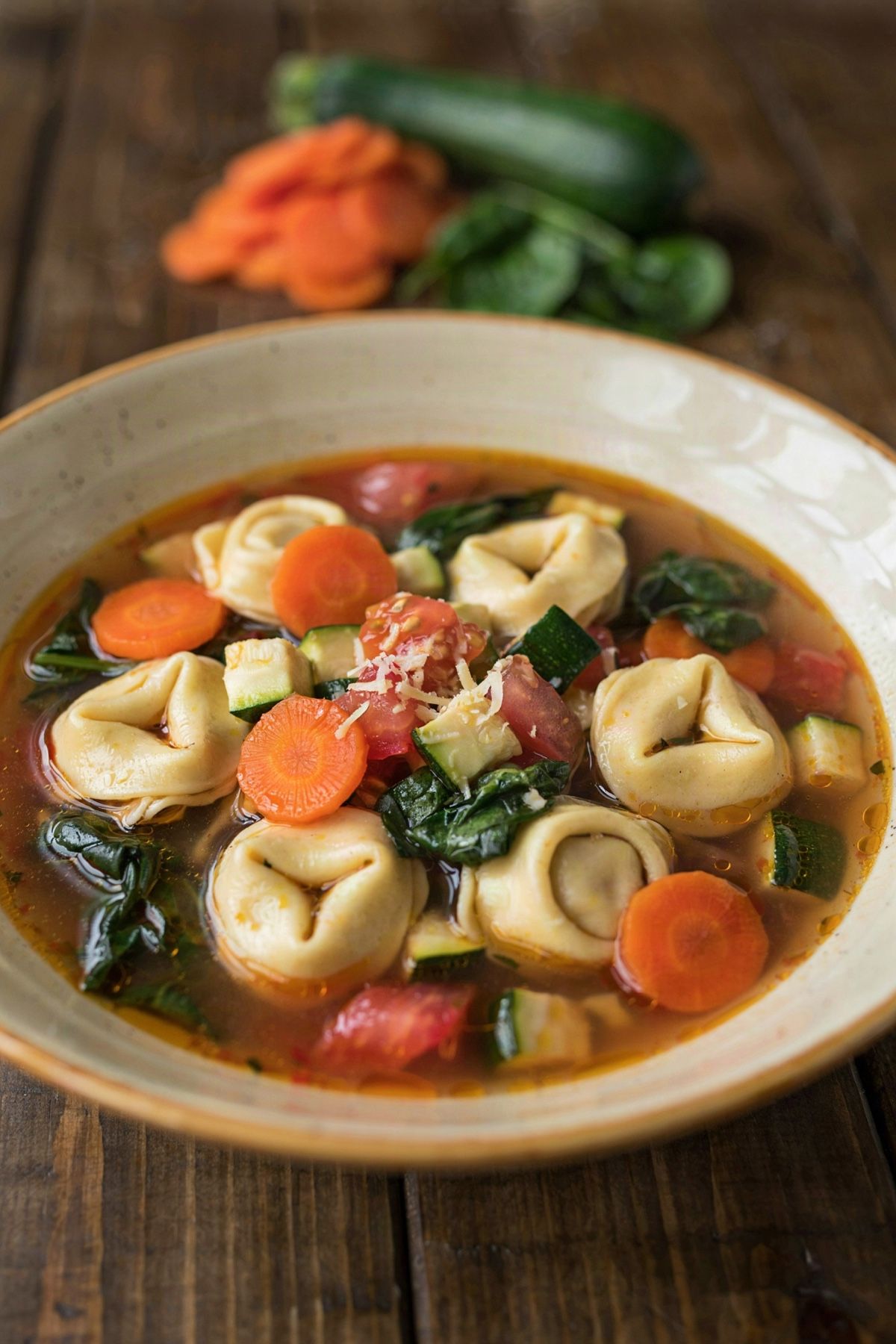
Why I Love This Meatless Tortellini Soup
This soup is my idea of comfort food, especially after a long day when I want something quick but still nourishing. Nothing beats seeing a pot full of colorful vegetables and those golden cheese tortellini bobbing around in a savory broth. The richness of the cheese tortellini gives the soup a satisfying bite, and the medley of veggies provides both nutrition and texture.
What I especially love about this recipe is its flexibility. If I've got a half zucchini in the fridge, it goes in. Leftover kale? Toss it in along with or instead of spinach. The soup comes together fast, about thirty-five minutes from prep to bowl, making it ideal for busy nights or when I crave a hearty meal without a ton of effort.
Two things make this soup really next-level, in my opinion:
- A sprinkle of Parmesan cheese right before serving.
- A hunk of crusty bread on the side to soak up the broth.
Whether it’s a chilly evening or just a regular weeknight, this soup always hits the spot for me. It’s a go-to recipe for when I want real food, real fast, and I’m always satisfied by the end.
The story
Tortellini Soup Was the Original Way to Eat Tortellini
Pasta floating in broth reads like a shortcut, something you do when you cannot be bothered to make a sauce. In Emilia-Romagna it is the opposite. Tortellini in brodo, tortellini in broth, is the dish the pasta was invented for, and it is what goes on the table at Christmas across Bologna and Modena. The dry, sauced version most of us met first is the newer idea.
Both cities claim the pasta, and the compromise story is set in Castelfranco Emilia, the town between them. Venus stops for the night at an inn, the innkeeper watches her through the keyhole, and all he can see is her navel. He goes down to the kitchen and folds pasta into the shape of it. Castelfranco Emilia still holds a festival for the legend, and tortellini are still sometimes called the ombelico di Venere. The story is lovely and roughly as old as the railway: it was written in the 1800s, not the Middle Ages. The documentary trail is duller and older, running back through a recipe for tortelletti that Bartolomeo Scappi published in 1570.
The definition got official in 1974, when the Dotta Confraternita del Tortellino registered a recipe with the Bologna Chamber of Commerce. For roughly a thousand tortellini it specifies pork loin, prosciutto crudo, mortadella di Bologna, Parmigiano-Reggiano, eggs and nutmeg, wrapped in squares of pasta about an inch and a quarter across. The broth they are dropped into is traditionally capon. Meat inside, meat outside.
So the word meatless in the title of this recipe is doing real work, and it is doing it twice. What makes the swap more than a modern liberty is that Italy already had the meatless filling: tortelloni, the bigger cousin, are stuffed with ricotta and spinach or pumpkin, a convention that comes straight out of the Catholic lean days when meat was off the table. Tortellini were the feast, tortelloni were the fast.
Which is why the packet in your hand is stranger than it looks. What American and British supermarkets sell as cheese tortellini is a tortelloni filling shrunk into a tortellini shape and size, about two grams a piece against the tortelloni's five. It is not a watered down version of anything. It is a splice of two real Emilian pastas, and dropping it into a vegetable broth puts it back where the small ones always belonged.
What to buy
Ingredient Notes
Cheese tortellini
Buy fresh from the chiller or frozen, not the shelf-stable dried kind, which needs closer to 15 minutes and clouds the broth while it gets there. Fresh comes in 9 oz packets in most US stores, which is why the recipe asks for 9 oz rather than a rounder number: use the whole packet. Read the label before you buy, because this is the item that decides whether the soup is vegetarian at all. Most cheese fillings lean on Parmigiano-Reggiano or pecorino, and both are made with animal rennet by law.
Grated Parmesan for serving
Real Parmigiano-Reggiano is never vegetarian. The EU rules protecting the name require animal rennet, so there is no vegetarian-certified version and there never will be. On a US-made generic parmesan, the word enzymes in the ingredient list usually means microbial rennet and is a good sign, but only an explicit vegetarian claim settles it. If you find a vegetarian hard cheese you like, save the rind: dropped in at step 4 and fished out before serving, it does more for the broth than the cheese at the end does.
Vegetable broth
Buy low sodium if you have the choice. A serving carries about 1,500 mg of sodium and almost all of it arrives dissolved in the broth or folded into the tortellini, not from the salt you add. Brands run from unsalted cartons to cubes that are mostly salt, which is why step 6 says taste first. If yours tastes thin, a hard cheese rind or a couple of dried porcini give it a backbone that more salt will not.
Tomato paste
Two tablespoons, and not for tomato flavor, which the can of diced tomatoes already supplies. It is there for depth. Cooked in hot oil for a minute until it darkens from red to brick, tomato paste turns savory and slightly sweet in a way it never does stirred straight into liquid.
Fresh spinach, packed
Four packed cups looks absurd on the counter and is about right in the pot, where it collapses to roughly a fifth of its volume. Baby spinach goes in whole; mature spinach wants the tough stems pulled. Frozen works if you thaw and wring it out hard in a towel, but use half the weight, because it is already collapsed and its water thins the broth.
Lemon juice
An unusual line in a tortellini soup and the one that pulls the bowl into focus. Canned tomatoes, broth and starchy pasta all pull in the same heavy direction, and a tablespoon of acid at the end lifts the lot. It has to go in off the heat, because simmered citrus loses its top notes and leaves a dull bitterness behind. Red wine vinegar does the same job in a sharper register.
Meatless Tortellini Soup
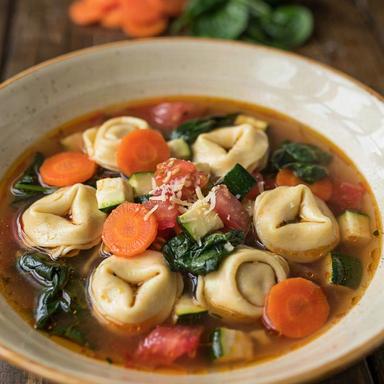
Hearty vegetable soup with cheese tortellini, spinach, carrots, and tomatoes in a flavorful broth.
Ingredients
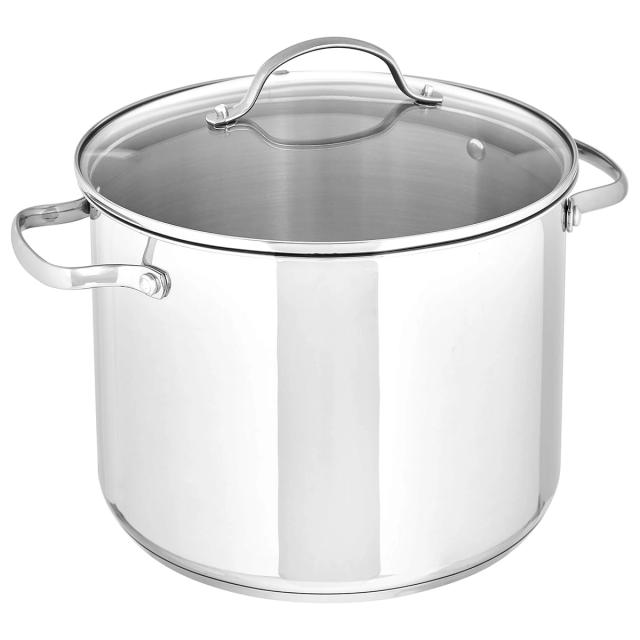
Equipment
As an Amazon Associate I earn from qualifying purchases, at no extra cost to you.
Instructions
- 1
Prep the vegetables
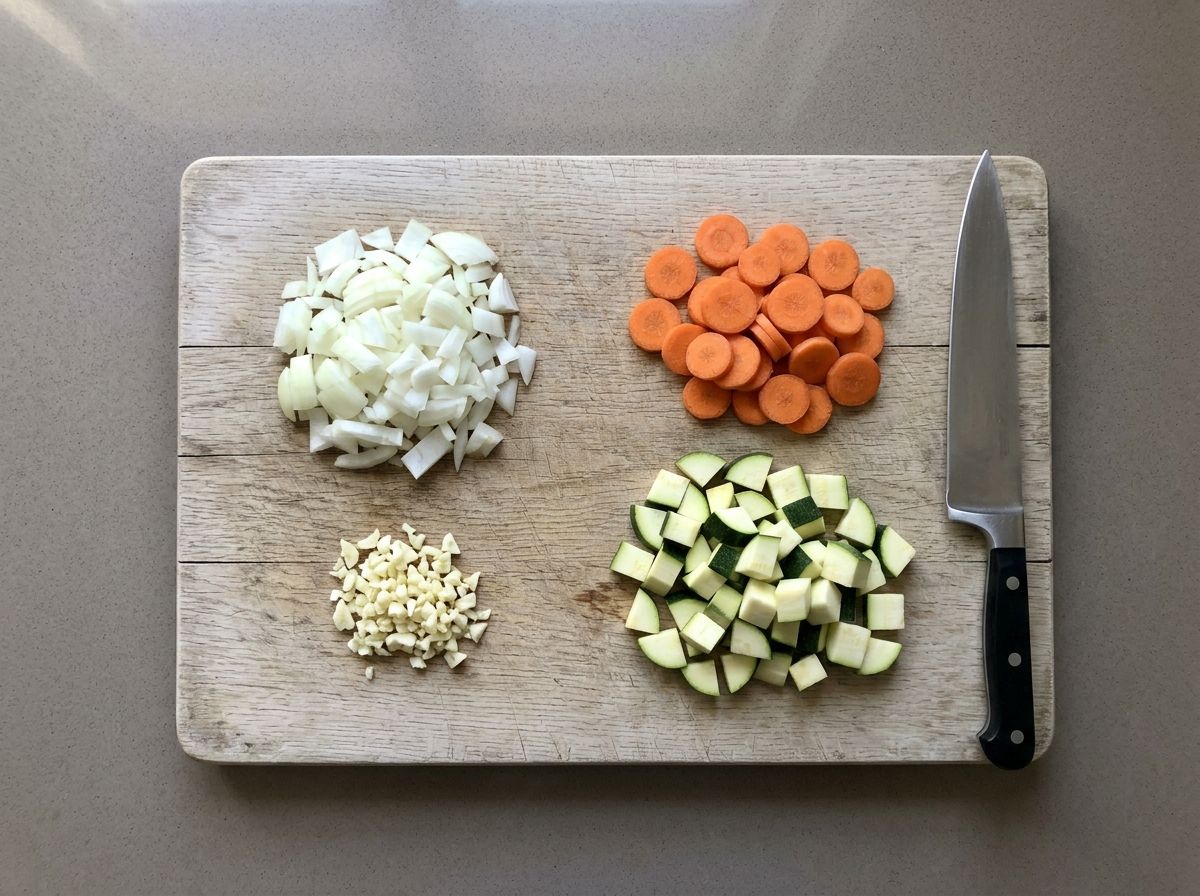
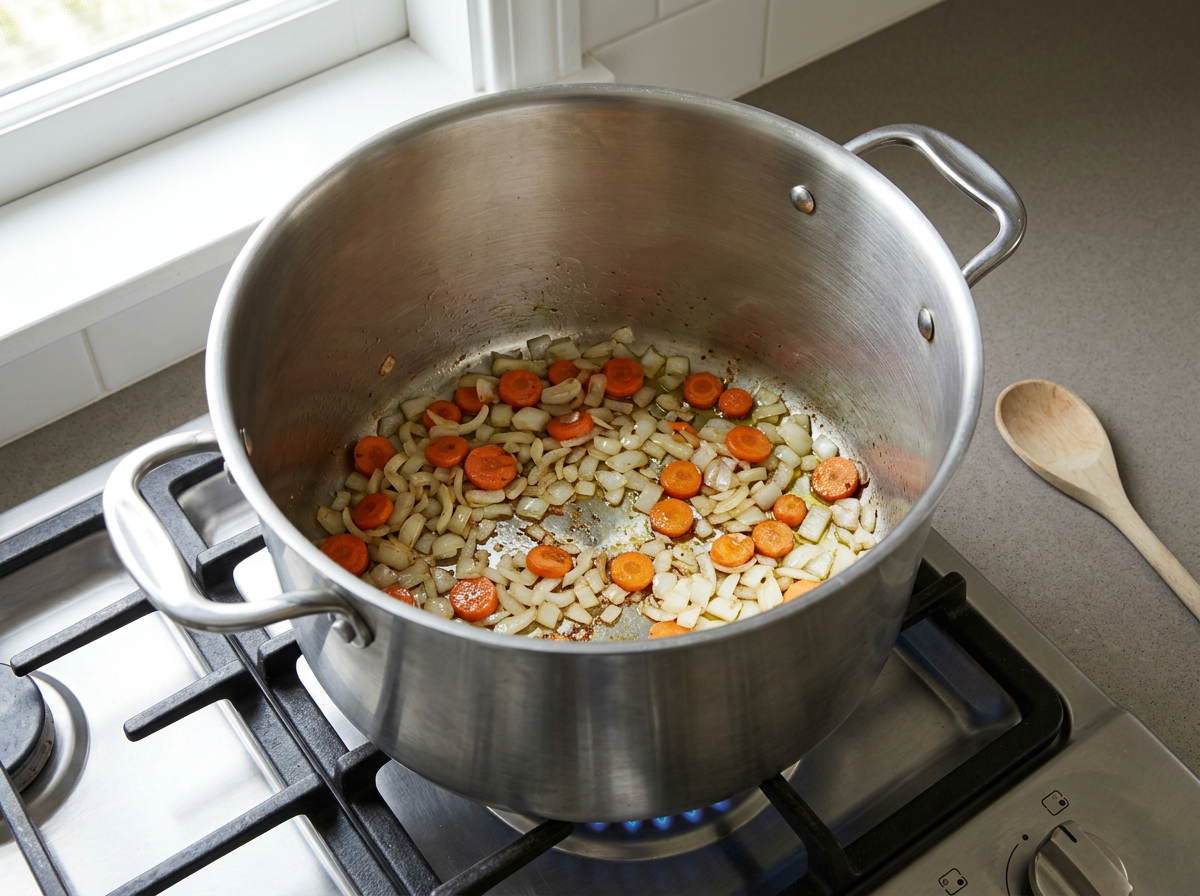
Chop the onion, mince the garlic, and dice the zucchini into half-inch pieces. Slice the carrots into thin coins, no thicker than a quarter inch. Cut them thicker than that and they will still be crunchy when everything else is done.
- 2
Soften the onion and carrots
Heat the olive oil in a large pot over medium heat. Add the onion and carrots and cook, stirring now and then, for about 6 minutes, until the onion turns translucent and the carrots have lost their raw snap. Get this done before anything acidic joins them, or the carrots will still be hard at the end.
- 3
Bloom the garlic, herbs and tomato paste
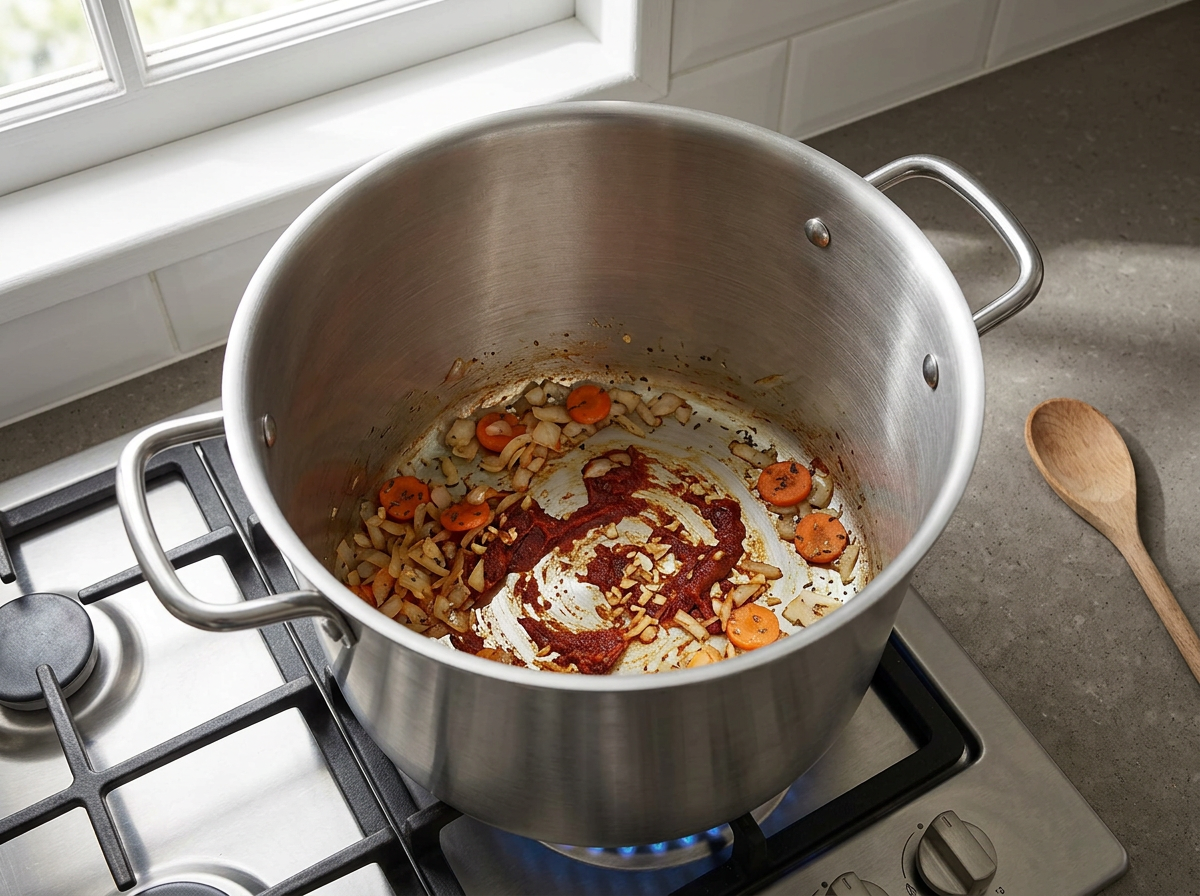
Add the garlic, Italian seasoning and tomato paste. Cook for 1 minute, stirring the whole time, until the garlic smells sweet and the paste darkens to brick red. Dried herbs give up almost nothing to boiling liquid and need a minute in hot fat first, and garlic added back with the onion would be burnt by now.
- 4
Build the broth
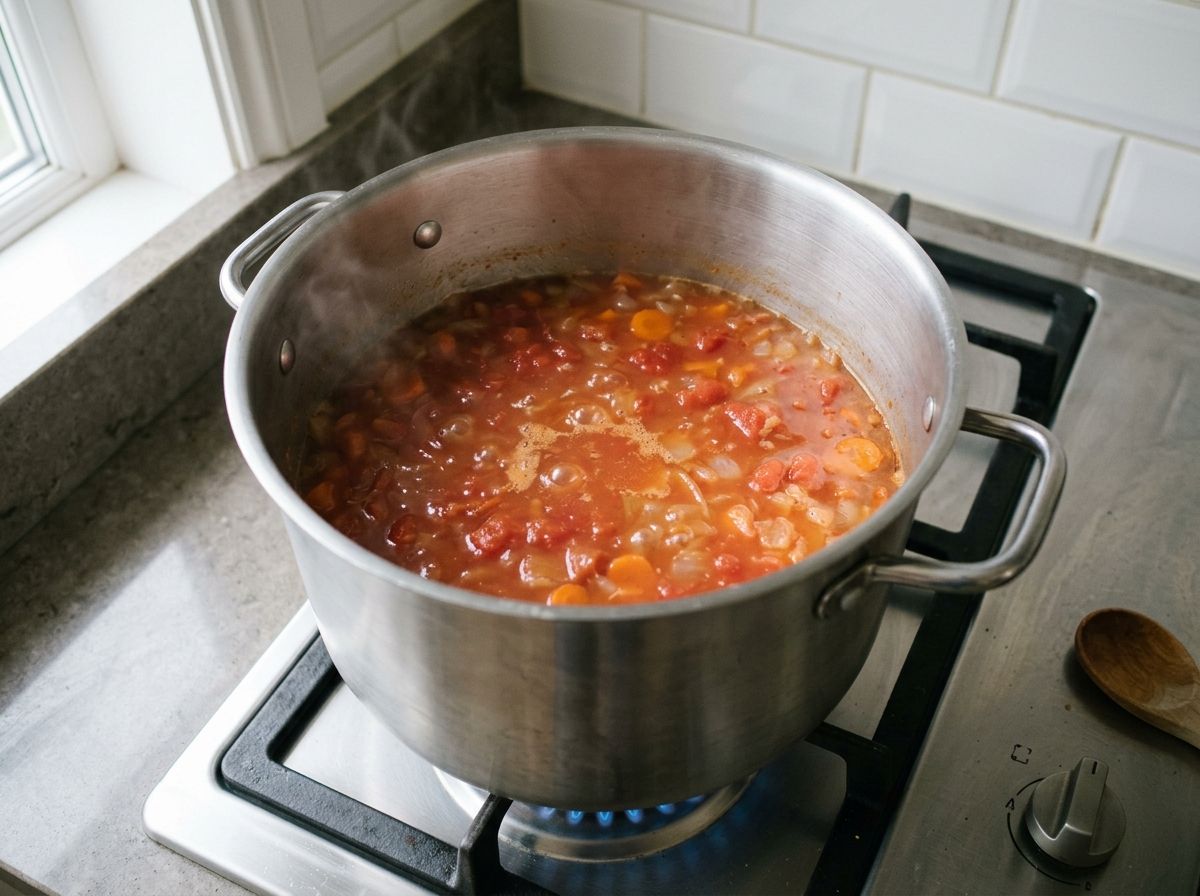
Pour in the vegetable broth and the diced tomatoes with all their juice. Scrape the bottom of the pot to lift the browned paste into the liquid, then bring it to a boil.
- 5
Cook the tortellini and zucchini together
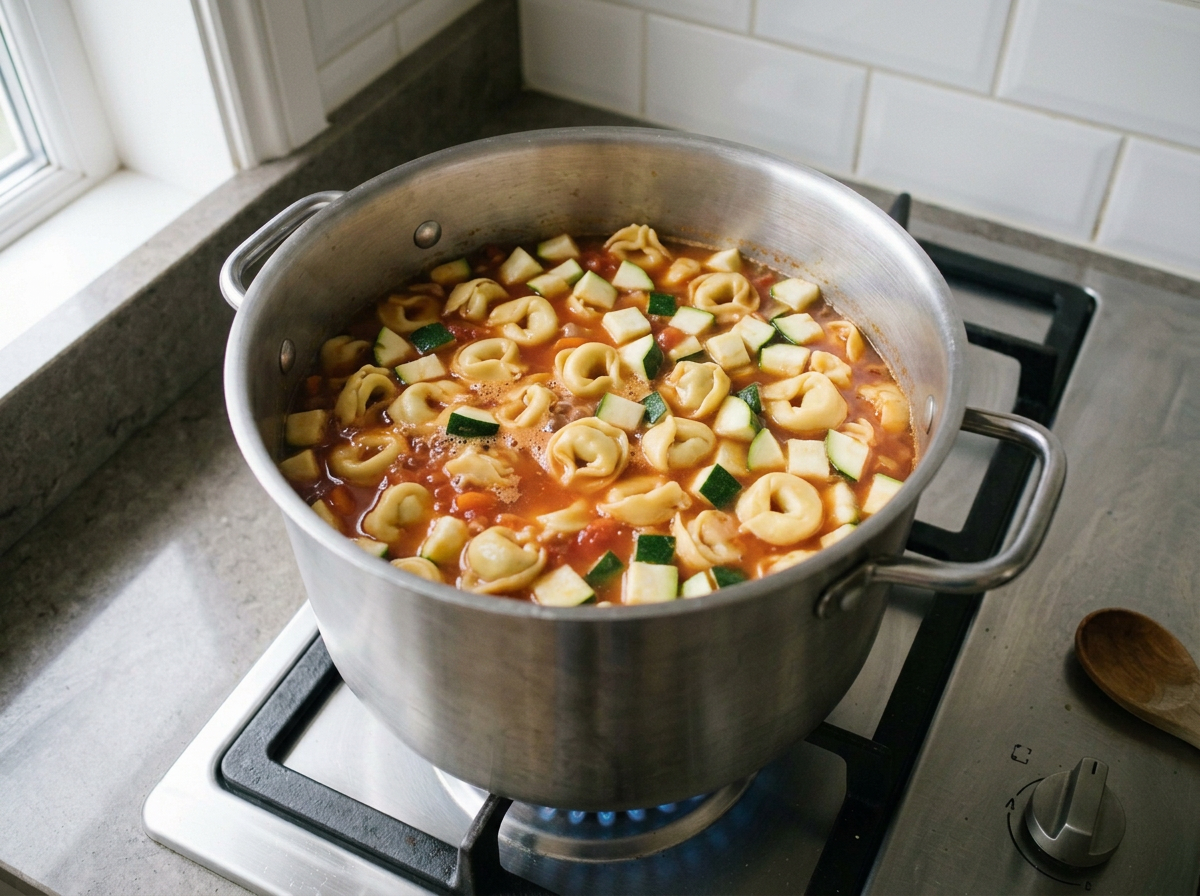
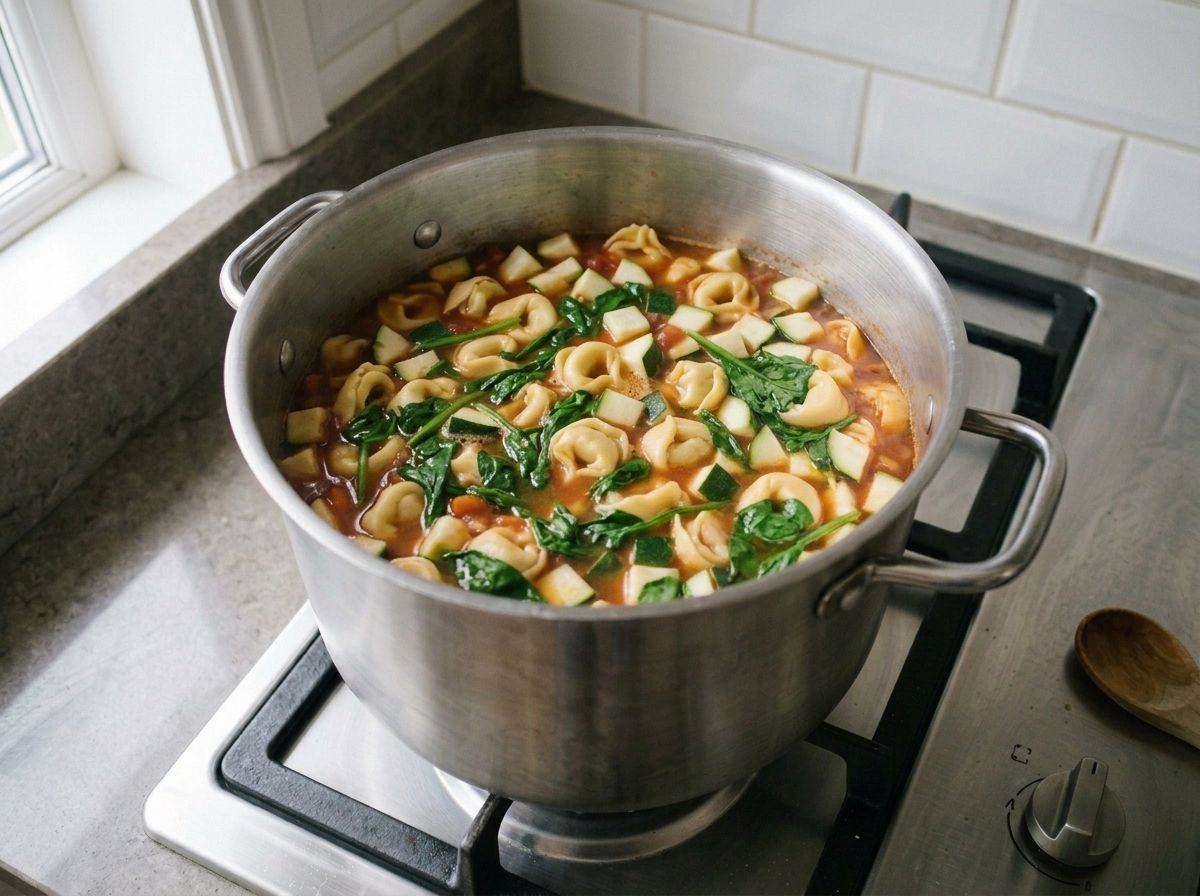
Add the tortellini and the zucchini. Drop the heat to a steady simmer and cook for 5 to 7 minutes, until the tortellini float and are tender to the tooth and a carrot coin gives when pressed against the side of the pot. The zucchini belongs here, not back with the carrots: it needs a third of the time.
- 6
Wilt the spinach off the heat
Take the pot off the heat, then stir in the spinach and the lemon juice. The residual heat wilts the leaves in about a minute, and off the heat the lemon stays bright instead of turning dull and faintly bitter. Season with salt and pepper, tasting first, because vegetable broths run anywhere from unsalted to very salty.
- 7
Serve it straight away
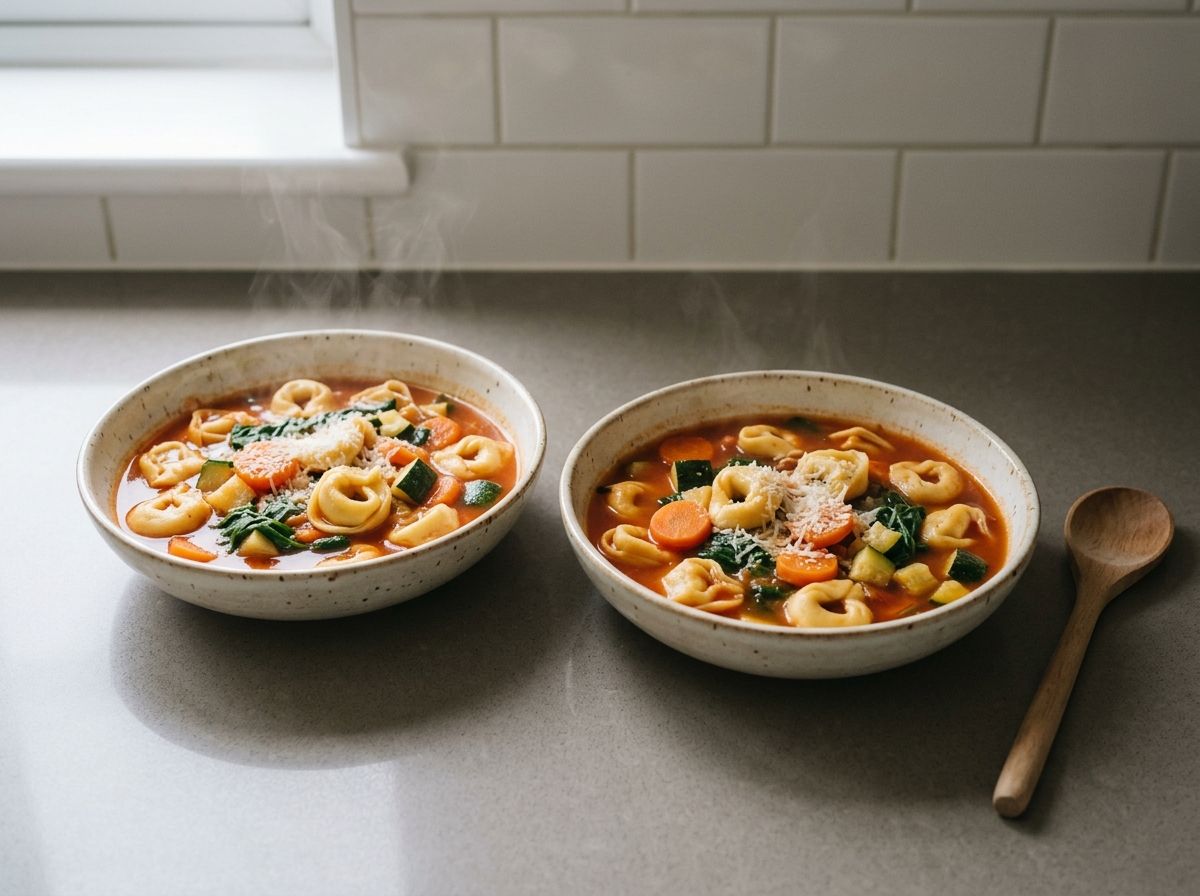
Ladle into bowls and grate over Parmesan if you are using it. Serve immediately. The tortellini go on drinking the broth for as long as they sit in it.
Notes
If you know there will be leftovers, boil the tortellini separately and add them to the bowls. Left in the pot they keep absorbing broth in the fridge, and by the next day they are bloated and the soup has become a stew.
Kale and Swiss chard work in place of spinach but not on the same timing. Stir either in with the tortellini rather than off the heat: they need about 5 minutes where spinach needs 1.
Frozen tortellini go in straight from the freezer and need 2 to 3 minutes longer. Do not thaw them first, they stick together in a lump.
Nutrition Facts
4 servings · 561 g per serving
- Calories
- 341 kcal
% Daily Value*
- Total Fat
- 13.1 g17%
- Saturated Fat
- 2.9 g14%
- Sodium
- 1529 mg66%
- Total Carbohydrate
- 45.6 g17%
- Dietary Fiber
- 6.7 g24%
- Sugars
- 11.6 g—
- Protein
- 13.1 g26%
Recipe from veggierecipes.blog
When it goes wrong
Troubleshooting
By the next day there was barely any broth left
Nothing went wrong, and it is worth knowing before you blame yourself. Filled pasta absorbs liquid for as long as it sits in it, cold fridge included, so a pot of leftovers quietly becomes a stew of swollen tortellini overnight. Hence the note about boiling them separately when you know there will be leftovers. If it has already happened, loosen the pan with a cup of broth as you reheat. The pasta will not come back, but dinner is still dinner.
The zucchini went gray and disappeared into the broth
It was in the pot too long. Zucchini needs about 5 minutes where the carrots need about 15, so any recipe adding them together is sacrificing one of them, which is why the zucchini goes in at step 5 with the tortellini. Size matters too: marrow-sized zucchini are mostly water and seed and collapse whatever you do, so buy two small firm ones rather than one big one.
The carrots are still hard and everything else is done
Two causes, and they compound. Thickness: coins much over a quarter inch will not soften in 20 minutes of gentle simmering. And order: acid stops the pectin in cell walls breaking down, so carrots that go in after the tomatoes stay firm almost indefinitely. Give them their 6 minutes in the oil first, before anything acidic joins them.
It tastes like hot vegetable water
Usually three things at once. The tomato paste was not cooked long enough to darken, so it added tomato rather than depth. The dried herbs went into boiling liquid instead of hot oil, where they release almost nothing. And there was no acid at the end. Take the pot off the heat, stir in the lemon juice, then taste again before reaching for salt, because flat and undersalted feel identical and only one of them is.
The broth turned cloudy and a bit gluey
The pot was at a rolling boil rather than a simmer while the tortellini cooked. Hard boiling knocks them against each other and the starch they shed goes straight into the broth. Drop the heat until the surface is barely moving as soon as they go in. A mild version of this is normal and even welcome, since a little starch gives the broth body.
Several tortellini split and the filling floated out
Almost always overcooking. Fresh tortellini are done in 5 to 7 minutes and they tell you by floating; leave them 12 and the seams give way. Frozen ones split for a different reason, which is being thawed first: they clump, and the ones welded into the middle get torn apart when you stir. Add them frozen, and stir gently once.
Before you serve
Serving & Storage
In Bologna a bowl of tortellini in brodo arrives with nothing on it, and whether it should get a spoonful of grated cheese is the kind of argument that runs a whole meal. This soup is a long way from that austerity, so put the cheese on the table and let people help themselves, with a pepper grinder next to it.
It wants bread, the chewier the better, for what is left in the bottom of the bowl. What it does not want is a second starchy dish beside it: this is already pasta, and garlic bread alongside is the same thing twice. A sharp green salad with a vinegary dressing is the better partner, doing outside the bowl what the lemon juice does inside it.
Making it ahead
This is where the recipe earns its place on a weeknight, and the trick is to stop before the pasta. Cook through step 4, cool the base and refrigerate it up to 4 days. It is better on day two than day one, because the tomato and herbs settle into the broth. To eat, bring it back to a boil and add the tortellini and zucchini: about 8 minutes. Making the whole thing ahead, pasta included, has no version that works.
Storing leftovers
Kept separately, the broth and the pasta both hold 3 to 4 days. Reheat the broth to a bare simmer, add the tortellini and give them a minute, just long enough to warm through; boiling them a second time is what turns yesterday's dinner to mush. If everything went into one pot, keep it anyway and plan for a thicker bowl. Add liquid as you reheat, taste again, and expect soft pasta.
Freezing
Freeze the base only, and freeze it before the zucchini as well as before the pasta. Cooked zucchini thaws waterlogged and stringy, and wilted spinach turns slimy. So freeze after step 4, in portions, up to 3 months, then thaw, boil, and cook the tortellini, zucchini and spinach into it fresh. The lemon juice goes in at that point too, since its brightness does not survive the freezer either. Freezing the finished soup is the one thing genuinely not worth doing: swollen split pasta, limp vegetables, and a freezer container spent on something that takes 35 minutes from scratch.
Still wondering
Frequently Asked Questions
How can I make this soup gluten-free?
Gluten-free tortellini turn up in most larger stores now, but they are not a drop-in swap. They shed far more starch than wheat pasta, so a pot cooked with them goes thick and cloudy, and their window between firm and falling apart is closer to a minute than three. Boil them separately in plenty of salted water and put them in the bowls before you ladle the soup over. Check the broth too: bouillon cubes and powders often carry wheat where cartons usually do not.
Can I double this for a crowd?
Yes, and it scales straight except for the timing. Doubled, you have around 8 cups of liquid, and a pot that size takes a couple of minutes longer to come back to a simmer after cold pasta hits it, which is time the zucchini spends cooking. Add the tortellini first, wait for a proper simmer, then the zucchini. A double batch also guarantees leftovers, so this is the case where a separate pan for the pasta is worth the washing up.
Can I make it vegan rather than just vegetarian?
Everything except the tortellini and the cheese already is. Vegan filled pasta turns up in some stores and cooks about a minute faster, so start checking at 4 minutes. If you cannot find any, change shape rather than hunting a substitute: 6 oz of a small dried pasta cooked separately, plus a drained can of white beans at step 5 to replace the protein the cheese filling was carrying. Nutritional yeast in place of the Parmesan.
Featured In
More Cozy, Veggie-Packed Soups
Made this?