
Mexican Chile Relleno Recipe
Published · Updated
Charred poblanos stuffed with stringy Oaxaca cheese and wrapped in an egg batter that puffs like a soufflé, served the way Puebla serves them, sitting in a thin tomato broth rather than crisp on a plate.
Jump To Recipe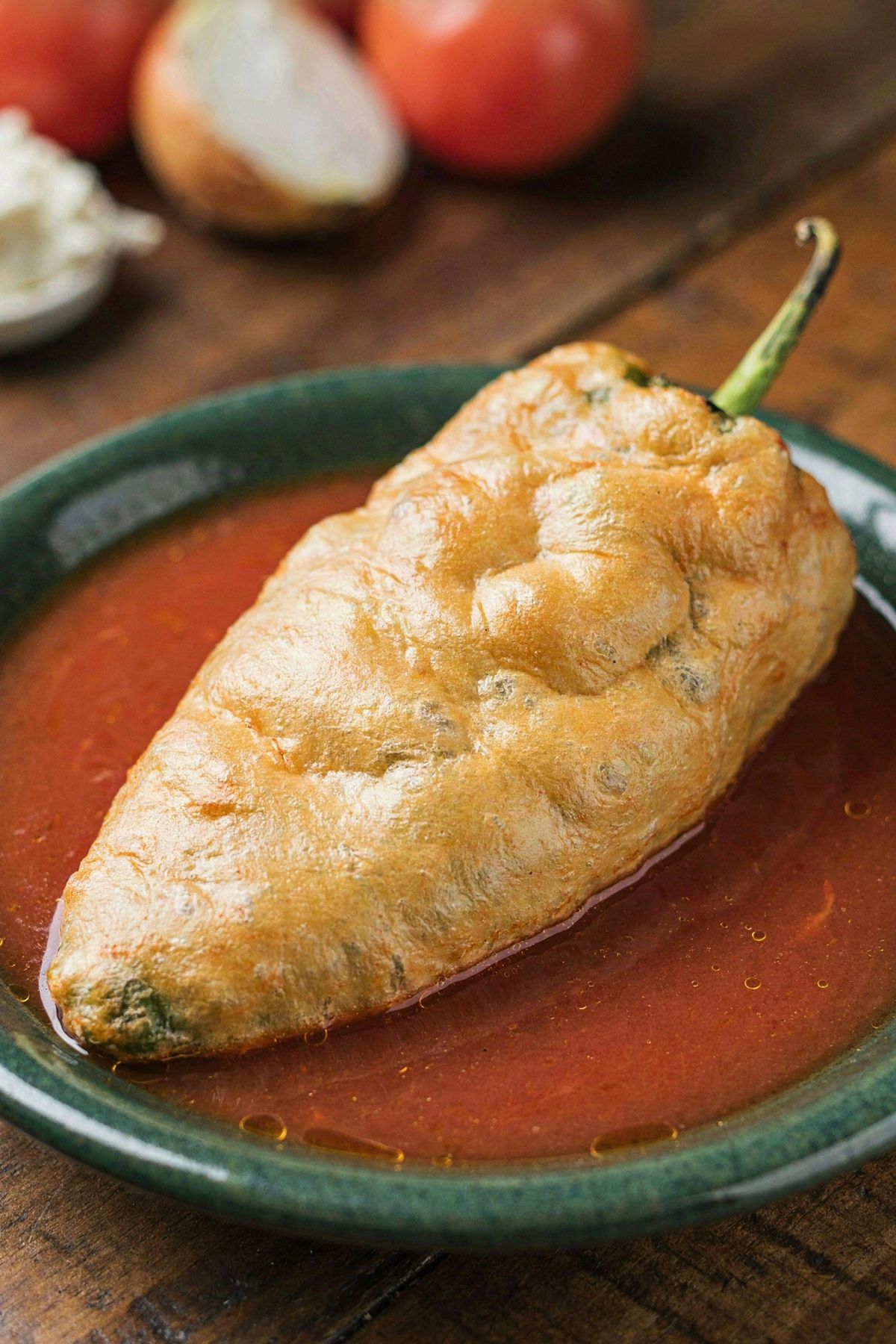
I Skipped The Flour For Years
I made chiles rellenos badly for a long time, and I was consistent about it: the batter would go on beautifully, hit the oil, and slide off in one piece, leaving me with a naked chile in a pan of scrambled egg. I blamed the eggs. I blamed the pan. I bought a thermometer. I tried whisking longer, which made no difference at all, because the problem was never the foam.
It was the flour. A dusting of it, fifteen seconds of work, mentioned in four words in every handwritten family recipe and skipped in most of the videos I had been copying. Egg white has nothing to hold onto against a peeled chile, and the flour is the only thing standing between a capeado and the bottom of your pan. I have not had one slide off since.
The other thing I had to unlearn took longer, which was wanting them crunchy. I kept pushing the oil hotter and the batter thicker, chasing a texture I had learned in American restaurants, and wondering why it never quite worked. It worked the first time I stopped and just put the chile in a bowl of caldillo instead. Soft was never the failure. It was the point.
The story
The Chile Relleno Was A Cheese Dish First
The chile is the clue. Poblano means “from Puebla”, and Puebla is where this dish belongs: a colonial-era marriage of things that grew in Mexico, the chile and the tomato, with two things the Spanish brought, cheese and eggs. Say it CHEE-lay ray-YEH-no, and note that the plural moves both words, chiles rellenos. Relleno just means stuffed.
Every menu prints the same origin story. The nuns of a Puebla convent invented it in August 1821 for Agustín de Iturbide, who was passing through on his way back to Mexico City after signing the Treaty of Córdoba. It is a good story and it is almost certainly folklore. Historians point out that indigenous and mestizo cooks had been stuffing chiles for a very long time before Mexican independence, and the same convent invented chiles en nogada and mole poblano in the same way, which is how you can tell a legend is doing the work of a record.
What matters more here is what the everyday version actually is. In Mexico the baseline is chiles rellenos de queso, stuffed with cheese, and the picadillo version, spiced minced meat with fruit and nuts, is the more elaborate one you make for an occasion. So this is not a famous dish somebody made vegetarian. The cheese version is the ordinary one and the meat version is the departure, which is the opposite of how most of the internet presents it.
The other thing worth knowing before you cook is that the coating is not supposed to crunch. The capeado is whipped egg white with the yolks folded back in, and it fries into something closer to a soufflé than a crust, then goes into a tomato caldillo and softens further. Crossing the border the dish picked up flour, breadcrumbs and sometimes beer batter, because a restaurant needs it to survive a steam table and American diners expect crunch from anything fried. Both versions are real. Only one of them is what Puebla puts in front of you.
What to buy
Ingredient Notes
Poblano chiles
Buy the broadest, flattest, most unblemished ones you can find, because you are going to slit them open and they need to hold together. Firm is good; anything soft or wrinkled will tear when you peel it. Heat is genuinely unpredictable, and two chiles off the same pile can be a mild pepper and a real kick, with nothing on the outside to tell you which. Anaheim is the usual substitute in the US and it works, but it is milder and thinner-walled, so handle it more gently. Bell peppers make a different dish.
Queso Oaxaca
Also sold as quesillo, and it looks like a ball of wound-up string because that is exactly what it is. It pulls into long strands and melts without weeping oil, which is the whole job. Monterey Jack is the honest substitute and is what most US recipes assume; queso asadero and queso Chihuahua are both closer if your shop carries them. Do not reach for cheddar. It splits under heat and you get an oil slick inside the chile instead of a molten core.
Eggs
This is the batter, not a detail. Take them out of the fridge half an hour ahead, because room temperature whites whip higher. Separate them one at a time into a cup before adding to the bowl, so a broken yolk costs you one egg rather than four: a trace of yolk is fat, and fat stops whites reaching stiff peaks. The bowl and the whisk have to be properly clean and properly dry for the same reason.
All-purpose flour
The dusting is the step everybody skips and it is the reason most home chiles rellenos fail. Egg foam has nothing to hold onto against a smooth, faintly damp chile skin, so it slides off in the pan. A thin coat of flour is a primer, and it takes fifteen seconds. Cornstarch or rice flour does the same job if you need it gluten free, with a slightly more fragile result.
Tomatoes for the caldillo
Ripe Roma tomatoes in summer, a tin of whole peeled tomatoes the rest of the year, and the tin is genuinely better than a pale winter tomato. What you are making is a caldillo rather than a sauce: thin, closer to a seasoned broth, meant to pool around the chile instead of clinging to it. If yours is thick enough to coat a spoon, loosen it with more broth.
Mexican oregano
Not the same plant as the oregano in your Italian shelf. Mediterranean oregano is Origanum vulgare and tastes piney; Mexican oregano is Lippia graveolens, a different family altogether, and reads citrusy and faintly grassy. It is worth buying a bag, and it will not go to waste anywhere else in this cuisine. Use the Italian one if it is what you have, and use a little less.
Frying oil
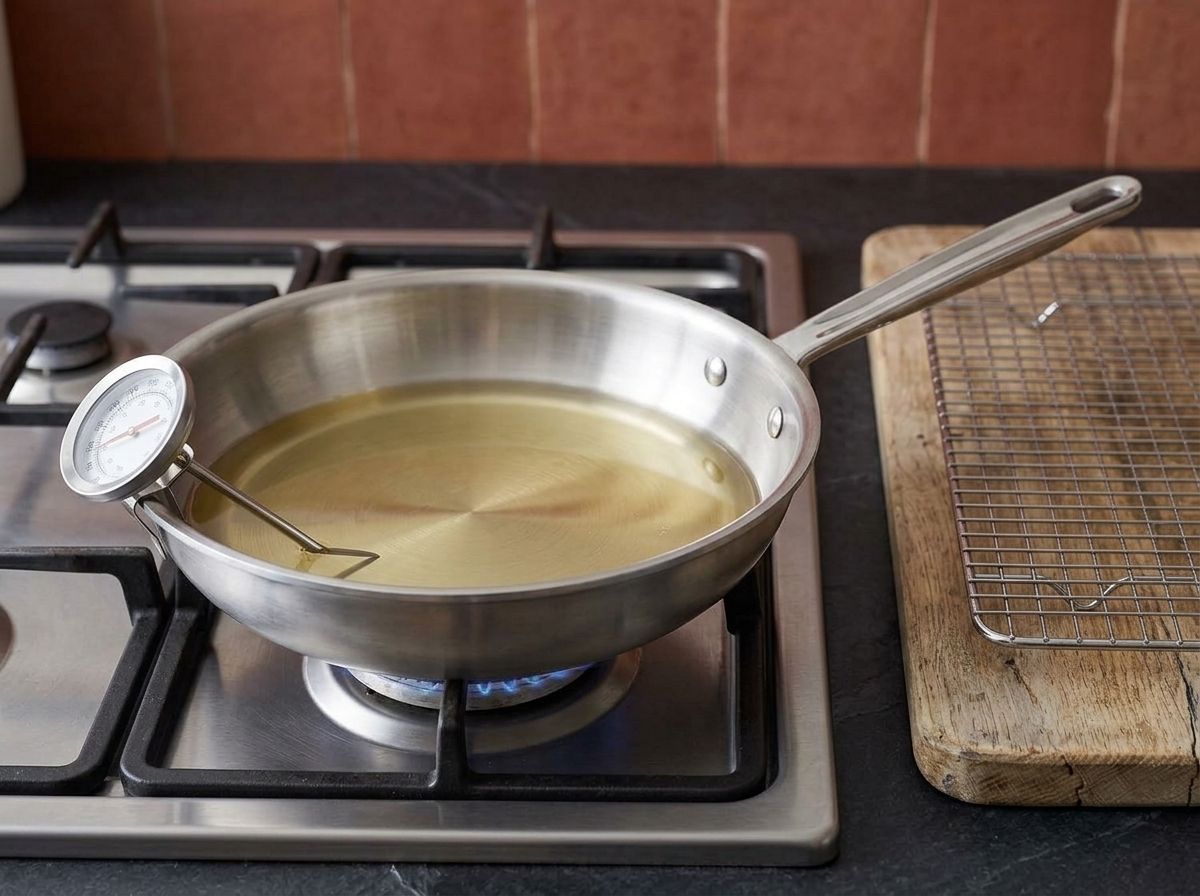
Any neutral oil with a high smoke point. What matters is depth rather than brand: you want enough that the chile floats about halfway, roughly half an inch in a wide skillet, so the batter sets on contact instead of sitting on a hot metal floor.
Mexican Chile Relleno
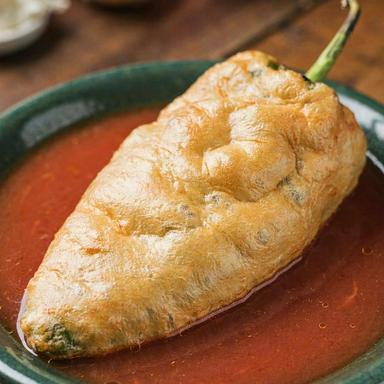
Charred poblano chiles stuffed with queso Oaxaca, coated in a whipped egg capeado and shallow-fried, then served sitting in a thin tomato caldillo. The Puebla version, soft rather than crisp.
Ingredients
Equipment
As an Amazon Associate I earn from qualifying purchases, at no extra cost to you.
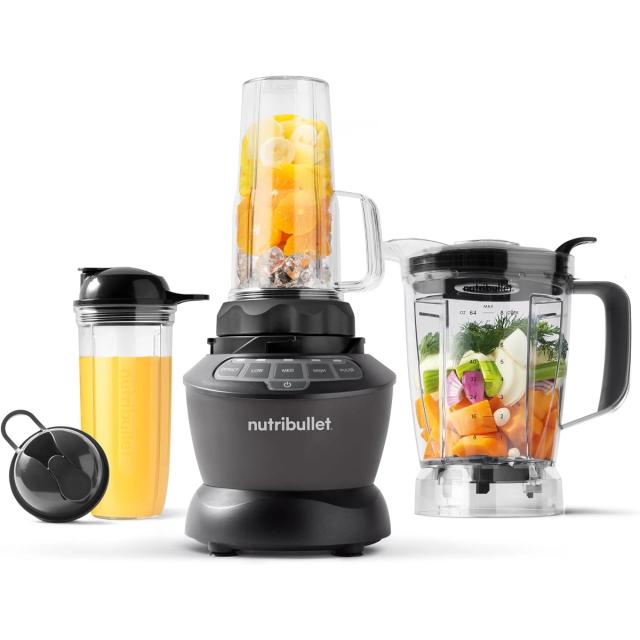
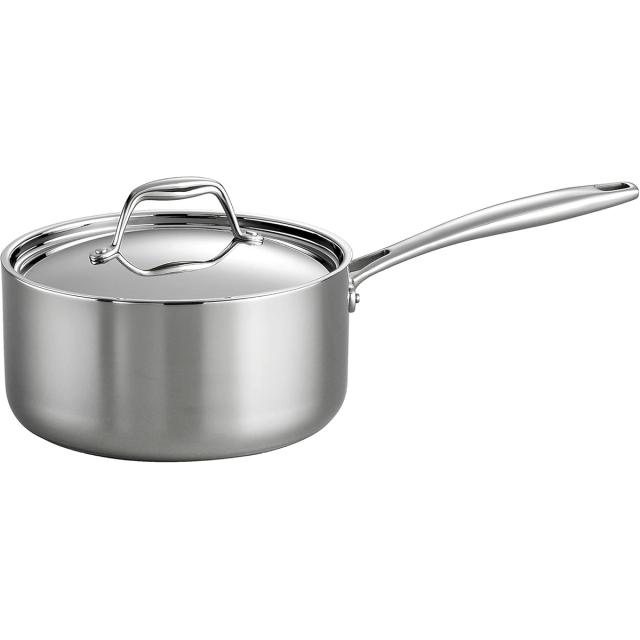
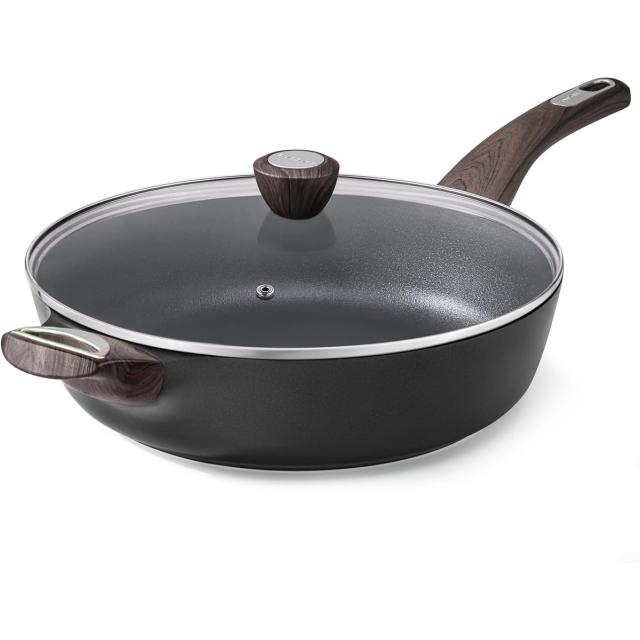

Instructions
- 1
Char the poblanos
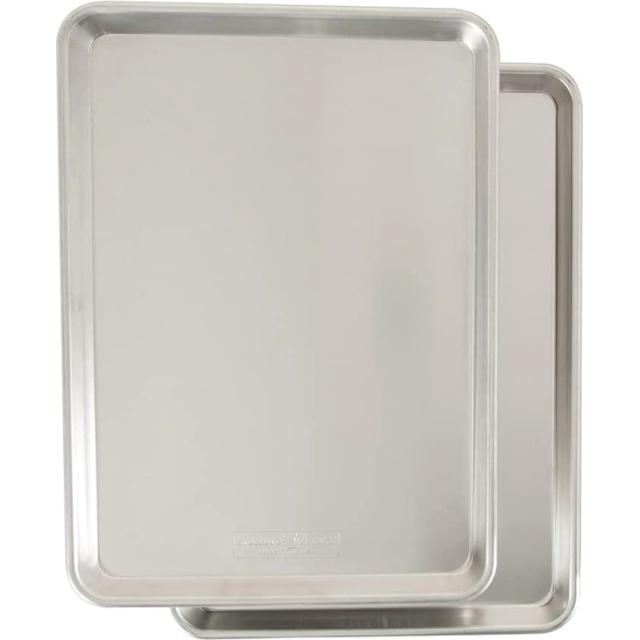
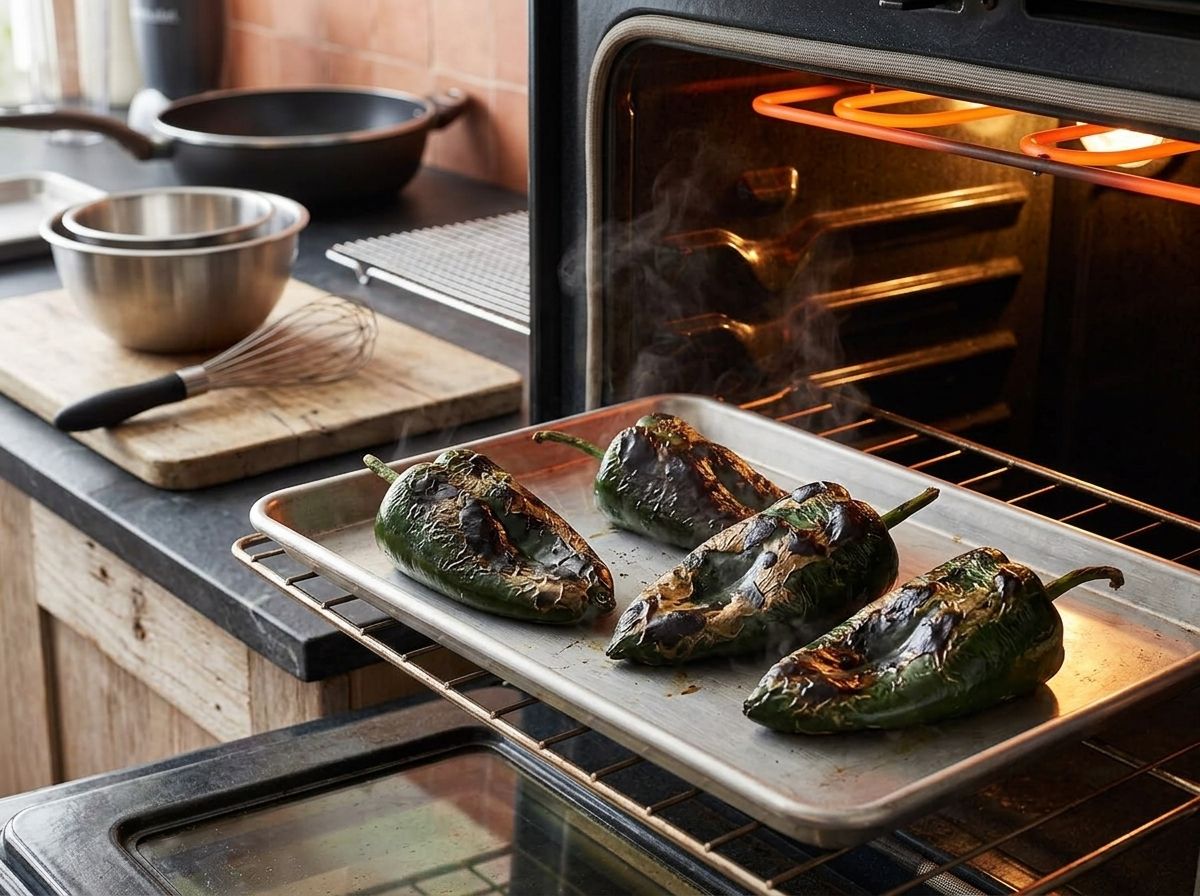
Set the chiles on a baking sheet under a hot broiler, or straight onto the grate of a gas burner. Turn them every couple of minutes until the skin is blackened and blistered all over, which takes about 10 to 12 minutes. You want the skin burnt and the flesh underneath still firm.
- 2
Sweat them covered
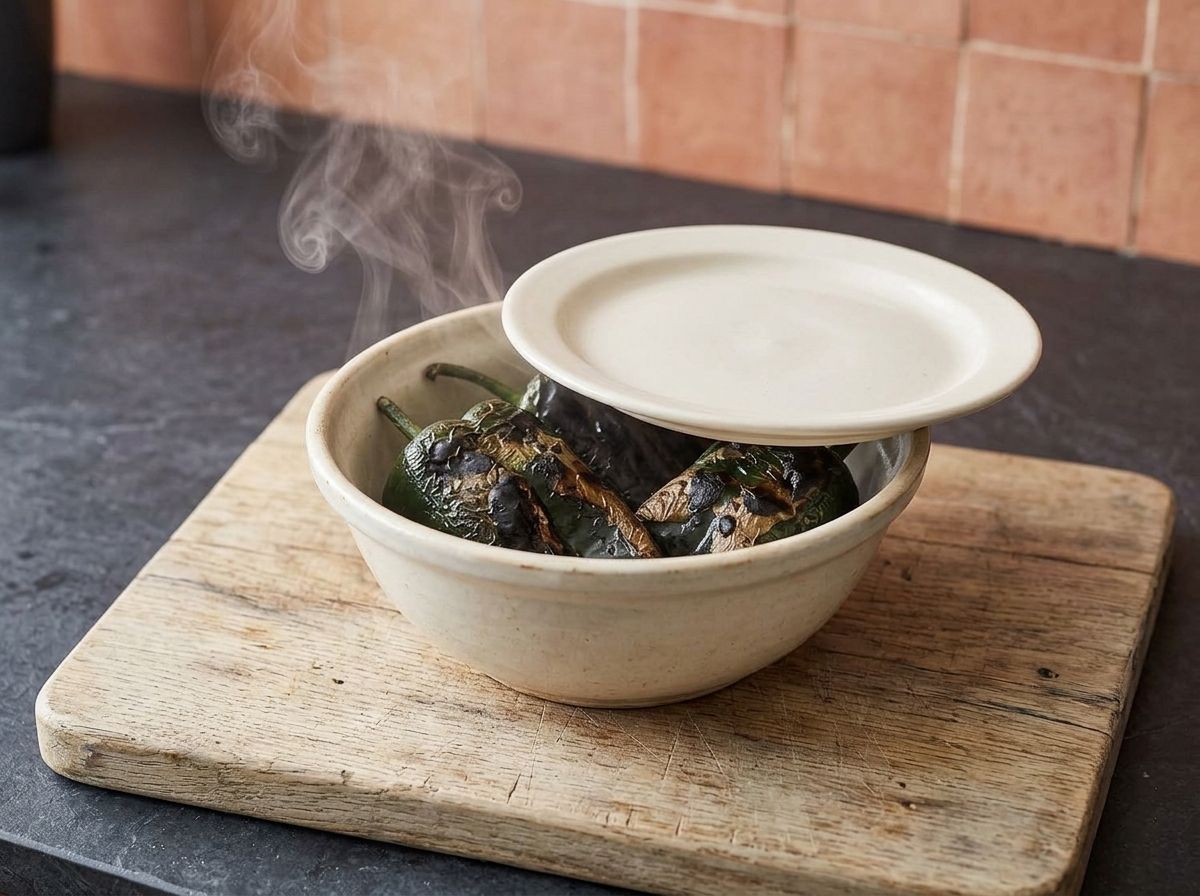
Move the chiles into a bowl and cover it tightly with a plate or a lid. Leave them 15 minutes. The trapped steam lifts the skin away from the flesh, which is what makes them peelable.
- 3
Peel, slit and seed
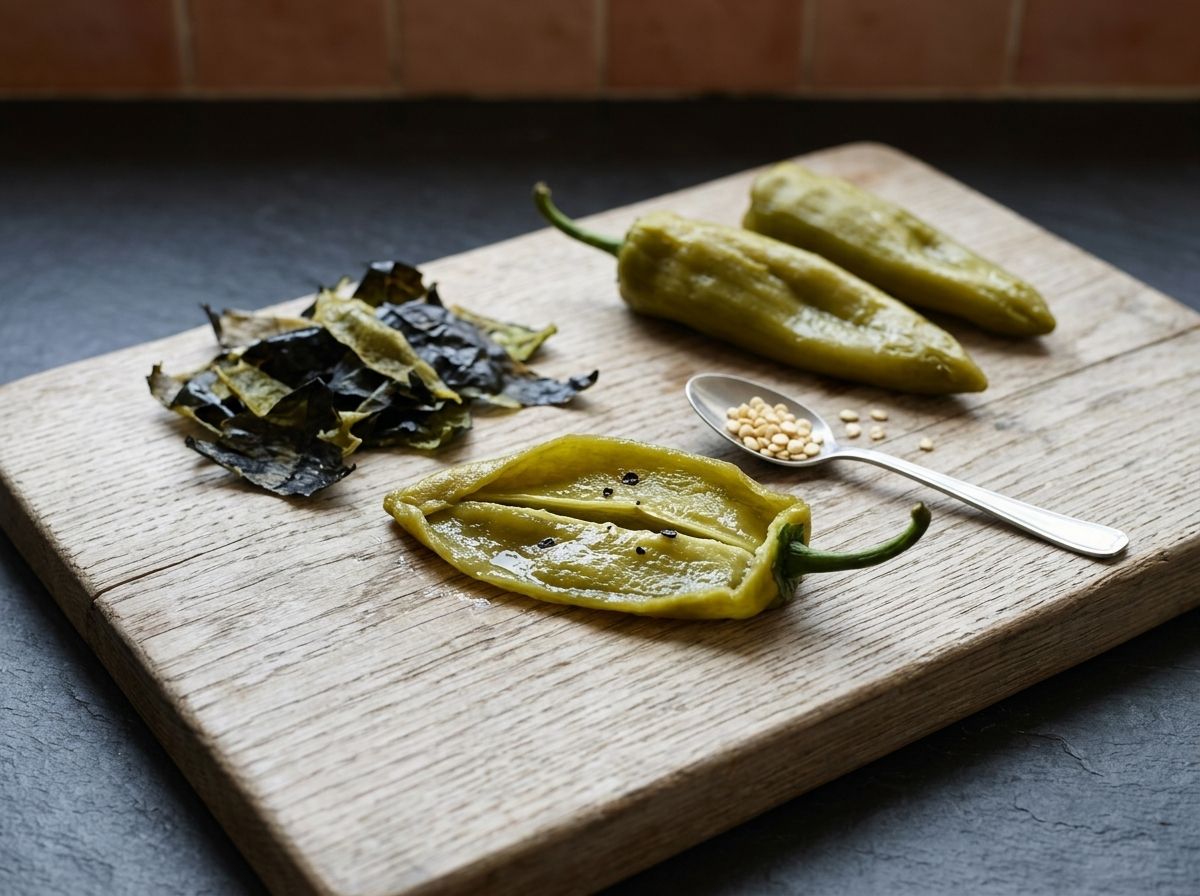
Rub the blackened skin off with your fingers, leaving a few flecks behind rather than rinsing them under the tap. Cut one lengthwise slit in each chile, stopping about an inch short of the tip, and scoop out the seed pod with a teaspoon. Leave the stem on and pat the chiles dry.
- 4
Make the caldillo
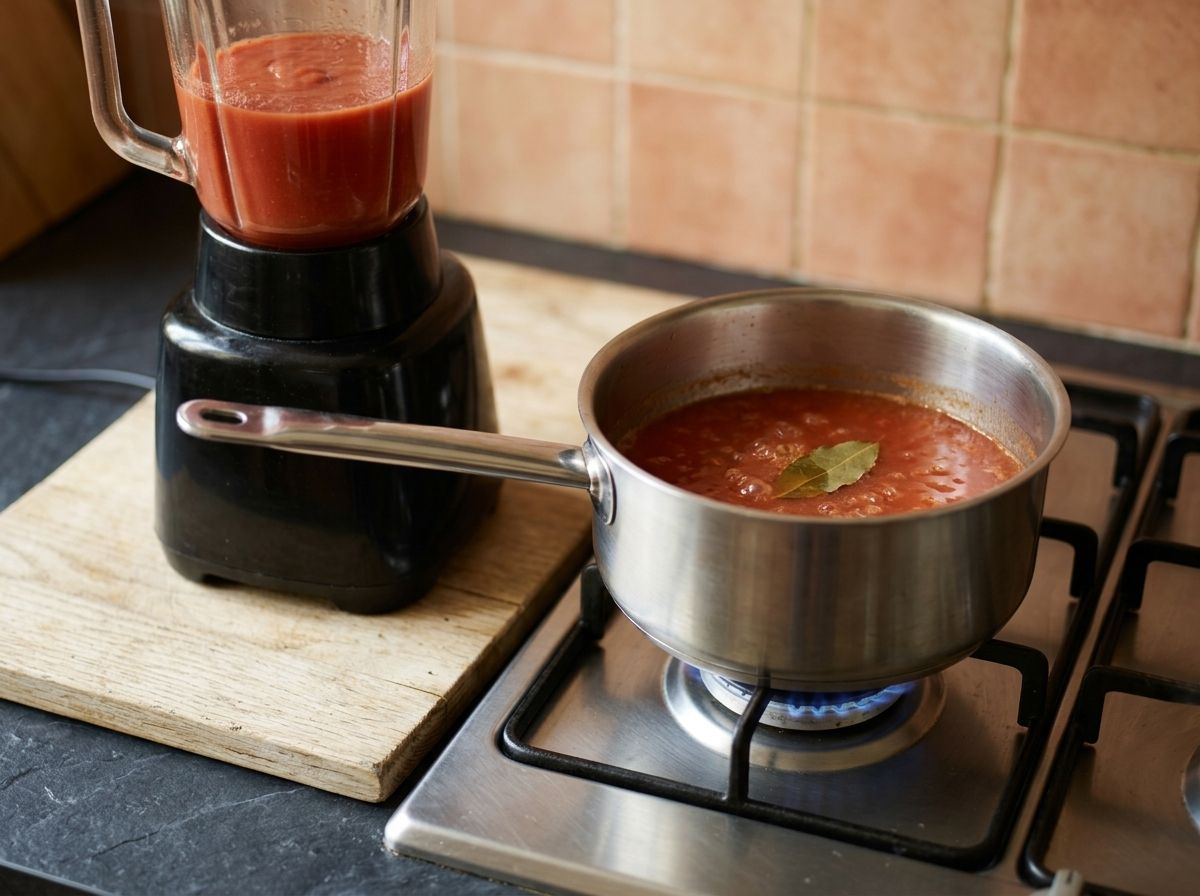
Blend the tomatoes, onion and garlic until smooth. Heat a tablespoon of oil in a saucepan, pour in the puree and let it bubble and darken for 5 minutes, then add the broth, oregano and bay leaf and simmer for 15 minutes. Season with salt and keep it warm; it should stay thin enough to pool.
- 5
Stuff with cheese
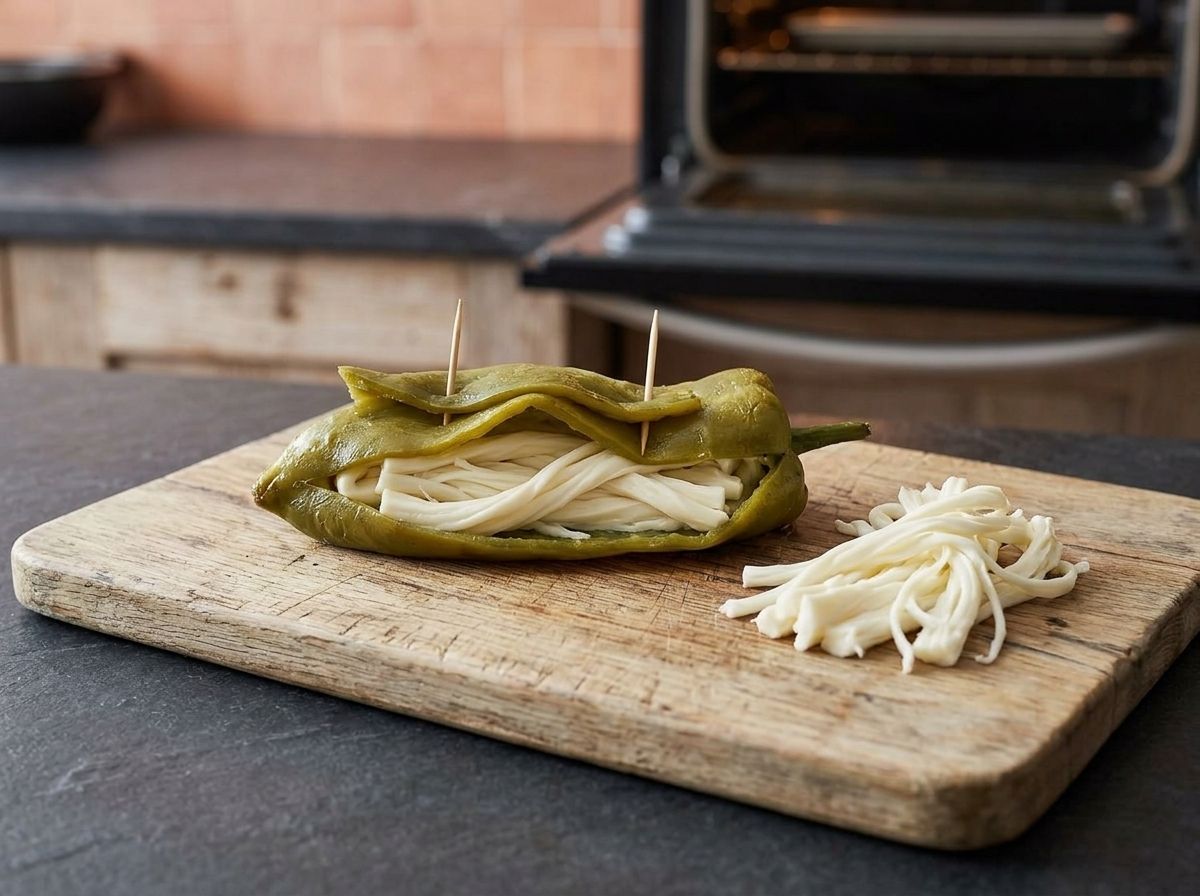
Fill each chile with a quarter of the cheese, pushing it towards the tip and stopping short of the opening so the cut edges still overlap. Pin each one closed with two toothpicks.
- 6
Dust with flour
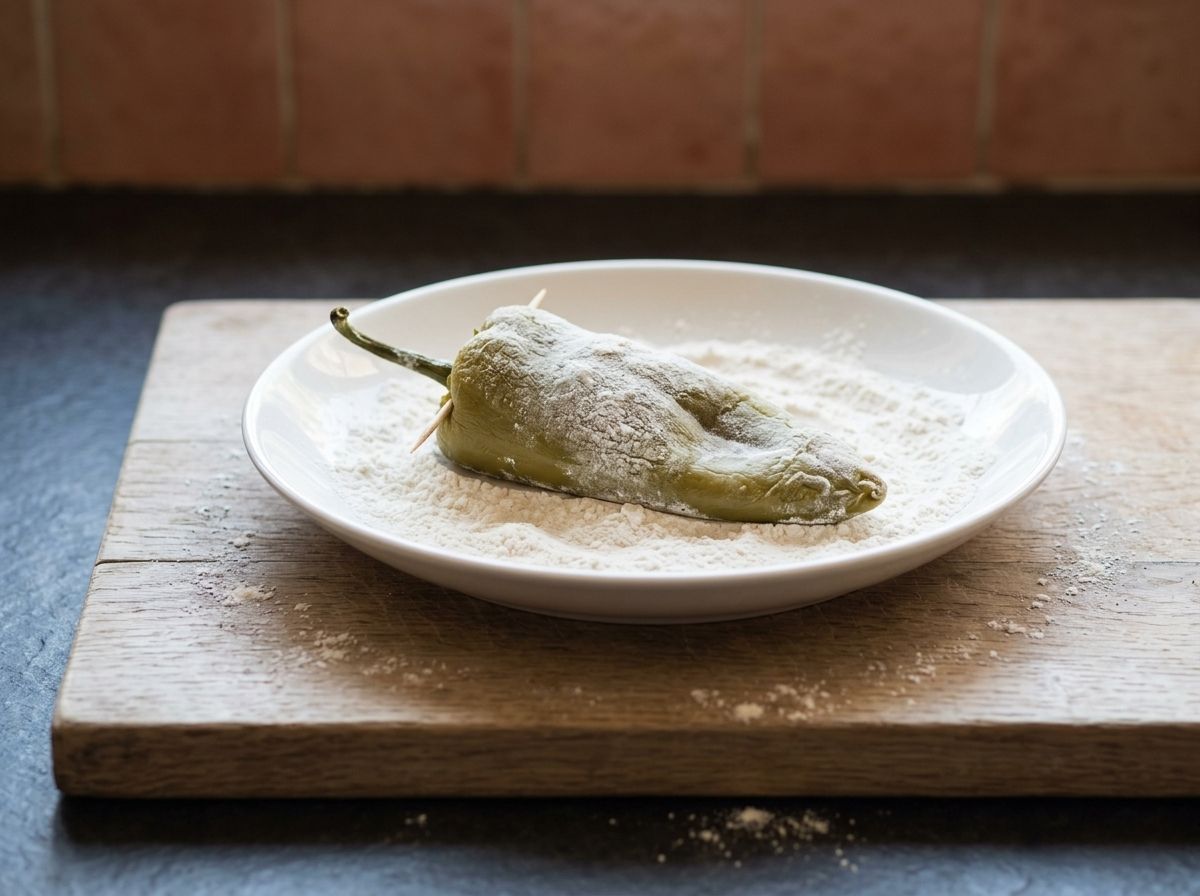
Spread the flour on a plate. Roll each stuffed chile in it and tap off the excess, so it carries the thinnest possible coat. Do not skip this step; it is what the batter holds onto.
- 7
Heat the oil
Pour the oil into a wide skillet to a depth of about half an inch and bring it to 350°F. Set a wire rack next to the stove.
- 8
Whip the capeado
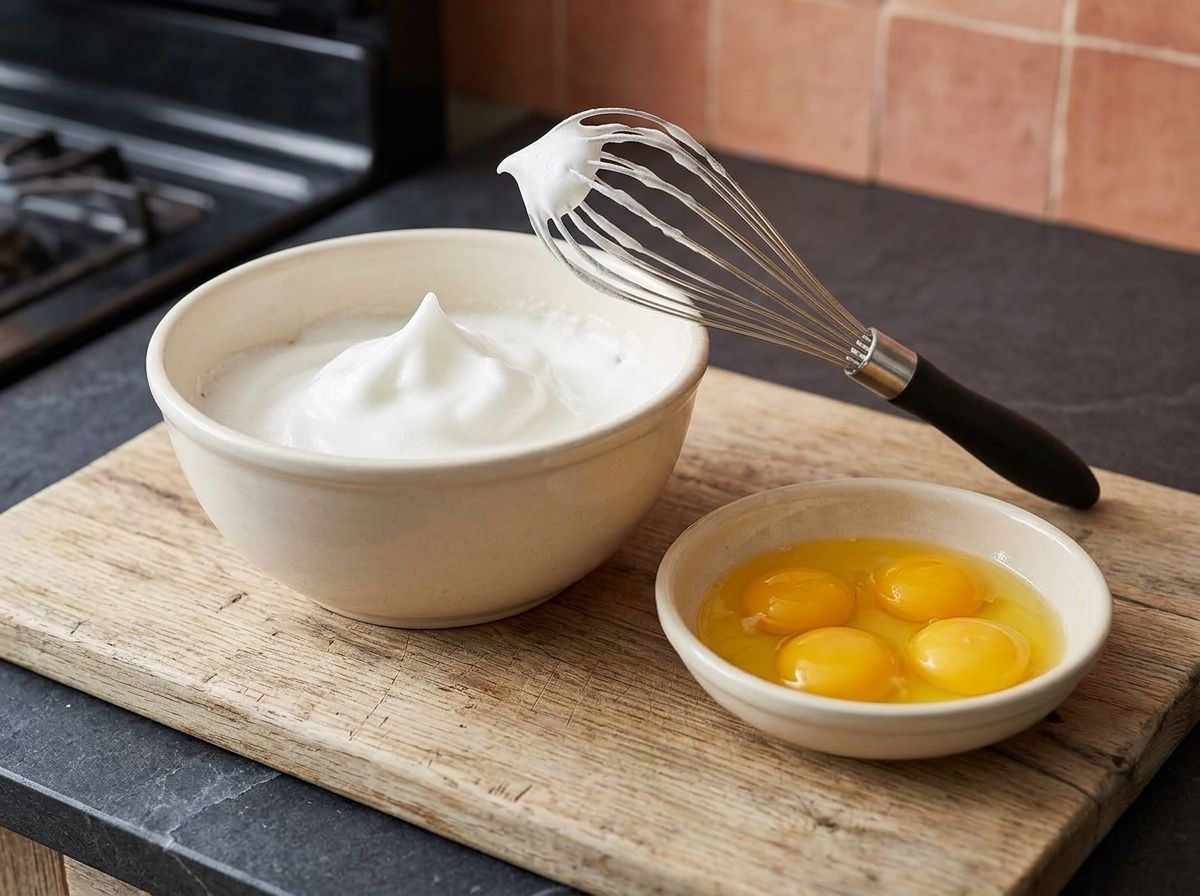
Beat the egg whites with the salt until they hold stiff, glossy peaks. Beat the yolks lightly in a separate bowl, then fold them into the whites in two additions, stopping while the batter is still streaky. Use it immediately.
- 9
Fry until golden
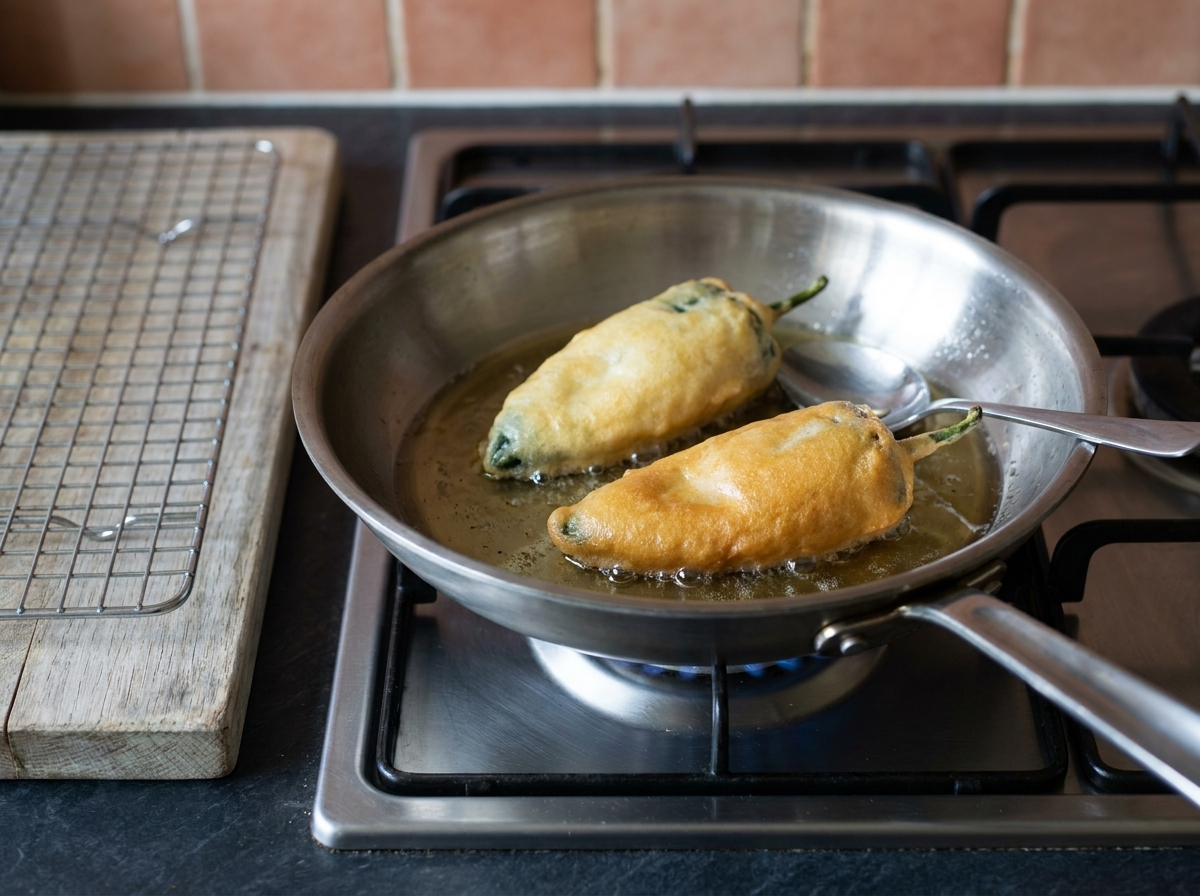
Holding a chile by the stem, lower it into the batter and turn it to coat, then lay it into the oil away from you. Fry two at a time for 2 to 3 minutes a side, spooning hot oil over the top, until puffed and deep gold. Lift onto the wire rack and pull out the toothpicks.
- 10
Serve in the caldillo
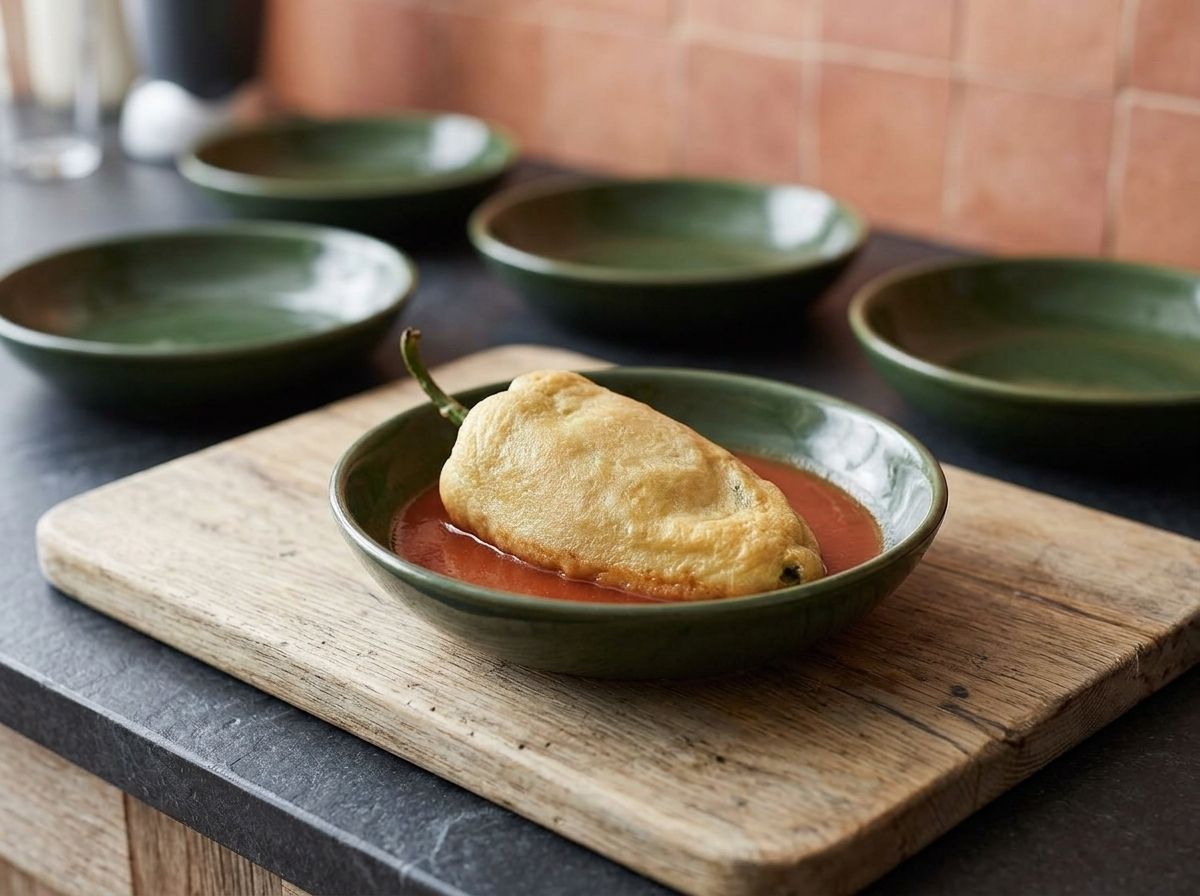
Ladle the warm caldillo into four shallow bowls and sit a chile in each one, so the sauce comes partway up rather than over the top. Add crema and cilantro if you are using them, and serve straight away.
Notes
Queso Oaxaca is the cheese to look for. Monterey Jack is the substitute, and cheddar is the one to avoid, because it splits under heat and turns greasy inside the chile.
Cornstarch in place of the flour dusting makes this gluten free, with a slightly more fragile coat.
Use round toothpicks and count them in and out, which is easier than finding one at the table.
The caldillo doubles well and keeps 3 days in the fridge, so it is worth making more than you need.
Nutrition Facts
4 servings · 556 g per serving
- Calories
- 561 kcal
% Daily Value*
- Total Fat
- 38.2 g49%
- Saturated Fat
- 14.9 g75%
- Sodium
- 1589 mg69%
- Total Carbohydrate
- 34.1 g12%
- Dietary Fiber
- 6.8 g24%
- Sugars
- 13.2 g—
- Protein
- 24.5 g49%
Recipe from veggierecipes.blog
When it goes wrong
Troubleshooting
The batter slid straight off into the oil
Almost always the flour. Egg foam cannot grip a smooth chile, and a thin dusting is what gives it something to hold; skip it and the coating peels away the moment it hits the pan. The other cause is a wet chile, so pat each one dry after peeling and again after stuffing. If it is still sliding, your oil is too cool and the batter is sitting there loose instead of setting.
My coating came out soft rather than crunchy, so what did I do wrong
Nothing. This is the entry worth reading twice, because it is the most common way people decide they failed at a dish they actually got right. A capeado is whipped egg, and whipped egg fries into something tender and soufflé-like, not into a crust. Then it goes into the caldillo and softens further, on purpose. The crisp chile relleno you get in American restaurants has flour or breadcrumbs or beer in the batter to make it behave that way. If crunch is what you are after, that version exists and is a fine thing to eat, but it is not this one.
The egg whites would not stiffen
Three usual suspects, all of them fat. A speck of yolk got into the whites, which is why you separate over a cup. The bowl was not properly clean or not properly dry. Or the eggs came straight from the fridge, and cold whites take much longer and never get as far. Start again with fresh whites rather than trying to rescue them, because a foam that will not hold is not going to coat anything.
The chile tore while I was peeling it
Over-roasted. You want the skin blackened and blistered, which takes less time than people expect, and the flesh underneath still firm enough to be a container. Once it collapses it cannot be stuffed. The other mistake is rinsing them under the tap to speed up peeling: it washes away the roasted flavor you just spent twelve minutes building and waterlogs the flesh. Sweat them covered, then rub the skin off with your fingers and accept that a few black flecks stay behind.
The cheese leaked out all over the pan
Overstuffed, most likely, or the slit runs too far towards the tip. Cut only as far as you need to get the seeds out, leave a good inch at the bottom intact, and fill so the edges still overlap rather than gape. Two toothpicks hold it shut. Cool oil makes it worse, because the longer the chile sits in the pan the longer the cheese has to find a way out.
It was heavy and greasy
The oil was below temperature. Batter that does not seal on contact drinks oil instead of repelling it, and 350°F is the number to hold. Fry two at a time at most, because four chiles dropped into one pan will pull the temperature down fifty degrees. Drain on a wire rack rather than on paper, which traps steam underneath and softens the base you just fried.
Before you serve
Serving & Storage
In Puebla this arrives in a shallow bowl with the caldillo poured around it, one or two chiles a person, and it is a plate of food rather than an appetizer. The thin tomato broth is not garnish: it is there to be spooned over the top and mopped up afterwards, which is why the coating being soft stops mattering the moment you eat it the way it is served.
White rice and a bowl of beans is the standard company, with warm corn tortillas to tear and use as a mop. If you want one thing alongside rather than three, make it the rice, because it soaks up the caldillo that ends up in the bottom of the bowl. A spoonful of Mexican crema and a few cilantro leaves are optional and both cut the richness.
Making it ahead
The caldillo is the part that keeps and it is better on day two. Make it up to 3 days ahead, refrigerate, and warm it through while you fry. The chiles can be charred, peeled, seeded and even stuffed a day in advance: lay them on a tray, cover, and refrigerate, then bring them back to room temperature before they meet the batter, because a fridge-cold chile cools the oil.
The batter cannot be made ahead by even an hour. It is a foam, it starts collapsing as soon as you stop whisking, and a deflated capeado coats like a wet omelette. Whip it when the oil is already at temperature and the chiles are already floured and waiting.
Storing leftovers
Fried chiles do not reheat well and there is no technique that changes that, so cook the number you are going to eat. If you do have leftovers, keep them submerged in the caldillo in a covered container for up to 2 days and reheat them gently in the sauce in a covered pan over low heat. The coating will be soft and slightly custardy, which is honestly not far from how it is served in Puebla anyway. A microwave turns the batter rubbery and should be the last resort.
Still wondering
Frequently Asked Questions
How spicy is a chile relleno?
Milder than most people expect, and less predictable than anyone would like. Poblanos sit around 1,000 to 2,000 on the Scoville scale, against 2,500 to 8,000 for a jalapeño, so a typical one is warm rather than hot and the cheese blunts what heat there is. The catch is variability: heat in poblanos depends on growing conditions, and two chiles from the same box can be noticeably different with nothing on the outside to warn you. If you are cooking for someone heat-averse, taste a raw sliver of each one after seeding and set aside any that bite.
Can I bake them instead of frying?
Not and still get this dish, and it is worth being straight about why. The capeado is an egg foam that sets on contact with hot oil, which is what makes it puff and hold its shape. Oven heat dries it instead, so it flattens onto the chile and sets into something closer to a thin omelette. What you get is perfectly edible baked stuffed poblanos in tomato sauce, which is a good dinner and is not a chile relleno. If the pan of oil is the objection rather than the frying itself, shallow fry in about half an inch and turn them once.
Is chile relleno gluten free?
Very nearly, and easily made so. The chiles, the cheese, the eggs and the caldillo are all naturally gluten free, and the only wheat in the recipe is the flour you dust the chiles with before battering. Swap in cornstarch or rice flour at the same quantity and the dish is gluten free; the coating grips slightly less well, so be a little more careful turning them. If you are using a shop-bought broth for the caldillo, check that label too.
Can I use jarred roasted poblanos and skip the charring?
You can, and on a weeknight it is a reasonable trade. Whole roasted poblanos come in jars and tins in most Latin groceries, already peeled and usually already slit. Two things to expect. They are softer than one you roasted yourself, so handle them as though they will tear and consider a third toothpick. And the flavor is flatter, because most of what charring gives you is smoke and that does not survive a jar. Drain them well and pat them very dry, since packing liquid is the enemy of a batter that has to cling. What you cannot buy is the smell of the kitchen while they blister, which is half the reason to make this at all.
More Traditional Mexican Dishes
Made this?