
Thai Noodle Salad Recipe
Published · Updated
Almost every Thai noodle salad written in English is dressed in peanut butter; the one Thailand actually eats is dressed in lime, and it tastes like a different dish.
Jump To Recipe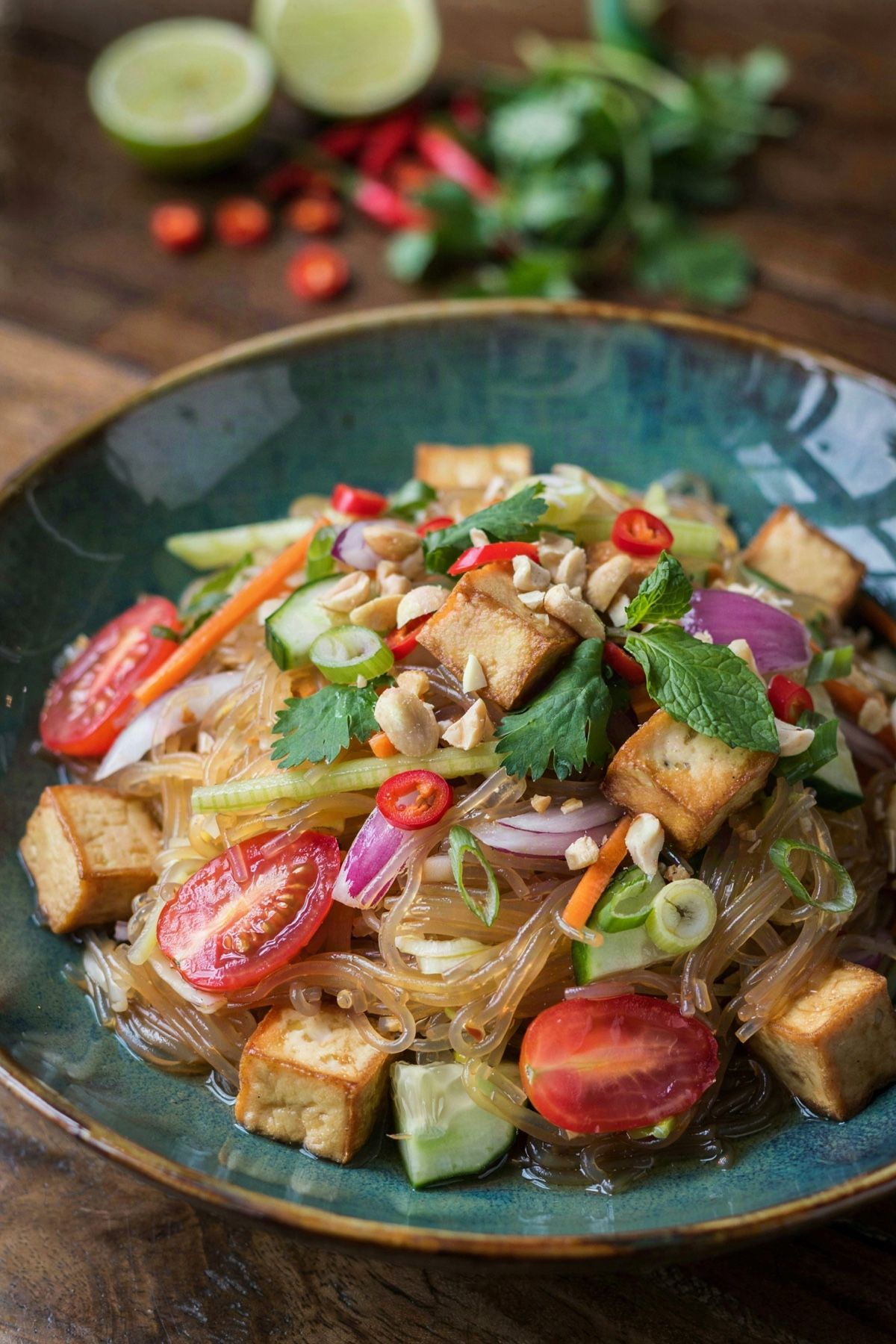
The Salad That Ruined Peanut Dressing For Me
I made the peanut butter version for years. It goes down well at a potluck, it holds up on a picnic table, and I never once questioned it. Then I ate yam woon sen at a plastic table in Chiang Mai, out of a bowl that cost about a dollar, and I spent the rest of that trip trying to work out what was missing from mine.
What was missing was the sourness. A real yam dressing is lime first and everything else second, and it hits you at the back of the jaw. Peanut butter cannot do that. It is thick and sweet and it coats every strand in the same beige, which is exactly why it travels so well to a potluck and exactly why it tastes like one flavor instead of four.
I still make the peanut one when someone asks for it. But this is the one I actually eat, usually standing at the counter with the bowl in my hand, usually before it gets as far as the table.
The story
Thai Noodle Salad Is A Yam, And Yam Means Toss
In Thai, yam is not a noun. It is a verb, and it means to mix or to toss. That is the whole definition of the category: anything you toss with the standard dressing becomes a yam, whether it is glass noodles, grilled beef, shredded green mango or a tin of sardines. Nothing about it requires a leaf, which is why translating it as salad sends English speakers looking for the wrong dish.
The specific one behind almost every Thai noodle salad worth eating is yam woon sen. Woon sen are the noodles, thin threads of mung bean starch that turn clear as they hydrate, which is where both glass noodle and cellophane noodle come from as names. They came into Thailand through Chinese cooking and were absorbed completely, the way a lot of Thai staples were, and they now sell in every market in the country in fifty gram bundles tied with string.
The dressing is the part that does not change. Lime juice, fish sauce, palm sugar and fresh chilies, in a balance that leans sour first, salty second, then sweet and hot behind them. Learn those four and you can dress almost anything. The proportions shift a little from cook to cook and from dish to dish, but the shape is fixed, and a yam that tastes flat is nearly always a yam that is short on lime.
What sits on the first page of English results for thai noodle salad is a different recipe altogether. It is dressed in peanut butter loosened with soy sauce, rice vinegar and maple syrup, and it descends from satay sauce rather than from yam. Satay sauce is real Thai cooking, but it belongs to grilled skewers, where a thick sweet sauce has something charred to play against and something solid to cling to. Spooned over cold noodles it does what thick sweet sauces do: it coats everything evenly, muffles the herbs, and turns the whole bowl one color.
Peanuts do belong in yam woon sen. They go in whole or roughly crushed, at the very end, and they stay crunchy. That is the difference in a single line. In the Thai dish the peanut is a texture. In the Western one it is a sauce.
None of the flavor here comes from meat, which is why this dish converts so cleanly. Yam woon sen usually carries a little minced pork and a few shrimp, but they are there for substance rather than for seasoning, and the character of the bowl is entirely in the dressing. Put fried tofu in their place and you lose nothing you can taste. The one genuine substitution is the fish sauce, and Thailand had already solved that: vegetarian fish sauce, usually built from soybeans and seaweed, is an ordinary supermarket product there, stocked for the vegetarian festival in October when a large part of the country eats jay for nine days.
So what follows is yam woon sen with the pork and shrimp taken out and fried tofu put in, which lands it closer to a Bangkok bowl than most of the meat versions written in English. It comes out gluten free and dairy free as a side effect, which nobody designed.
What to buy
Ingredient Notes
Glass noodles (woon sen)
Mung bean starch, sold dried in bundles of about 50 grams, three or four to a pack. Look for bean thread, cellophane or woon sen on the label, and check that the ingredients read mung bean starch and water. Sweet potato starch noodles sit in the same aisle and look almost identical, but they are far thicker and built for Korean japchae, not for this. Rice vermicelli will stand in if it is all you can get, though it goes chalky and clumps hard once cold, so eat that version the same hour you make it.
Vegan fish sauce
This is the ingredient that decides whether the salad tastes Thai or merely tastes fresh. Vegan fish sauce, usually soybean and seaweed based, gets closest, and any Asian grocer or a reasonable online order will have it. Tamari is the fallback and it does work, but it is straighter and saltier and misses the slight funk, so add half a teaspoon of white miso to make up the difference. Regular soy sauce works too, it just contains wheat, so the salad stops being gluten free.
Palm sugar
Sold as hard discs or a soft paste, and worth buying for the caramel note it carries that white sugar has no version of. Chop or shave it fine before it goes anywhere near liquid, then work it into the pounded aromatics until you cannot feel grit against the mortar. Palm sugar left in lumps simply sits at the bottom of the bowl, and the dressing then reads harsh and sour with an odd sweet surprise at the end. Light brown sugar substitutes at the same volume.
Thai chilies
Bird's eye chilies, small and blunt ended, hot in a way that arrives a second late. Two is a mild version by Thai standards and about right for most people; four is closer to how it would come out of a Bangkok kitchen. Taking the seeds out keeps the fruity flavor and loses some of the burn. Serranos are the easy supermarket stand-in and are much milder, so use three of them in place of the two Thai chilies and accept a gentler bowl.
Celery
Chinese celery is what actually goes in this in Thailand: thin hollow stalks, far more leaf, and a sharper, almost medicinal flavor. If your Asian grocer has it, buy it and use the leaves as a herb. Ordinary celery is a true substitute rather than a compromise, but slice it thin and on a steep diagonal so it lands as a crunchy accent instead of a mouthful of raw celery.
Firm tofu
Firm or extra firm, never silken. Press it properly, because water left inside the block is water that ends up diluting the dressing in the bowl, and a wet cube steams in the pan instead of browning. If you would rather skip the frying altogether, smoked tofu is a genuinely good shortcut: cube it straight from the packet and fold it in at the end.
Thai Noodle Salad
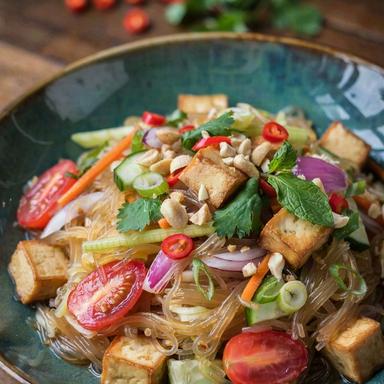
Glass noodles tossed in a sharp lime and chili dressing with golden tofu, crisp vegetables and crushed peanuts. The Thai version, not the peanut butter one.
Ingredients
Equipment
As an Amazon Associate I earn from qualifying purchases, at no extra cost to you.
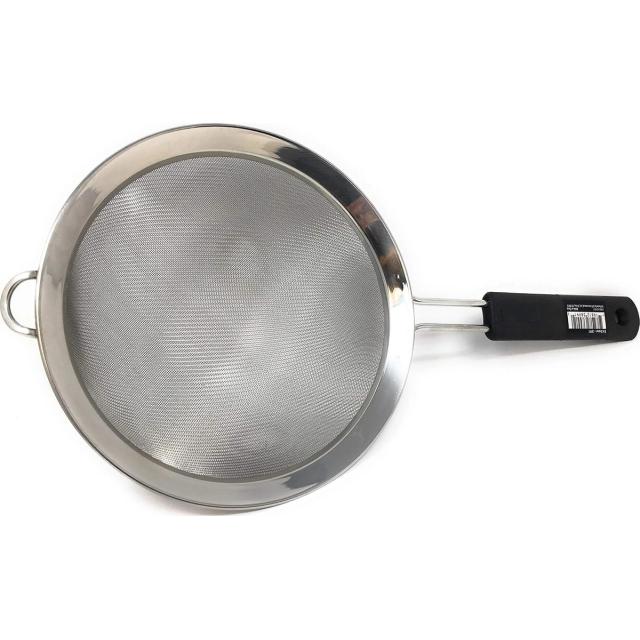
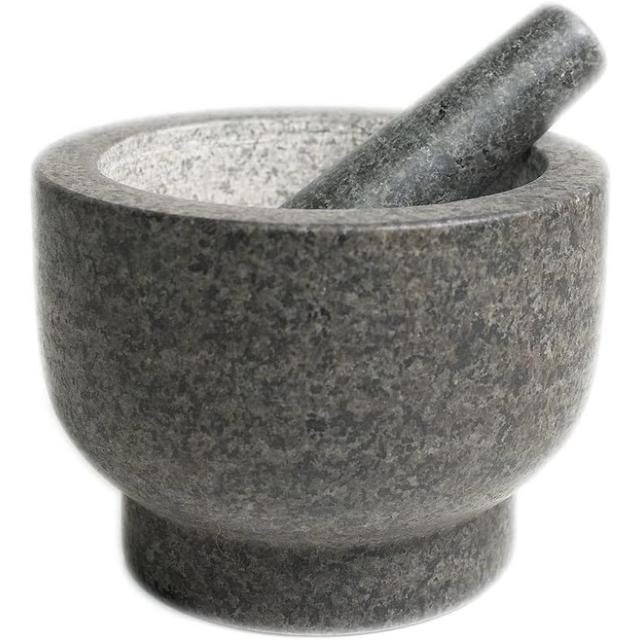
Instructions
- 1
Press the tofu
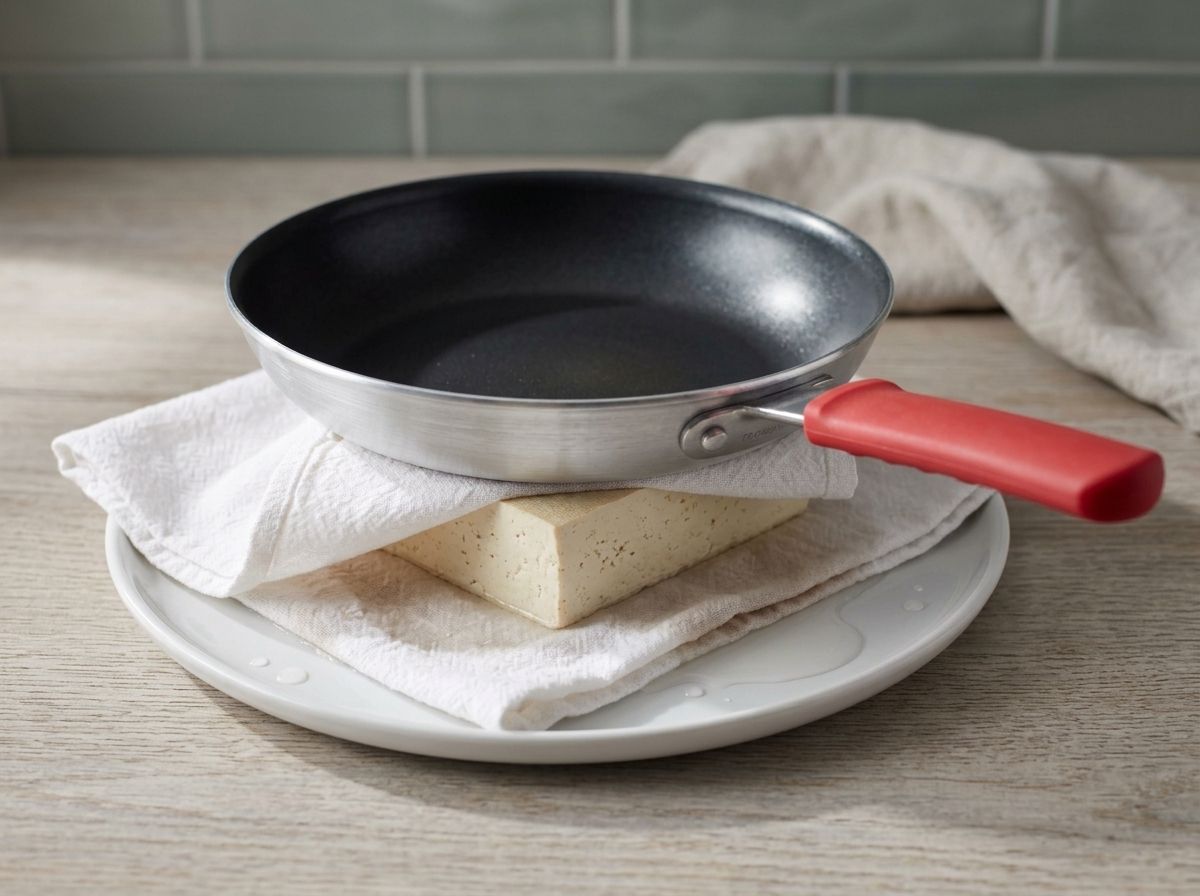
Drain the tofu and set the block on a plate lined with a folded kitchen towel. Lay another towel over it and weigh it down with something heavy, a cast iron pan or a couple of cans. Leave it 15 minutes while you get on with the dressing and the vegetables. You are looking for a block that feels noticeably firmer and a towel that is visibly wet.
- 2
Pound the garlic and chilies
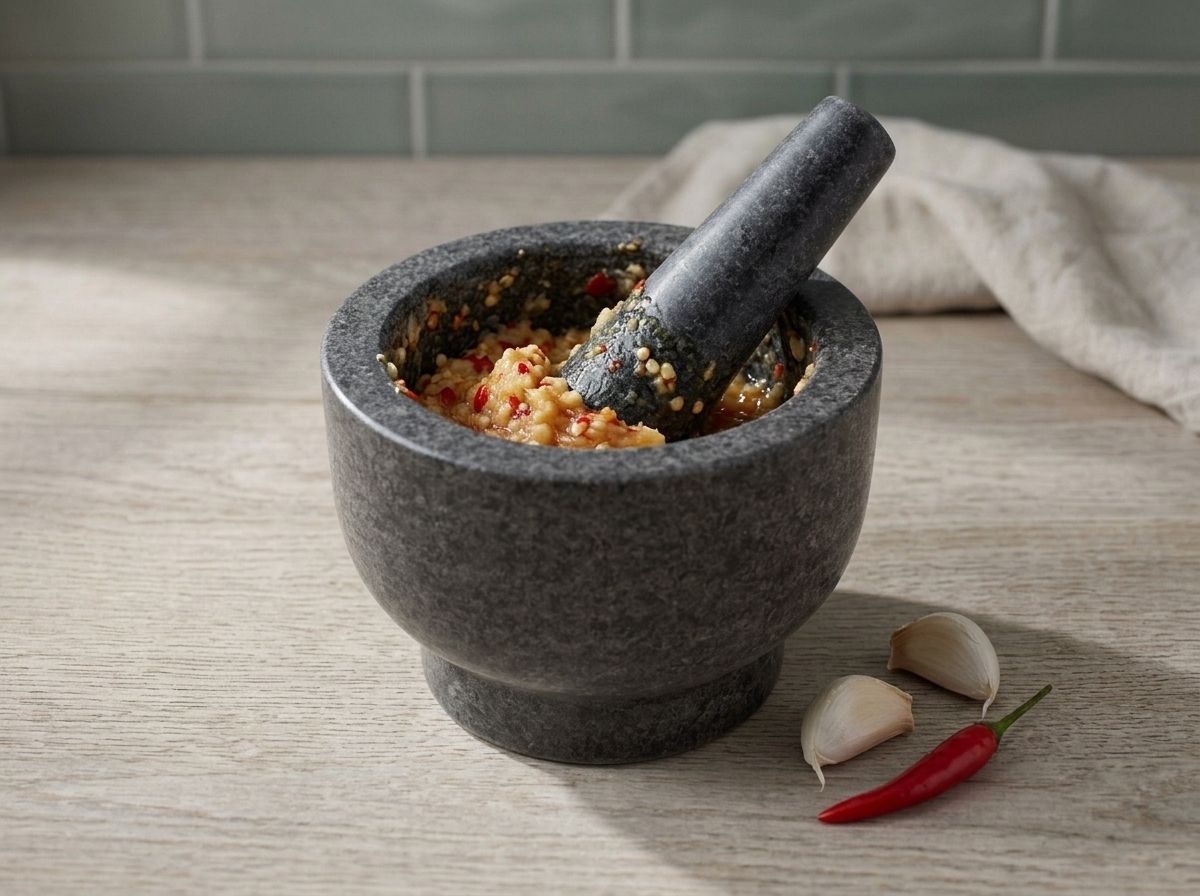
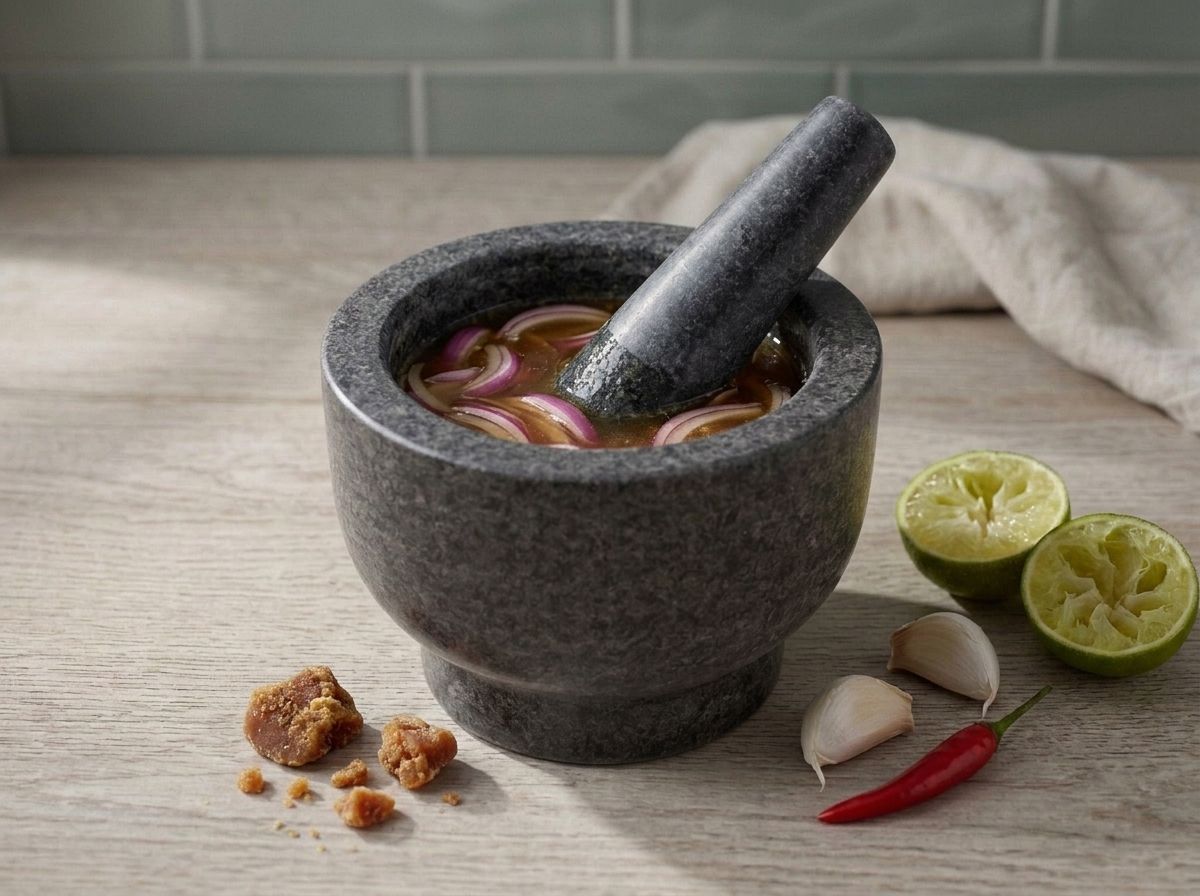
Put the garlic and the Thai chilies in a mortar with a pinch of salt and pound them to a rough paste, about a minute. Without a mortar, mince both as finely as you can and then drag the flat of the knife across the pile several times to crush them.
- 3
Dissolve the sugar and mix the dressing
Add the palm sugar to the mortar and work it into the paste until you cannot feel any grit, then stir in the lime juice and the vegan fish sauce. Taste it on its own. It should be aggressively sour and salty at this stage, because the noodles and vegetables will flatten it out considerably. Slide the sliced red onion into the bowl and leave it sitting there.
- 4
Cut the vegetables and herbs
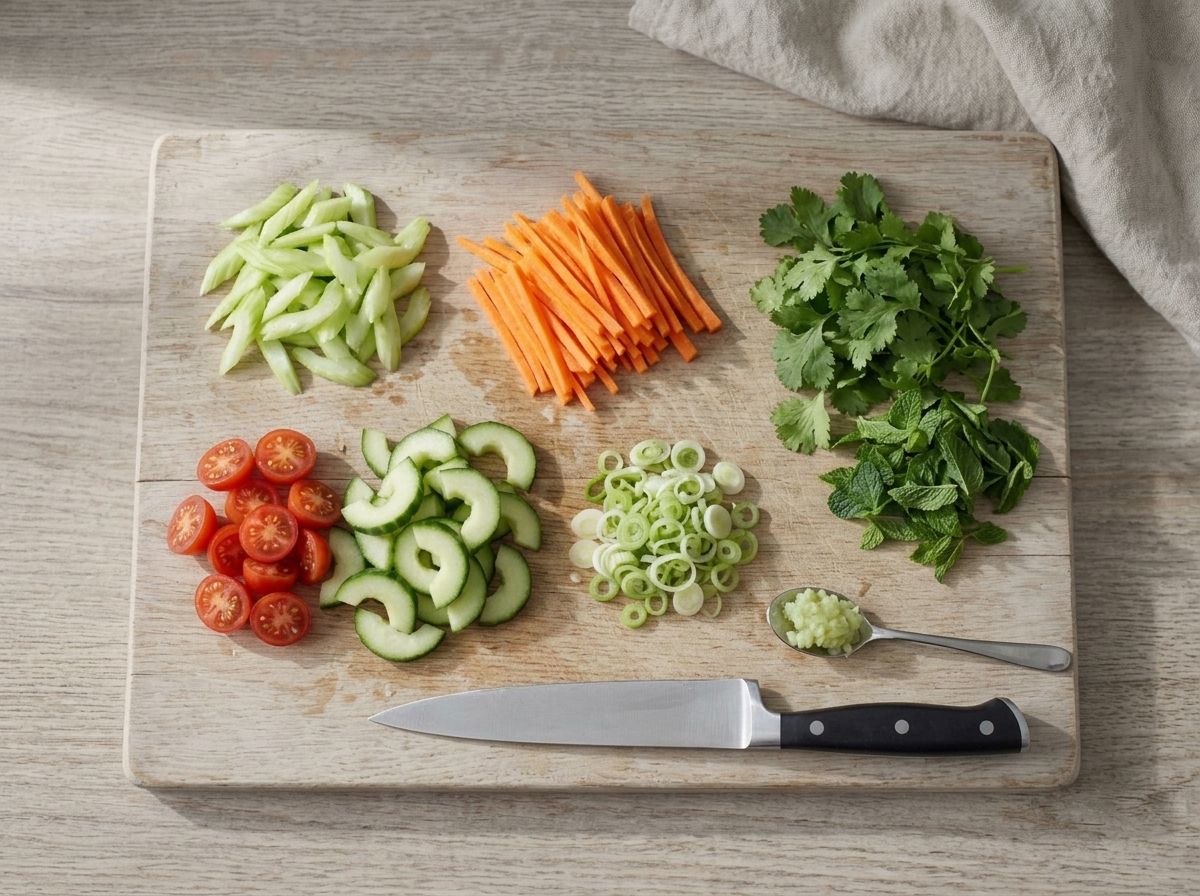
Slice the celery thin on a steep diagonal, julienne the carrot, halve the cherry tomatoes, and scrape the seeds out of the cucumber before slicing it. Roughly chop the cilantro, thin stems included, and tear the mint. Keep the herbs in a separate pile; they go in at the very end.
- 5
Fry the tofu
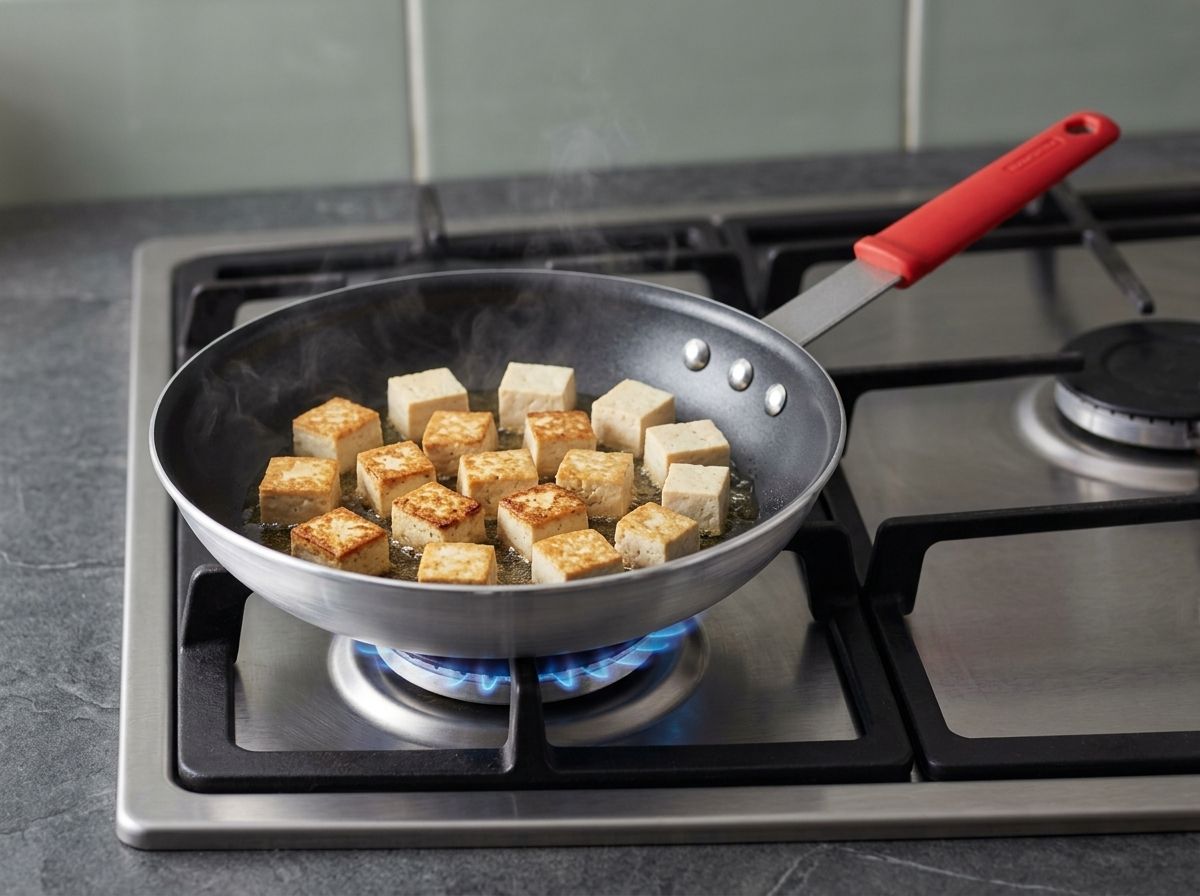
Cut the pressed tofu into 3/4 inch cubes and pat the cut faces dry. Heat the oil in a non-stick skillet over medium-high until it shimmers, add the tofu in a single layer, and leave it alone for 3 minutes. It will stick at first and release itself once a crust forms. Turn and repeat until most sides are golden, about 10 minutes in total, then take the pan off the heat.
- 6
Soak the noodles
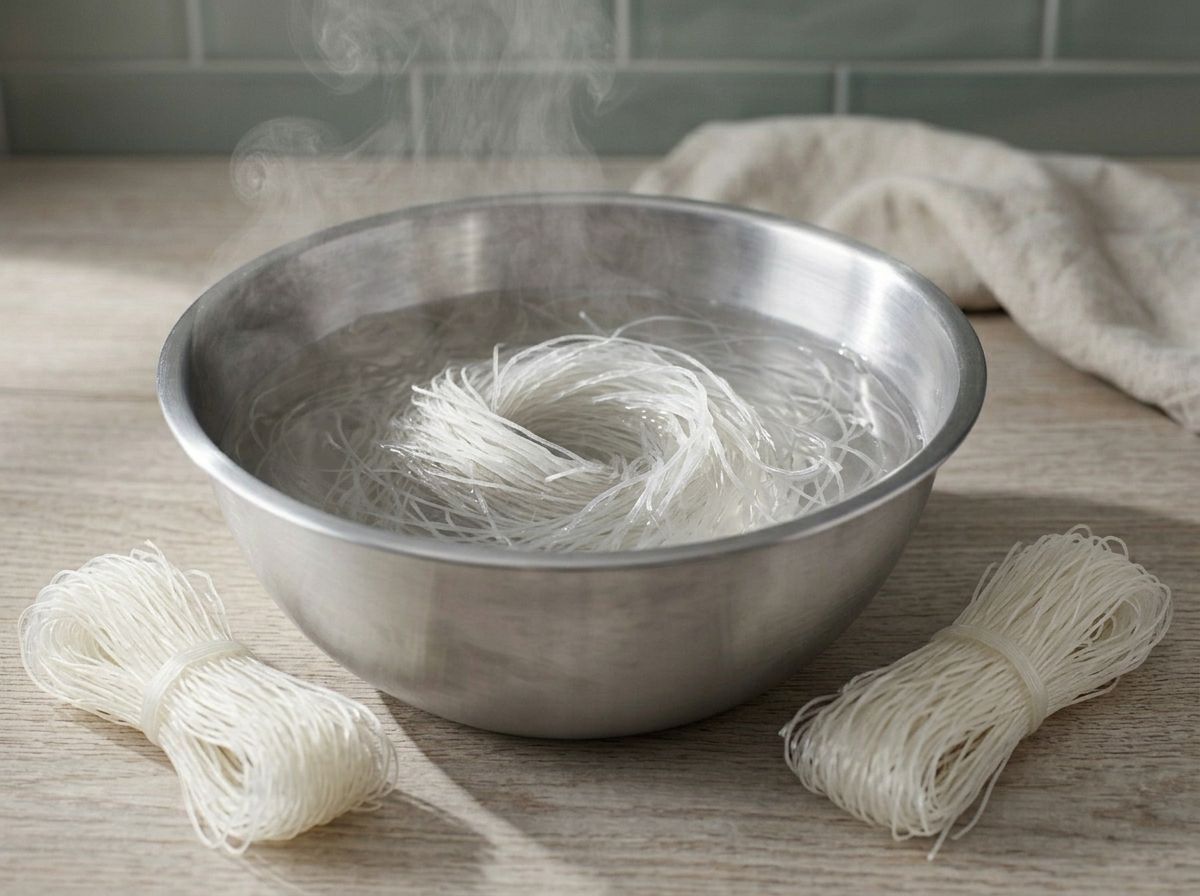
Put the dried noodles in a large heatproof bowl and pour just-boiled water over them until they are completely submerged. Leave them 4 to 5 minutes, until they have turned clear and bend easily without snapping. Do not boil them, and ignore the cooking time on the packet. Glass noodles go from done to mush in well under a minute of real boiling.
- 7
Rinse, cut and drain hard
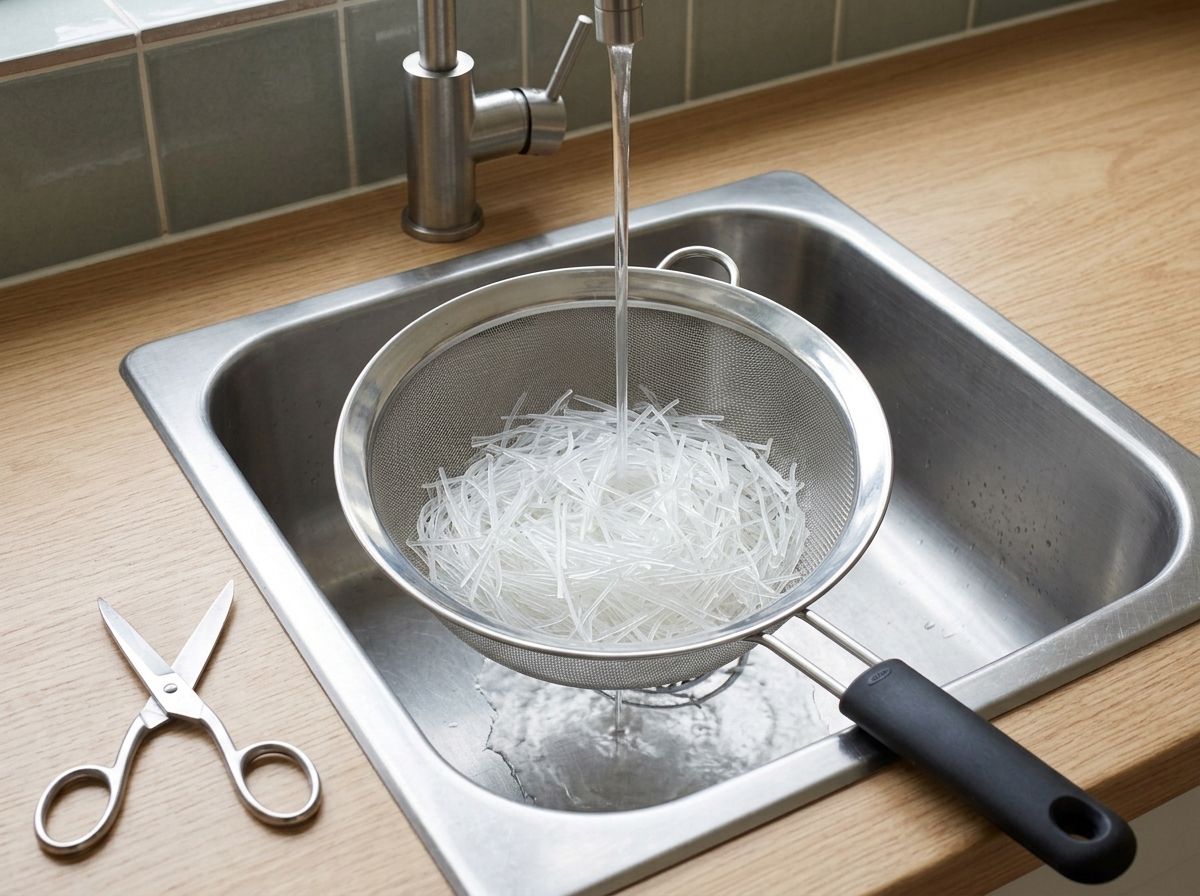
Tip the noodles into a strainer and rinse under cool running water for about 20 seconds, lifting them with your fingers so the water reaches everything. This washes off the loose starch that would otherwise glue them into a block. Take kitchen scissors to the pile in the strainer and cut through it three or four times, until nothing is longer than about 3 inches, then press down firmly with your hand to force the water out.
- 8
Dress the noodles first
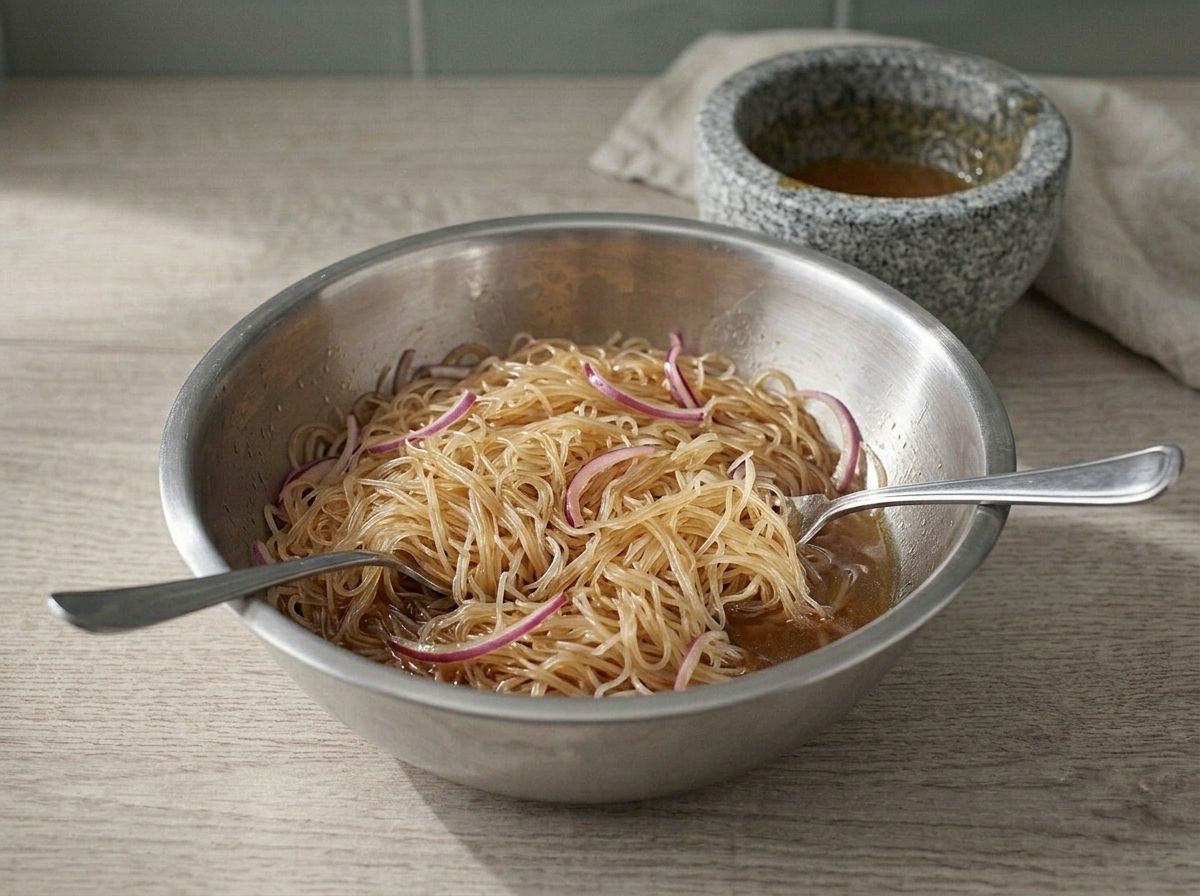
Tip the drained noodles into a large mixing bowl and pour over about two thirds of the dressing, red onion and all, while they are still faintly warm. Toss with your hands or two forks until every strand is coated and no clumps are left. Doing this before the vegetables arrive is the whole trick: the noodles are the only bland thing in the bowl, and this is the one moment they will absorb anything.
- 9
Toss everything together and serve
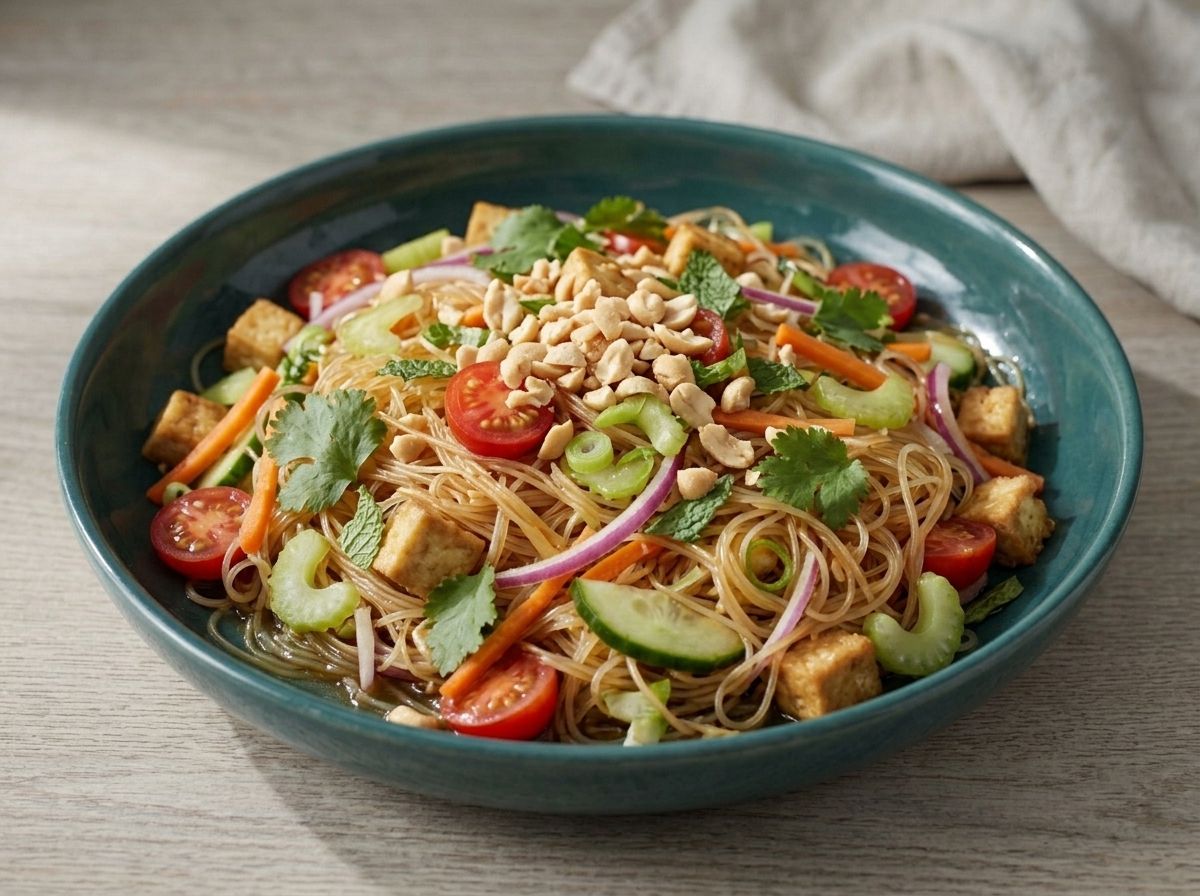
Add the celery, carrot, tomatoes, cucumber, scallions and fried tofu, and pour over the rest of the dressing. Toss gently, then fold through the cilantro and mint. Taste and correct it: more lime if it reads flat, more vegan fish sauce if it reads sour. Scatter the peanuts over the top, with the fried shallots and Thai basil if you are using them, and serve within 10 minutes.
Notes
Shredded green mango, snow peas or bean sprouts all fit here. Add them raw, at the end, with the other vegetables.
For a nut-free version use toasted sunflower seeds. They give the same crunch, and the dressing carries the dish either way.
Double the dressing and keep half in a jar. It dresses shredded cabbage, grilled mushrooms or cold rice noodles just as well.
Fresh lime only. The dressing is mostly lime juice, so bottled juice puts its metallic edge right at the front of the dish.
Nutrition Facts
4 servings · 376 g per serving
- Calories
- 456 kcal
% Daily Value*
- Total Fat
- 20.5 g26%
- Saturated Fat
- 3 g15%
- Sodium
- 1199 mg52%
- Total Carbohydrate
- 55 g20%
- Dietary Fiber
- 5.5 g20%
- Sugars
- 10.6 g—
- Protein
- 16.9 g34%
Recipe from veggierecipes.blog
When it goes wrong
Troubleshooting
The noodles turned to mush
They were boiled. Glass noodles are starch threads and they go from firm to disintegrating in well under a minute of real boiling, which makes the packet instruction to cook them for four to six minutes a trap when they are headed for a salad. Pour just-boiled water over them off the heat instead, leave them four or five minutes until they have gone clear and bend without snapping, and drain. They carry on softening for a minute after that, so pull them while they still feel slightly firm.
It came out of the fridge as one solid block
Two things cause this and you want to fix both. Starch noodles harden and stick as they cool, the same process that makes day-old rice go hard, and any loose starch left on the surface sets like glue as it dries. So rinse the drained noodles until the water runs clear, then dress them straight away rather than at the end, while they are still faintly warm and every strand can take a coating. A block that has already formed will loosen if you leave it out for twenty minutes and work it apart with your fingers.
There is a pool of liquid in the bottom of the bowl
Salt pulls water out of everything raw it touches, so the cucumber and the tomatoes start weeping the moment the dressing hits them, and any water still clinging to the noodles adds to it. Scrape the seeds out of the cucumber with a teaspoon before slicing, since that is where most of its water lives. Drain the noodles hard and press down on them in the strainer. Then dress the salad no more than ten minutes before anyone eats it. A little liquid at the bottom is normal and worth spooning back over the top.
It tastes sharp and sour and not much else
The sugar has not dissolved, or there is not enough of it. Palm sugar in lumps does nothing at all until it is in solution, so work it into the pounded garlic and chilies first, before any liquid goes in, and keep going until the paste is smooth. If it has genuinely dissolved and the bowl is still sharp, reach for salt rather than more sugar: another teaspoon of vegan fish sauce usually rounds it out, because in a yam the salty and the sour hold each other up.
The tofu is pale and soft instead of golden
Either the pan was not hot enough or the tofu was still wet. Press it for the full fifteen minutes, pat the cut faces dry, and get the oil shimmering before anything goes in. Then leave it alone. Tofu sticks hard for two or three minutes and then releases itself once a crust has formed, so turning it early tears the surface off. Worth saying plainly as well: this tofu will not stay crisp sitting in a wet salad, and it is not meant to. If you want crunch, hold it back and scatter it over each bowl at the table.
All I can taste is raw onion
That is not a fault in the recipe, it is a step that got skipped. The sliced red onion goes into the finished dressing as soon as the dressing exists and stays there while everything else gets done, which is about fifteen minutes. The acid takes the sulfurous bite off it, and the onion hands the dressing back a little sweetness in exchange. Straight from the board into the bowl, it walks over everything else in there.
Before you serve
Serving & Storage
In Thailand a yam is not a make-ahead dish and it is not really a side dish either. It is tossed to order, arrives at the same time as everything else, and gets eaten alongside rice and two or three other plates rather than on its own. If you are building a meal around it, something plain and hot next to it is the right instinct: steamed jasmine rice, or a fast stir fried green like morning glory or bok choy.
On its own it is a full lunch for two or a light dinner for four, and it wants nothing more than lime wedges and a small dish of extra sliced chilies for whoever asks. Put the peanuts on the table instead of scattering all of them over the bowl, so the last serving is as crunchy as the first.
Making it ahead
The dressed salad does not keep, and it is worth being direct about that rather than pretending otherwise. The noodles soften, the cucumber weeps and the herbs blacken, all inside a couple of hours. What does work is splitting the job up. The dressing can be made three days ahead and kept in a jar in the fridge, and it improves over the first day as the garlic and chili infuse into it. The tofu can be fried the day before and refrigerated. The vegetables can be cut in the morning and held in a covered box with a damp piece of kitchen towel laid over them. With that done, the noodles take five minutes and the tossing takes two, which turns this into one of the faster things you can put on a table.
Storing leftovers
Leftovers keep two days in the fridge and they will not be as good, but they are a long way from wasted. The noodles harden and clump, so take the container out half an hour before you want it and let it come up to room temperature, then break it apart with your fingers and wake it up with fresh lime juice and a new handful of herbs. Do not microwave it. Heat turns the mint bitter and collapses the cucumber completely.
Freezing does not work at any point in this recipe. Glass noodles come out of the freezer with the texture of wet thread, and every vegetable in the bowl is one that freezing ruins.
Still wondering
Frequently Asked Questions
Is 5 ounces of dried noodles really enough for four people?
Yes, and it looks wrong in the packet. Glass noodles take on roughly three times their weight in water, so 5 ounces dry comes out somewhere around 20 ounces hydrated, which is a very large bowl once the vegetables and tofu are folded through. Weigh them dry. Judging glass noodles by eye in the bundle is how people end up making twice as much salad as they meant to.
Can I double this for a party?
Double everything except the chilies, which scale badly. Go to three for a double batch rather than four, taste, and add more at the end if it needs it. The bigger problem is mechanical: a doubled quantity will not toss evenly in one bowl, and the strands at the bottom end up carrying all the dressing. Split it across two bowls, dress each one separately, then combine them on the serving platter.
Is this actually gluten free?
As written, yes. Mung bean noodles contain no wheat, and tamari is brewed without it. The two places gluten sneaks in are regular soy sauce, which is roughly half wheat, and vegan fish sauce itself, since some brands are thickened or seasoned with wheat protein. Read that bottle rather than assuming, because it is the one ingredient here nobody thinks to check.
Do I need a mortar and pestle?
No, a knife gets you most of the way. But pounding does something mincing does not: it ruptures the cell walls in the garlic and chilies so their oils go into the dressing rather than staying locked inside small pieces suspended in it. The practical result is that a pounded dressing tastes evenly of garlic and chili, while a minced one tastes of lime with occasional hot bits.
More Thai And Asian Noodle Dishes
Made this?