
Vegan Banana Pudding Recipe
Published · Updated
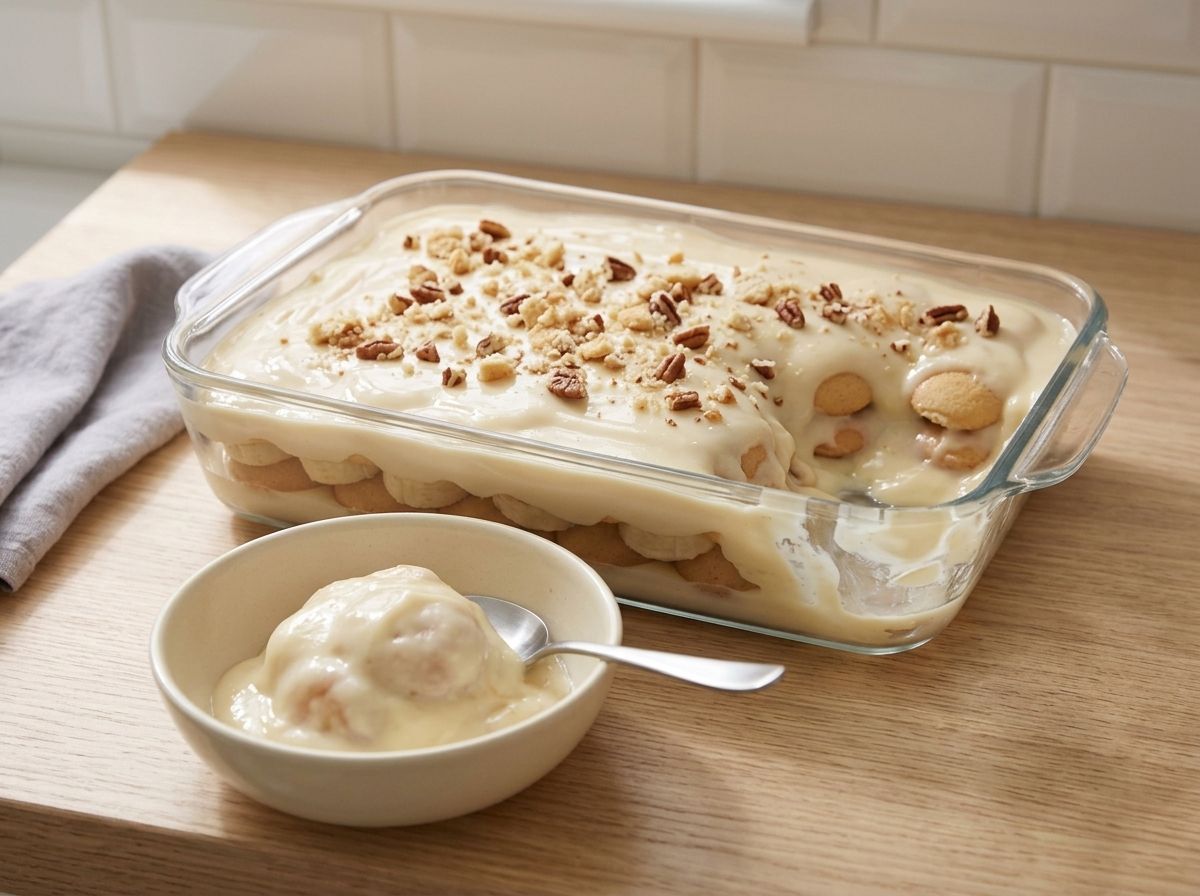
Vegan banana pudding built the way the Southern original works: warm custard poured over vanilla wafers so they soften into cake, with the crunch added at the table.
Jump To Recipe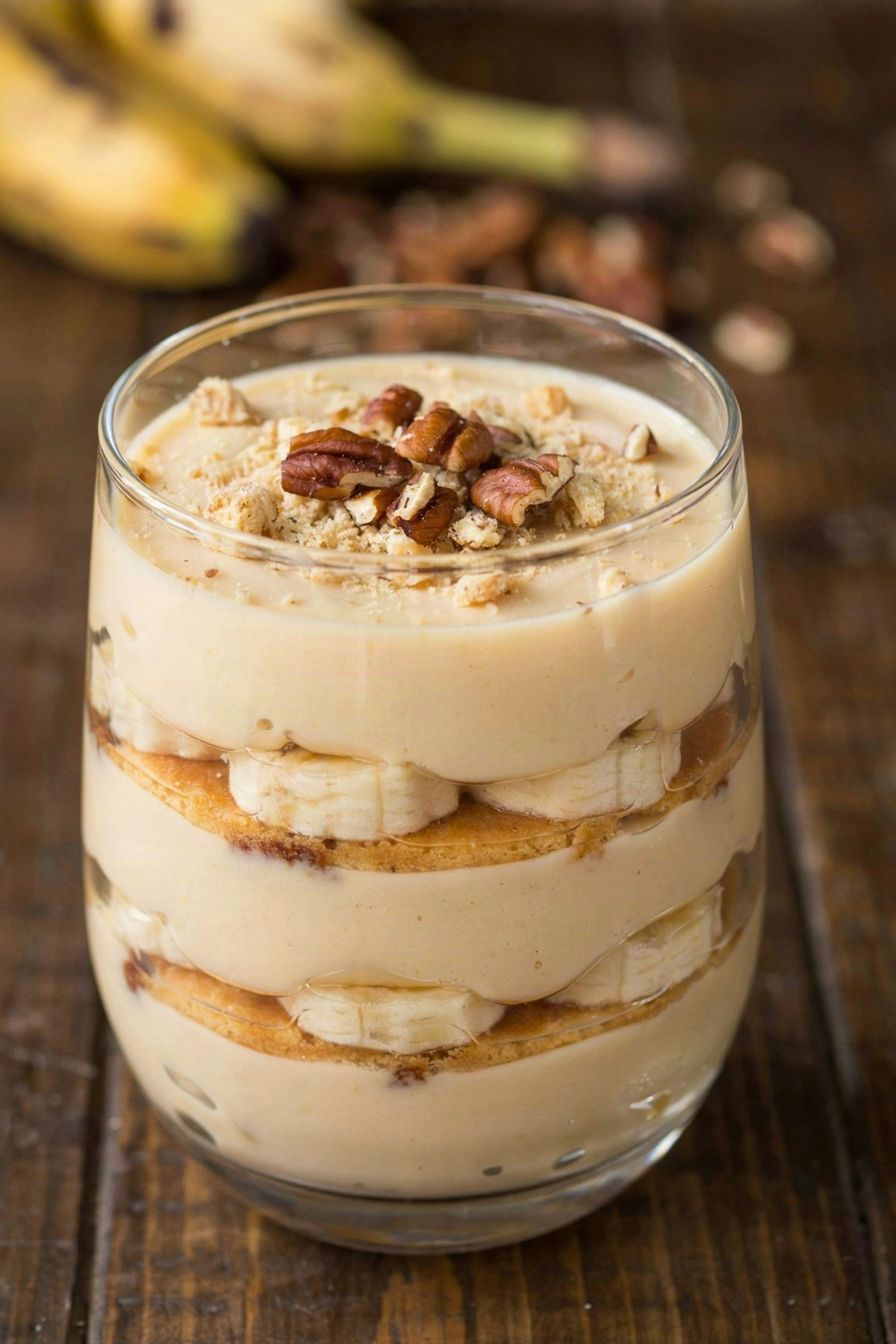
Why I Love This Vegan Banana Pudding
There’s something about a dessert that is pure nostalgia and still happens to be plant-based. When I dig into a glass of this vegan banana pudding I’m back at family barbecues and lazy summer afternoons, and nobody at the table has ever worked out what is missing.
Coconut milk gives it the richness that dairy usually provides, and the soy milk underneath keeps the whole thing tasting of vanilla and banana rather than of piña colada. What I like most is what happens overnight: the wafers pull moisture out of the pudding and soften into cake. A spoonful is all soft, and the crunch comes from the handful of wafers you crush over the top at the last minute.
A few things I like about this recipe:
- Super easy ingredients, most of which are in my pantry already.
- Customizable: you can substitute agave for maple syrup, or swap in your favorite vegan cookies.
- It has to be made the day before, which turns a chore into an advantage when you are feeding people.
- No eggs, no dairy, and no meringue to weep all over it in the fridge overnight.
Serve it with a sprinkle of nuts or coconut, and it looks impressive, an effortless dessert option.
I like that this pudding can win over even my most skeptical friends. This goes to show that plant-based can absolutely deliver on flavor and nostalgia. I hope you like it too.
The story
Banana Pudding Was Already Halfway Vegan
The first trace of banana pudding in print is a request, not a recipe. In 1878 a reader wrote to the “Information Wanted” column of The New York Times asking whether anybody had a receipt for frozen banana pudding. Bananas had been a curiosity in America before the Civil War, and then faster steamships out of the Caribbean met a railroad network that could carry them inland, and within twenty years they were among the cheapest things in the shop.
Cooks put the cheap new fruit into something familiar, and the familiar thing was English trifle. In 1888 Good Housekeeping, published in Massachusetts, printed what is counted as the first full recipe: chill a pint of custard, then line a dish with alternating layers of sponge cake and sliced banana. Hundreds followed within the decade, some with ladyfingers, some set with gelatin in molds, some finished with meringue. None of them were Southern. The early history of this dessert is northeastern magazines adapting a British pudding to an imported fruit.
The cookie arrived late and changed everything. Nabisco had made vanilla wafers since 1898, and in 1921 The Pantagraph of Bloomington, Illinois ran a recipe from a Mrs. Laura Kerley that swapped the sponge cake for a full pound of them. That is the first recorded version of the dessert as it is made now, and by the 1940s it was printed on the side of the box. The Southern identity came later still, largely from mid-century newspapers selling it as a Deep South specialty, and it stuck because a dish that needs no oven, feeds thirty and improves overnight is exactly what a church supper wants.
All of which makes this an unusually easy American dessert to veganize. Almost every other custard classic is built on eggs. Banana pudding gave its eggs up decades ago: the potluck version that took over after the war is a box of instant pudding mix, a can of condensed milk and a tub of whipped topping, with no egg anywhere in it. Cornstarch does the setting that yolks did in 1888, more predictably than they ever did. That leaves the cookie as the only real obstacle, because Nilla Wafers, the product this dessert has been married to for a century, contain both whey and egg. You will spend longer reading packets than making the pudding.
What to buy
Ingredient Notes
Full-fat coconut milk
Canned, not the thin drinking milk in a carton, and if it separated in the cupboard scrape in the solid cream and the water both. Light coconut milk is mostly water and sets soft and hollow. The fat does two jobs: richness while the pudding is warm, firmness once it is cold, because coconut fat is solid at fridge temperature. That second job is why this recipe needs less cornstarch than an all-plant-milk version.
Unsweetened soy milk
Soy is the right partner for the coconut because it is the only common plant milk with real protein and fat, which is what gives a cooked pudding body. Almond milk is essentially water. Oat works but is sweeter and brings its own starch, so the set is less predictable. Buy it plain: the vanilla-flavored ones push the sugar too high.
Cornstarch
A quarter cup is 32 g, but scoop-and-level varies by a third either way, so weigh it if you can. Flour is not a one-for-one swap, it has roughly half the thickening power. Arrowroot sets a glossier gel that turns slippery in a milk pudding and collapses if it is stirred once set, and tapioca goes stringy. Cornstarch is the right starch here, and all it asks in return is that you actually boil it.
Vegan vanilla wafers
Nilla Wafers are not vegan, and most supermarket own brands copy the same formula, so read the packet rather than assuming. A handful of smaller brands make a genuinely vegan version. Failing that, plain vegan shortbread or vegan digestive biscuits both work, and Lotus Biscoff works well while tasting of cinnamon and caramel rather than vanilla, which is a different dessert and a good one. Whatever you use has to start dry and crisp. A soft cookie has nothing to absorb with and goes straight to paste.
Ripe bananas
Yellow with brown freckles, not solid brown. Freckled bananas have converted enough starch to sugar to taste of something. Fully brown ones are sweeter but structurally finished, and they slump into the pudding overnight instead of staying as slices. Underripe is the worse mistake: a green-shouldered banana tastes chalky and astringent and nothing in the fridge fixes it. Four medium bananas is about 450 g peeled.
Maple syrup
80 ml is deliberately restrained, because the wafers arrive carrying a lot of sugar of their own. Grade matters more than you would expect: a dark robust maple argues with the vanilla, while a golden or amber grade stays in the background. Plain cane sugar is the genuinely neutral option, at 70 g plus two tablespoons of extra soy milk to replace the liquid.
Lemon juice
One tablespoon, and it is there for chemistry rather than flavor. Cut banana browns because an enzyme in the flesh reacts with oxygen, and acid slows that enzyme down. Bottled is fine, and lime works the same way.
Creamy Vegan Banana Pudding
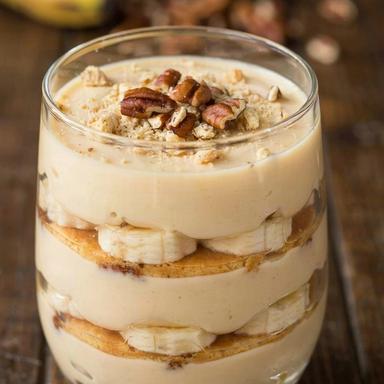
Silky vegan banana pudding on a coconut and soy milk base, layered warm with vanilla wafers and fresh banana so the cookies soften into cake overnight.
Ingredients
Equipment
As an Amazon Associate I earn from qualifying purchases, at no extra cost to you.
Instructions
- 1
Whisk a cold slurry
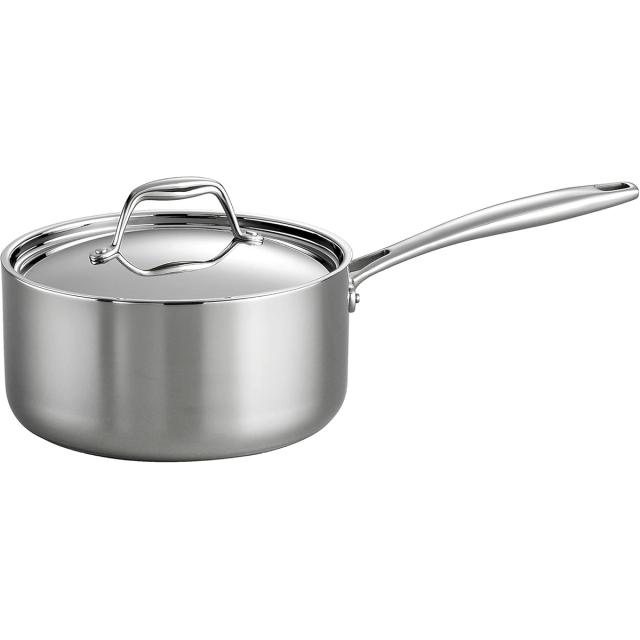
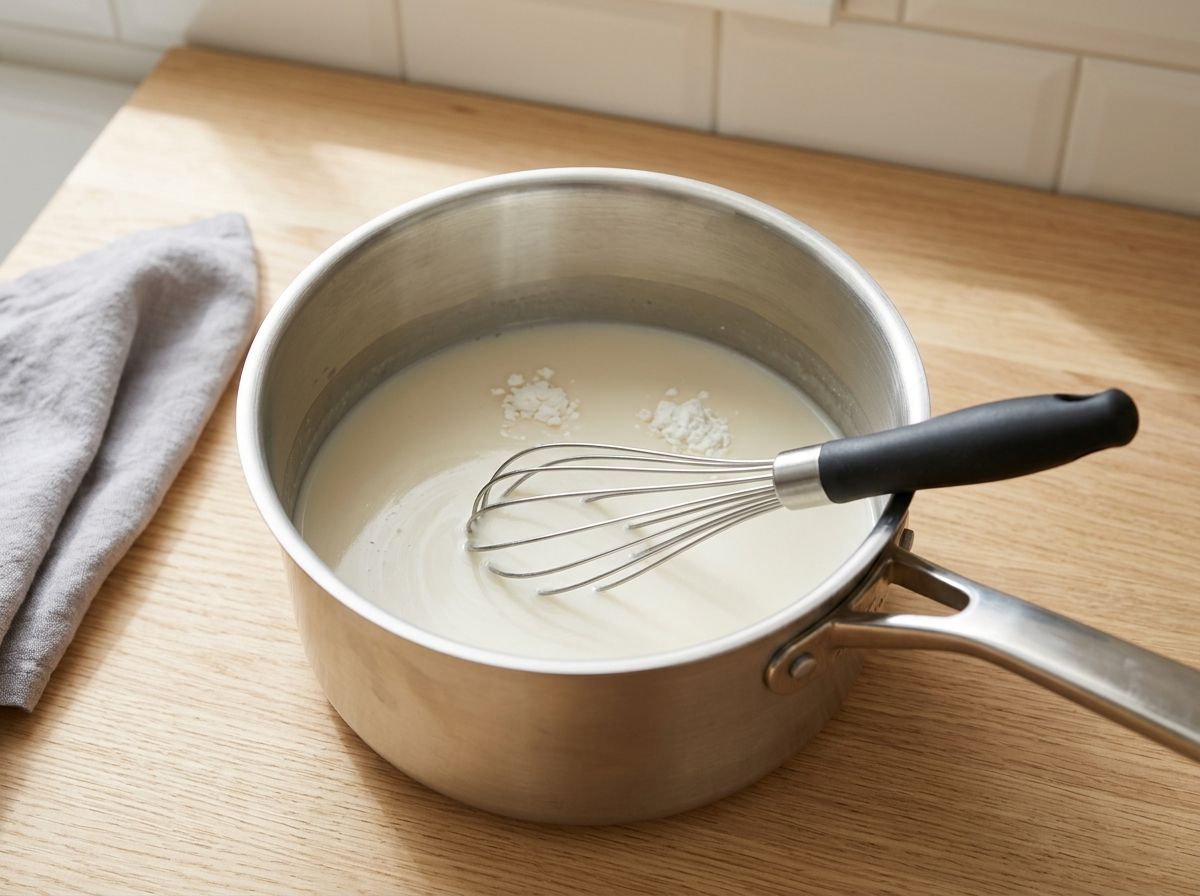
Put the cornstarch and salt in a saucepan and whisk in about 120 ml (½ cup) of the soy milk a splash at a time, until you have a smooth cream with no dry pockets in the corners. Cornstarch only disperses in cold liquid; tipped into a hot pan it seizes into lumps on contact. Whisk in the rest of the soy milk, then the coconut milk and the maple syrup.
- 2
Bring it to a full boil
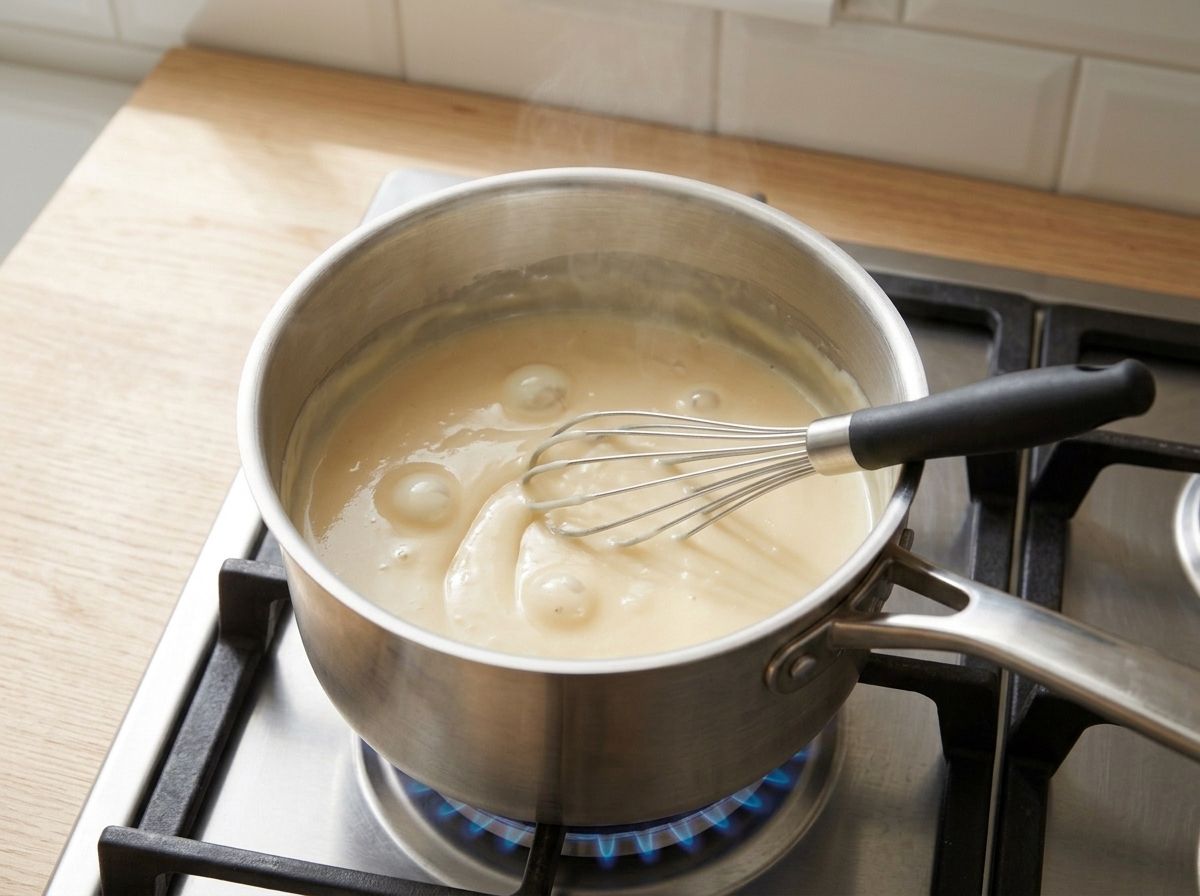
Set the pan over medium heat and whisk steadily, keeping the whisk moving across the base. The mixture stays thin for several minutes, then thickens quite suddenly at around 85°C (185°F). Keep going. It is not finished until fat bubbles are breaking the surface, and then it needs one more full minute at that boil, still whisking. Thickened is not the same as cooked.
- 3
Vanilla, sieve, then cool
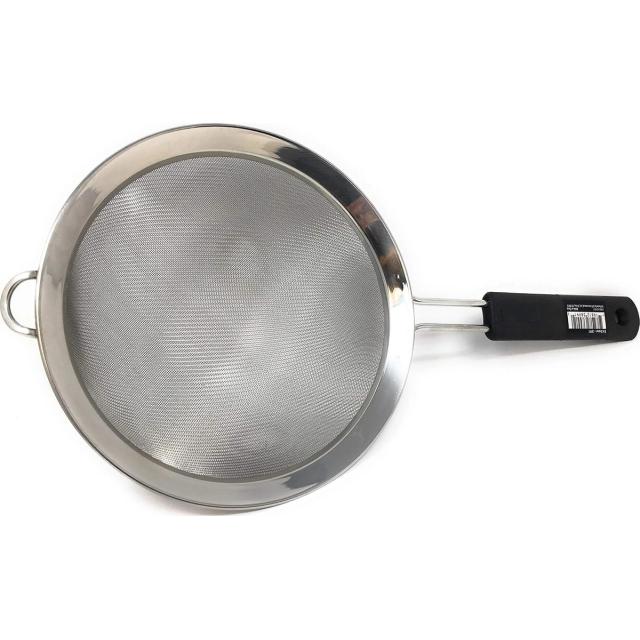
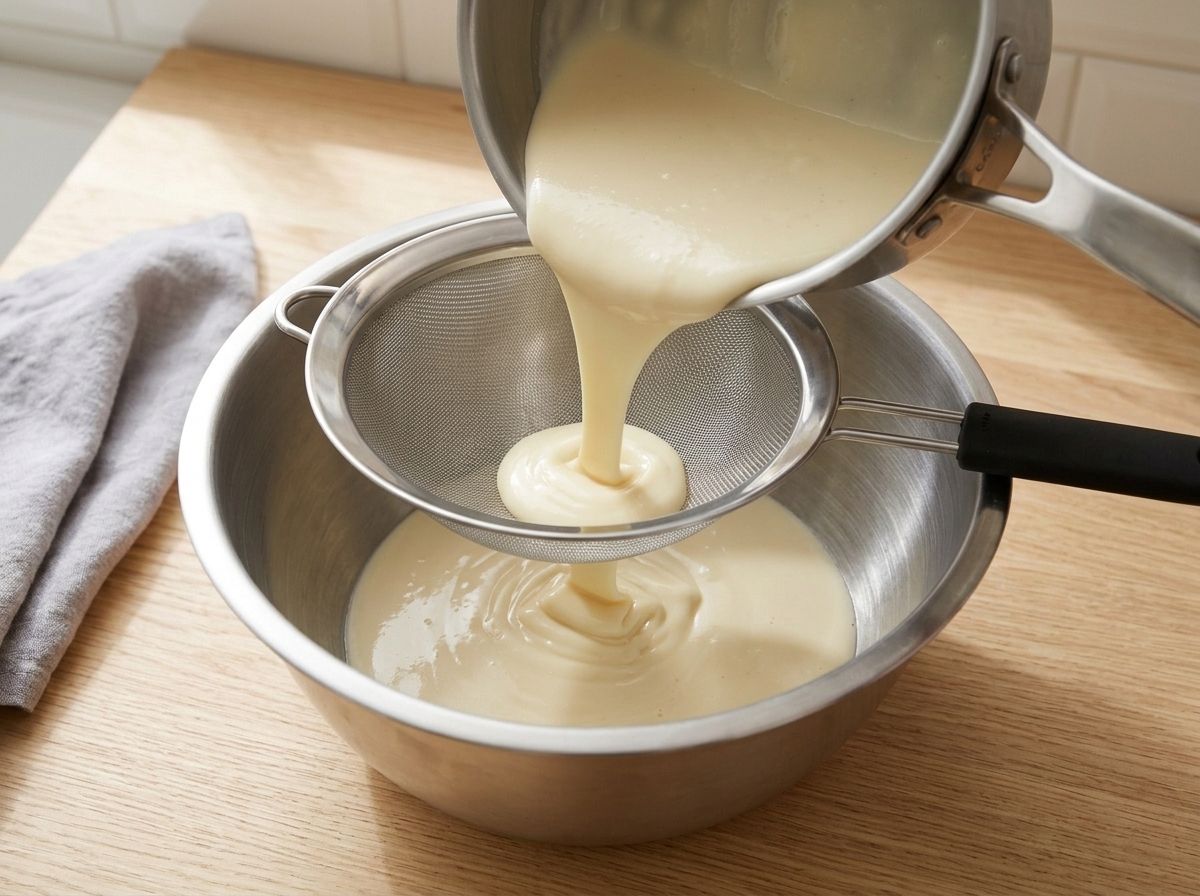
Off the heat, stir in the vanilla extract, which loses most of its aroma if you boil it. Pour the pudding through a fine-mesh sieve into a bowl, which takes ten seconds and catches anything that went lumpy. Press a sheet of plastic wrap flat onto the surface so no air touches it, and leave it 20 minutes, until it is warm rather than hot.
- 4
Slice the bananas last
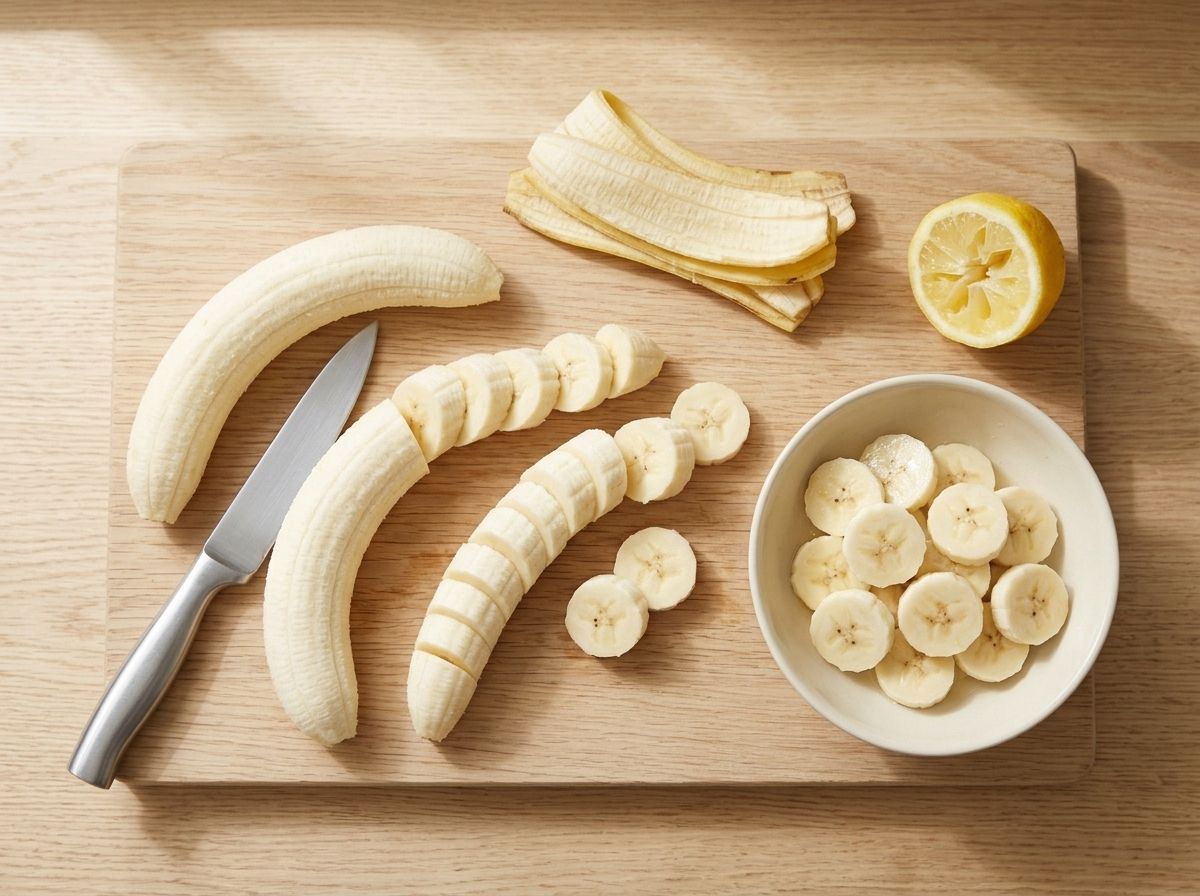
Peel the bananas and slice them about 5 mm (¼ inch) thick, then turn the slices through the lemon juice. One tablespoon across four bananas is nowhere near enough to taste, but it is enough to slow the browning that otherwise leaves the middle layers gray by morning.
- 5
Layer it warm, not hot
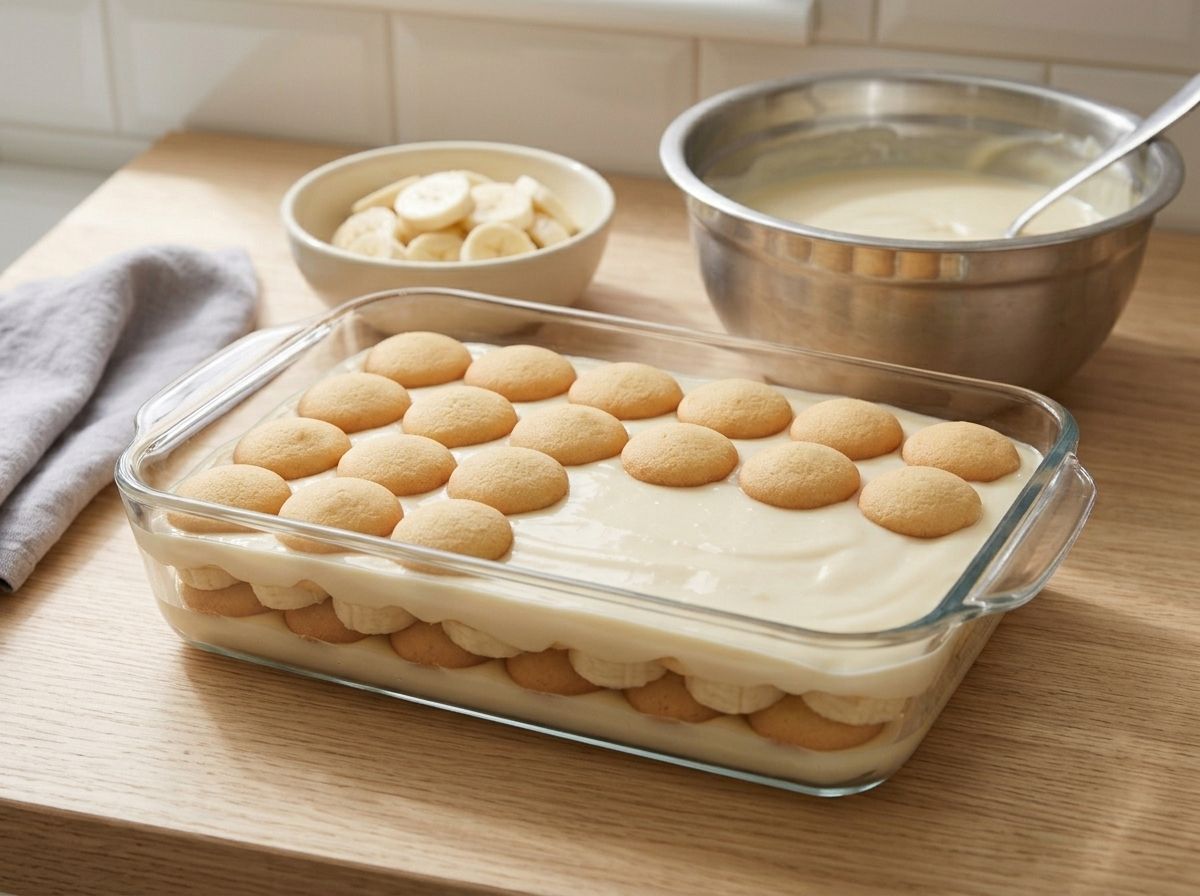
Spoon a thin film of pudding into a 1.5 liter (1½ quart) dish or six glasses, then a layer of wafers, then banana slices, then pudding. Repeat, and finish with pudding, pushing it right to the edges so the fruit underneath is sealed away from the air. Warm pudding is what turns the wafers cakey; layer it fridge-cold and they stay hard.
- 6
Chill until the wafers give in
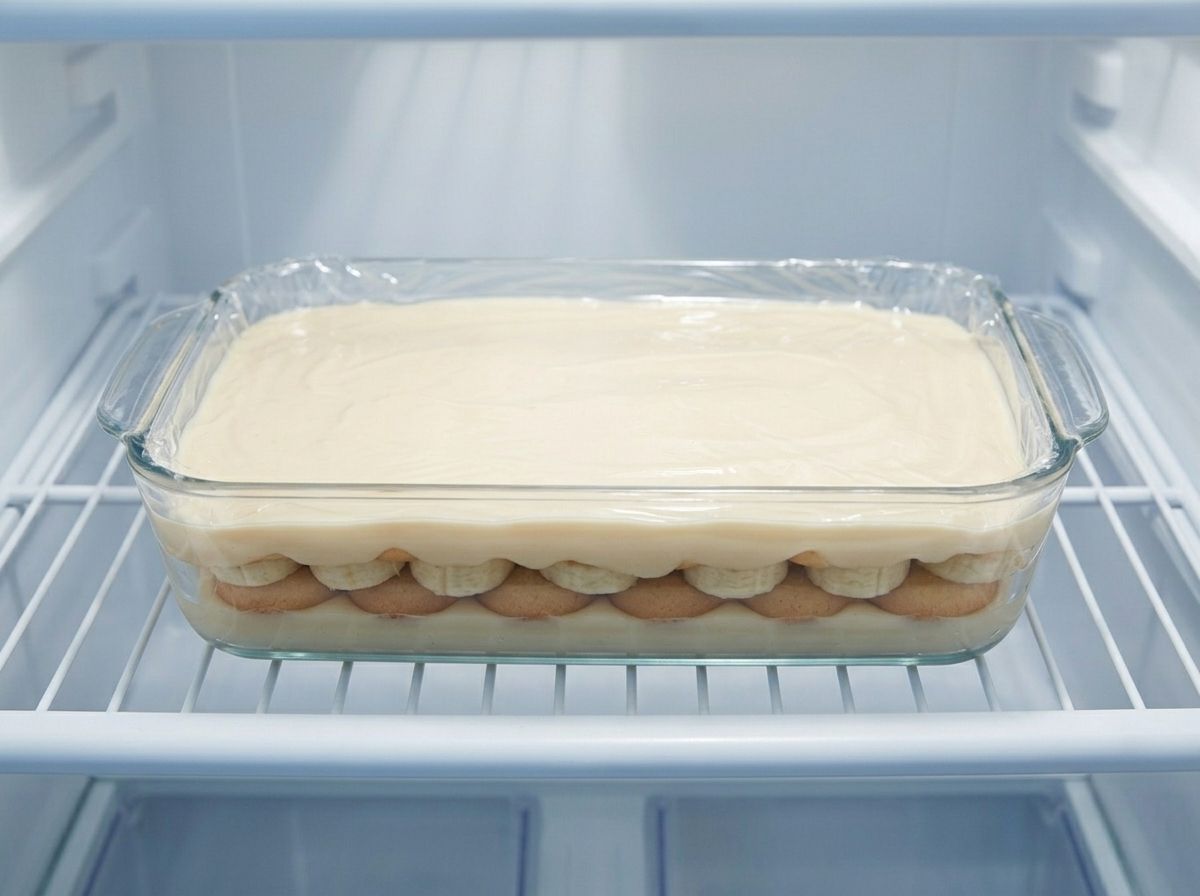
Press plastic wrap onto the surface again and refrigerate for at least four hours, ideally overnight. This is not only setting time. The wafers are pulling moisture out of the pudding and softening into cake, which is the texture the whole dessert is built on.
- 7
Add the crunch at the table
Just before serving, crush a small handful of wafers over the top, with the pecans or coconut flakes if you are using them. The layered wafers are soft by now on purpose, so all the crunch comes from what goes on last. Let the dish sit out for 15 minutes first, because fridge-cold flattens banana flavor.
Notes
You need six glasses of at least 250 ml each, or one dish of about 1.5 liters. Anything smaller and the last of the pudding has nowhere to go.
Vegan wafers vary a lot in size, so go by weight rather than by count. 200 g is roughly 45 to 55 small wafers.
Nutrition Facts
6 servings · 256 g per serving
- Calories
- 443 kcal
% Daily Value*
- Total Fat
- 21 g27%
- Saturated Fat
- 14.7 g74%
- Sodium
- 357 mg16%
- Total Carbohydrate
- 62 g23%
- Dietary Fiber
- 2.8 g10%
- Sugars
- 31.1 g—
- Protein
- 5 g10%
Recipe from veggierecipes.blog
When it goes wrong
Troubleshooting
It tastes chalky, like raw flour
The pudding thickened but never boiled. Cornstarch granules swell and thicken well below boiling point, which is why it feels finished early, but they do not burst and release their starch until the mixture is genuinely bubbling. Stopping at thick leaves raw starch you can taste on the roof of your mouth. Caught before you assemble it is fixable: back to the pan, up to a rolling boil, one full minute.
The whole thing tastes of coconut, not banana
Nearly every vegan banana pudding uses canned coconut milk on its own, and a full can is more assertive than either of the flavors it is supposed to be carrying. Cutting it with soy keeps the fat and loses most of the perfume. If it is already made, more vanilla will not rescue it, but building the remaining layers with more banana and fewer wafers gets you partway back.
It went lumpy, and there is a rubbery skin on top
Two different mistakes that tend to show up together. Lumps mean the cornstarch met hot liquid before it was dispersed in cold, so it gelled in clots on contact. The skin means the surface was left open to the air as it cooled and dried into a film. The sieve handles the lumps. For the skin, the wrap has to be pressed flat onto the pudding itself, not stretched across the rim of the bowl; an inch of trapped air is enough to form one.
It was thick in the pan and loose in the glass
Usually the chalky problem surfacing a few hours later, because undercooked starch loses its grip as it cools. The other cause is stirring. A set cornstarch gel is shear-thinning, so whisking it hard once cold breaks the network permanently and it will not rebuild. Never beat it smooth again.
The wafers went soft and I wanted them crunchy
Not a fault, it is the dessert. Soft wafers have been the point since 1921, and the sponge cake in the 1888 version was doing the same job. Left overnight the cookies draw moisture out of the custard and turn into something close to cake, which is why four hours is a minimum rather than a target. Crunch belongs on top at the last minute, because anything crisp buried in wet pudding is soft within the hour.
The bananas turned brown and slimy in the middle
Air reached them. Slices on the top layer brown because they are exposed; slices in the middle brown because the pudding was not pushed right to the edges and left channels down the side of the dish. Seal every fruit layer completely and press the wrap onto the surface. Even done properly it holds two days, and on the third the bananas are past it whatever you did.
Before you serve
Serving & Storage
Banana pudding is not a plated dessert and never has been. It goes to the table in the dish it set in with a serving spoon in it, and people help themselves twice. It is the food of church suppers, family reunions and funerals across the South, and one of very few desserts with its own festival: Centerville, Tennessee holds the National Banana Pudding Festival on the first weekend of October.
Six glasses or one dish is a real trade-off. Glasses look better and give everyone a clean cross-section. A single dish tastes better, because the layers press into each other and share moisture and the wafers soften more evenly. Either way, take it out of the fridge fifteen minutes before serving: straight from cold the banana flavor goes muted and the coconut fat reads as waxy. Put nothing rich alongside it. It is sweet and heavy and wants strong black coffee.
Making it ahead
This is not a dessert you can make on the day, which is a feature rather than a limitation. Four hours in the fridge is the minimum and overnight is better. Two days is the outer edge: by then the bananas are browning through the acid and the wafers have gone from cake to wet.
What does not work is splitting the job. Making the pudding on Monday to assemble on Wednesday sounds efficient and produces a bad dessert, because cold pudding will not soften a wafer. You would have to warm it back to pouring temperature, and reheating a set cornstarch gel thins it permanently. Cook, layer and chill in one go.
Storing leftovers
Press wrap onto the cut surface again and it keeps two days, no more. Resist decanting it into a smaller container, because every transfer stirs the gel and thins it. The garnish does not keep at all, so only crush wafers over the portions you are actually serving.
It does not freeze, and that is worth saying plainly because several versions of this recipe elsewhere claim it does. Cornstarch gels weep on thawing: the starch network contracts and pushes its water out, so you get a puddle under a grainy solid, and the bananas thaw to mush independently of that. Too much left over means a second sitting tomorrow, not the freezer.
Still wondering
Frequently Asked Questions
Is this gluten-free?
No, and the cookie is the only reason. The custard is thickened with cornstarch rather than flour, so it is naturally gluten-free, and so is everything else in the dish. Vegan vanilla wafers are wheat. A gluten-free vanilla cookie makes the whole dessert gluten-free, but buy by weight rather than count: gluten-free cookies are denser, so 200 g is noticeably fewer of them, and they soften faster, so six hours is plenty and a full overnight can take them too far.
Can I double this for a crowd?
Yes, and everything doubles straight across including the cornstarch. Two things do not scale linearly. The pudding takes around four minutes longer to reach a boil and scorches more readily on the base, so use a wide pan rather than a tall one and do not turn the heat up to hurry it. And a doubled batch fills a 9x13 dish about three-quarters full, far deeper than six glasses, so give it six hours in the fridge instead of four.
Can I put a meringue on top like the classic version?
You can, with aquafaba, but the timing matters more than the technique. Whip 90 ml of chickpea liquid with 90 g of sugar and a quarter teaspoon of cream of tartar to stiff peaks and it browns under a broiler much the way egg white does. What it will not do is survive a fridge: aquafaba meringue weeps within a few hours on something cold and wet. It has to go on immediately before serving, onto a pudding that has already had its full chill. For anything made ahead the crushed wafers are the more honest topping.
Featured In
More Dreamy Vegan Desserts
Made this?