
Vegan Chocolate Mousse Recipe
Published · Updated
Experience rich, creamy chocolate bliss in every spoonful of this easy vegan chocolate mousse, made with ripe avocados for the ultimate healthy indulgence!
Jump To Recipe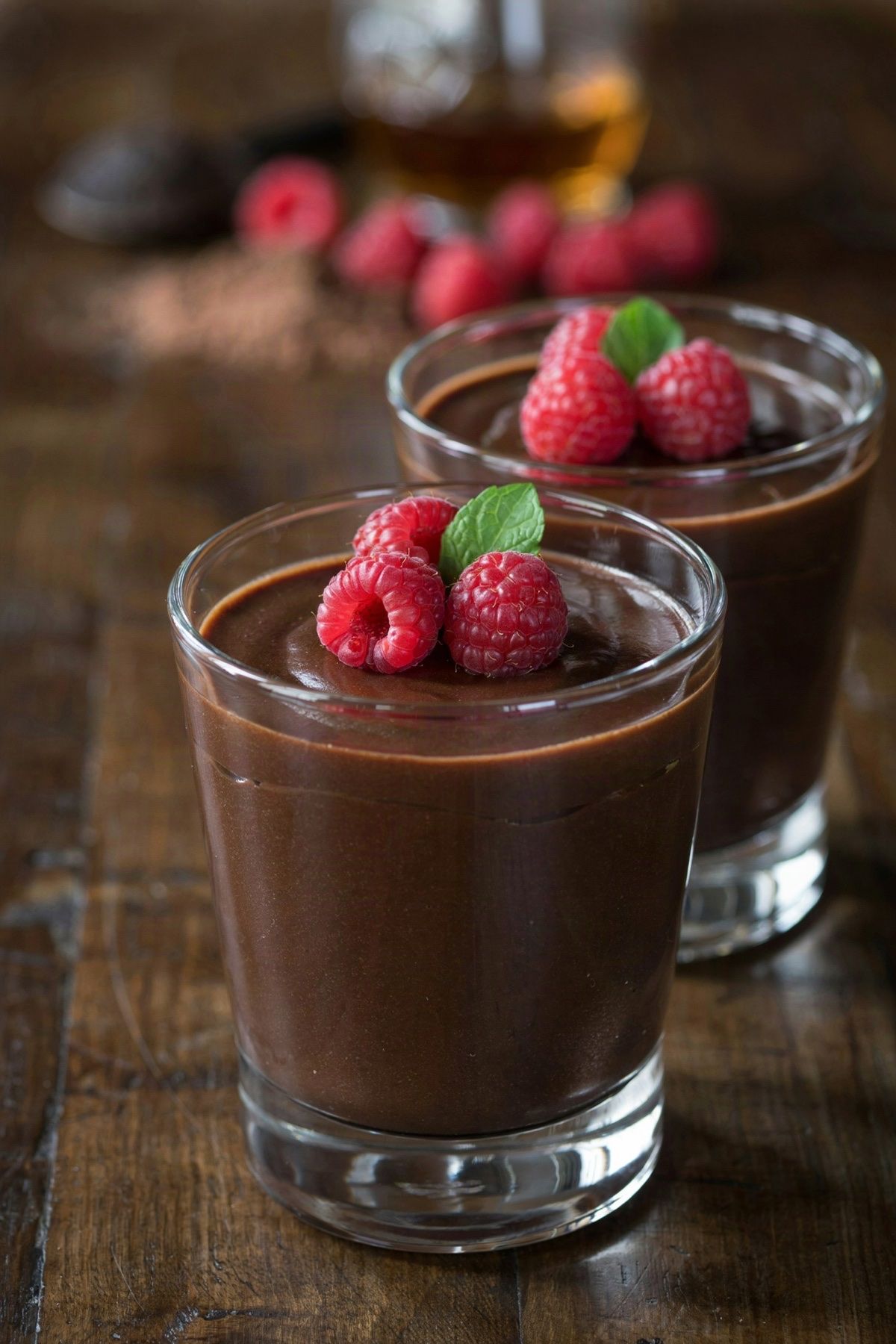
Why I’m Obsessed with Vegan Chocolate Mousse
When someone first told me that chocolate mousse can be made from avocados, I was very doubtful. Still, I had to try it out for myself. After eating this, I must say it absolutely deserves its spot as one of my favorite desserts. If I want something indulgent but don’t want something heavy on dairy or refined sugar, then this is definitely the recipe I will be making.
The process of making it is pretty simple. Bloom the cocoa in warm milk, blend the avocado until there is not a fleck left in it, stir the two together and let it sit in the fridge. This is one of those desserts that will get everyone talking around the table, and guess what? They’re shocked when they learn what’s inside.
What I especially enjoy about this mousse:
- Fifteen minutes of hands-on work, then the fridge does the rest.
- Healthier than most traditional desserts, yet totally decadent.
- Garnishes like berries and mint take it to a whole new level of fancy.
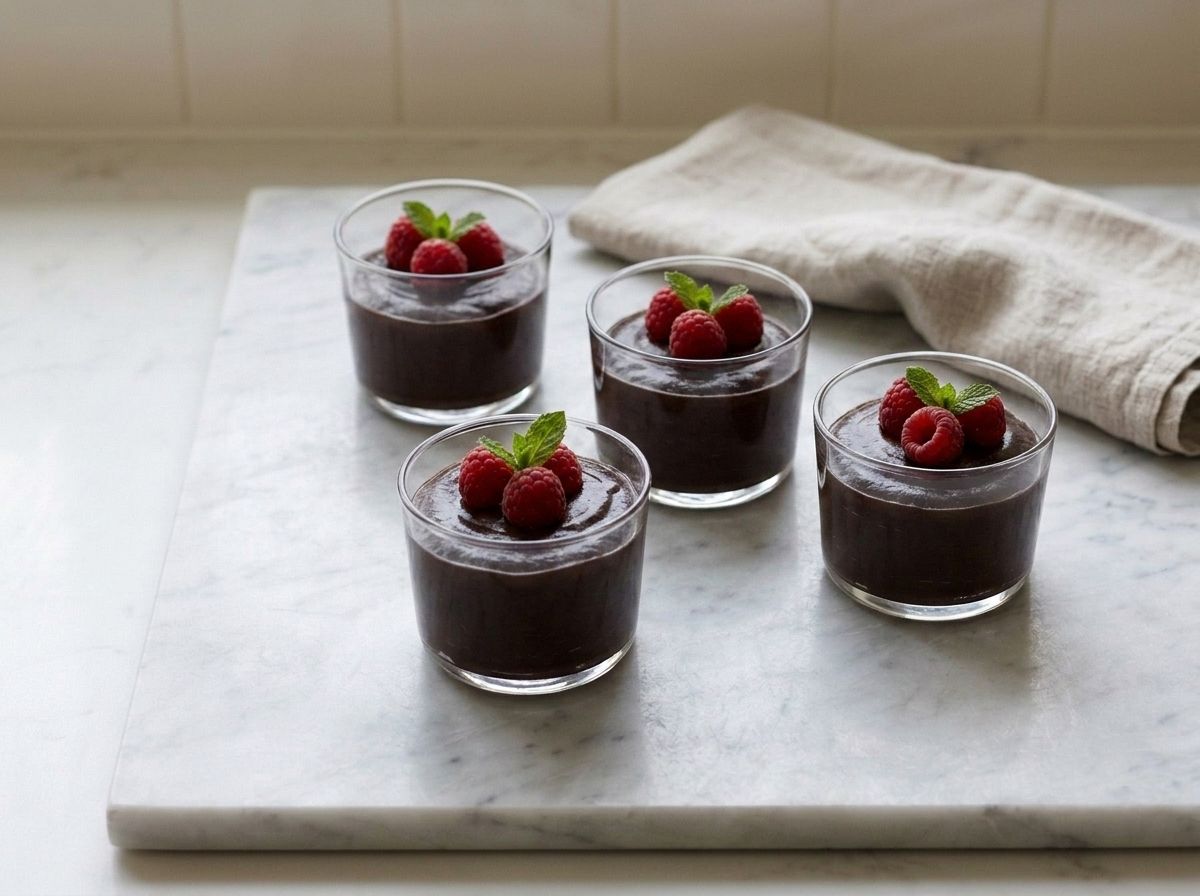
If you have a couple of ripe avocados sitting on the counter and a craving for chocolate, this is the move. I have served it at gatherings, but I mostly make it for myself after a long day, in one small glass, with a handful of raspberries on top.
The story
Avocado Was a Dessert Long Before It Was a Health Food
Chocolate mousse did not always go by that name. In late nineteenth century France it circulated as mayonnaise de chocolat, a title usually pinned on the painter Henri de Toulouse-Lautrec, who cooked as seriously as he painted. He almost certainly did not invent it, since printed mousse recipes turn up as early as 1768, but the odd name he popularized is the honest one. Mayonnaise and mousse run on the same trick: fat held in suspension in a liquid until the mixture is thick enough to hold a shape. In the French version that fat came from egg yolk and cream. No rule says it has to.
Which is where the avocado comes in, and not by way of a diet blog. Avocados reached Rio de Janeiro in 1809 and Brazilians have eaten them sweet ever since: creme de abacate is avocado mashed with sugar and lime, eaten cold with a spoon. The chocolate pairing is Southeast Asian. In Indonesia, jus alpukat is avocado blended smooth with condensed milk and poured into a glass streaked with chocolate syrup, sold from street carts nationwide, and the version with a shot of dark coffee poured over it is es alpukat kopi. Sweet avocado drinks are just as ordinary in the Philippines, Vietnam, India and Morocco. The combination that gets sold to Western readers as a clever swap has been a normal thing to order in Jakarta for decades.
One honest caveat about the word mousse. A classic mousse au chocolat is aerated, with whipped egg white or cream folded through, and its lightness is trapped air. Nothing here is whipped and no air goes in. This is a purée that firms as it chills, which puts it nearer a pot de crème than a foam. That is not a failing, but it does tell you where to spend your attention: blending until the avocado has genuinely disappeared, then leaving it in the fridge long enough, is the whole recipe.
What to buy
Ingredient Notes
Ripe avocados
Buy Hass: small, dark, pebbly, and roughly a quarter fat by weight. The big smooth-skinned Florida and Fuerte types carry far more water and much less fat, and a mousse made from them stays loose however long you chill it. You want fruit that gives evenly under gentle pressure with no soft dents, which usually means buying two or three days ahead. Weigh rather than count if you can, since one oversized fruit can throw 300 g out by half.
Unsweetened cocoa powder
Dutch-process if you have the choice. It has been treated with an alkali, which darkens it, mellows it, and makes it dissolve into liquid far more willingly. Natural cocoa is acidic and sharper, which is lovely in a cake where baking soda neutralizes it and less so in a cold purée where nothing does. Either way, sift it: a lump that survives the processor is a mouthful of bitter dust. Not drinking chocolate, which is mostly sugar.
Maple syrup or agave
Half a cup sounds like a lot beside half a cup of cocoa and it is exactly right, because unsweetened cocoa is punishing alone and cold food tastes less sweet than warm. It has to be a liquid sweetener; granulated sugar will not dissolve in an unheated purée and leaves a grittiness you can feel on your teeth. Maple brings caramel, agave is cleaner, date syrup is darker and fruitier. Honey is not vegan and fights the cocoa anyway.
Plant milk
Only a quarter cup, but it does two jobs: it is the warm liquid that blooms the cocoa, and it loosens the purée enough for the blade to catch. Plain and unsweetened, since a vanilla carton stacks more sugar on the syrup. Almond and oat are neutral and reliable. Full-fat canned coconut milk gives the richest and firmest version by some margin. Avoid anything strongly flavored of itself, hemp in particular.
Fine sea salt
The quarter teaspoon is not a rounding error. Under-salted cocoa reads bitter and dusty rather than chocolatey, and most complaints about avocado mousse tasting harsh come down to this rather than to the avocado. Use fine salt, not flakes: nothing here is ever heated, so a flake of Maldon stays a flake and gives you a salty pocket instead of a lift across the whole spoonful. Save the flaky salt for scattering at the table.
Berries and mint (optional)
These look like decoration and they are not. The mousse is dense, fatty and sweet, and it needs acid to reset the palate between spoonfuls. Raspberries are the best match, passionfruit the most dramatic, blood orange the winter answer. Anything sweet and soft, banana for instance, only adds to the problem. With none of it in the house, a squeeze of lime over each glass does more than a mint leaf will.
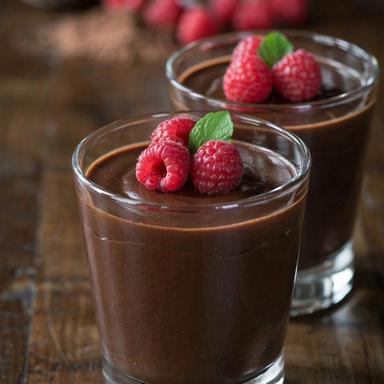
Decadent Vegan Chocolate Mousse
A rich, creamy vegan chocolate mousse featuring ripe avocados, cocoa powder, and maple syrup, topped with fresh berries for the ultimate plant-based dessert.
Ingredients
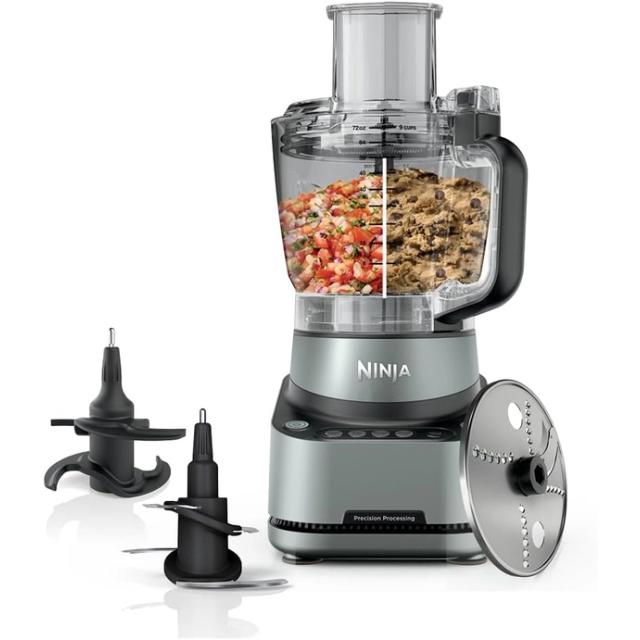
Equipment
As an Amazon Associate I earn from qualifying purchases, at no extra cost to you.
Instructions
- 1
Bloom the cocoa
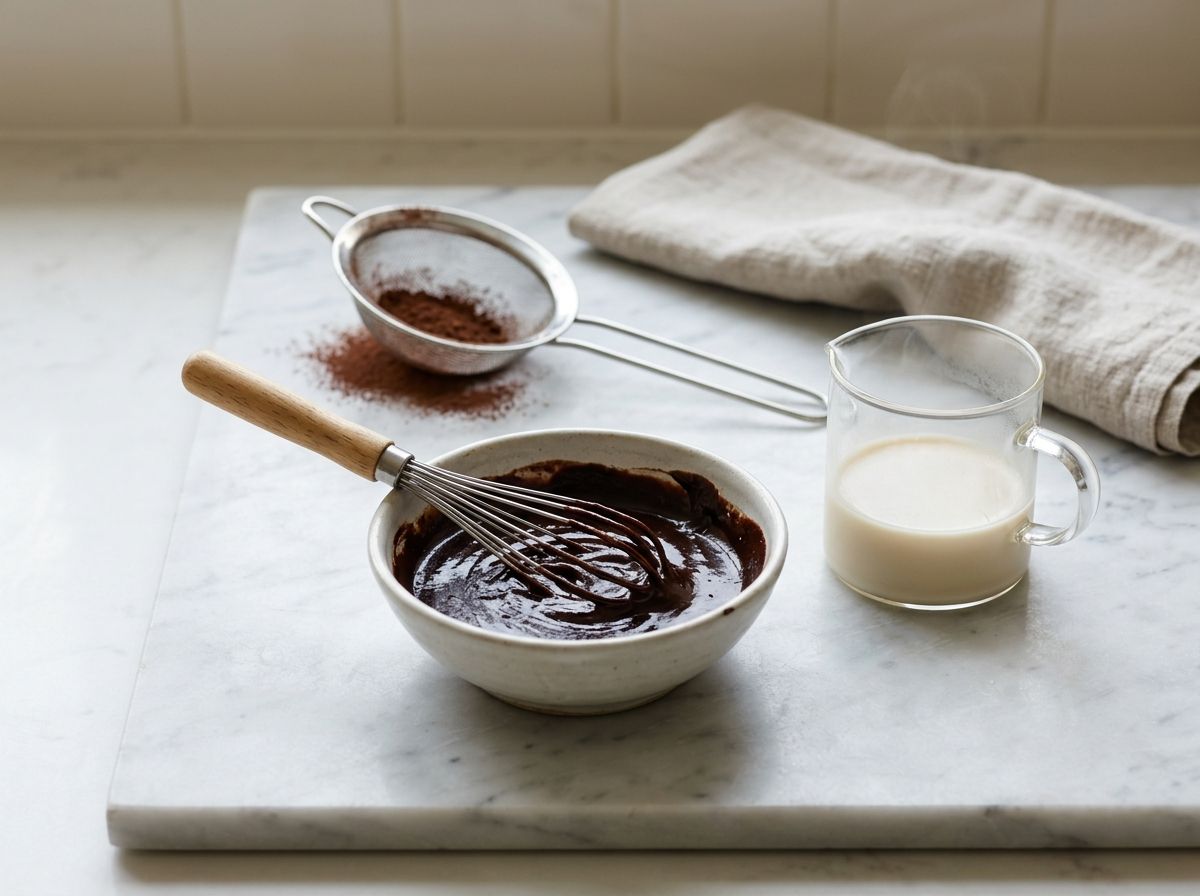
Sift the cocoa powder into a small bowl. Warm the plant milk until it steams, about 30 seconds in the microwave, then whisk it into the cocoa a splash at a time until you have a smooth, glossy paste with no dry pockets left. Set it aside to cool to room temperature. Dry cocoa stirred straight into cold avocado stays gritty and reads raw and bitter; warm liquid dissolves it and deepens the flavor.
- 2
Blend the avocado on its own
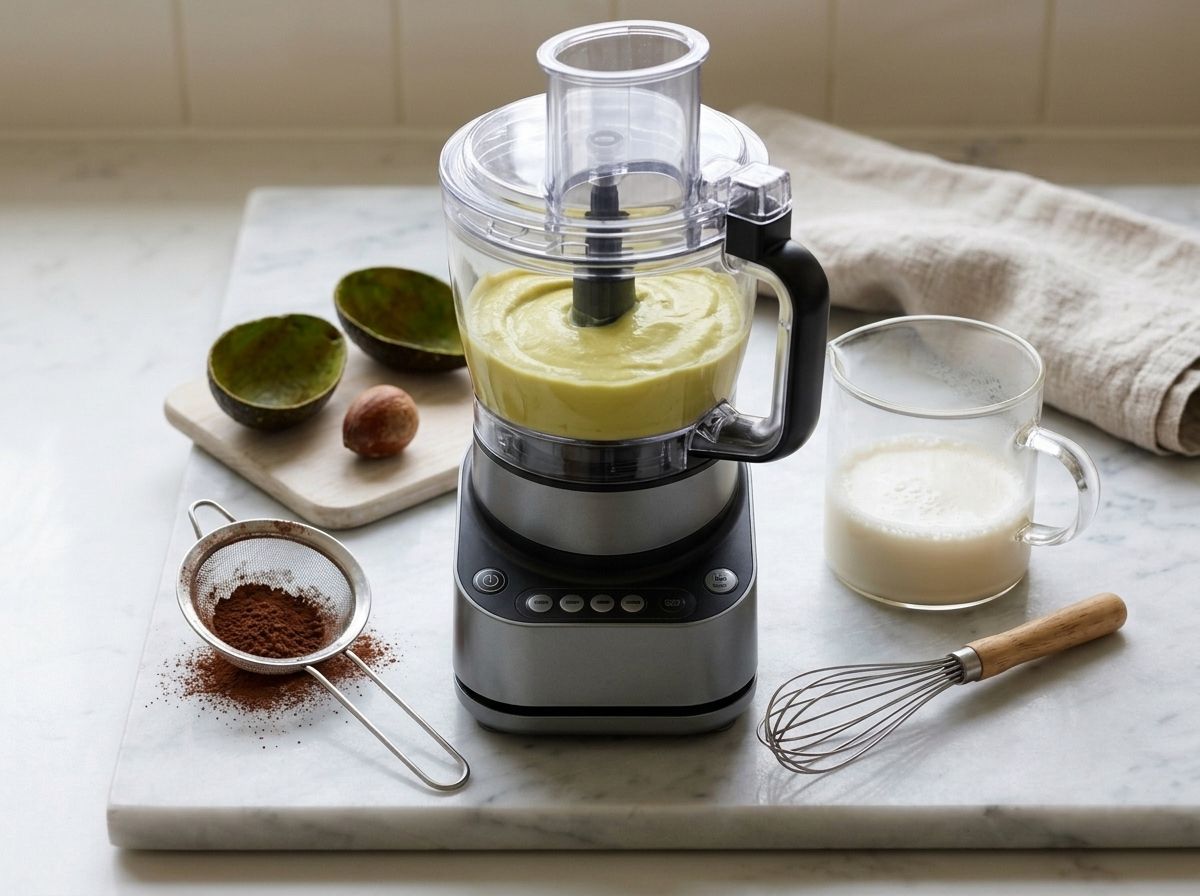
Scoop the avocado flesh into the food processor, leaving behind any brown patches or stringy fibers near the skin, which are bitter and grainy. Blend for 30 to 60 seconds, scraping the bowl down twice, until the purée is pale and completely smooth with no flecks at all. Every fleck left now is a bite that tastes of avocado later.
- 3
Add the cocoa paste and sweetener
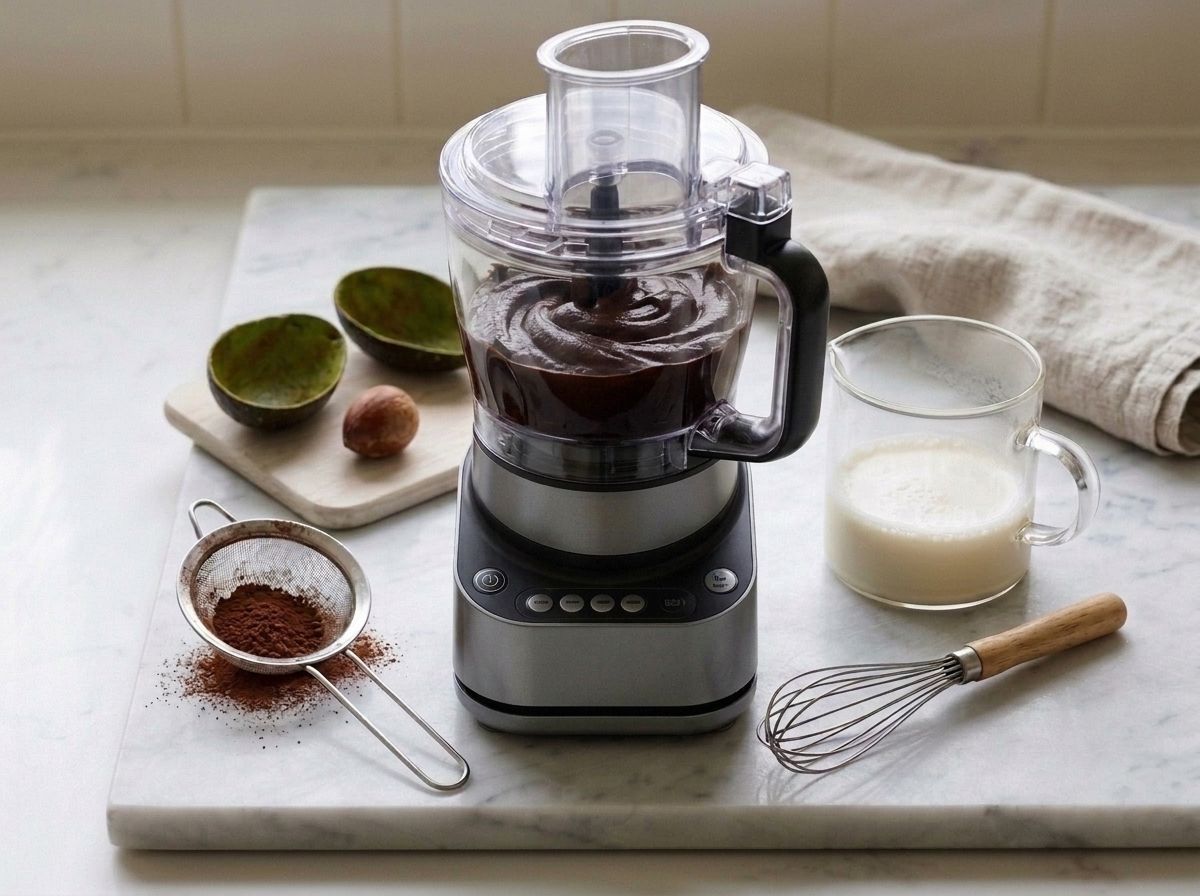
Check that the cocoa paste is no longer warm, because heat turns avocado bitter. Add it with the maple syrup, vanilla and salt, and blend for a minute or two, scraping the sides at least twice, until the mousse is dark, glossy and silky between your fingers.
- 4
Taste it warm, not cold
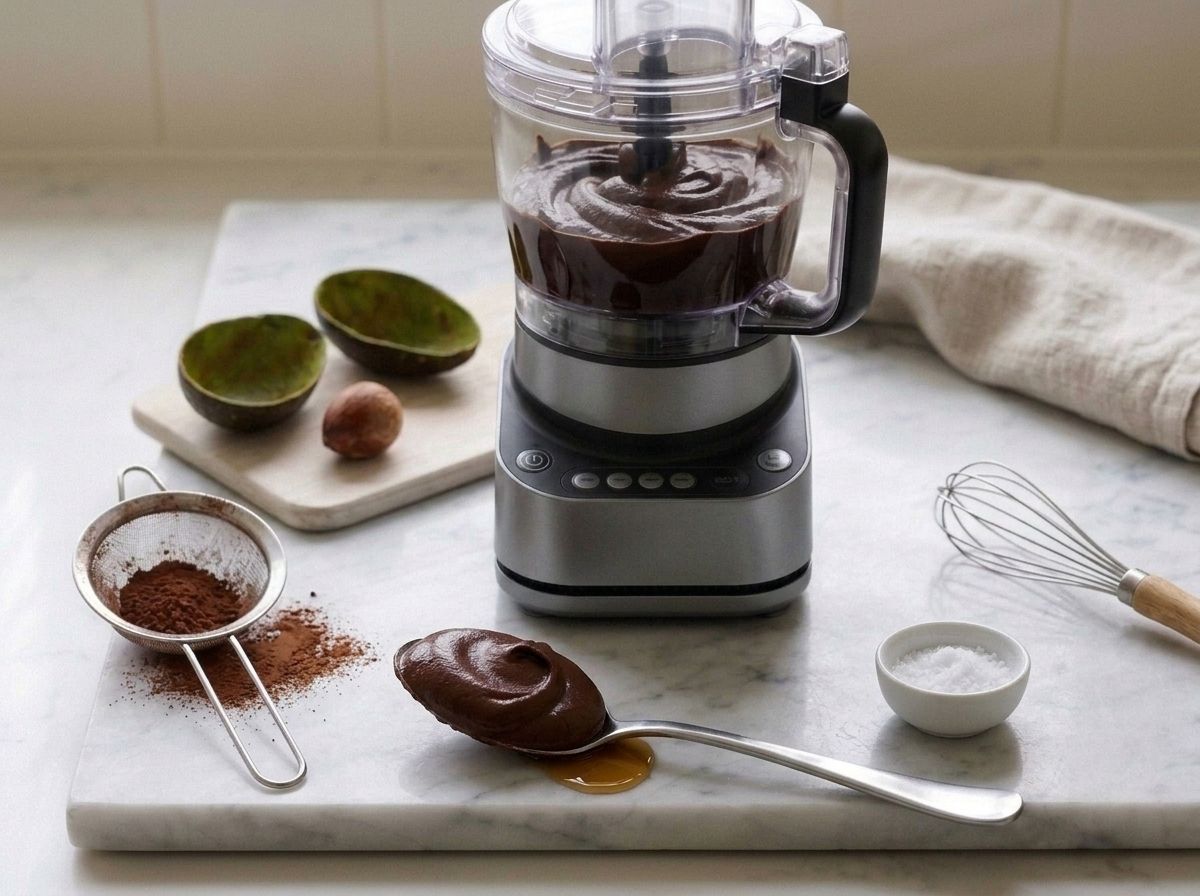
Taste now, at room temperature. Chilling mutes sweetness, so it should read very slightly sweeter than you want the finished mousse to be. If it tastes bitter rather than flat, add another pinch of salt before you add more syrup; salt is what turns cocoa into chocolate.
- 5
Chill covered for two hours
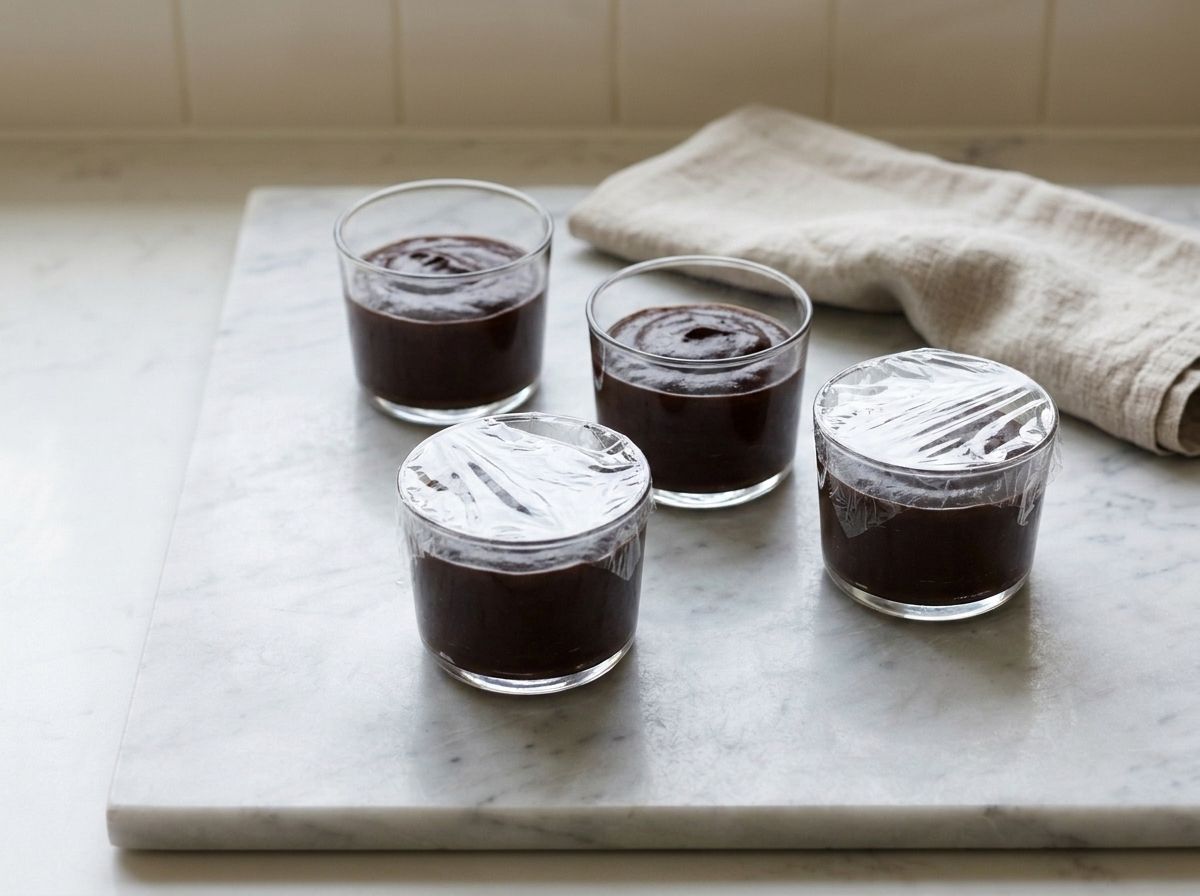
Spoon into four small glasses or ramekins and press a piece of cling film onto the surface of each, or cover the glasses. Refrigerate for at least 2 hours, ideally overnight. This is not just about getting it cold: the mousse firms up as it sits and the green, grassy note of the avocado fades away.
- 6
Garnish and serve
Serve straight from the fridge, topped with fresh berries and a mint leaf if you like. Add the garnish just before it goes to the table so the berries stay dry and the mint stays perky.
Notes
Use avocados that yield to gentle pressure all over but have no soft dents. Underripe ones will not blend smooth; overripe ones taste bitter.
Full-fat coconut milk in place of the almond milk makes a noticeably richer mousse and a good one to bloom the cocoa in.
Other toppings that work: toasted coconut flakes, chopped pistachios, flaky salt, or a strip of orange zest.
Nutrition Facts
4 servings · 156 g per serving
- Calories
- 276 kcal
% Daily Value*
- Total Fat
- 16.6 g21%
- Saturated Fat
- 3 g15%
- Sodium
- 176 mg8%
- Total Carbohydrate
- 36 g13%
- Dietary Fiber
- 10.8 g39%
- Sugars
- 19.7 g—
- Protein
- 4.2 g8%
Recipe from veggierecipes.blog
When it goes wrong
Troubleshooting
It just tastes like cold avocado
Three causes, in order of likelihood. You blended everything at once, so tiny pieces of avocado survived whole and each one is a bite of fruit; blending the avocado on its own first, until it is pale and completely smooth, fixes this more than any other change. Or you cut the chill short, because the grassy note genuinely fades over the first hour or two in the fridge and thirty minutes is not enough. Or the fruit was underripe, in which case nothing will save it.
It is bitter and chalky rather than chocolatey
The cocoa never dissolved. Dry powder stirred into a cold purée stays as microscopic dry particles that your tongue reads as dust, however long the processor runs, which is what blooming it in warm milk prevents. If the mousse is already made, reach for salt before more syrup: another pinch, blended in, usually turns bitter into chocolatey, whereas extra sweetener just leaves it sweet and bitter at once.
There are dark green specks or fibrous strings through it
You scooped too close to the skin, or the avocado was past its best. The layer against the skin is darker, more fibrous and noticeably more bitter, and the pale strings running through an overripe fruit will not break down in a processor. Scoop from the middle, and throw out avocados with brown patches rather than cutting around them. After the fact, a fine sieve catches the strings but not the flavor.
It never set and it is still soupy after chilling
A very ripe, watery avocado, or one of the large smooth-skinned varieties, brings water where you needed fat, and no amount of fridge time thickens that. Extra plant milk does the same. The rescue is to blend in another half avocado, raising the fat without adding liquid, then chill again. If it is merely soft, give it longer: it keeps firming for hours and overnight beats two.
It went in glossy and came out dull with a skin on top
Normal, and not spoilage. The surface of any uncovered purée dries in a fridge and cocoa loses its shine as it sets. Press cling film directly onto the surface of each glass, rather than stretching it across the rim, and it will not happen at all. What would actually worry you is gray or brown color running down into the body of the mousse, which means the avocado has oxidized and it has been in there too long.
It tasted perfect in the processor and flat at the table
Cold suppresses sweetness and aroma both, so a mousse balanced at room temperature always lands a little muted straight from the fridge. That is why the recipe has you taste before chilling and aim slightly sweeter than you want. If it is already made and reading flat, stand the glasses out for five to ten minutes first. The gap between fridge-cold and cellar-cold is wider than you would expect.
Before you serve
Serving & Storage
Serve it small. A portion is about 156 g and carries 276 calories and 16 g of fat, and the mousse is dense enough that a full bowl of it becomes wearing halfway down. Four espresso cups or 100 ml tumblers are the right vessel. Indonesia, which has been putting chocolate and avocado in the same glass for decades, serves the pairing tall and over ice for the same reason: the fat wants cutting with something.
What sits beside it matters more than what sits on it. Acid first, so raspberries, passionfruit or blood orange rather than anything sweet and soft. Crunch second, since everything else on the plate is the same texture: toasted hazelnuts, coconut flakes, a thin crisp biscuit. A few flakes of sea salt at the last moment do more than any of it.
Two things to skip. Whipped coconut cream on top is fat on fat and turns the whole thing muddy. And nothing warm: a hot sauce will slump the mousse and turn the avocado bitter, which is exactly why the method cools the cocoa paste before it meets the fruit.
Making it ahead
The night before is ideal, because the texture is better at twelve hours than at two and the avocado note has fully receded by then. Two days is the outside edge; by the third it tastes flat and faintly metallic and the color has slid from dark brown towards gray. Portion into the serving glasses before chilling rather than after, since set mousse spooned out of a big container tears rather than falls. The garnish is the one thing that cannot go on ahead: berries weep and mint wilts against a cold surface within the hour.
Storing leftovers
Cover the surface with cling film pressed flat against it, not stretched over the rim, and keep it in the coldest part of the fridge for up to two days. Do not freeze and thaw it: avocado holds a lot of water, that water turns to ice crystals, and what comes back out is grainy and weeping. It is the one thing here that cannot be rescued. Freezing it to eat frozen is another matter and works beautifully, so spoon it into ice pop molds or a small loaf tin for chocolate pops or a sliceable semifreddo.
Still wondering
Frequently Asked Questions
Do I need a food processor, or will a blender do?
A food processor is easier, because its wide shallow bowl keeps a stiff purée in contact with the blade and you can scrape down without dismantling anything. A high-speed blender gives an even silkier result but you will need the tamper, and add the plant milk early to get it moving. What struggles is an ordinary jug blender, where the purée climbs the sides and spins above the blade; a stick blender in a narrow jug is the better fallback. A bowl and a fork will not get you there, because hand-mashed avocado always leaves lumps, and lumps are what make this taste of avocado.
Is this suitable for gluten-free, dairy-free and nut-free diets?
Gluten-free and dairy-free, yes, with nothing to watch but your cocoa powder, since a few brands are processed on shared lines and say so on the label. Nut-free needs one swap: oat, soy or coconut milk in place of the almond milk, and a topping other than hazelnuts. It is egg-free and soy-free as written too, which between them cover most of the reasons a classic chocolate mousse is off the table.
Can I double it, or make just one portion?
Both scale cleanly, since nothing is cooked and no ratio shifts with volume. Doubling gives eight small servings and your only limit is the processor bowl, which needs headroom or the purée climbs the sides instead of turning over. Going down, one avocado with half of everything else makes two servings, and that is about the smallest batch a full-size food processor will handle, because a single avocado sits below the blade. For one portion, make the two-serving batch and eat the second tomorrow.
Featured In
More Dreamy Vegan Desserts
Made this?