
Vegan Blueberry Pie Recipe
Published · Updated
A double-crust blueberry pie sweetened with maple syrup, with the filling cooked on the stove first so every slice holds its shape.
Jump To Recipe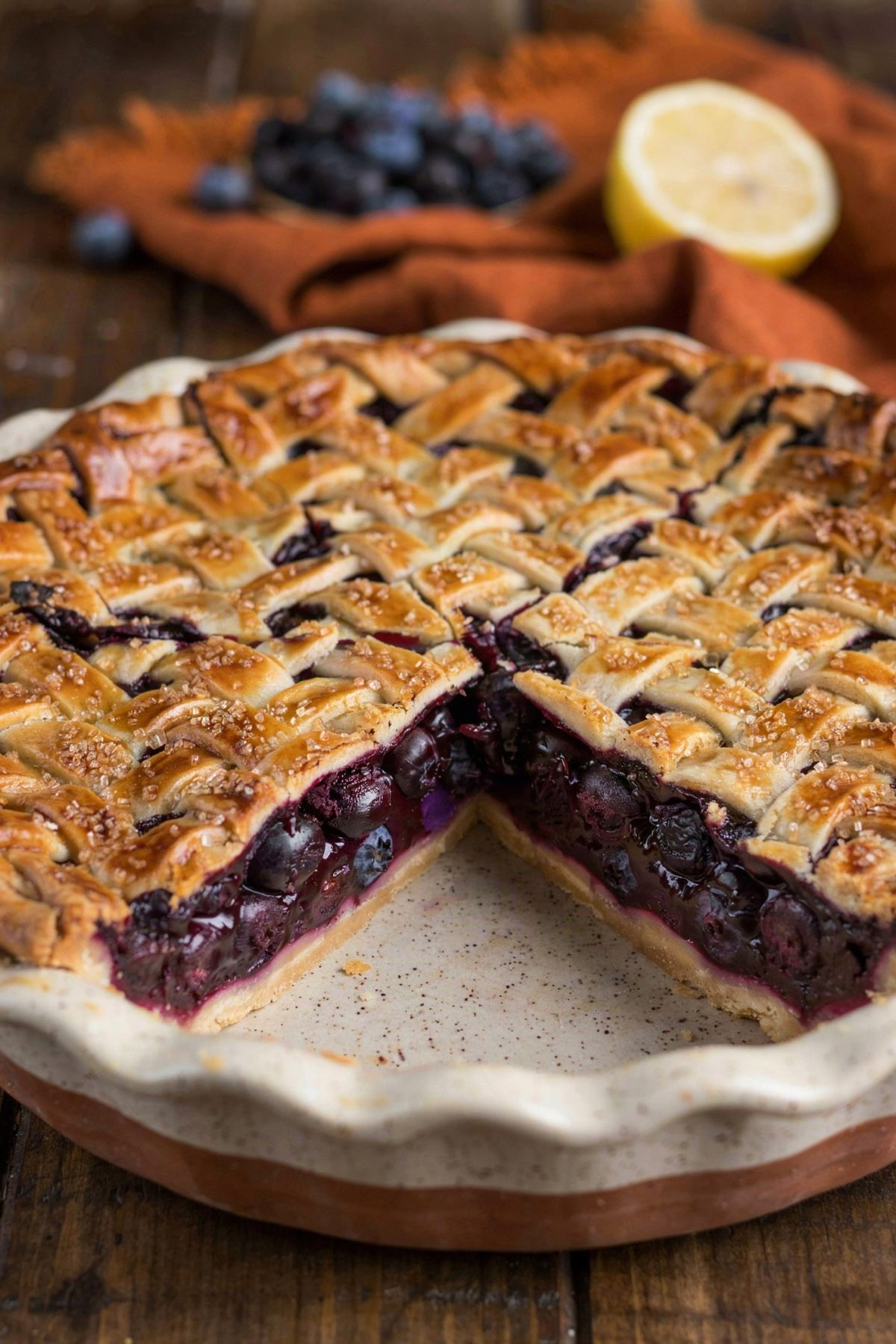
Why I Love This Vegan Blueberry Pie
I have made this pie enough times to know which parts matter. Two of them are not obvious, and both are about getting a slice that holds its shape.
What I like most about this recipe:
- The filling is cooked before it ever sees the oven. Ten minutes in a saucepan is what buys you a slice that stands up instead of sliding, and it is the one step I will not skip.
- Only a third of the berries get cooked. The rest go in whole and burst in the oven, so the pie tastes like fruit rather than jam, and nobody has ever asked where the butter went.
- Maple syrup instead of granulated sugar gives the berries a darker, slightly caramel edge. It is still a proper slice of pie at around 370 calories, so treat it as one.
Serve it at room temperature with vegan ice cream or coconut cream, and it goes down just as well with friends who do not follow a vegan diet.
My advice: give it the full four hours on the rack. Cornstarch sets as the pie cools, not while it bakes, and a pie opened early will not set again.
The story
Blueberry Pie Is Barely a Hundred Years Old
Blueberry pie feels like one of the oldest desserts in America, and the baking of foraged berries into pastry here really is that old. The blueberry you can buy in February is not. Until 1916 every blueberry pie was a wild-berry pie, made from small lowbush fruit picked by hand off scrubby ground in a season a few weeks long that nobody could plan around.
The plant resisted farming and nobody could work out why. Frederick Coville, chief botanist at the US Department of Agriculture, found the answer around 1910: blueberries will only thrive in strongly acidic soil, which is exactly the soil most crops are limed to avoid. In 1911 Elizabeth Coleman White, who ran her family’s cranberry operation at Whitesbog in the New Jersey Pine Barrens, read Coville’s report and offered him her land for the experiments. She paid local pickers to find the largest wild bushes in the barrens, and Coville crossed them. Their first commercial crop shipped in 1916, and every berry in the punnet you bought this week descends from it.
The wild berry never went away. Maine still harvests almost all of the country’s lowbush crop, and in 2011 the state wrote blueberry pie into law as its official dessert, with the statute specifying wild Maine blueberries. The fussiness is earned: wild berries carry far more skin for their size, which means more color, more acidity and much less loose juice in the pan.
The vegan part of this pie is younger than the berry and older than the label. A blueberry filling has never needed dairy or eggs; only the crust does, and the crust most Americans think of as traditional was itself invented in a factory. Crisco arrived in 1911, the first shortening made entirely from vegetable oil, and Procter & Gamble advertised it in the Yiddish press as pareve, neither meat nor milk, so that kosher households could bake an all-American pie without breaking their own kitchen rules. The plant-based crust is not a modern substitution for the classic. For much of the twentieth century it was the classic, and it took a hundred years for anyone to think of calling it vegan.
What to buy
Ingredient Notes
Blueberries
Six cups, 900 g, is not a typo and it is not generous. A 9-inch dish needs that much fruit to stay full once the berries collapse; less leaves an air gap that sets into a hollow dome under the top crust. Wild or frozen wild berries make the better pie, because their higher skin-to-flesh ratio means more color and less loose juice in the pan.
Dark maple syrup
Maple is roughly a third water, which is the whole reason this filling is cooked on the stove. Half a cup carries about 40 ml of water that granulated sugar would not, enough to turn a raw-toss filling soupy however long you bake it. Buy the darker grade, sold as Grade A Dark or Robust; pale early-season syrup tastes of very little against six cups of fruit. Golden syrup or agave set the same way but bring no caramel note.
Cornstarch
Four tablespoons for six cups of fruit, and it has to hold a real rolling boil for a full minute or it never reaches full strength. That is easy to watch in a saucepan and nearly impossible to judge through a crust, which is the second reason for cooking the base. Quick-cooking tapioca substitutes one for one and gives a softer, more suspended set. Avoid arrowroot: it thins out again if you hold it at a boil, and it dislikes this much lemon.
Pre-made vegan pie crust (2 rounds)
The trap in this recipe is the crust, not the filling. A great many refrigerated store-bought crusts are made with lard or beef fat, so "pie crust" and "vegan pie crust" are different products on the same shelf. Wholly Wholesome is certified by Vegan Action; Mi-Del, Jus-Rol and several supermarket own-brands are fine too. Read the panel every time, because manufacturers change fats.
Lemon juice and zest
Two tablespoons of juice and two teaspoons of zest do separate jobs. The juice is acid, and it sharpens fruit that maple syrup would otherwise make cloying. The zest carries the aromatic oils, which is where the smell of lemon actually lives, and it goes into the saucepan so the heat pulls them out. Skip the zest and the pie is duller in a way most people cannot name.
Sugar for sprinkling (optional)
Demerara gives the best crunch, because the crystals are large enough to survive an hour in the oven. It is also the one ingredient worth checking for strict vegans: refined cane sugar in the United States is often filtered through bone char, while beet sugar, organic cane and anything unrefined are not. Demerara is unrefined, so it sidesteps the question.
Vegan Blueberry Pie
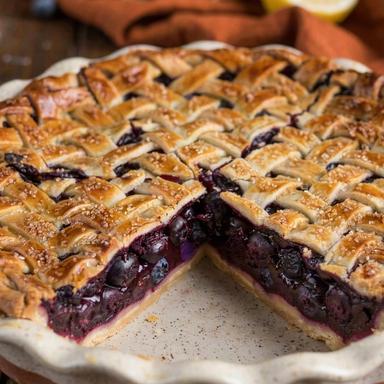
A proper double-crust blueberry pie sweetened with maple syrup, with the filling started on the stove so that it sets firmly and the bottom crust stays crisp.
Ingredients
Equipment
As an Amazon Associate I earn from qualifying purchases, at no extra cost to you.
Instructions
- 1
Heat the oven and a baking sheet
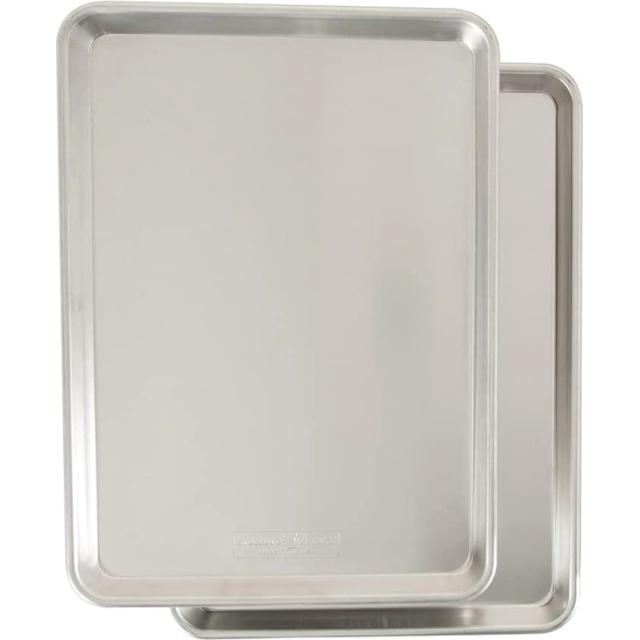
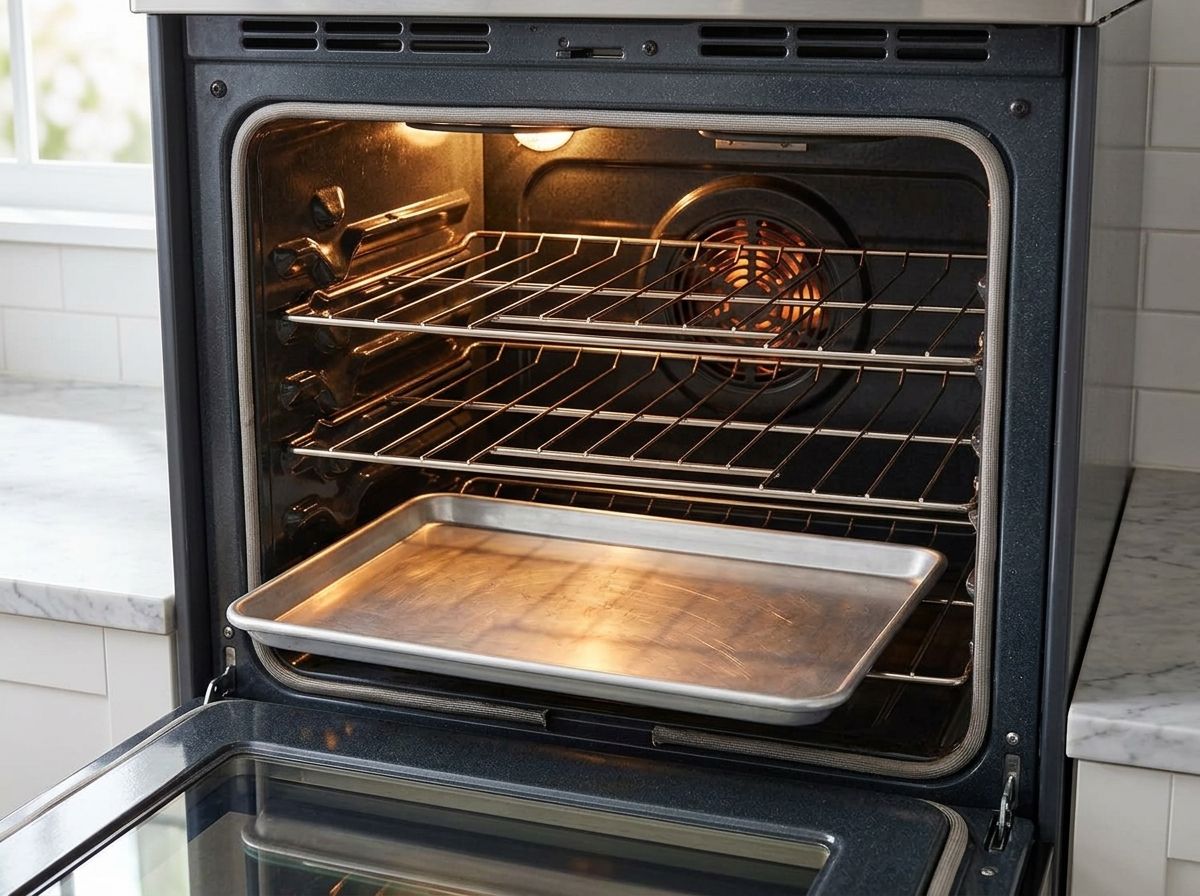
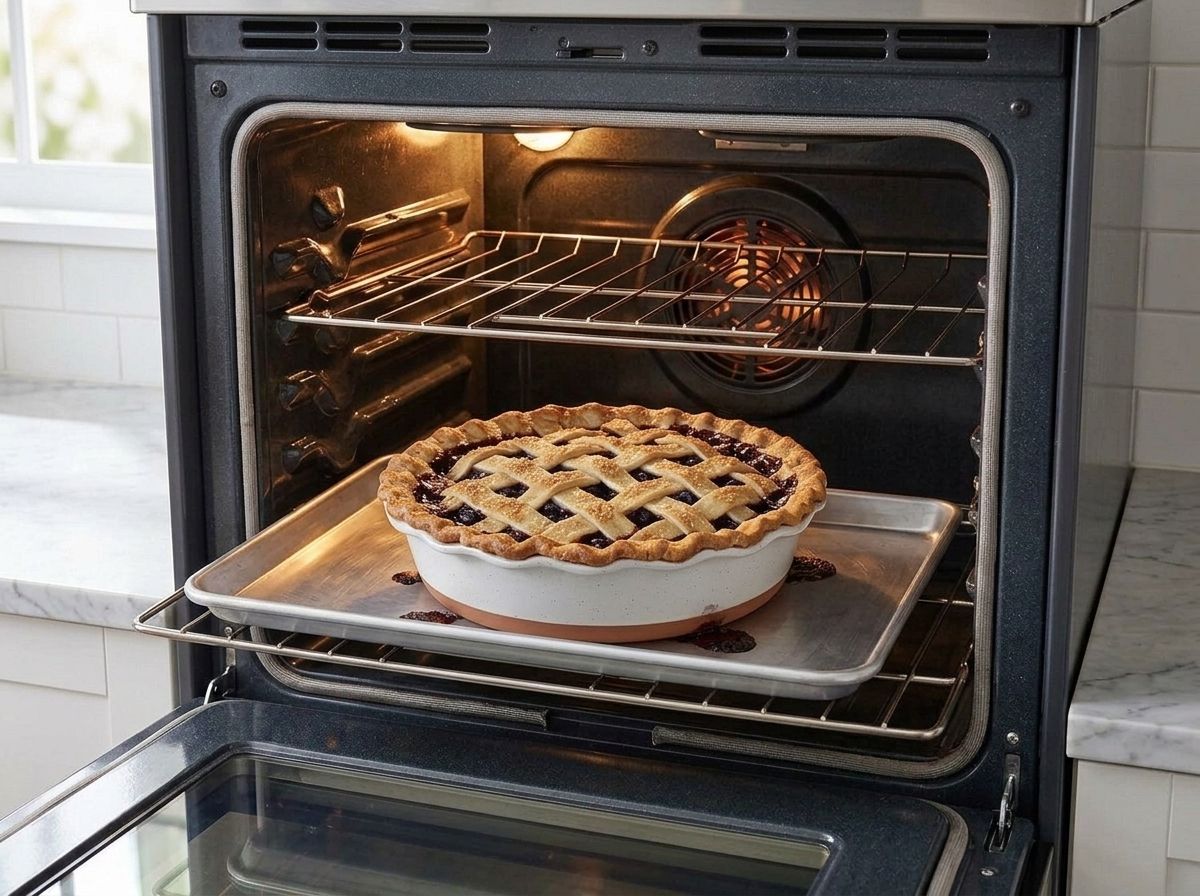
Put a rimmed baking sheet on the lowest oven rack and heat the oven to 425°F (220°C). The pie dish goes straight onto the hot sheet, and heat arriving from below is most of what keeps the bottom crust crisp under a wet fruit filling.
- 2
Cook the base of the filling
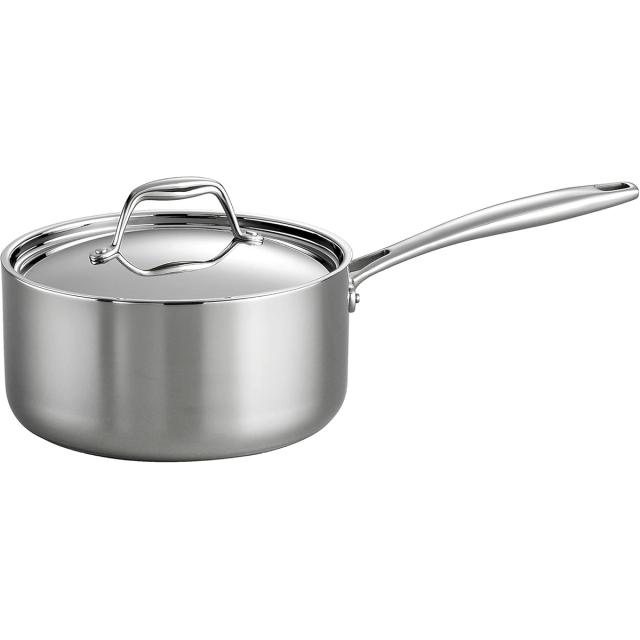
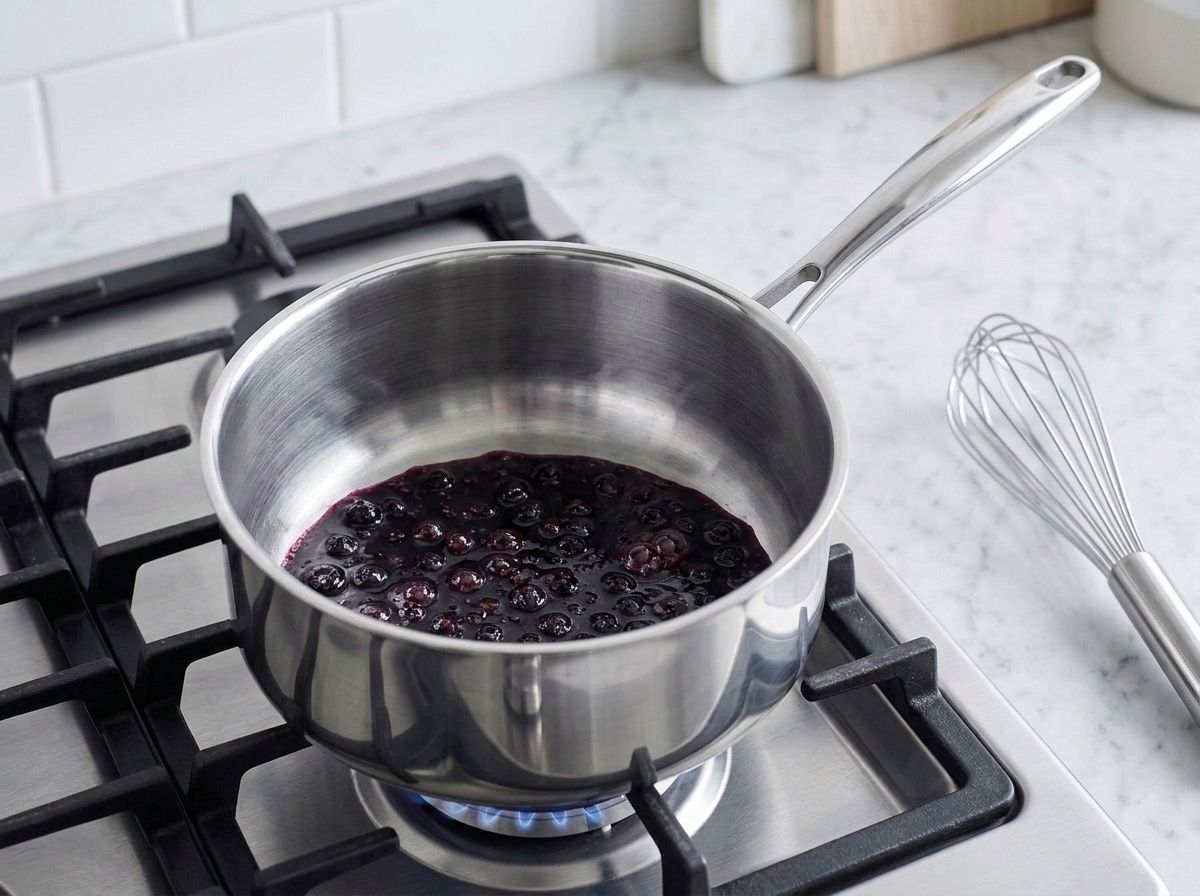
Whisk the cornstarch into the maple syrup and lemon juice in a saucepan until no lumps are left, then add 2 cups (300 g) of the blueberries with the lemon zest and salt. Bring it to a boil over medium heat, stirring and crushing the berries against the side of the pan, and let it boil for a full minute, until it turns thick, dark and glossy and holds the line when you drag a spoon across the bottom. Off the heat, stir in the vanilla.
- 3
Fold in the raw berries
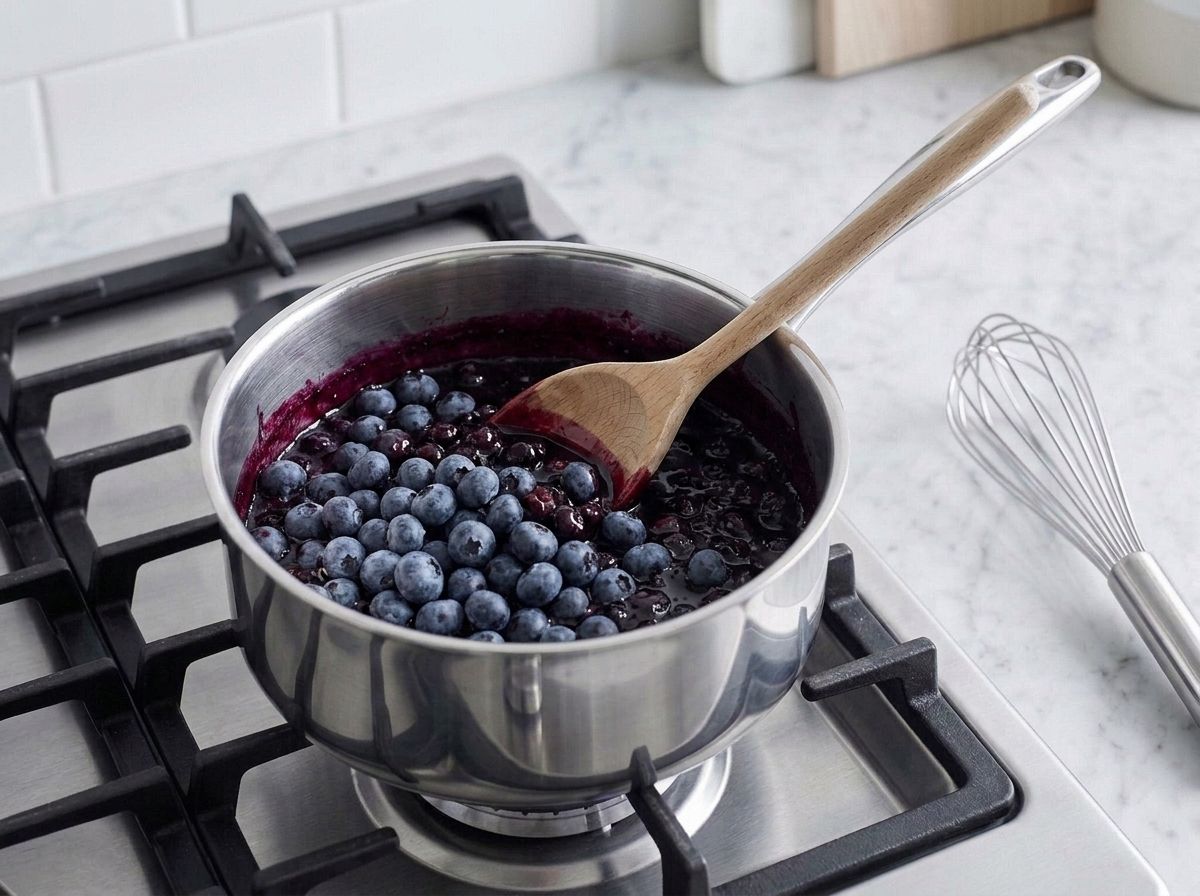
Fold the remaining 4 cups (600 g) of blueberries into the hot base and leave it to stand for 10 minutes while you deal with the crust. The berries you did not cook stay whole and burst in the oven, which is what keeps the pie tasting like fruit rather than jam.
- 4
Line the dish
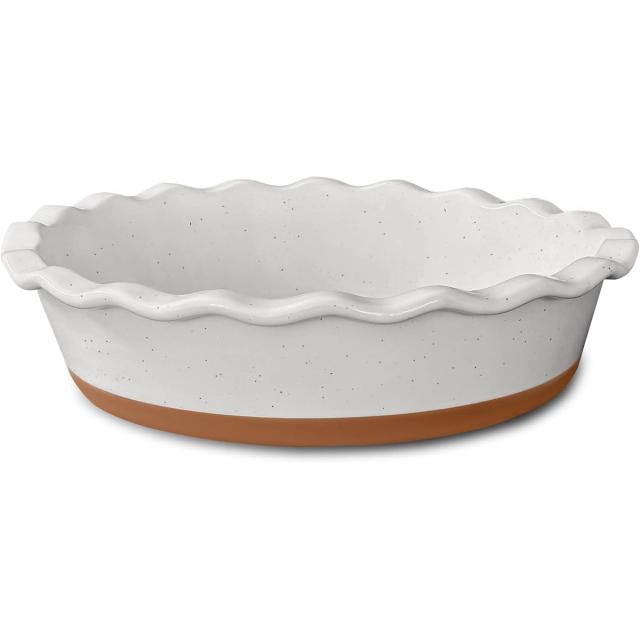
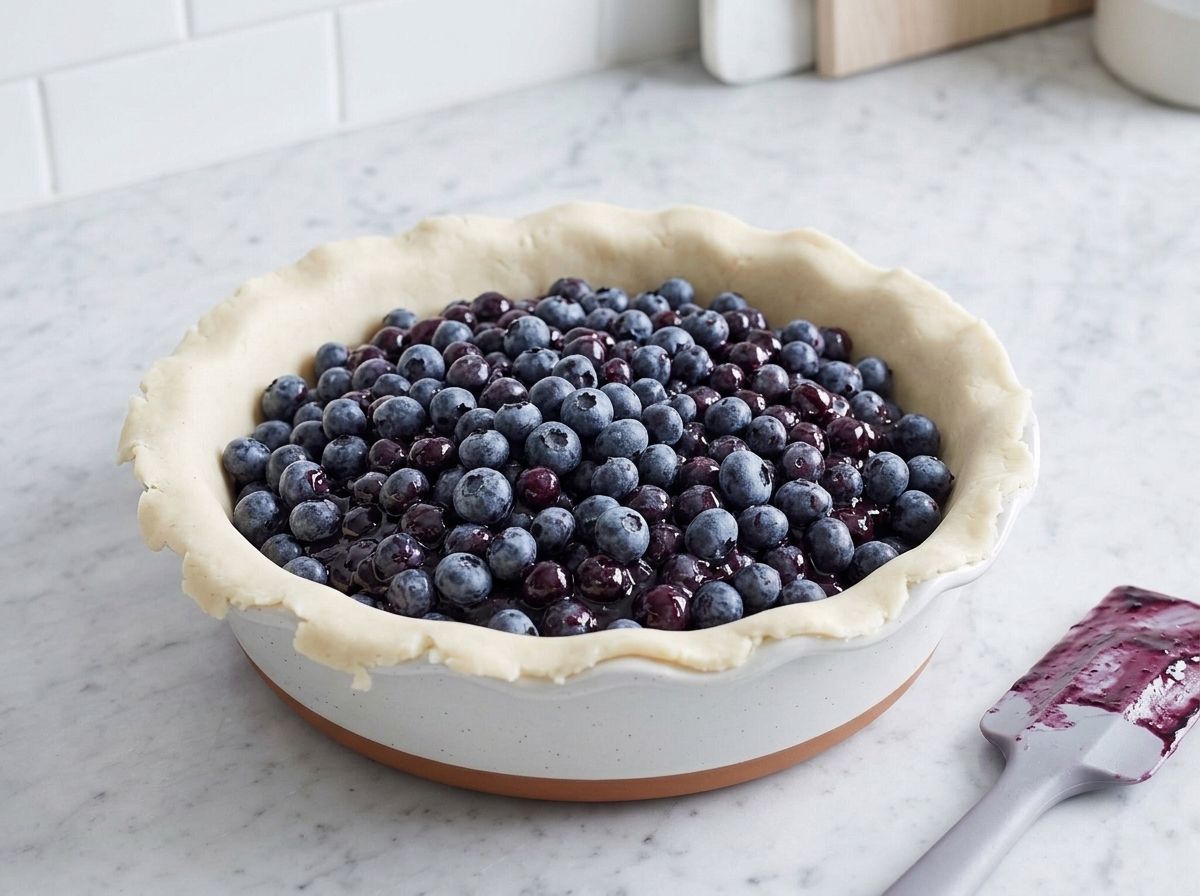
Fit one crust round into a 9-inch pie dish, easing it into the corners rather than stretching it, and leave the overhang hanging for now. Scrape in the filling and mound it a little higher in the middle, because it settles as it bakes.
- 5
Top, seal and vent
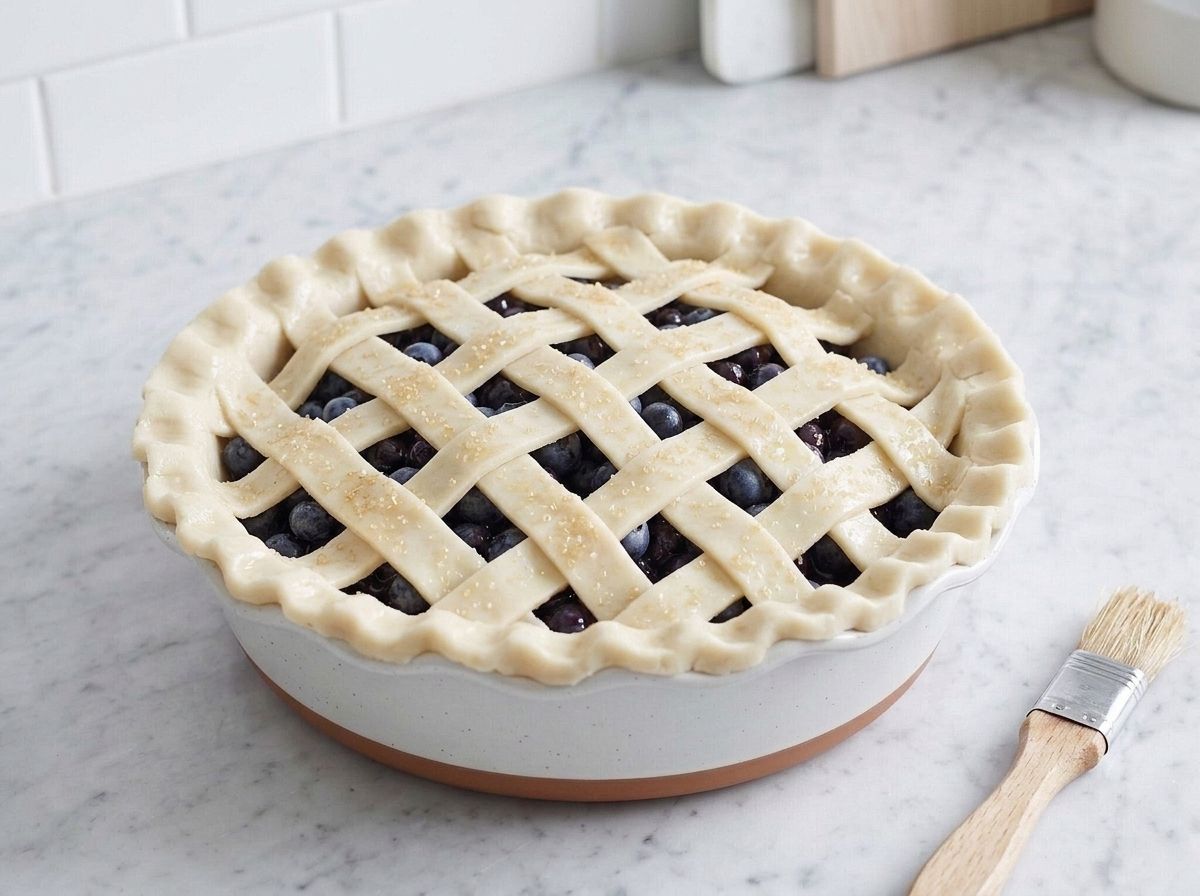
Lay the second round over the top, or cut it into strips and weave a lattice. Trim the overhang to about half an inch, fold it under itself and crimp the rim to seal. A solid top needs at least four generous steam vents cut into it; without them the steam lifts the crust clear of the fruit and splits it. Brush the top with non-dairy milk and sprinkle over the sugar.
- 6
Bake hot, then lower the heat
Set the dish on the hot baking sheet and bake at 425°F (220°C) for 25 minutes, then drop the oven to 375°F (190°C) and give it another 25 to 30 minutes. It is ready when the crust is deep golden and the filling is bubbling slowly and thickly through the vents, not just weeping thin juice at the edge. Lay a ring of foil over the rim if it colors before the rest catches up.
- 7
Cool it completely before you cut it
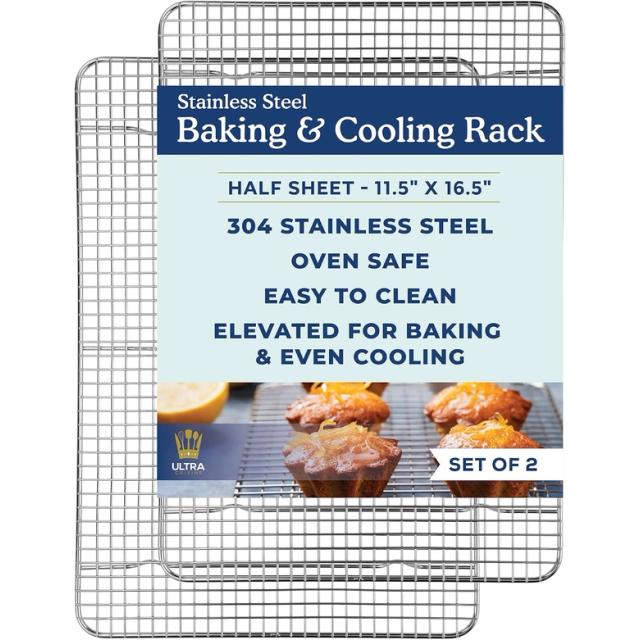
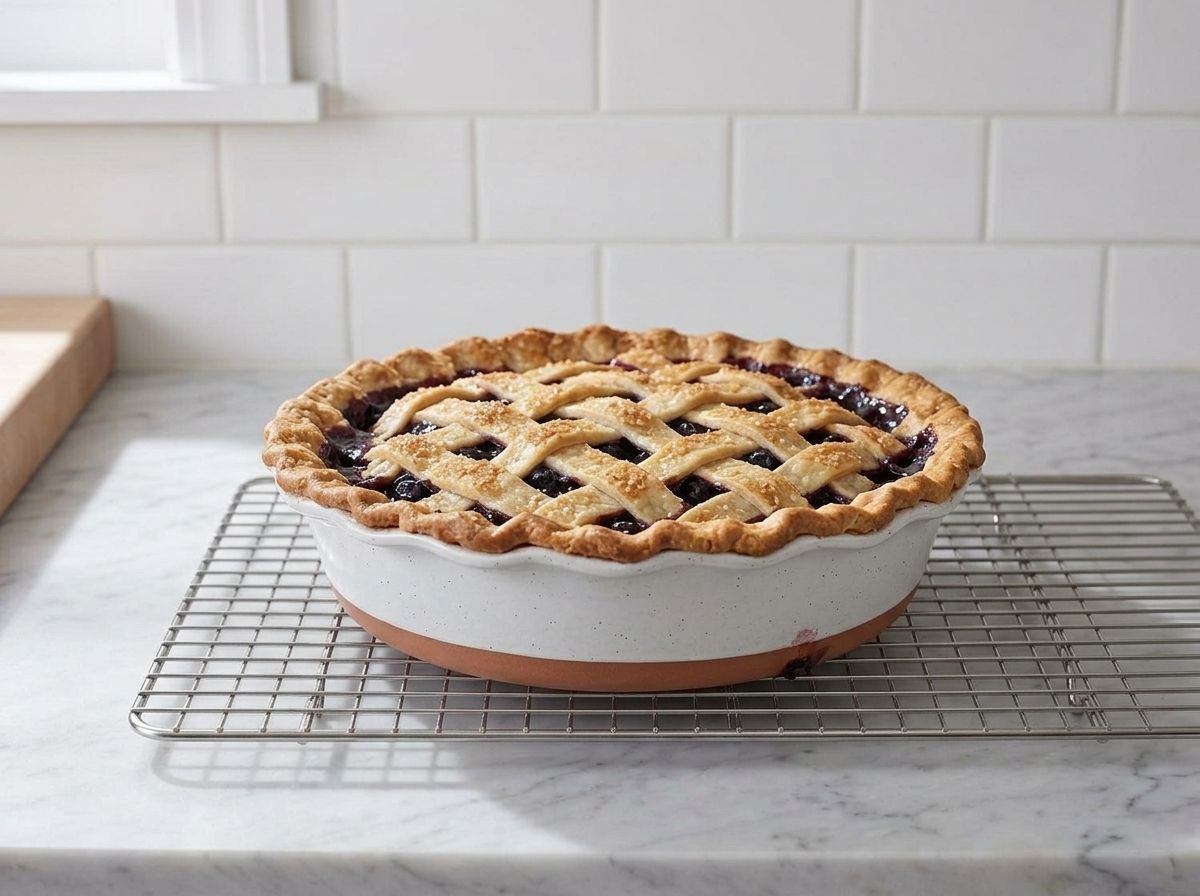
Move the pie to a wire rack and leave it alone for at least 4 hours, until the dish is no warmer than your hand. Cornstarch does most of its setting on the way down rather than in the oven, so a pie cut after twenty minutes runs across the plate, and it will not set again once it has been opened.
Notes
Check the crust before you buy it. Plenty of refrigerated store-bought crusts are made with lard or beef fat, so "pie crust" and "vegan pie crust" are not the same shelf.
Frozen blueberries go into the pan frozen. Do not thaw and drain them, that pours away flavor and color and leaves you with collapsed fruit.
A pie shield or a ring of foil over the rim after the first 25 minutes is the difference between a golden edge and a burnt one.
If you are weaving a lattice, chill it on a sheet of parchment for ten minutes before you lift it on. Warm strips sink into the filling.
Nutrition Facts
8 slices · 193 g per serving
- Calories
- 370 kcal
% Daily Value*
- Total Fat
- 13.5 g17%
- Saturated Fat
- 4.1 g21%
- Sodium
- 282 mg12%
- Total Carbohydrate
- 59.6 g22%
- Dietary Fiber
- 4 g14%
- Sugars
- 24.8 g—
- Protein
- 4 g8%
Recipe from veggierecipes.blog
When it goes wrong
Troubleshooting
The filling ran across the plate the moment I cut it
Almost always it was cut too soon. Cornstarch does most of its setting as the filling cools through about 140°F, not in the oven, so a pie that looks thick at the vents will still be liquid after thirty minutes. It needs four hours on a rack, and once it has been opened it will not set again. The other cause is a base that never truly boiled: it has to bubble hard for a full minute in the saucepan, not just steam at the edges.
The bottom crust is pale and damp
Three things fix this and the recipe uses all of them: the baking sheet heats with the oven, so the dish meets metal already at 425°F; the first 25 minutes are hot, which sets the pastry before the fruit can soak into it; and the filling goes in hot, so the base cooks from both sides at once. Bake the whole pie at 375°F in a cold dish on a cold rack and you get a gummy layer between fruit and pastry.
The top crust ballooned up and split away from the fruit
Steam had nowhere to go. A solid lid needs at least four generous vents cut right through the pastry, not pricked with a fork, which seals shut again as the dough sets. A lattice vents itself. If the dome has already formed it is cosmetic rather than fatal, and it usually settles as the pie cools.
It is sweet but somehow flat
The quarter teaspoon of salt and the lemon are not garnish. Six cups of fruit and half a cup of syrup is a lot of sugar to balance, and without acid and salt it reads as one flat sweet note. If the pie is already baked, a squeeze of lemon over the cut face of each slice does a surprising amount.
It boiled over and burned onto the oven floor
That is what the baking sheet is for, and a pie that bubbles over the rim got properly hot in the middle, so it is not a failure of technique. Mound the filling in the center rather than against the rim and keep the crimp sealed all the way round. Scrape the sheet while it is still warm, because cooked-down berry juice sets like glue.
Before you serve
Serving & Storage
Room temperature is the right way to eat this, and not only because of the four-hour wait. A properly set blueberry filling has a clean, dark, almost jammy flavor that a hot pie blurs. New England has never been shy about fruit pie at breakfast, and a cold slice the morning after is genuinely better than the same slice was the night before.
Vegan vanilla ice cream against a room-temperature slice is the classic pairing and hard to improve on. Lightly whipped coconut cream works if you want something less sweet, and thick unsweetened coconut yogurt is better still against all that maple. Skip thin vegan custard: it pools and turns the plate into soup.
Making it ahead
Because the pie needs four hours to set anyway, baking it the day before is not a compromise, it is the better plan. A pie baked in the morning cuts more cleanly that evening than one rushed on the day.
The filling keeps in the fridge for up to three days. Rewarm it in the saucepan until it pours before it goes into the crust, because straight from cold it is a solid block and will not spread into the corners. An assembled but unbaked pie freezes well: wrap it hard, freeze it flat, and bake it from frozen at 425°F for 30 minutes and then 375°F for 45 to 50, brushing it only as it goes in.
Storing leftovers
Cover the cut pie loosely and leave it on the counter for up to two days. The fridge buys another couple of days but softens the crust, so bring refrigerated slices back with 12 to 15 minutes at 350°F on a baking sheet. The microwave is the wrong tool: it steams the pastry and you get a warm slice on wet cardboard. Baked slices freeze for three months wrapped individually, and reheat from frozen at 350°F in about 25 minutes.
One thing that does not work is using the fridge to speed the set. A hot pie in a cold fridge condenses moisture under the crust and undoes exactly the crispness the hot baking sheet gave you. The first four hours have to happen at room temperature, uncovered, on a rack that lets air under the dish.
Still wondering
Frequently Asked Questions
Can I make this pie gluten-free?
Yes, and only the crust changes. The filling is already gluten-free: cornstarch, fruit, maple syrup and lemon. Buy a certified gluten-free vegan crust such as Mi-Del or the Wholly Wholesome gluten-free shell, roll it between two sheets of parchment rather than on a floured board, and give the pie a solid vented top instead of a lattice, because gluten-free dough tears as soon as you cut it into strips. For coeliac disease, check the cornstarch box carries a gluten-free label, since some brands are milled on shared lines.
Can I scale this up to a deep-dish or 10-inch pan?
Yes, but scale the thickener with the fruit or the extra depth will not set. A 10-inch or deep-dish 9-inch pan takes about 8 cups (1.2 kg) of blueberries, 5 tablespoons of cornstarch and ⅔ cup (160 ml) of maple syrup, with the salt and lemon up by half. Keep the 25 minutes at 425°F, add 10 to 15 minutes to the second stage, and give it five hours to cool, because a deeper pie holds its heat longer. An 8-inch pan takes 4 cups (600 g) of berries and 3 tablespoons of cornstarch, and bakes about 10 minutes less.
Every other recipe just tosses the fruit in raw. Do I have to cook the filling first?
Not if you swap the sweetener. The raw-toss method works with granulated sugar because sugar is dry; it fails with maple because half a cup of syrup brings about 40 ml of water into the dish with nowhere to go. To skip the saucepan, use ½ cup (100 g) of granulated sugar in place of the maple, keep the 4 tablespoons of cornstarch, and bake at 425°F for 25 minutes and then 375°F for 40 to 45, since the starch now has to reach a boil inside the crust. You lose the caramel note, and the set is looser.
Featured In
More Vegan Pie and Dessert Favorites
Made this?