
Vegan Corn Chowder Recipe
Published · Updated
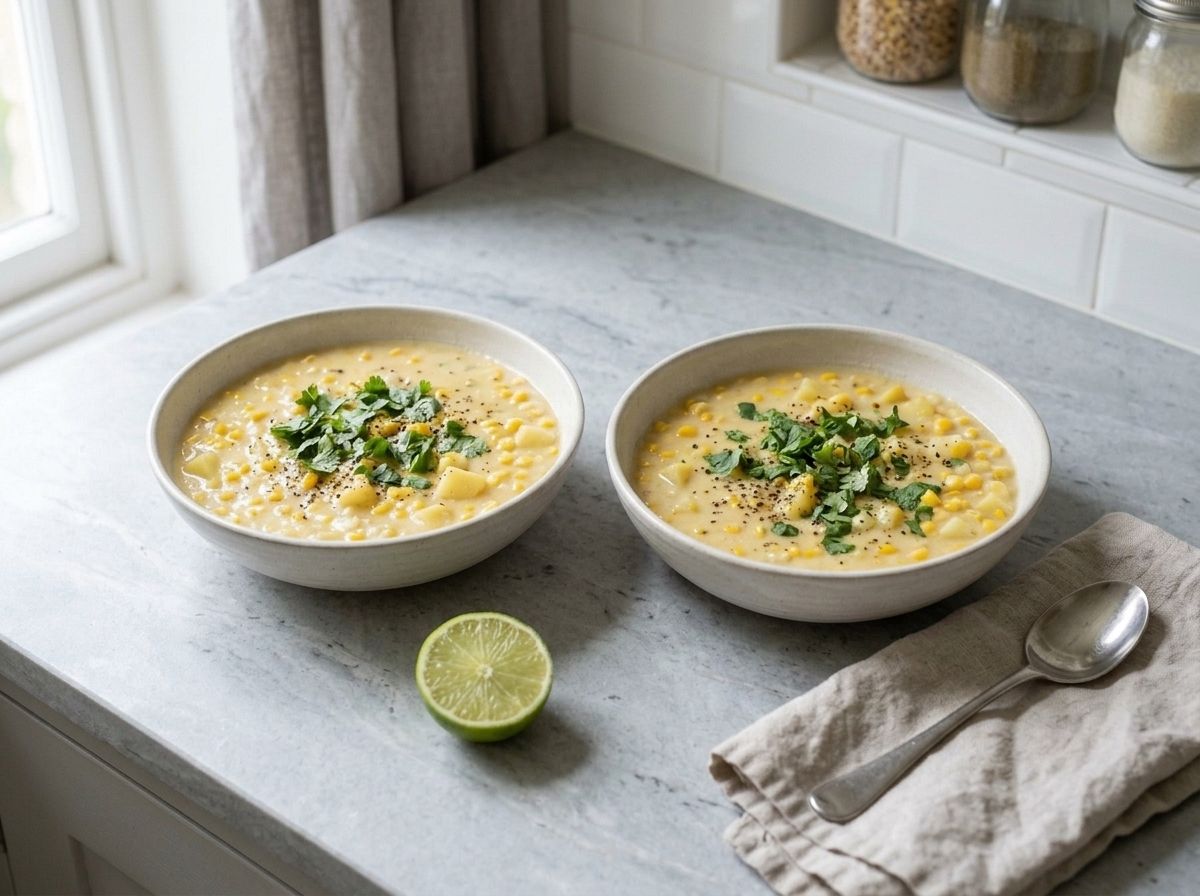
Sweet corn and tender potatoes come together in a creamy, totally vegan chowder that's pure comfort in a bowl!
Jump To Recipe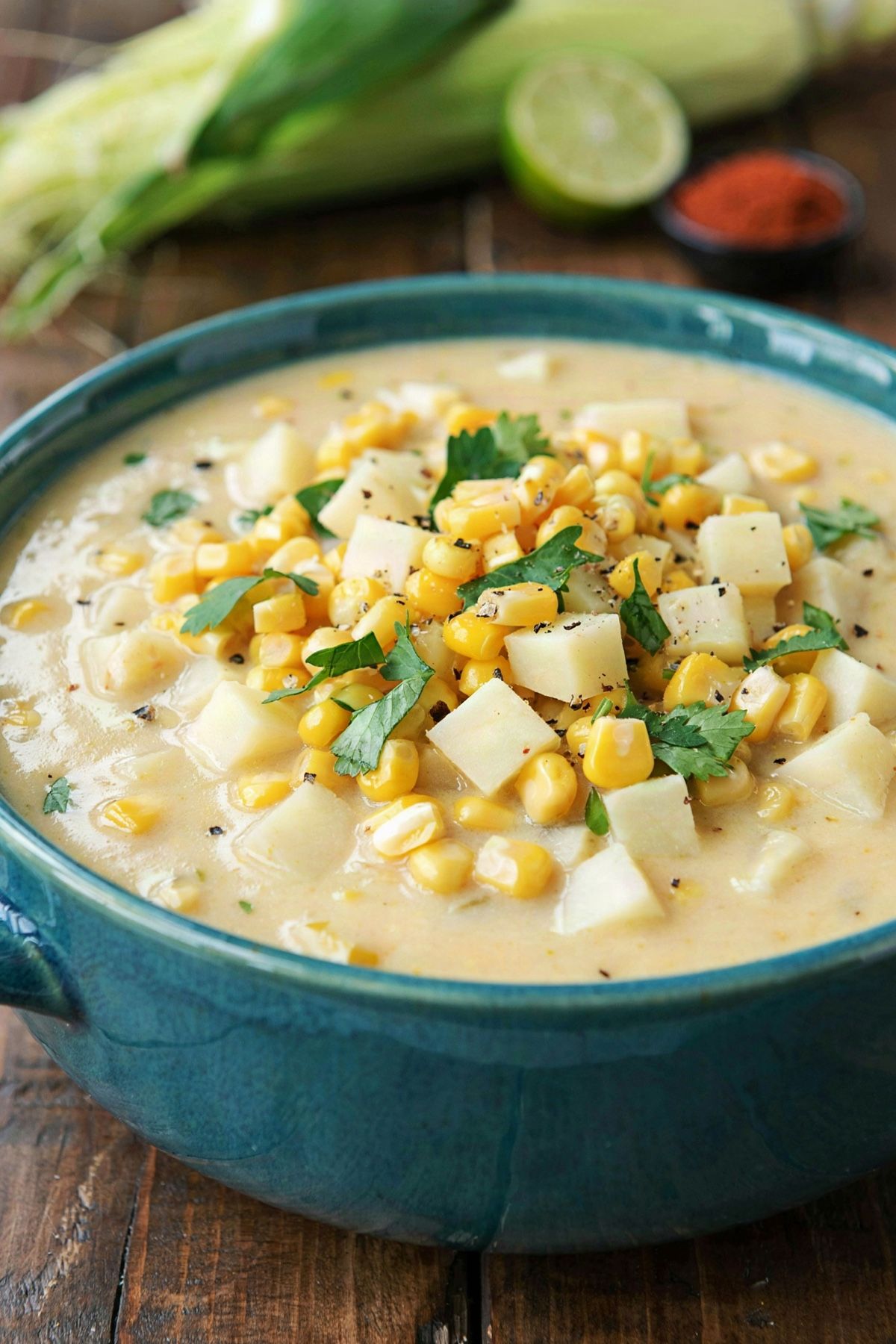
Why I Love This Creamy Vegan Corn Chowder
There’s nothing quite like a hot bowl of chowder to take the edge off a chilly day or to brighten up a laid-back summer evening. This creamy vegan corn chowder checks every box for me: big on flavor, thick and satisfying, and completely plant-based without skimping on the comfort factor.
The classic duo of corn and potatoes never fails, and when you bring in coconut milk for richness, it’s hard to believe there’s not a drop of dairy involved. Honestly, the aroma when onions and garlic hit the olive oil sets the tone for the whole meal.
The one trick I would not skip is ladling out a couple of scoops of the corn and broth, blending them smooth, and stirring them back in. Corn purees into a genuinely silky base, so you get the thickness without cream. Leaving the potato dice whole is what keeps every spoonful interesting.
The other thing I learned the hard way is that it needs a splash of vinegar or lime at the very end. Corn is sweet, coconut milk is sweet, and with nothing sharp to push against, a whole bowl of it goes cloying long before you reach the bottom.
The story
Corn Chowder Got Its Body From Crackers, Not Cream
Chowder began at sea and it began with fish. The word most likely comes from the French chaudière, the cauldron a Breton fishing crew hung over a fire, and the dish traveled to Newfoundland and down the coast into New England with the boats. The first printed recipe in English, “Directions for making a Chouder” in the Boston Evening Post of 1751, is a set of layers rather than a soup: salt pork, fish, onion, spices and ship’s biscuit, built up in the pot and covered with water and a little wine. There is no milk in it. There are no potatoes in it either.
The biscuit is the part worth noticing. Hardtack was already on board, it kept indefinitely, and once it had soaked up the liquid it broke down and gave the pot its body. Thickening a chowder with starch is not a shortcut somebody worked out later, it is the oldest instruction in the dish. Cream arrived in the nineteenth century, long after chowder had come ashore.
Corn chowder is what happened when the dish moved inland. Away from the coast there was no fish, but there was corn, native to the Americas in a way that nothing else in the pot is. It reached print in Mary Lincoln’s Boston Cook Book in 1884 and then Fannie Farmer’s Boston Cooking-School Cook Book in 1896, where the list runs: a can of corn, four cups of sliced potato, a cube of fat salt pork, a sliced onion, scalded milk, and eight common crackers split and soaked. What made it a chowder rather than a corn soup was still the crackers.
Which makes a vegan corn chowder a smaller departure than it sounds. Take the dairy out of a clam chowder and you have removed something structural. Take it out of corn chowder and you land close to what Farmer’s readers were eating, where the thickening came from starch and the sweetness came from the corn. This recipe only moves the starch around, using pureed corn and the milk scraped from the cobs where the crackers used to go.
What to buy
Ingredient Notes
Corn, fresh or frozen
Fresh corn in season is worth the extra ten minutes, and not for the kernels. It is the cobs. Scraping a stripped cob with the back of a knife releases a thick, cloudy liquid that is mostly starch and sugar, and that is what separates a chowder from a bowl of sweet soup. Five ears gives the 4 cups here. Frozen is a good stand-in out of season.
Yukon Gold potatoes
Waxy potatoes hold their shape and give up nothing to the broth. Starchy russets break down, cloud the pot and go grainy. Yukon Golds sit between the two, holding a clean dice for fifteen minutes while still thickening what is around them. If russets are all you can get, cut them larger and pull the pot off the heat the moment they yield.
Full-fat canned coconut milk
Buy the can, not the carton. Coconut milk sold as a chilled drink is mostly water with a stabilizer in it, and it thins the chowder rather than enriching it. Light canned works, but you give up most of the body. Shake the can hard before opening, because whichever half goes in first, the solid cream or the thin water, is what you taste.
Cider vinegar or lime juice
The one ingredient people leave out and should not. Corn is sugary, coconut milk is sugary, and the pot has no tomato, no wine and no cheese to push back. A tablespoon stirred in off the heat is what makes the bowl read savory rather than dessert. Lime is the brighter, cider vinegar the rounder. Balsamic is sweet as well, so it does not help.
Celery
The chowder works without it and it is noticeably duller. Celery is faintly bitter and plainly savory, and in a pot built on two sweet ingredients that is the whole job. Use the pale inner ribs, and chop the leaves into the garnish rather than throwing them out.
Smoked paprika (optional)
This is where a modern pantry gets closest to what the old chowders did. Every printed corn chowder from the 1880s on begins by rendering salt pork, and that smoke is what the dish misses without it. Half a teaspoon bloomed in the oil is enough, and a whole teaspoon stops it tasting of corn. Sweet paprika brings the color and none of the point.
Creamy Vegan Corn Chowder
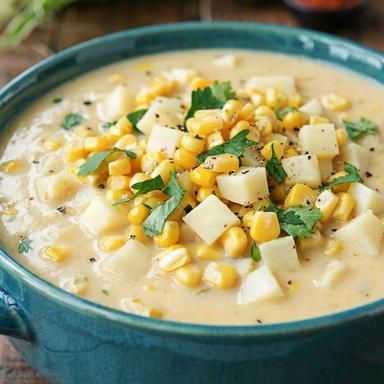
Sweet corn and potatoes simmered with onion, celery and garlic, then finished with coconut milk for a thick, dairy-free chowder.
Ingredients
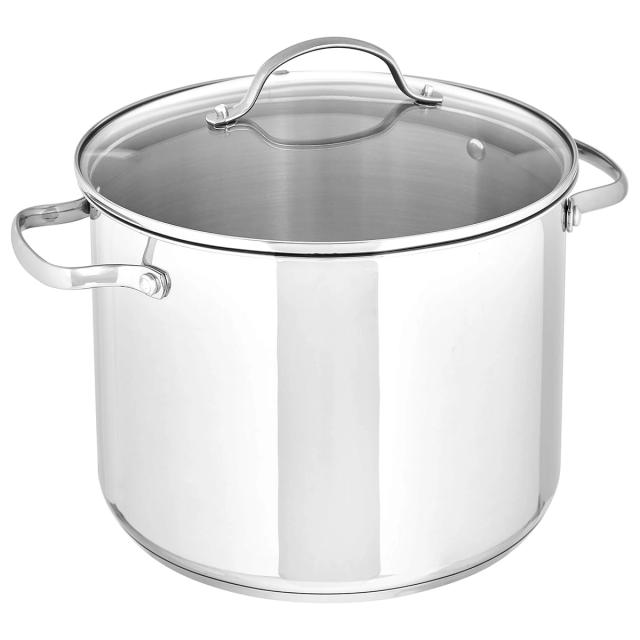
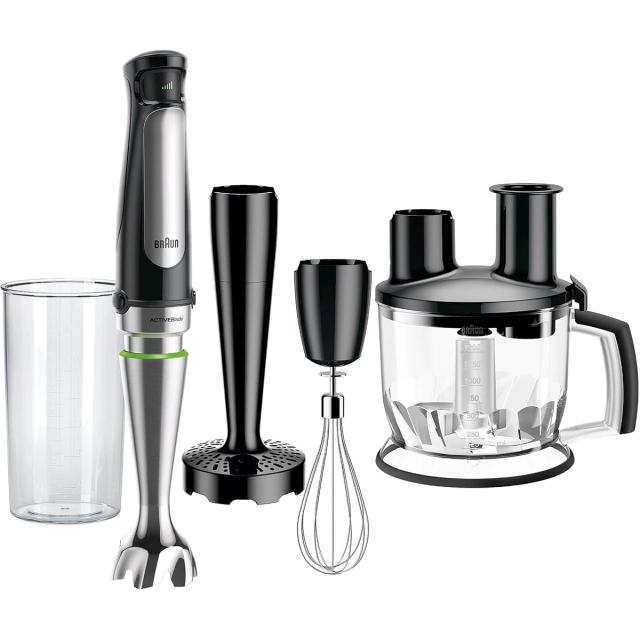
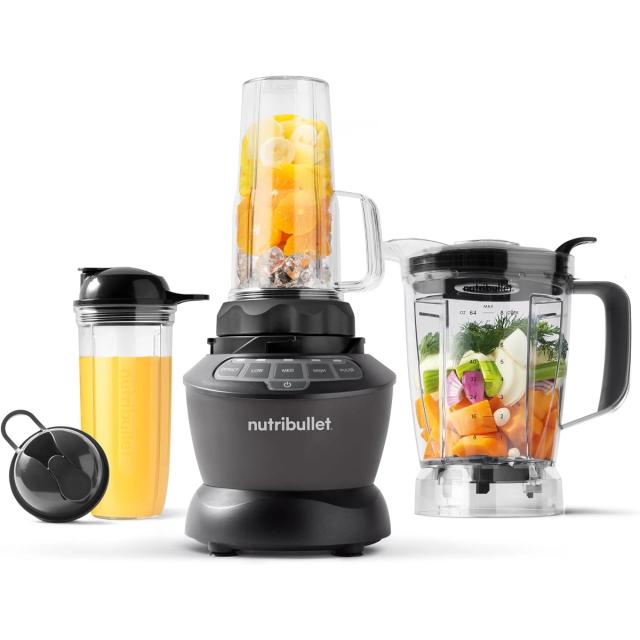
Equipment
As an Amazon Associate I earn from qualifying purchases, at no extra cost to you.
Instructions
- 1
Strip the corn and prep the vegetables
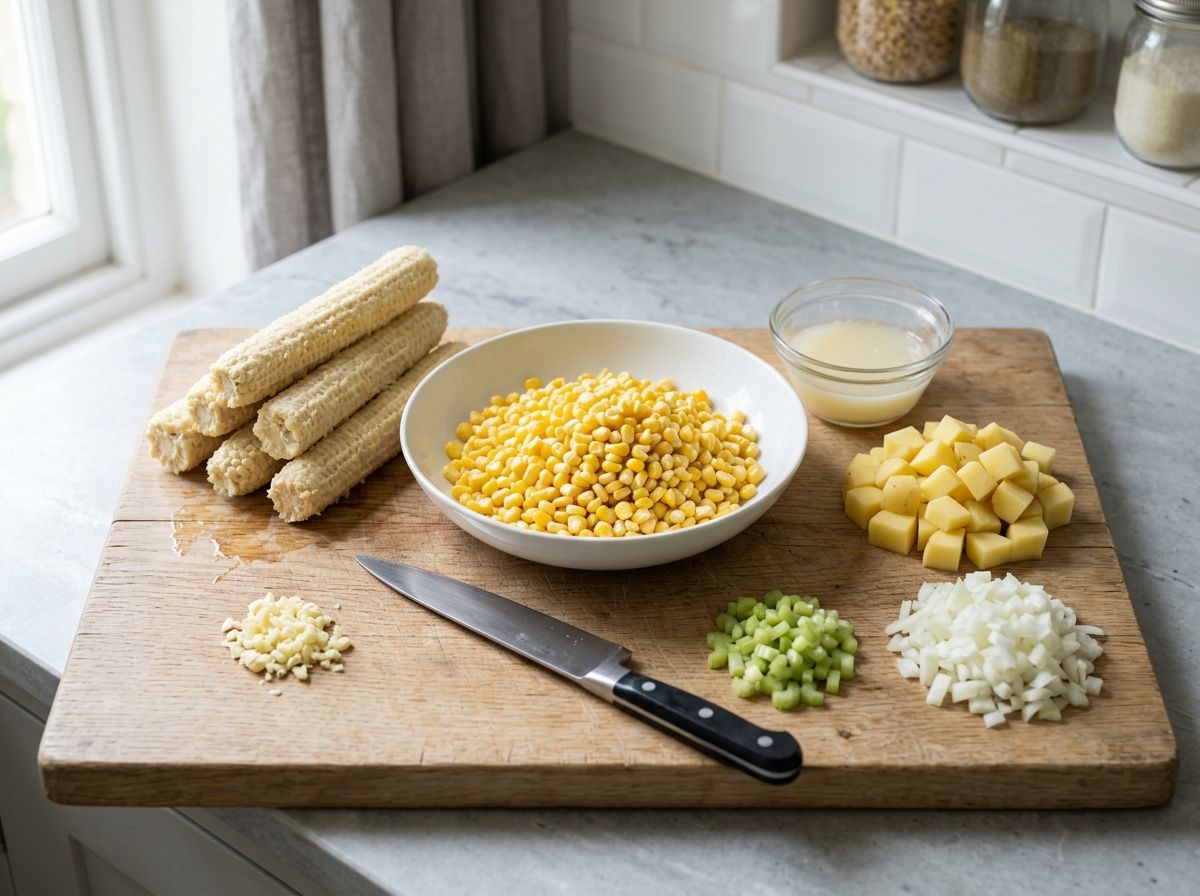
For fresh corn, stand each ear upright in a wide bowl and cut down the sides to free the kernels, then scrape each bare cob hard with the back of the knife for the thick, cloudy corn milk. Keep the milk and keep the cobs. Frozen corn goes in straight from the bag. Peel the potatoes and cut them into 1.5 cm (½ inch) dice, finely chop the onion and celery, and mince the garlic. Do not rinse the potato, its surface starch helps thicken the pot.
- 2
Sweat the onion and celery
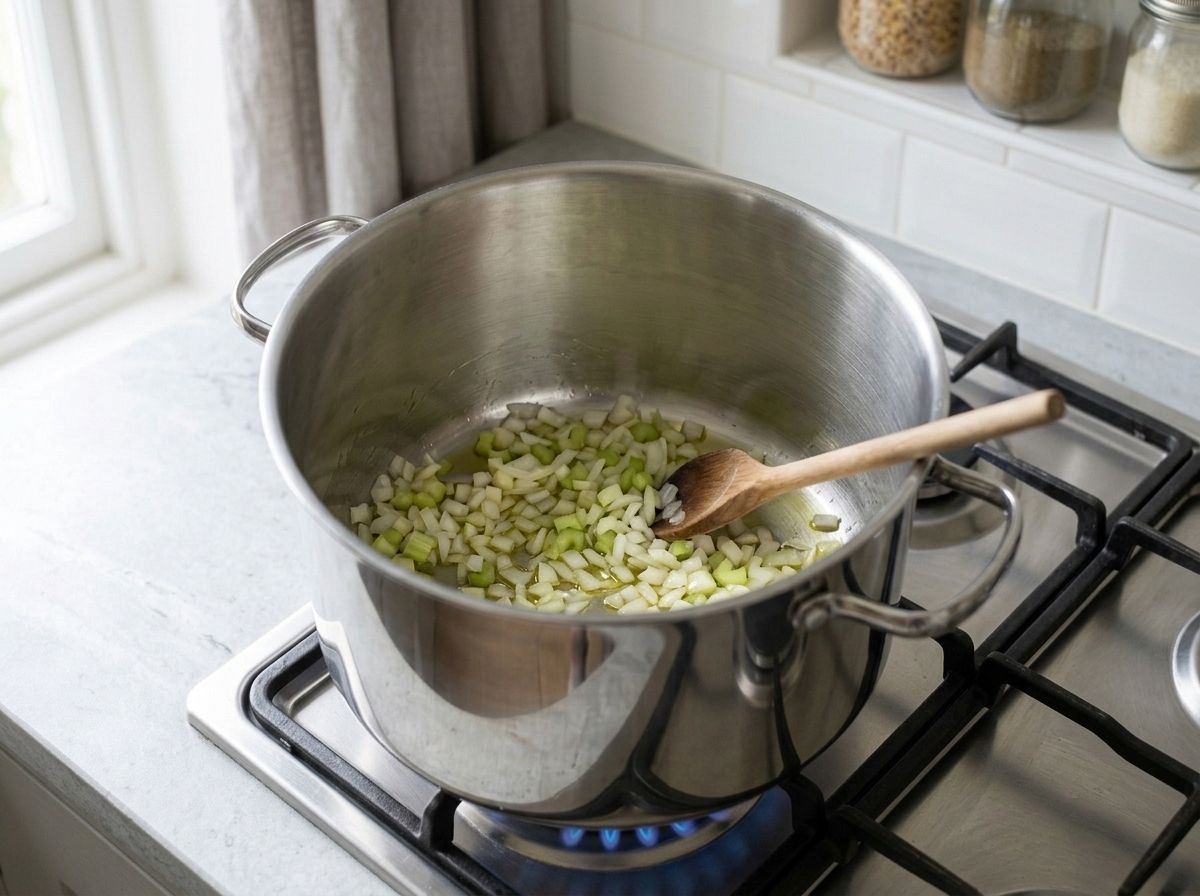
Heat the olive oil in a large pot over medium heat. Add the onion, celery and half the salt and cook for 8 minutes, stirring now and then, until soft and translucent. Keep the heat low enough that nothing colors, because browning pushes the pot towards sweet and it is sweet enough already.
- 3
Bloom the garlic and spice
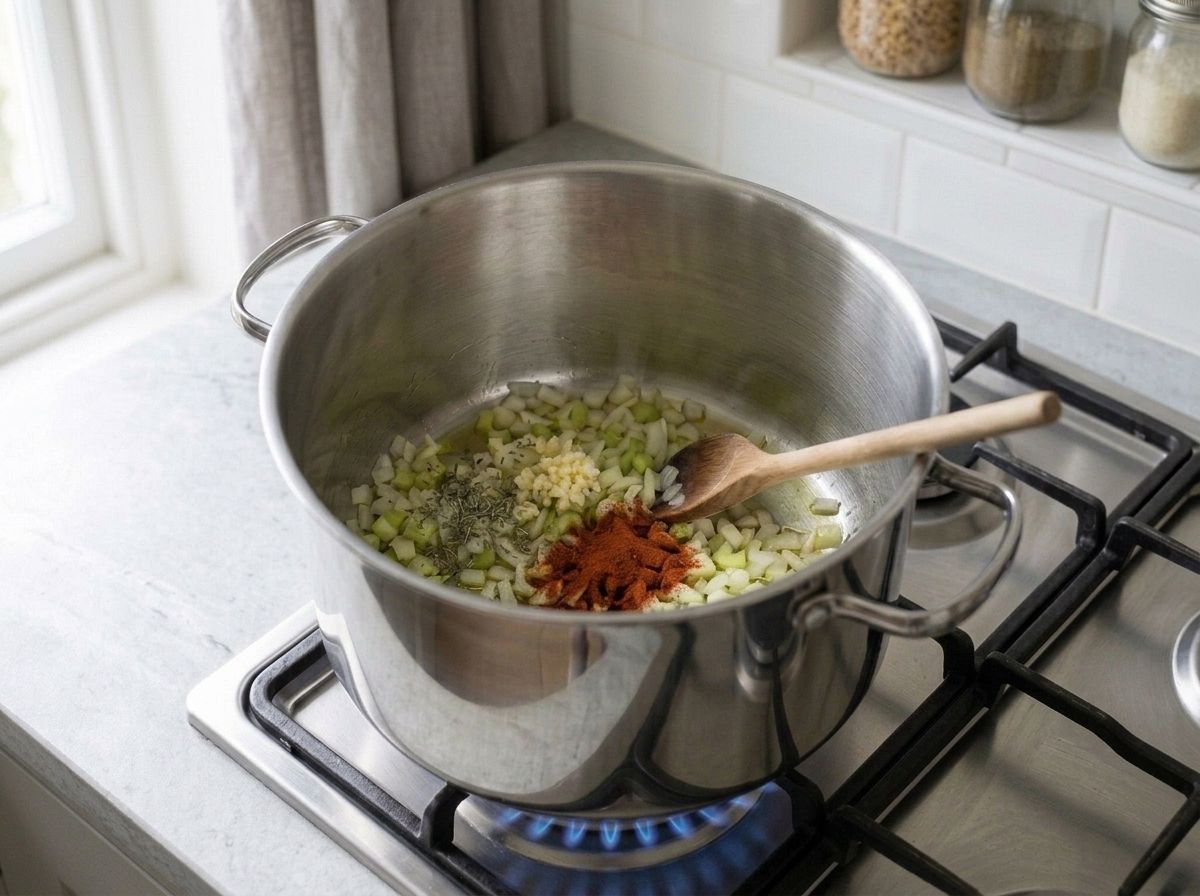
Stir in the garlic, the thyme and the smoked paprika if you are using it. Cook for 45 seconds, just until the garlic smells sweet rather than raw. Longer at this heat and it turns bitter, which is hard to hide in a soup this mild.
- 4
Simmer the potatoes
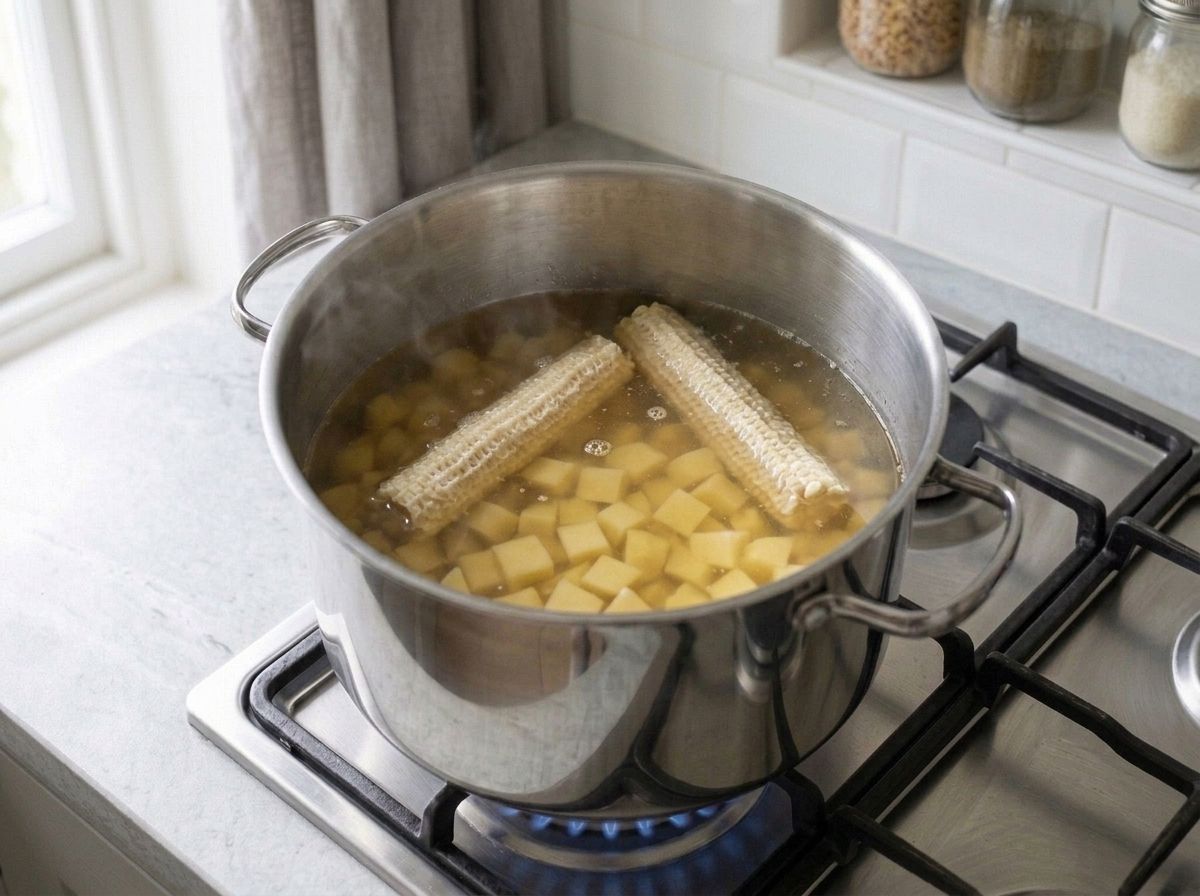
Add the potatoes, the broth and the stripped cobs if you have them. Bring to a boil, drop to a bare simmer and cook for 15 minutes, until a piece of potato crushes easily against the side of the pot. Lift the cobs out and discard them.
- 5
Cook the corn
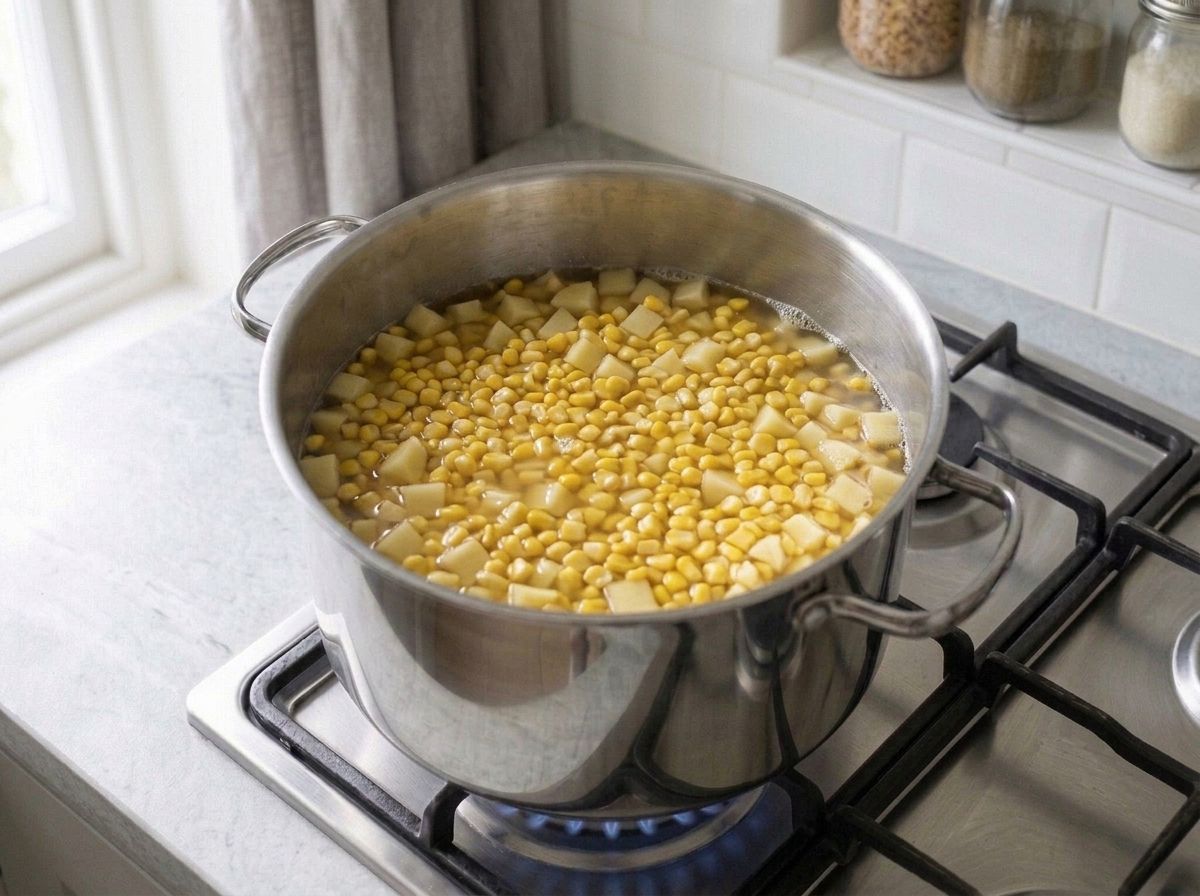
Stir in the corn and any corn milk you scraped, and simmer for 5 minutes. Long enough to cook fresh kernels through and bring frozen ones up to temperature, short enough that they still pop rather than collapse.
- 6
Blend the corn, not the potatoes
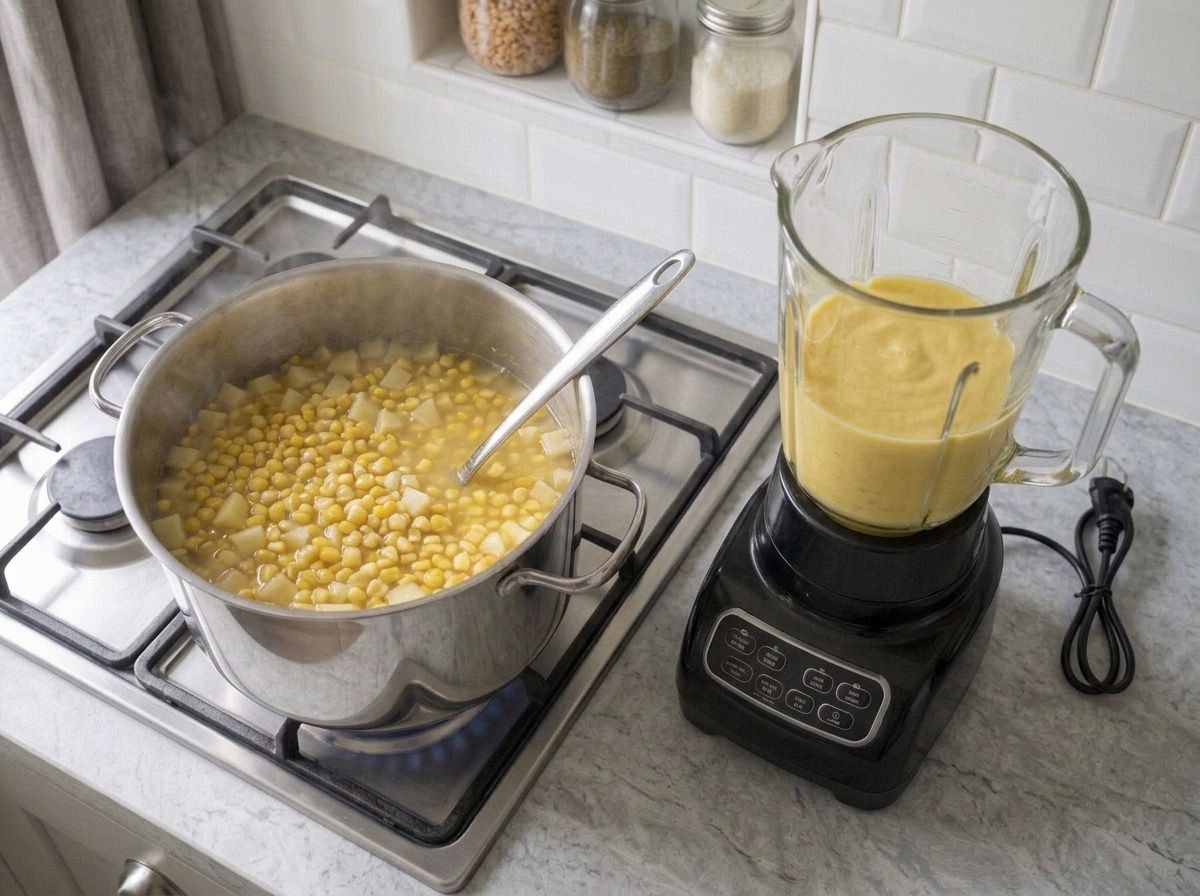
Ladle about 500 ml (2 cups) into a blender or a tall jug, scooping mostly corn and broth and leaving the potato dice behind. Blend for a full minute, until no grain is left in it, then stir it back into the pot. Corn purees into a silky base that thickens the chowder on its own. Potatoes hit with a blade turn gluey, which is why they stay whole.
- 7
Finish with coconut milk
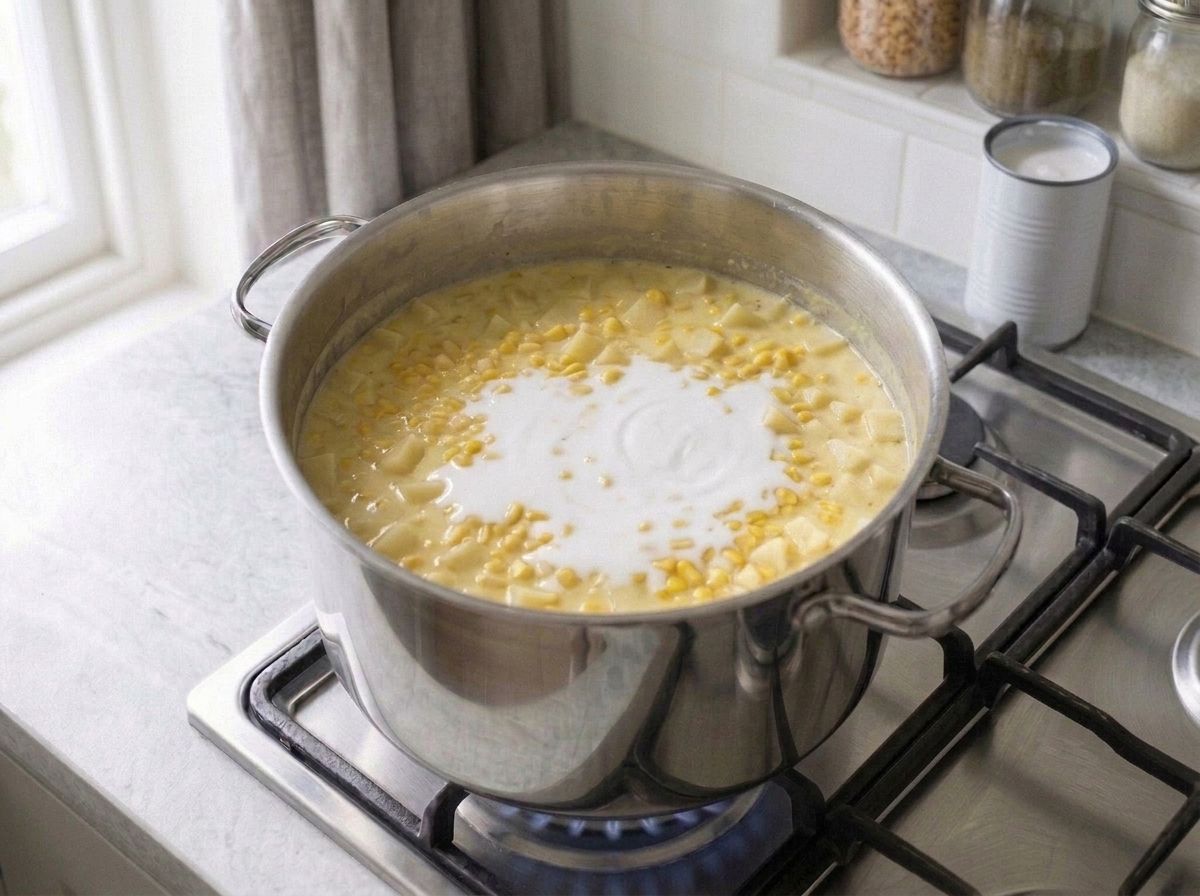
Take the pot off the boil and stir in the coconut milk. Warm it through for 3 to 4 minutes at a bare shiver, never a rolling boil, or the emulsion breaks and the fat beads out on the surface.
- 8
Sharpen it and serve
Off the heat, stir in the vinegar or lime juice, then taste and add the rest of the salt and the black pepper. The acid is not a garnish, it is what keeps two sweet ingredients from reading as dessert. Ladle out and scatter over the cilantro or parsley.
Notes
Canned corn is the one form to avoid. It has already been cooked soft in the can and goes to mush in the pot.
The chowder keeps thickening as it stands. Loosen a reheated bowl with broth or water, not more coconut milk, which only pushes it sweeter.
Diced red bell pepper or a seeded poblano can go in with the onion. Carrot is the tempting addition and the one to skip.
A tablespoon of white miso whisked into the coconut milk stands in for the salt pork the first corn chowders were built on. Check the label if you need it gluten free.
Nutrition Facts
4 servings · 575 g per serving
- Calories
- 489 kcal
% Daily Value*
- Total Fat
- 29.6 g38%
- Saturated Fat
- 19.6 g98%
- Sodium
- 1331 mg58%
- Total Carbohydrate
- 55.7 g20%
- Dietary Fiber
- 6.2 g22%
- Sugars
- 12.7 g—
- Protein
- 9.5 g19%
Recipe from veggierecipes.blog
When it goes wrong
Troubleshooting
It came out gluey, like wallpaper paste
You blended the potatoes. A blade tears open the swollen starch granules in cooked potato and releases amylose, which sets into a sticky elastic network the moment it meets liquid. It is why nobody makes mashed potato in a food processor. Ladle out mostly corn and broth for the blender and leave the dice in the pot. Nothing brings a gluey chowder back.
It is thin, more soup than chowder
Too much liquid, and older versions of this recipe were guilty of it. Three cups of broth plus one can of coconut milk is the ceiling for this much corn and potato. If you are past it, blend another ladle of corn and broth back in, or simmer uncovered for ten minutes before the coconut milk goes in. Cornstarch gives a glassy sheen a chowder should not have.
It tastes sweet and somehow flat
The commonest failure here, and the reason vinegar is on the list. Corn is sweet, coconut milk is sweet, and a carrot-heavy broth makes three. Stir the acid in off the heat, then add salt a quarter teaspoon at a time until it stops reading as dessert. If it is still soft, a tablespoon of white miso does what the salt pork used to.
There is fat floating on the surface in globules
The coconut milk boiled. Canned coconut milk is a loosely held emulsion and a rolling boil breaks it, driving the fat out. Take the pot off the heat and whisk hard and it mostly comes back together. Next time, add it once the pot is off the boil and never let it do more than shiver.
The kernels are tough and the puree came out gritty
Corn skins. The hull of a kernel is cellulose and five minutes of simmering does not soften it, so a half-hearted blend leaves it behind as grit. Blend for a full minute, longer than feels necessary, and push the puree through a sieve on the way back if your blender is not up to it. Whole kernels that stay tough mean old or canned corn.
It went watery in the fridge overnight
That is retrogradation, not a mistake. Starch that gelatinized in the hot pot recrystallizes as it cools and squeezes out the water it was holding, so the chowder separates into something thick with a thin layer on top. Reheat gently over low heat, stirring, and it pulls back together.
Before you serve
Serving & Storage
Serve it with crackers, and not as a nice idea. The crackers were in the pot before they were beside it, so a plain unsalted cracker crumbled over the top is doing the job it did in 1751, thickening the last third of the bowl while you eat it. Oyster crackers are the New England form and a saltine is a fine stand-in. Anything flavored falls apart and tastes of itself.
Past that, the chowder wants texture and it wants heat. Corn charred dry in a hot skillet, pickled jalapeño, chili crisp, or tortilla strips fried until they blister all give the spoon something to hit. A green salad with a sharp vinaigrette does more for the meal than bread, because what you want on the table is the one thing that is not soft and sweet.
Making it ahead
The base is better on the second day, once the aromatics have settled. Cook it through the potato simmer, then cool and refrigerate, and pick up at the corn on the day you serve. Splitting it there keeps the kernels from going soft and spares the coconut milk a second round of heat. If you make the whole thing ahead, hold the vinegar back and stir it in after reheating, because acid goes dull overnight.
Storing leftovers
Four days in a sealed container in the fridge, where it will thicken enough to stand a spoon in. Reheat over low heat, stirring, and loosen it with broth or water rather than more coconut milk, which only makes it sweeter. Skip the microwave on full power, it boils the coconut milk and splits it.
What does not work
Freezing. The potato dice comes back mealy, because water inside the cells expands into ice crystals and ruptures the walls, and the coconut milk separates on top of that. If you want something in the freezer, stop before the potatoes and the coconut milk go in, freeze the corn and broth base, and build the rest fresh. Serving it cold does not work either, the coconut fat sets on the tongue.
Still wondering
Frequently Asked Questions
Is this corn chowder gluten free?
Yes, and not by substitution. Chowder is traditionally thickened with crackers or a flour roux, and those are exactly what usually put one off limits. This version takes its body from blended corn and potato starch, so there is no gluten in it to swap out. The two things to check are the vegetable broth, which sometimes carries barley or wheat, and the miso in the recipe notes if you use it, since barley miso is common.
What can I use instead of coconut milk?
Cashew cream is the closest match: blend 100 g (¾ cup) raw cashews with 300 ml (1¼ cups) water until completely smooth and use it in place of the can. It is thicker and less sweet, so blend a little less corn at step 6. Unsweetened oat milk goes in at the same 400 ml but brings almost no fat, so add a tablespoon of olive oil with it and expect a lighter bowl. Almond milk is too thin and too nutty.
Featured In These Collections

More Cozy Vegan Soups to Try

Made this?