
Vegan Cornbread Dressing Recipe
Published · Updated
Dressing is not stuffing under another name: it goes into the pan loose enough to pour, and that one difference is what most recipes get wrong.
Jump To Recipe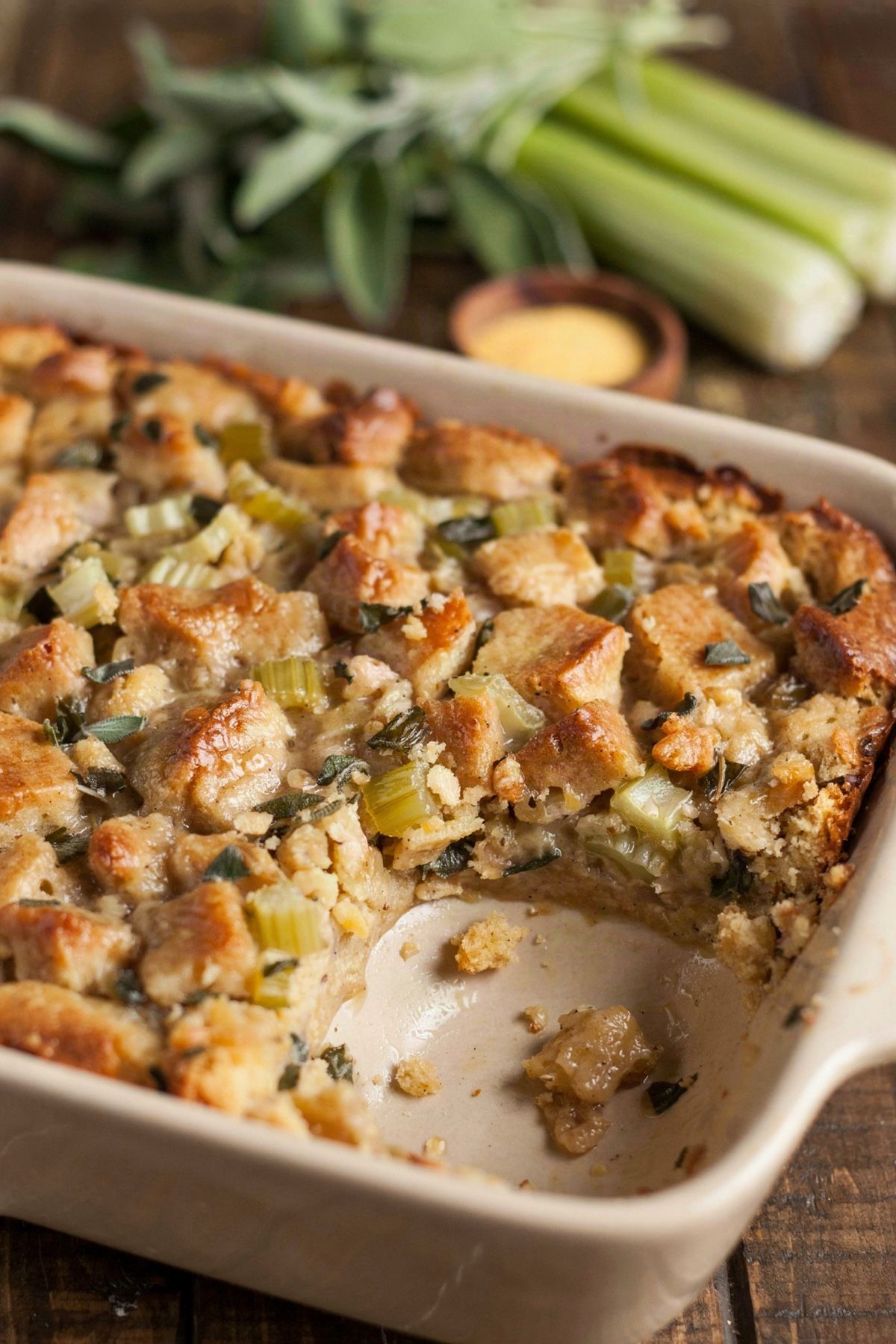
The Year I Made It Like Stuffing
I grew up on bread stuffing, so the first time I made dressing I made it the way I already knew how. I dried the cornbread, tossed it with the vegetables, added just enough broth to dampen everything, and put it in the oven. What came out was a pan of seasoned cornbread crumbs. It was not wrong exactly. It was sand.
The correction came the following year, from a friend’s mother who grew up on it in Tennessee and stood over me telling me to keep pouring. I added another two cups of broth and the bowl turned into something that looked like a mistake, thick and sloshing, nothing like the pan of stuffing I had in my head. It was the best thing on the table.
That is most of the recipe, honestly. Everything else here is about making the cornbread worth eating before it gets crumbled, and about replacing the eggs and the drippings without pretending the dish needs meat to work. It never did. The oldest version of it was cornmeal, onion and fat, and two of those three were never the problem.
The story
Cornbread Dressing Started As A West African Grain Dish
Ask why the South says dressing and you will usually be told it is because the dish is baked in a pan instead of inside the bird. That is true, and it is not the whole story. The word arrived in the 1850s, when Victorian table manners made “stuffing” sound coarse and polite cookbooks reached for “dressing” instead. The North eventually drifted back. The South kept the word, and by then it was attached to something that had stopped being a bread stuffing at all.
Wheat did poorly in the Southern climate, and for most of the region’s history cornmeal was the flour people actually had in the house. New England built its holiday stuffing out of wheat loaves because that is what a New England kitchen contained. A Southern kitchen contained cornmeal, so it built the same idea out of cornbread, and the two dishes drifted apart until they were no longer versions of one another.
The line runs back further than the holiday table. The culinary historian Michael Twitty traces cornbread dressing to kush, a dish enslaved West Africans carried with them and rebuilt out of what they were issued. The name comes from kusha, the Hausa word for the steamed millet and sorghum dishes of Islamic West Africa, the same family couscous belongs to. In the quarters the grain became rationed cornmeal: day old cornbread crumbled up and cooked down with onions and peppers from the garden plots in whatever fat there was, usually salt pork grease. WPA interviewers in the 1930s were still being told it made a good supper.
That history is worth knowing here for a reason beyond credit, though credit matters too, and Twitty’s point is that the dish gets told as a Confederate soldier story with the enslaved cooks written out of it. It is worth knowing because the original is very nearly a vegan recipe already. Crumbled cornbread, onion, pepper, fat. Only the last item was animal, and it is the one thing on that list with no flavor of its own to lose. Everything that makes dressing taste like dressing, the sage and the black pepper and the celery and the corn, was never coming from the bird.
What to buy
Ingredient Notes
Stone-ground cornmeal
Grind matters more here than color does. Coarse meal stays gritty through two bakes and a long soak, because the grains never fully hydrate, and the dressing reads as sandy no matter how much broth you pour in. Medium or fine grind is what you want. Yellow and white are both traditional depending on which part of the South you ask, and they behave the same way; white is a little softer in flavor.
Sugar, or the absence of it
This is the one that ruins a pan. Southern cornbread meant for dressing carries no sugar at all, and most boxed mixes and most cornbread recipes written outside the South carry a lot. A standard mix runs 6 to 8 grams of sugar per serving, which is enough that the finished dressing tastes like a savory dessert sitting next to the gravy. If you use a mix, read the label first and expect to be disappointed.
Poultry seasoning
It contains no poultry. It is a blend of sage, thyme, marjoram, rosemary and usually a little nutmeg, named for what it was sold to season rather than for what is in it, and the supermarket brands are vegan. It is also the single ingredient that makes this taste like the dressing people remember, so it is worth getting past the name.
Fresh sage
Sage is the dominant flavor and it should be assertive. Three tablespoons of chopped fresh sage in one pan sounds like too much and is not. If you only have dried, use one tablespoon of rubbed sage rather than ground, and add it to the hot butter rather than to the broth, because dried sage needs fat and heat to come back at all.
Low sodium vegetable broth
Five cups is a lot of broth, and its faults get concentrated rather than diluted. The carrot forward supermarket brands turn the dressing sweet, which fights the same battle the sugar does. Look for one whose first vegetables are onion and celery, or make up a bouillon paste at slightly under the strength on the jar. Low sodium matters because the cornbread and the seasoning are salted already.
Chickpea flour
This does the job the two or three eggs do in a traditional dressing, which is to hold the pan together without drying it out. Whisked into warm broth it hydrates and then sets as it bakes, and at a third of a cup across five cups of liquid that set is a soft one: enough that a spoonful lifts out in one piece, nowhere near enough to cut into tidy squares. Dressing is not meant to slice like a cake. Leave it out and it still works, it is simply looser again and wants a deeper spoon.
Sturdy white bread
A pan of pure cornbread is heavy and a little relentless. Traditional Southern dressing usually cuts it with torn biscuits or plain white sandwich bread, called light bread in the old recipes, and that fraction is what keeps the texture from going dense. Sourdough works. Anything with a strong flavor of its own does not.
Vegan Cornbread Dressing
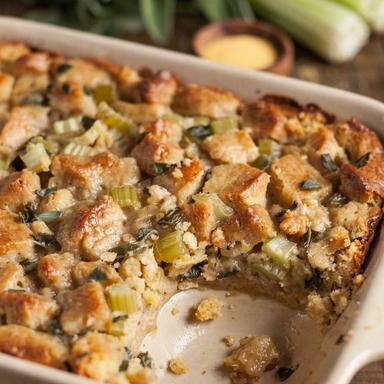
A Southern style vegan cornbread dressing built on unsweetened cornbread, browned sage butter and plenty of black pepper, baked loose so the middle stays soft under a crisp top.
Ingredients
Equipment
As an Amazon Associate I earn from qualifying purchases, at no extra cost to you.
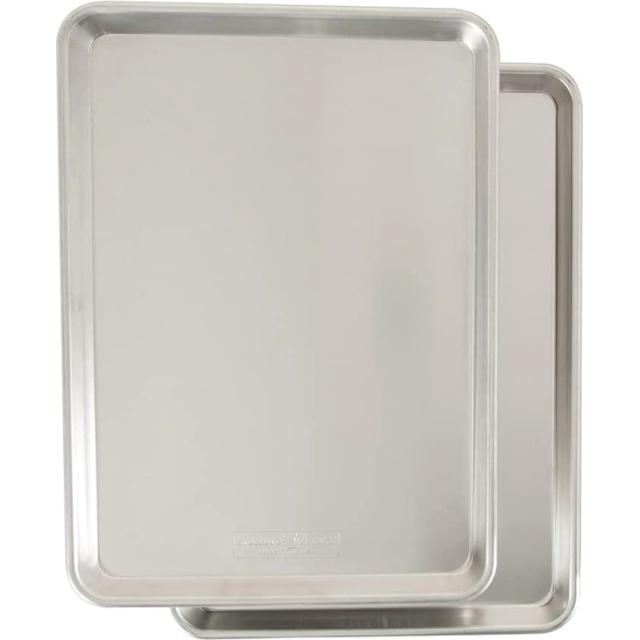
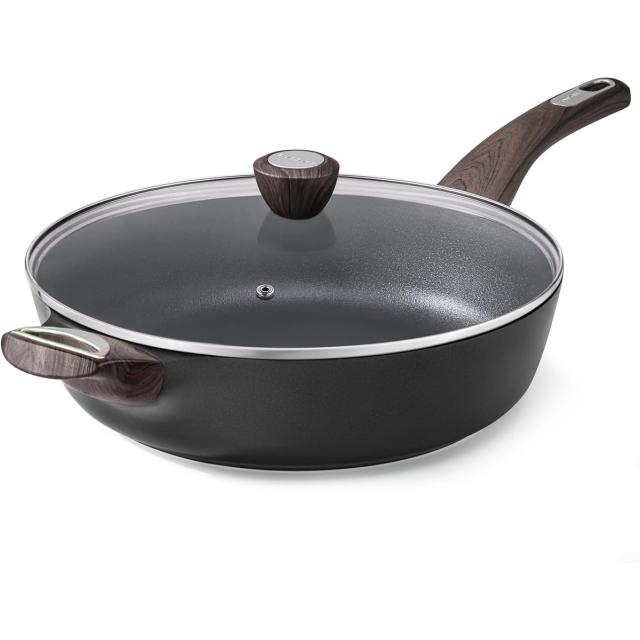
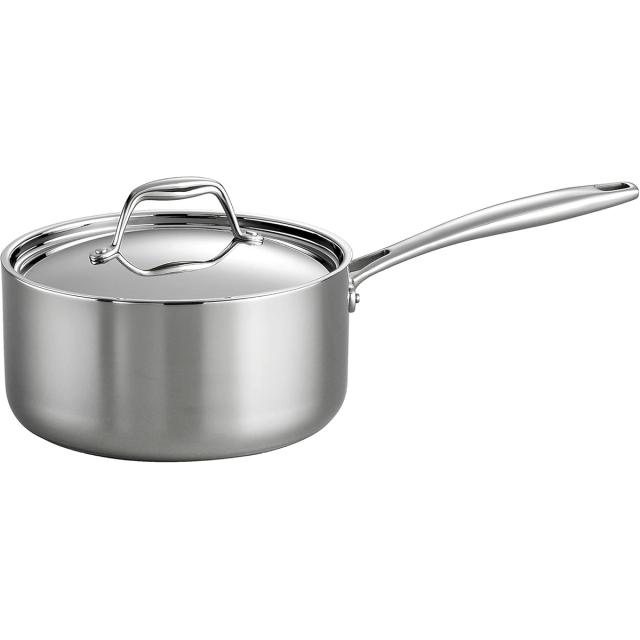
Instructions
- 1
Mix the cornbread batter
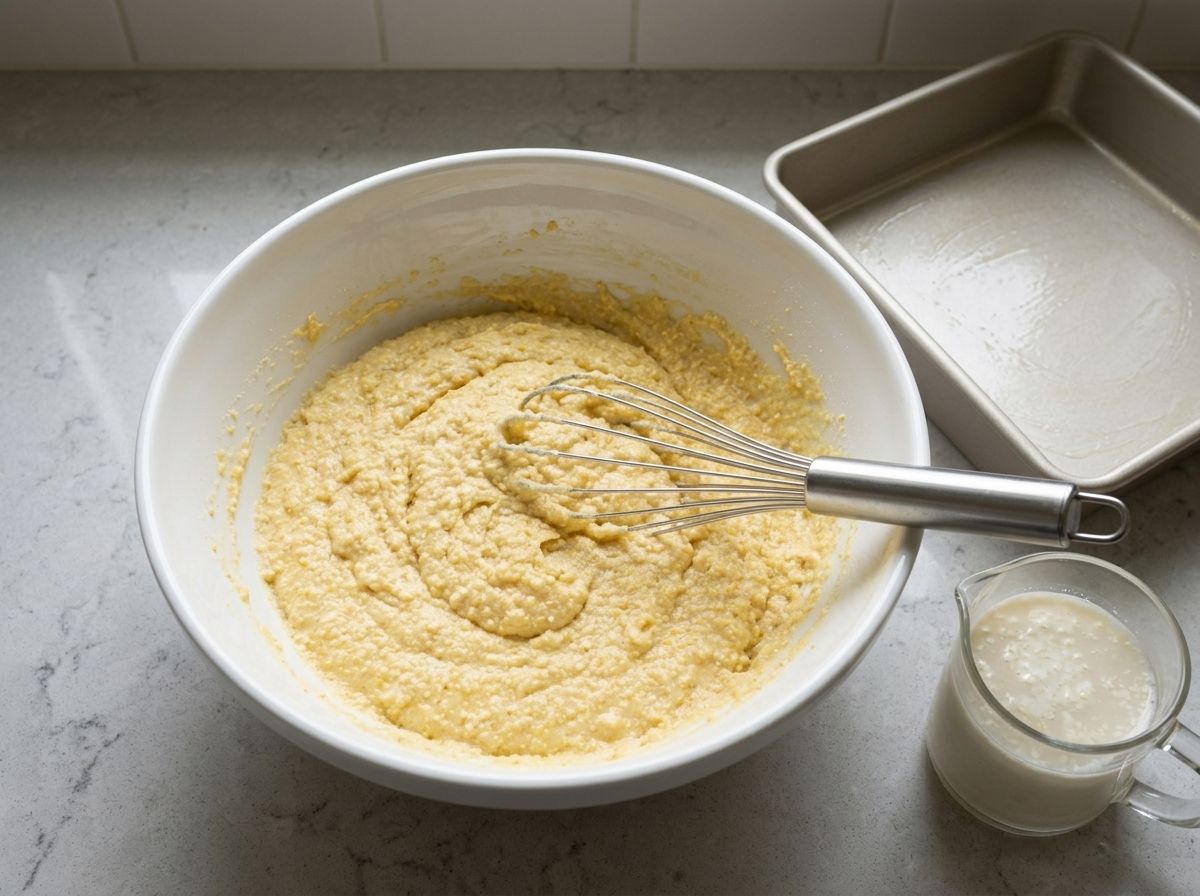
Heat the oven to 425°F (220°C) and oil a 9x9 baking pan. Stir the vinegar into the soy milk and leave it for 5 minutes, until it thickens and separates slightly. Whisk the cornmeal, flour, baking powder, baking soda and the cornbread salt together in a large bowl, then pour in the curdled milk and the oil and stir just until no dry meal is left. Lumps are fine. Working it smooth develops the flour and makes the cornbread tough.
- 2
Bake the cornbread
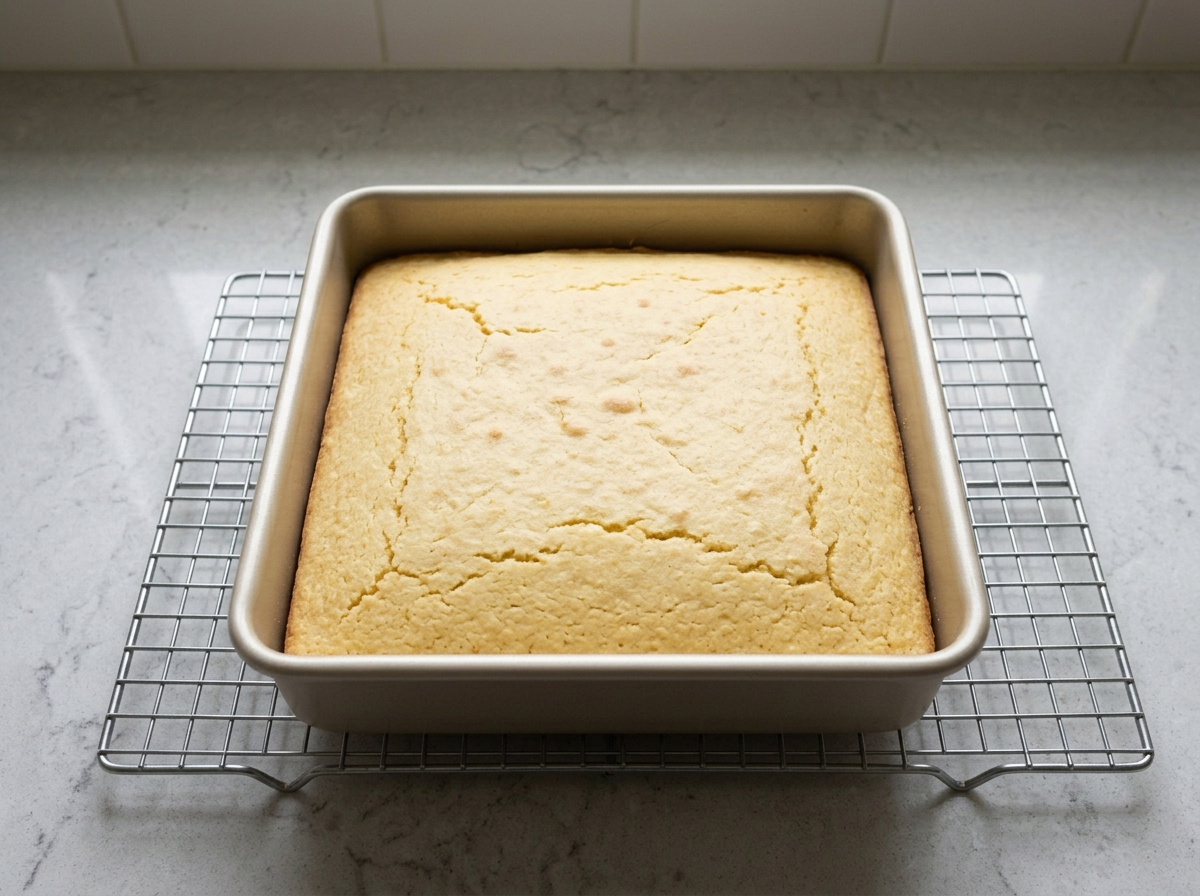
Scrape the batter into the pan and level the top. Bake for 22 to 25 minutes, until the surface is set and pale gold and a skewer comes out clean. It will not brown much and it should not taste sweet. Turn the oven down to 275°F (135°C).
- 3
Crumble and dry it out
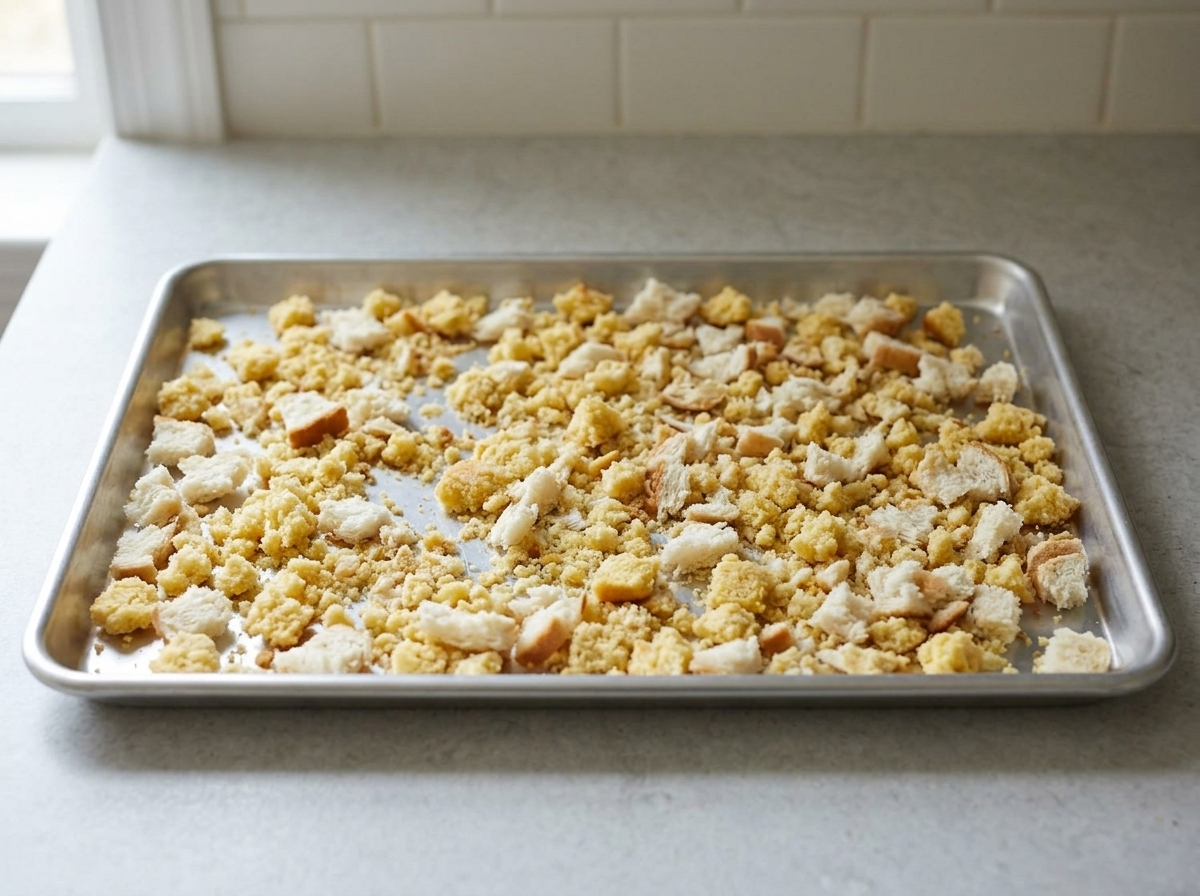
Leave the cornbread in its pan for 20 minutes, until it is cool enough to handle. Crumble it with your hands onto a large baking sheet in pieces between the size of a pea and a grape, tear the white bread into similar pieces and scatter it over, then spread everything into an even layer. Bake at 275°F (135°C) for 25 minutes, stirring once, until the crumbs feel dry and light and sound papery. Do not reduce it to powder, because the uneven pieces are what give the finished pan its texture.
- 4
Brown the butter and the sage
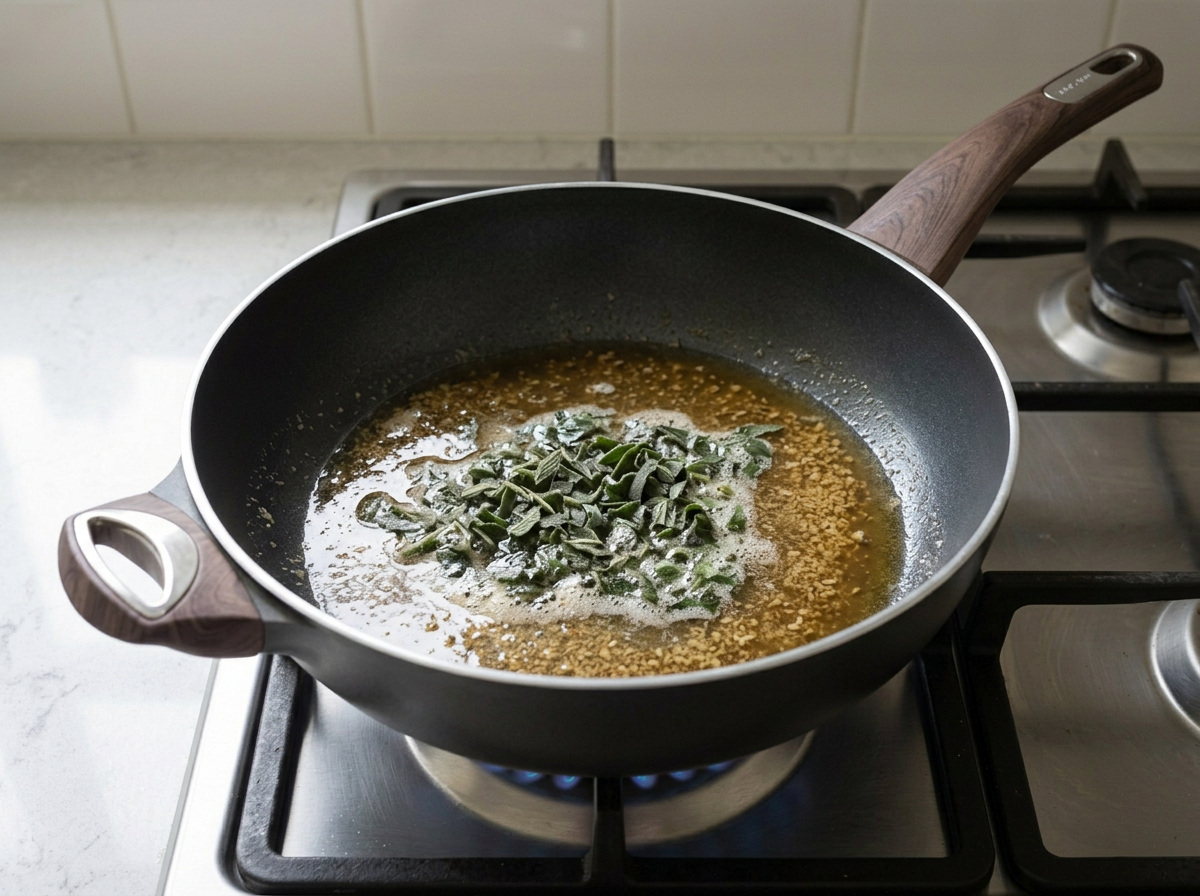
Melt the vegan butter in a large skillet over medium heat and keep it going for 3 or 4 minutes past melting, swirling now and then, until it smells nutty and the solids on the bottom turn light brown. Add the chopped sage and let it sizzle for 30 seconds. It will crackle hard and then go quiet, and the butter will smell strongly of sage.
- 5
Soften the onion and celery
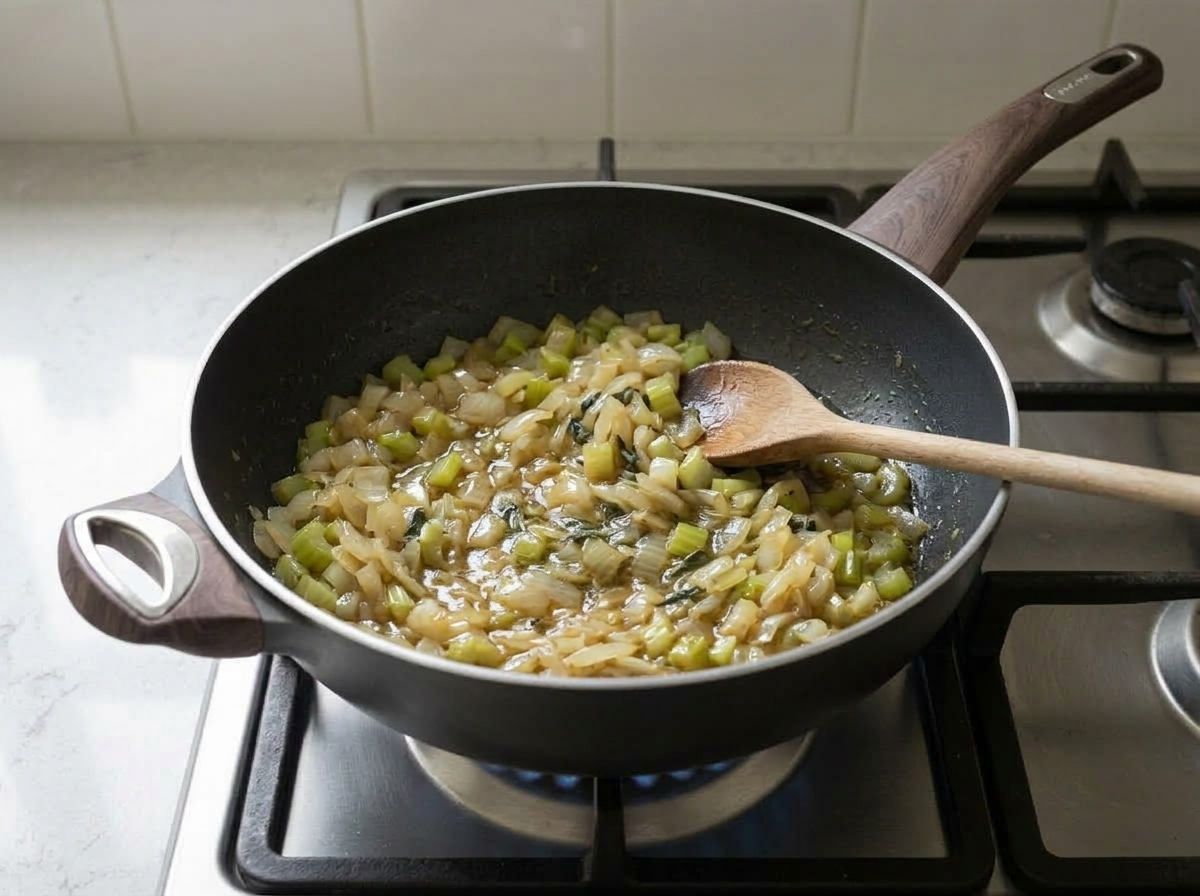
Tip the onion and celery into the sage butter with a good pinch of the dressing salt. Cook over medium heat for 12 minutes, stirring every couple of minutes, until the onion is completely soft and translucent and the celery has lost its squeak. Do not rush this to a quick browning. You want them collapsed, not caramelized.
- 6
Toast some of the crumbs
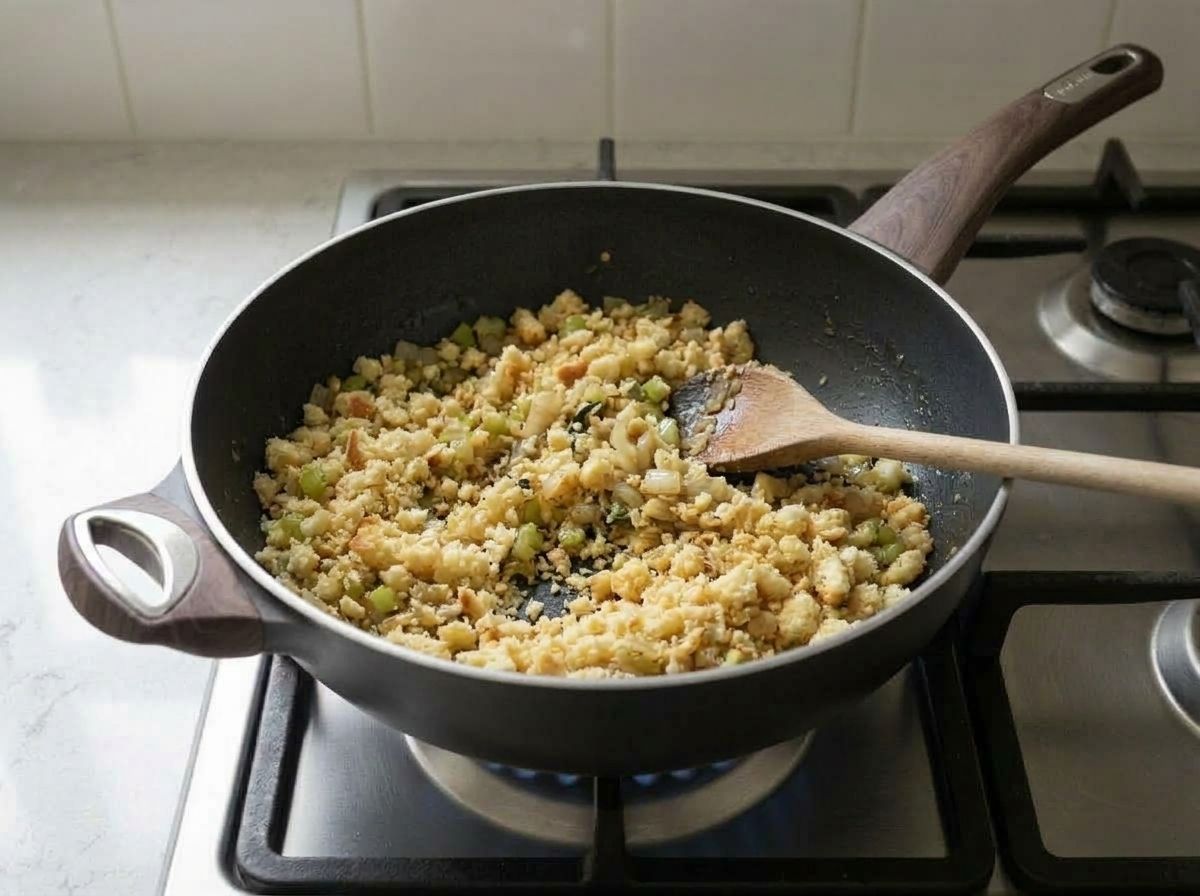
Stir in the garlic, thyme, poultry seasoning and black pepper and cook for 1 minute. Add about a quarter of the dried crumbs to the skillet and stir them through the fat for 3 to 4 minutes, until they take on color and smell toasted. This is the oldest part of the dish and it puts a roasted note into the pan that broth alone will not.
- 7
Season the broth
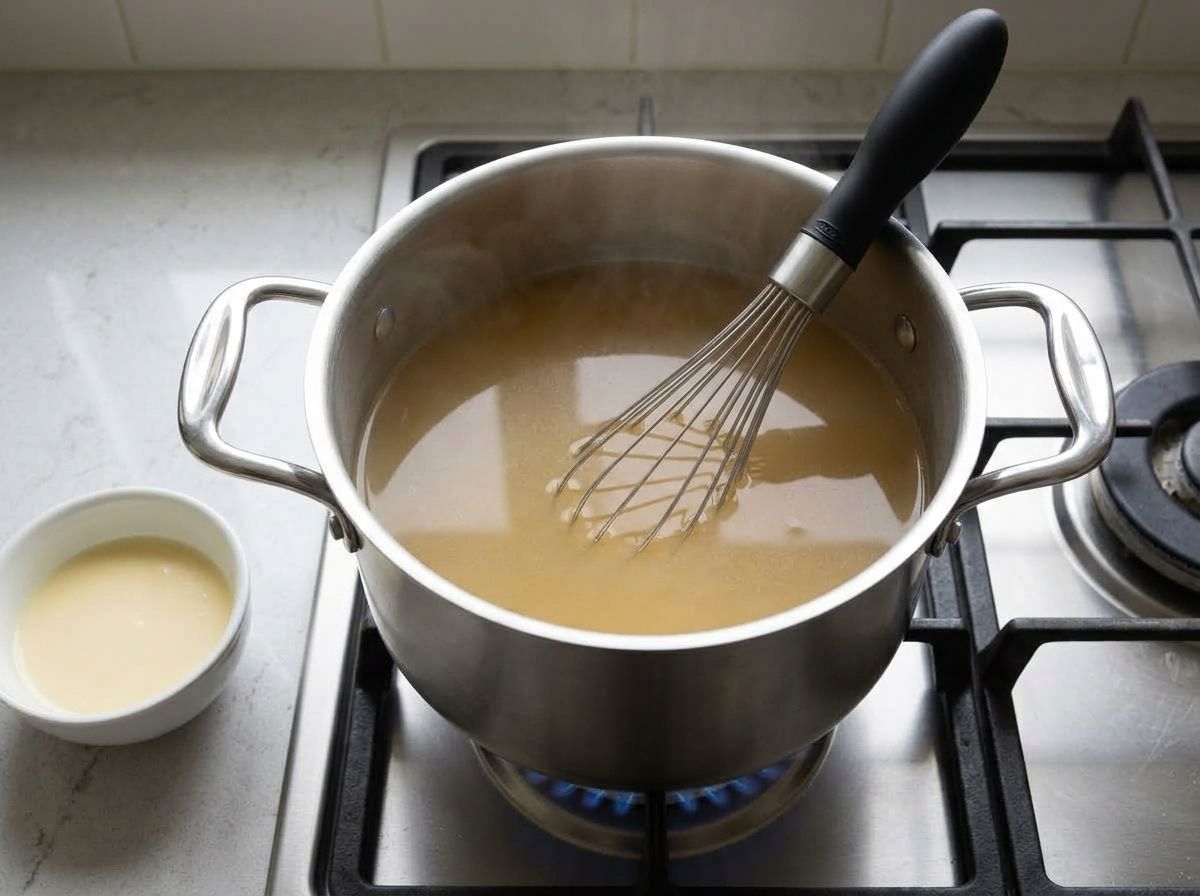
Warm the vegetable broth in a saucepan until it steams. Whisk the chickpea flour and nutritional yeast in a small bowl with a ladleful of the warm broth until completely smooth, then pour that back into the pan and whisk it through. Taste it, and add the rest of the salt until it is slightly too savory on a spoon, because everything it soaks into is unseasoned.
- 8
Combine it wet
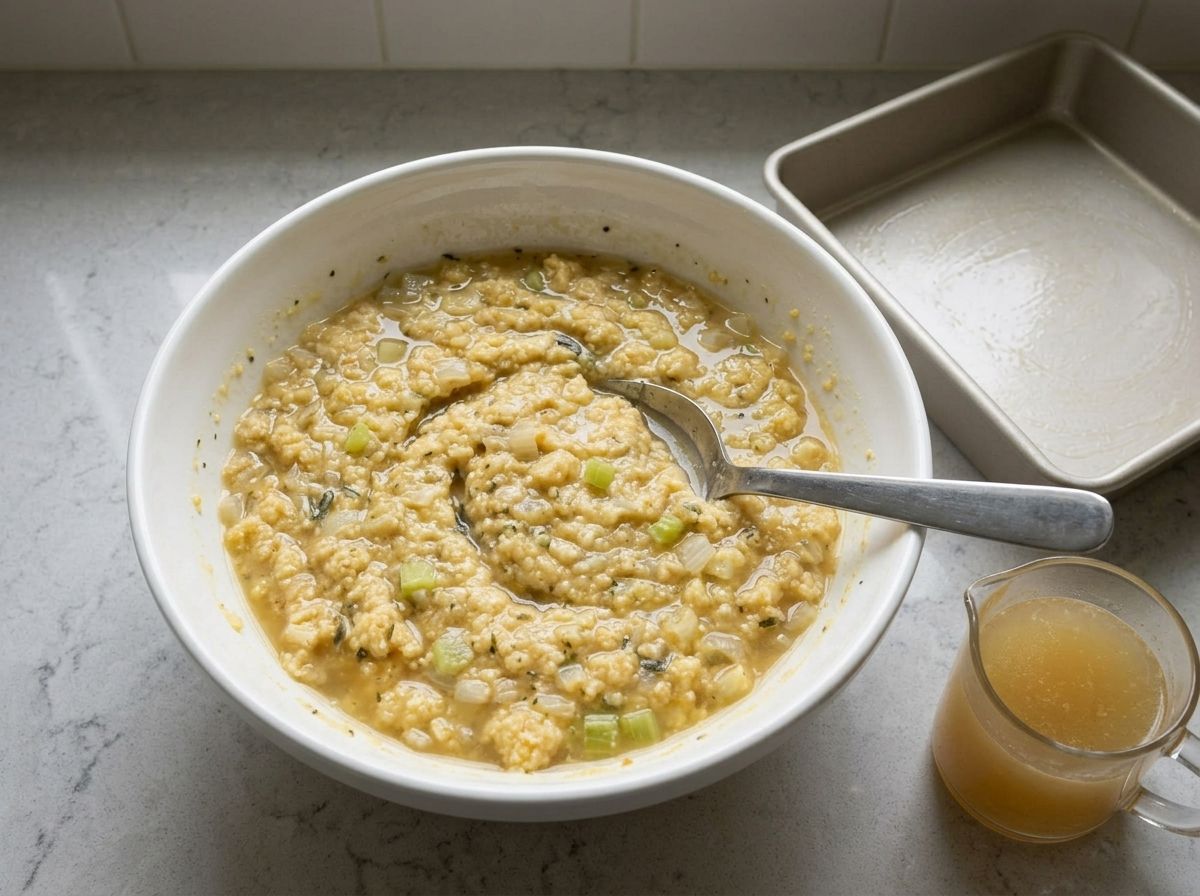
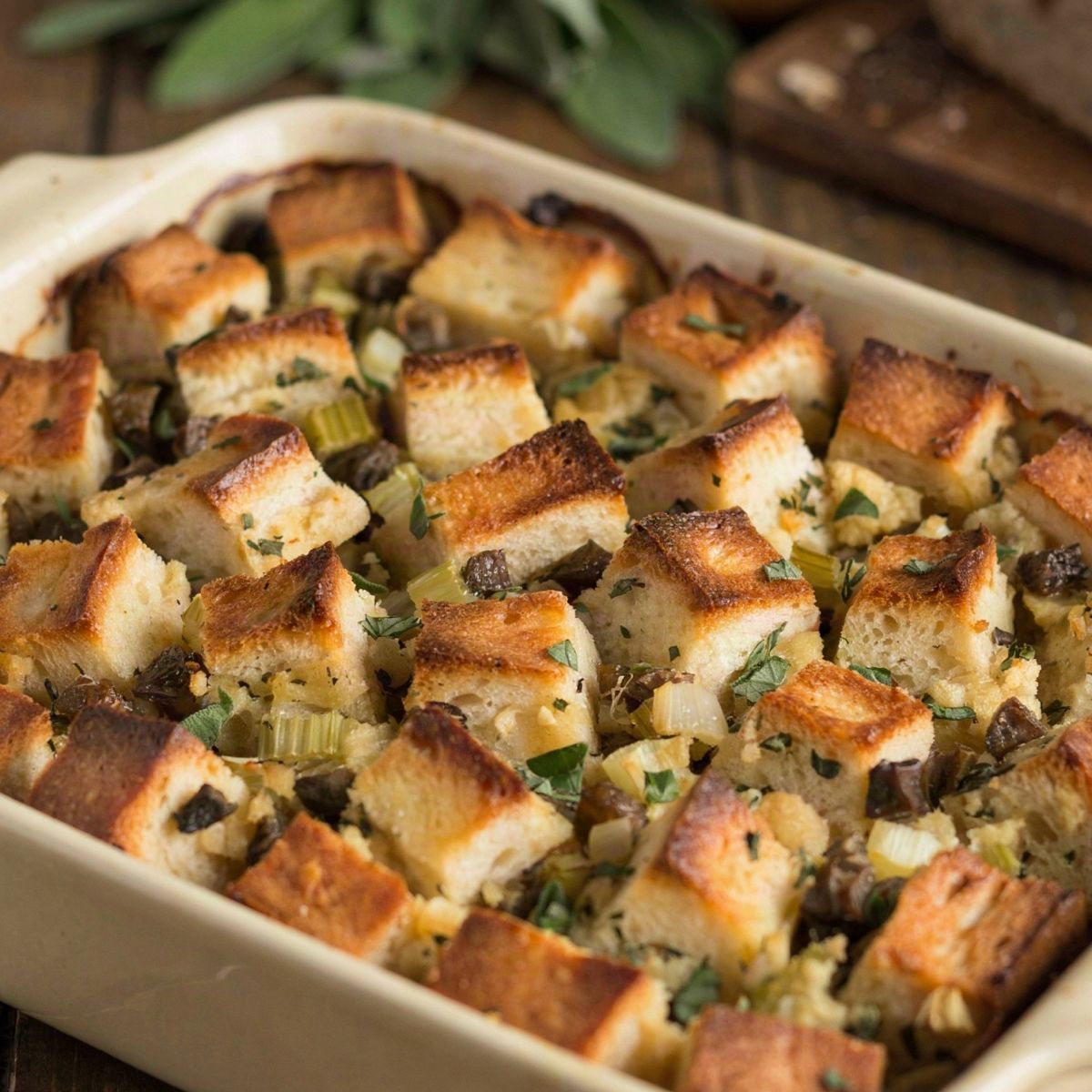
Tip the remaining dried crumbs into your largest mixing bowl, add the skillet contents and toss them through. Pour the warm broth over in three or four goes, folding between each one. Stop when the mixture pours rather than piles and a spoon dragged through it fills back in slowly. It should look far too wet. That is the whole difference between dressing and stuffing.
- 9
Fill the dish
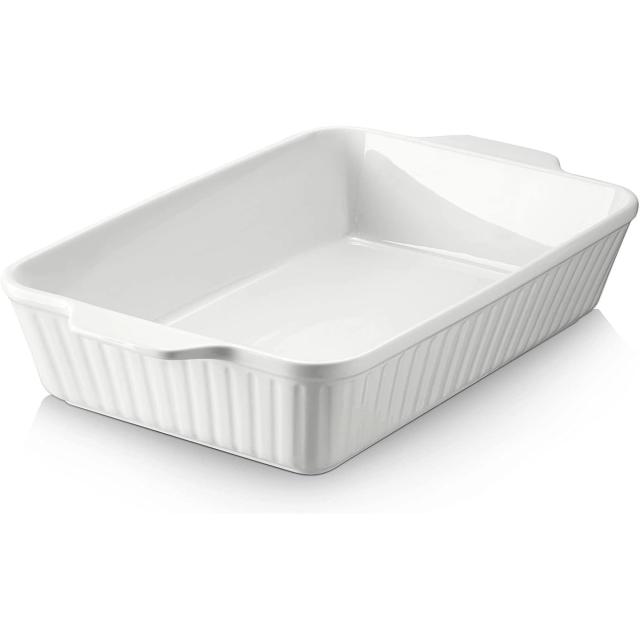
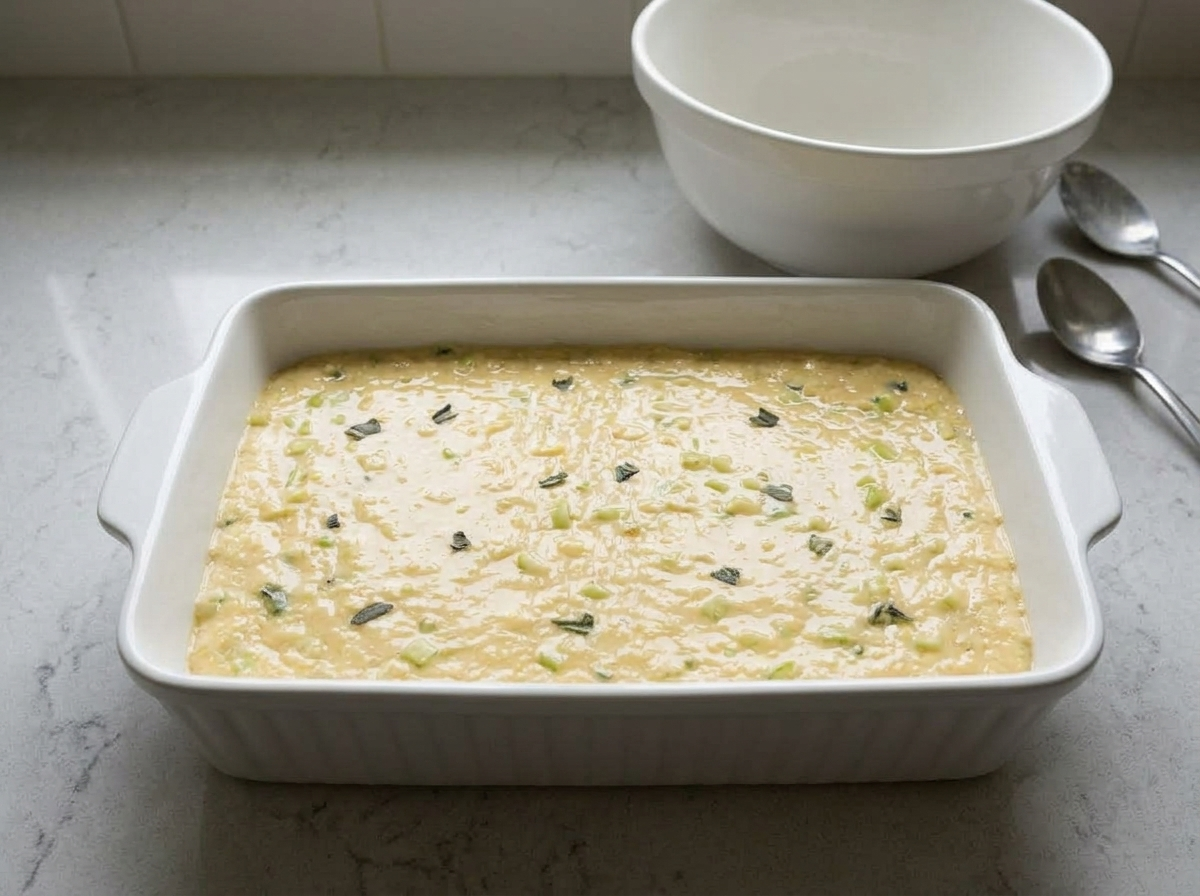
Heat the oven to 350°F (175°C). Grease a 9x13 baking dish, pour the mixture in and spread it level with the back of a spoon. Do not press it down. If the surface does not settle flat by itself within a few seconds, it is too dry, so stir in another half cup of broth.
- 10
Bake it covered
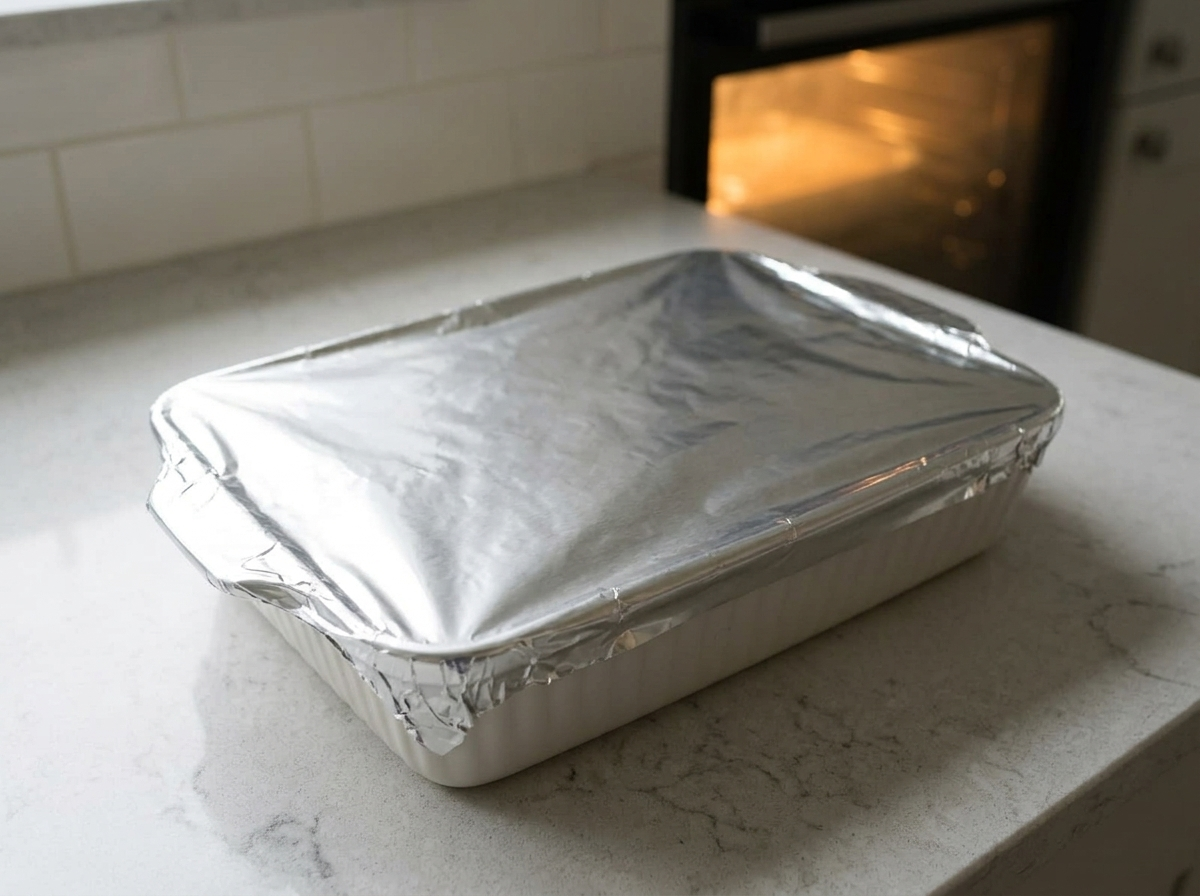
Cover the dish tightly with foil and bake for 30 minutes. This stage steams the dressing through and sets the chickpea flour, and the top will still be pale and soft when the time is up.
- 11
Brown the top
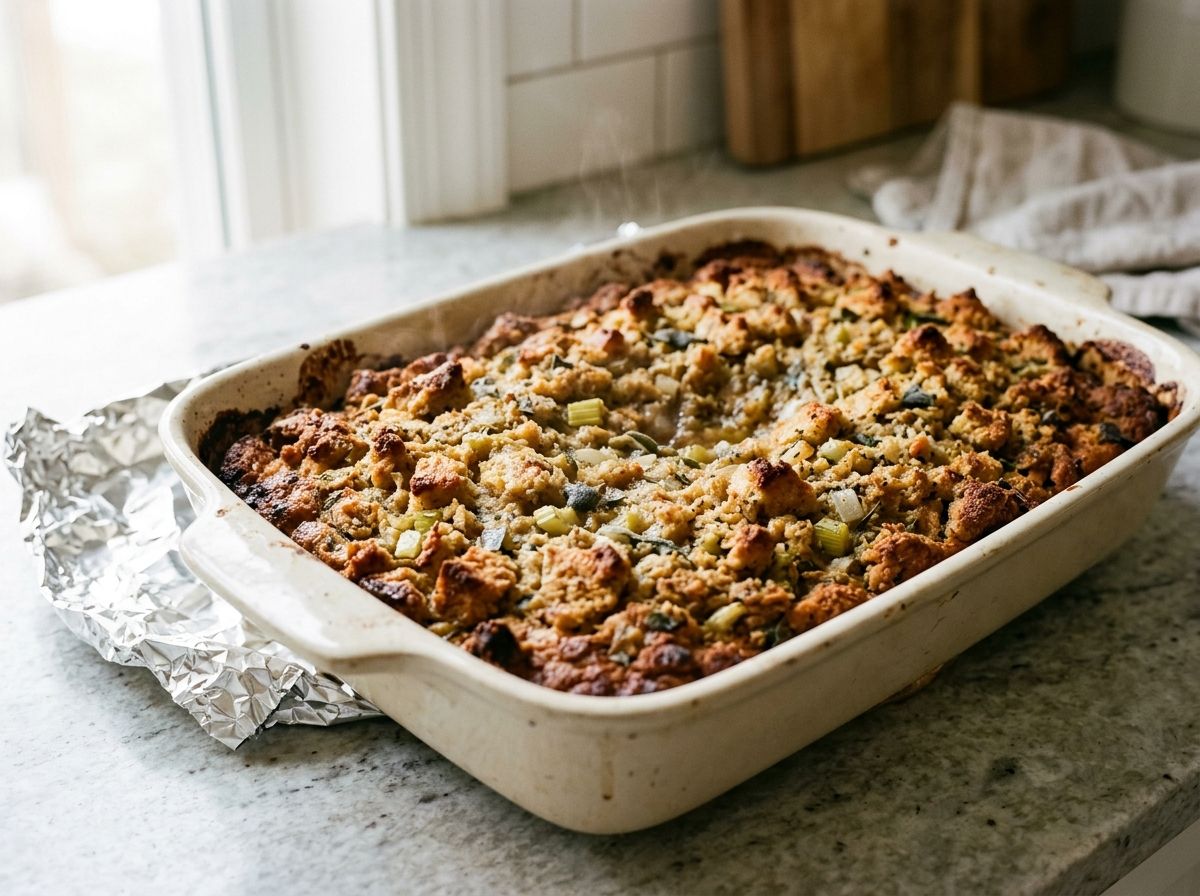
Take the foil off and bake for another 25 to 30 minutes, until the top is golden and crisp at the peaks and the edges have darkened and pulled away from the dish. Underneath it should still give softly when you press it. A knife pushed into the middle should come out with moist crumbs on it and no free liquid.
- 12
Rest, then serve
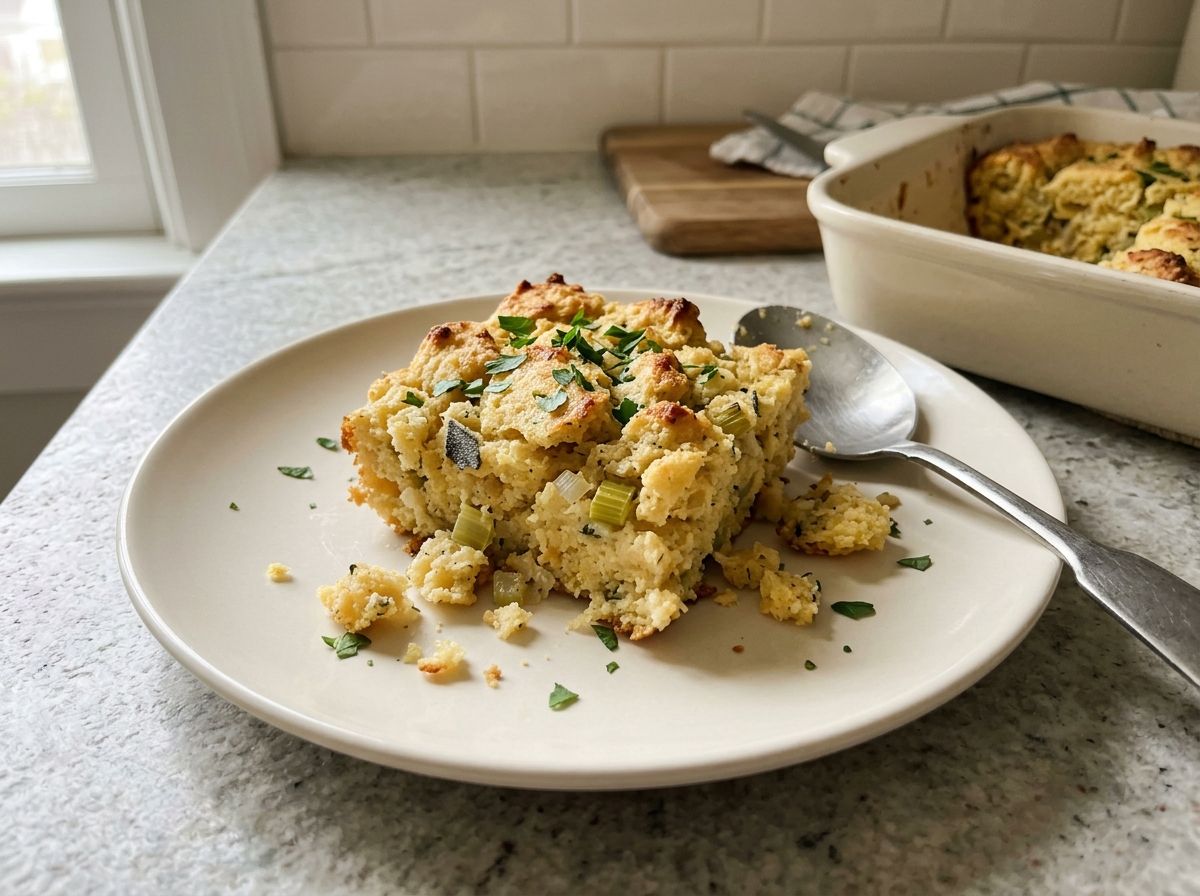
Leave it to stand for 15 minutes. The middle keeps setting as it cools, and dressing served straight from the oven runs on the plate. Serve it in spoonfuls rather than in squares: it should slump gently as it lands and be soft enough to eat with a fork without cutting anything. Scatter over the parsley if you are using it, and serve it with gravy.
Notes
If you are adding vegan sausage, brown the crumbles in the dry skillet first, lift them out, and fold them in at the combining stage. Cook the butter and vegetables in the fat they leave behind.
A 10 inch cast iron skillet gives the cornbread a better crust than the 9x9 pan does, but the crust gets crumbled in either way, so it is not worth buying one for this.
The cornbread can be baked and crumbled up to three days ahead. Leave it uncovered or in a paper bag, never sealed into a container.
Taste the broth and over season it on purpose. It is seasoning five cups of unsalted crumbs, and every flat pan of dressing was seasoned to taste in the saucepan.
Nutrition Facts
10 servings · 342 g per serving
- Calories
- 397 kcal
% Daily Value*
- Total Fat
- 16.7 g21%
- Saturated Fat
- 3.5 g18%
- Sodium
- 732 mg32%
- Total Carbohydrate
- 48.6 g18%
- Dietary Fiber
- 6.9 g25%
- Sugars
- 4.8 g—
- Protein
- 13.6 g27%
Recipe from veggierecipes.blog
When it goes wrong
Troubleshooting
It came out dry and crumbly
You did not add enough broth, and you almost certainly stopped at the point where the mixture looked correct. It should not look correct. Dressing goes into the pan loose enough to pour and settle flat on its own, closer to a thick porridge than to a bowl of damp crumbs, and if it looks like stuffing at that stage it will bake dry. Dried cornbread absorbs far more than it appears to. Add broth until it sloshes, then add a little more.
It tastes sweet, almost like a dessert
The cornbread had sugar in it. This is nearly always a boxed mix or a cornbread recipe written for the bread basket rather than for dressing, and it is not fixable after the fact, because nothing you can add reads as savory strongly enough to cancel it out. Extra salt and pepper just give you sweet dressing with salt on it. Make the cornbread unsweetened next time.
It is gritty, like there is sand in it
Coarse ground cornmeal. The grains are too large to hydrate fully even across the bake, the drying and the long soak in broth, so they stay as hard specks. Switch to a medium or fine grind. If you are stuck with coarse meal and have not baked it yet, soaking the cornmeal in the curdled soy milk for 20 minutes before you mix the batter helps a great deal.
The middle is still wet after an hour
Two different causes needing two different fixes. If the top is brown but the middle is loose, it went in too deep: a 9x13 dish is the right size and a doubled batch in the same pan will never bake through. If the whole thing is pale and wet, the foil stayed on. The covered stage steams it and the uncovered stage drives the moisture off, so the second half of the bake is not optional browning, it is how the dish finishes cooking.
It tastes flat, like cornbread and onions
Under seasoned, and usually in three places at once. Dressing takes more salt than seems reasonable because the cornbread, the broth and the vegetables all dilute it. It takes far more black pepper than a casserole normally would, and a teaspoon and a half is a starting point rather than a limit. And it takes more sage than you think. Taste the broth in the saucepan while you can still fix it, and season it until it is slightly too strong on a spoon.
The top browned but the edges burned
The dish sat too close to the top of the oven, or the oven runs hot. Bake on the middle shelf. Southern dressing is meant to have dark, chewy edges where it meets the dish, and those are the best part of the pan, but there is a line between that and bitter. If the edges are getting there before the top has any color, drop the oven to 325°F and give it another ten minutes rather than pushing the heat up.
It set firm and cuts like a savory cake
It baked too long with the foil off, or it went into the dish drier than it should have, and either way the cornbread has given its moisture up to the oven instead of holding on to it. A dressing is not a cake and should not cut into clean squares that stand up on a plate. The finished pan wants to be soft enough that a spoon goes through it without any effort and the portion slumps a little as it lands. Take the covered stage seriously, because that is where it steams rather than dries, and pull it out while a knife pushed into the middle still comes back with moist crumbs on it.
Before you serve
Serving & Storage
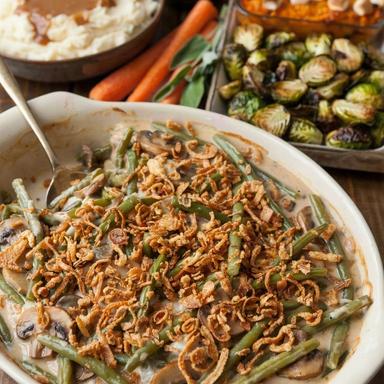
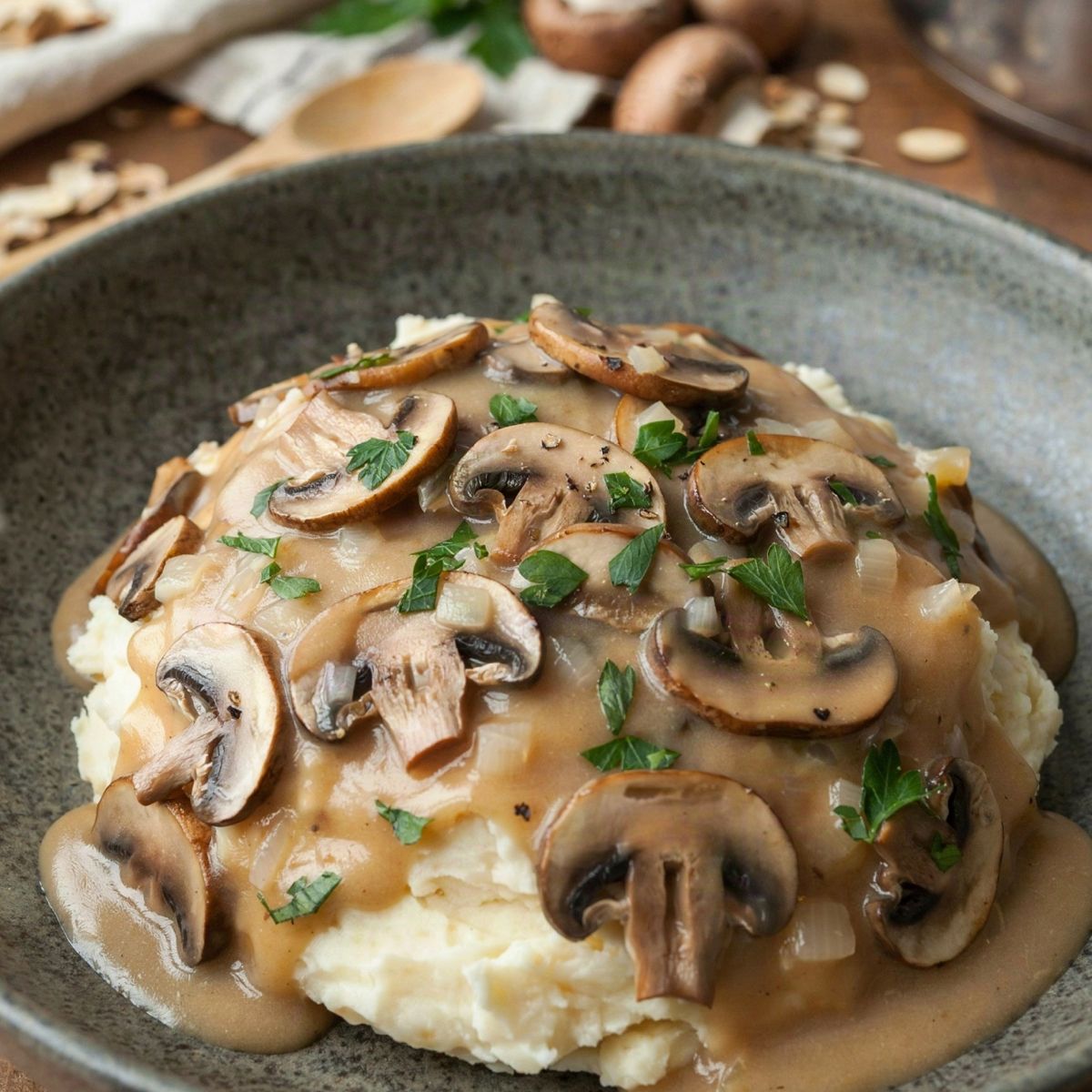
Dressing wants gravy. In a lot of Southern households it is the reason the gravy exists at all, and a plate gets built by putting a spoonful of dressing down and pouring over it, not by treating it as a dry side that sits politely at the edge. A mushroom gravy does the job here and so does a plain onion one. Keep the cranberry sauce beside it rather than on it, because the dressing already has enough going on.
It also holds up away from the holiday entirely. A cold scoop pressed flat into a hot skillet and left alone until the underside crisps, with something sharp next to it, makes a genuinely good lunch, and it is closer to what kush actually was than the pan on the Thanksgiving table is.
Making it ahead
The cornbread is the part worth moving. Bake it up to three days ahead, crumble it, and leave it uncovered on a tray or in a paper bag at room temperature. It has to dry out anyway, so time is doing you a favor. What you must not do is seal it into a container, where it goes soft and you end up drying it again on the day.
The whole dish can be assembled a day ahead, covered and refrigerated unbaked, and that is the version I actually make. It comes out of the refrigerator stiffer than it went in, because the cornbread keeps drinking overnight, so loosen it with half a cup of broth before it goes in and add fifteen minutes to the covered stage. What does not work is baking it fully the day before and reheating the whole pan. The second bake dries the middle out and there is no way back from that.
Storing leftovers
Covered in the refrigerator it is good for four days. Reheat it in the oven at 350°F with a splash of broth poured over the top and foil on for the first ten minutes, or in a skillet in a little vegan butter if you want the crisp face. The microwave turns it to paste, and it is the one method to avoid.
It freezes better than most casseroles, up to three months, and it freezes better before baking than after. Freeze it in the dish, thaw overnight in the refrigerator, then bake as written with an extra ten minutes covered. Baked and then frozen it survives well enough, but the texture turns slightly grainy on thawing.
Still wondering
Frequently Asked Questions
What is the difference between cornbread dressing and stuffing?
Where it is baked is the answer people give, and it is the least interesting one. The real difference is texture, and it comes from the base. Bread stuffing is made from cubes that hold their shape, so it goes into the pan as a pile of damp pieces with air between them and bakes into something whose structure you can still see. Dressing is made from crumbled cornbread, which breaks down and drinks roughly twice the liquid, so it goes in as a loose batter and bakes into one soft mass under a crisp lid. They are different enough that a table can want both, which is why this is not a replacement for a stuffing.
Is this gluten-free?
Not as written. The cornbread carries half a cup of all-purpose flour and the torn white bread is wheat. Both are fixable. Swap the flour for a cup-for-cup gluten-free blend at the same 65 g weight, and replace the 3 cups of white bread with either an extra half batch of cornbread or gluten-free sandwich bread. Check the poultry seasoning and the broth as well, since both occasionally carry wheat as a carrier or a flavoring.
Can I double this for a crowd?
Yes, but not into one pan. Doubling into a single deep dish gives you a browned top over a wet middle, because the heat cannot reach the center before the surface is done. Use two 9x13 dishes on the same shelf, or one 9x13 and one 9x9, and keep the times as written. With one oven and one shelf, bake them one after the other and reheat the first pan covered for 15 minutes while the table is being set.
Can I make it in a slow cooker?
It works, and it solves the real problem, which is that on Thanksgiving the oven is full. Assemble as written, transfer to a greased 6 quart slow cooker and cook on low for 3 to 4 hours. What you give up is the top: a slow cooker will not brown it and it will not crisp, so the result is soft the whole way through. If that matters, run it under a hot broiler for 5 minutes if your crock is broiler safe, or scoop it into a dish and brown it there.
Featured In
More For The Thanksgiving Table
Made this?