
Vegan Creamed Corn Recipe
Published · Updated
The can of cream style corn in every American pantry lists water, corn, corn starch, sugar and salt, and not one of them is cream.
Jump To Recipe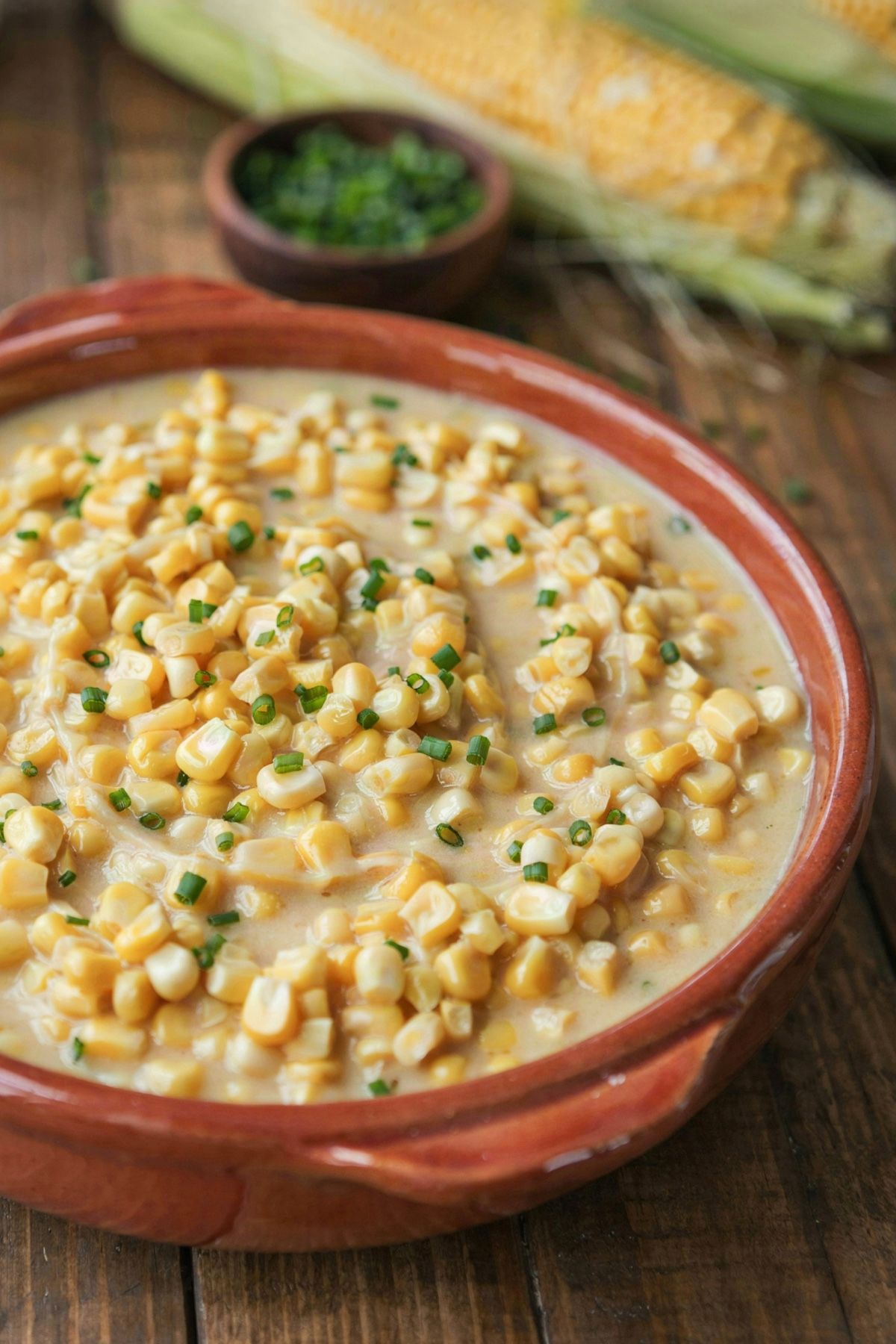
I Spent Years Making This The Wrong Way
For most of a decade my vegan creamed corn was a bag of frozen kernels, a can of coconut milk and a spoon of nutritional yeast, simmered until it looked about right. It was fine. It was also, unmistakably, corn in coconut sauce, and every time I put it on the table someone asked what the other flavor was.
What changed it was reading the back of a can in a supermarket aisle, of all places. I had gone looking for cream style corn to cheat with, turned the can over out of habit, and found no cream on the list. No milk either. Water, corn, corn starch, sugar, salt. The most industrial version of this dish on the shelf had been dairy free the whole time, and I had spent years carefully replacing an ingredient that was never in it.
So the next August, with a farm stand selling corn by the dozen, I tried it the way the dish was actually built: cut the kernels off, scrape the cobs for the thick starchy milk that comes out of them, blend some of it, cook it down. It took no longer than the coconut version and it tasted of corn and nothing else. I have not bought a can since, and I have not put a cashew anywhere near it.
The story
Creamed Corn Was Never A Dairy Dish
Creamed corn comes out of Native American cooking, and in its original form there is no cream in it at all. The technique is a way of getting the most out of an ear of sweet corn: cut the kernels off, then scrape the stripped cob to force out the thick, opaque liquid sitting inside the immature kernels. That liquid is corn milk, and it is heavy with starch. Heat it and it thickens on its own, which is the entire trick. Part of the corn is also crushed or partly puréed, releasing more of the same starch, which is why the finished dish is loose and creamy around kernels that are still whole.
The word cream in the name describes the texture, not an ingredient. It is the same use of the word as in creaming butter and sugar, or a cream of tomato soup that has never met a cow.
Dairy arrived later, with European settlers who tasted the dish and cooked it the way they cooked everything else. Milk went in, then butter, then eggs, and the egg version set in the oven and became corn pudding. That is the lineage most American home cooks inherited, through the South and the Midwest, and it is the version that made creamed corn look like a problem for anyone avoiding dairy.
The canned aisle never followed. Pick up a can of cream style corn today and the ingredients read water, corn, modified food starch from corn, sugar and salt. There is no cream in it, there is no milk in it, and there has not been. The industrial version kept the original thickener and the home version drifted away from it.
This matters for a vegan creamed corn because it changes what the job is. Almost every dairy free version online treats this as a substitution problem and reaches for something rich from somewhere else: soaked cashews, a can of full fat coconut milk, nutritional yeast to fake a dairy tang. All of that solves a problem the dish does not have, and each of those ingredients brings a flavor that competes with corn. Coconut is the worst offender, because it is assertive and it does not belong anywhere near a Thanksgiving table.
Going back to the corn milk is not a compromise made for vegans. It is the older, better method, and the reason to use it is that the result tastes more like corn, not less.
What to buy
Ingredient Notes
Fresh sweet corn on the cob
The recipe is built on what comes off the cobs, so this is the one ingredient with no real shortcut. Look for heavy ears with plump kernels right to the tip, and buy six for six servings, which gives about 4 cups of kernels and roughly ⅓ cup of scraped corn milk. Cut about three quarters of the way through the kernels rather than flush against the cob: cutting flush takes the tough kernel bases with it and leaves nothing behind to scrape.
Frozen corn, if it is November
Sweet corn is out of season for most of the year, and Thanksgiving is the worst possible date for it. Frozen corn on the cob is the better fallback, because a half thawed cob still scrapes. Frozen kernels work too, but they have already been cut from the cob, so there is no corn milk coming and the dish loses its thickener. Thaw and drain them, blend half rather than a third to make up the body, and expect to want every bit of the cornstarch.
Unsweetened oat milk
Oat is the right plant milk here because it is neutral and carries a little starch of its own. Unsweetened is not optional: sweet corn plus a sweetened milk turns the dish cloying, which is the same fault as the canned version. Soy is a fine substitute and slightly higher in protein. Almond is thin and needs more cornstarch. Coconut milk works texturally and ruins it on flavor. If gluten matters to you, buy oat milk labeled gluten free, since oats are often milled alongside wheat.
Cornstarch
One tablespoon, which is insurance rather than the main event, and it is thematically honest: the thickener you are adding is more corn. Whisk it into the cold oat milk in the blender, never into the hot pan, or it seizes into lumps you cannot smooth out. Very fresh, very milky cobs may not need all of it, so if your purée looks thick going in, hold back half and add it later if the pan stays loose.
Vegan butter
Fat is doing the work that cream used to do, so this is not the place to cut it. Use a firm block style vegan butter rather than a soft tub spread, which can be more than half water and will thin the pan. Olive oil works and tastes like olive oil. Refined coconut oil is neutral and adds nothing, which is fine but not as good.
Shallot
One small shallot, finely diced, and no more. Plenty of traditional versions use no allium at all, so the point is a low background sweetness rather than a flavor you can name. Half a small onion does the same job slightly less delicately. Keep it pale: any browning gives you a caramelized note that pulls the dish away from corn and towards a chowder.

Vegan Creamed Corn
Vegan creamed corn thickened the way the dish was originally built, with the starchy milk scraped from the cobs and a third of the kernels blended smooth. No cashews, no coconut, and it tastes of nothing but corn.
Ingredients
Equipment
As an Amazon Associate I earn from qualifying purchases, at no extra cost to you.
Instructions
- 1
Cut the kernels from the cobs
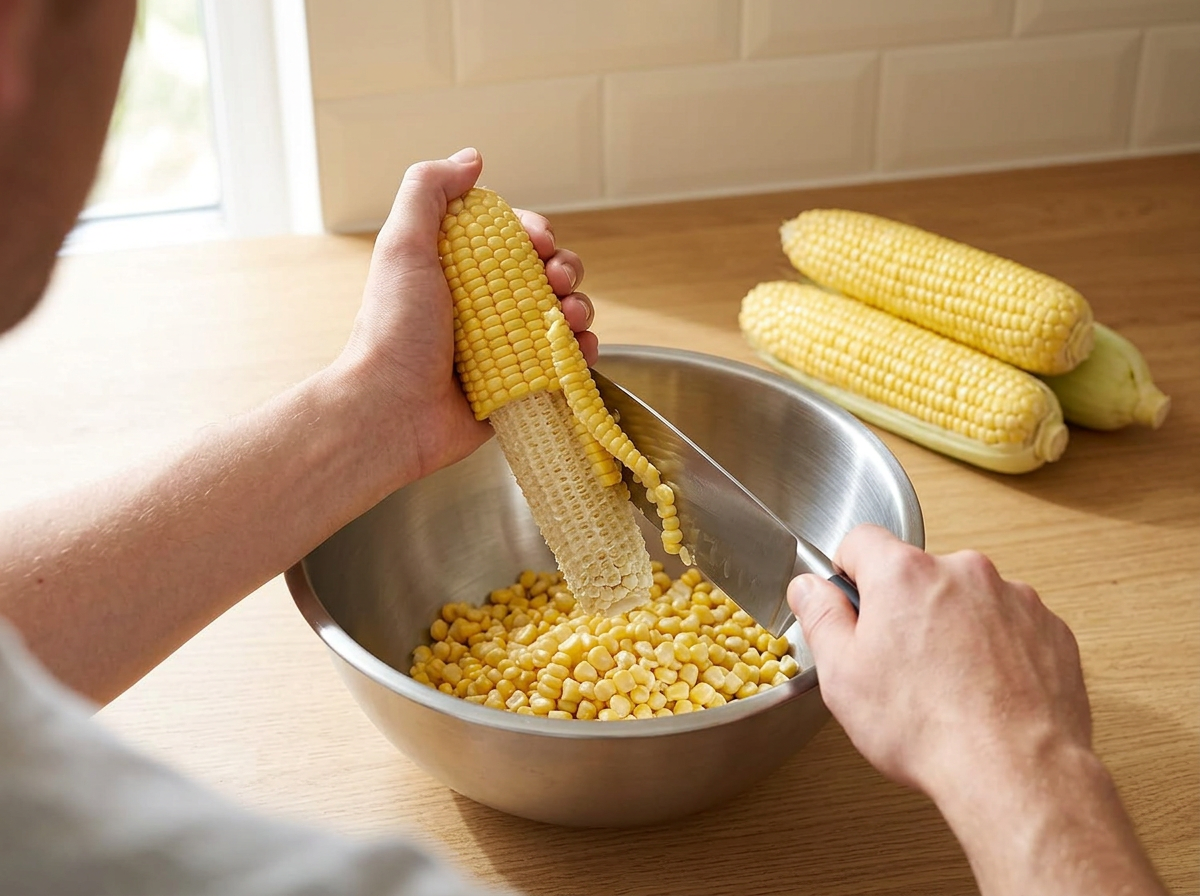
Husk the corn and rub off the silk. Stand one ear upright in a wide bowl and run a sharp knife down the cob, cutting about three quarters of the way through the kernels rather than flush against it. Turn the ear and keep going all the way around, then do the other five. You should end up with about 4 cups of kernels.
- 2
Scrape the cobs for their milk
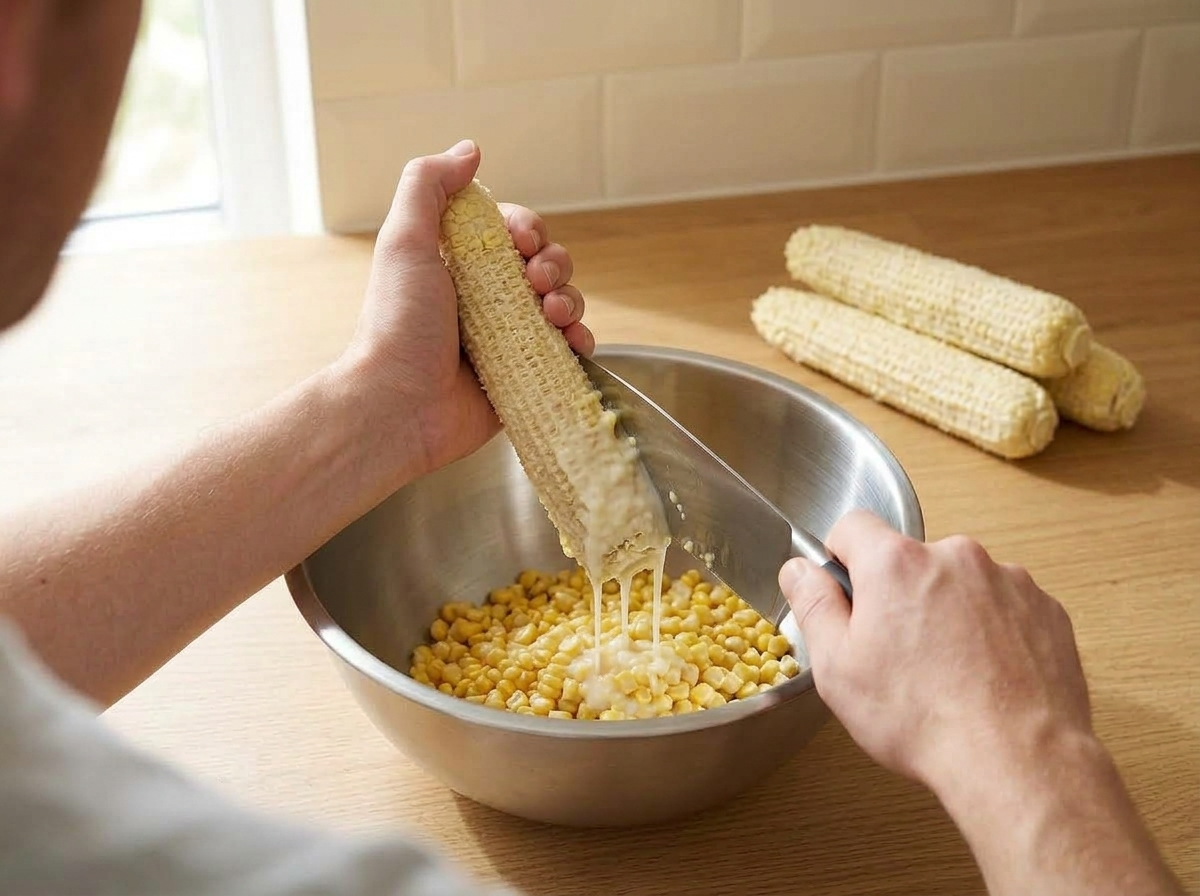
Go back over each stripped cob with the back of the knife, pressing hard and working from top to bottom into the same bowl. What comes off is thick, opaque and starchy, and it is the thickener the dish is named after. Six ears give about ⅓ cup of it.
- 3
Blend a third of the corn
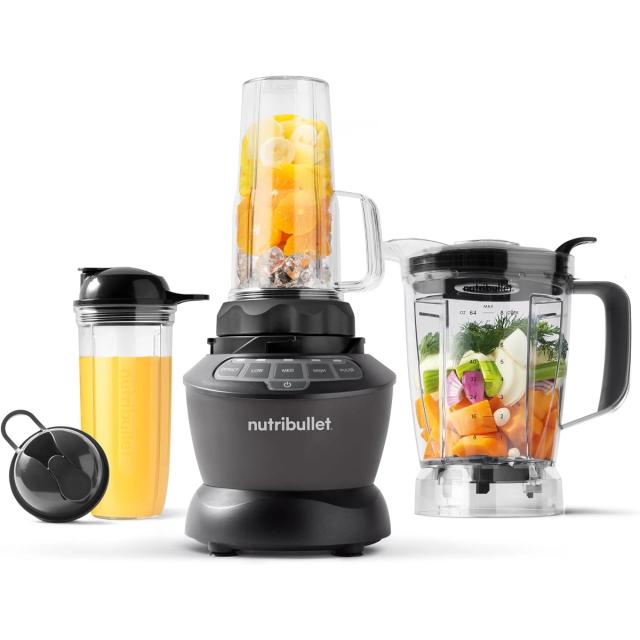
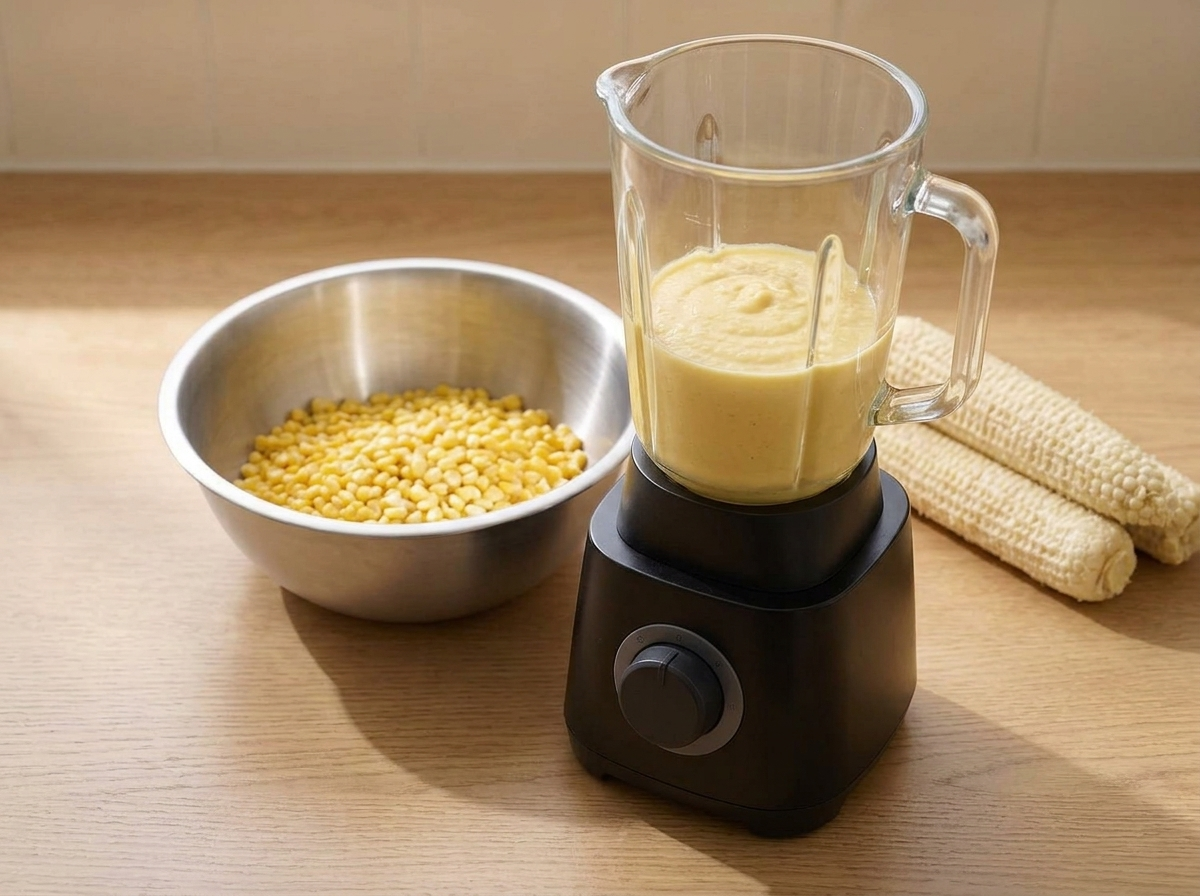
Tip roughly a third of the kernels into a blender with all of the scraped corn milk, the oat milk and the cornstarch. Run it for a full minute, until the purée is pale and smooth rather than flecked with kernel skins. Leave the other two thirds whole.
- 4
Soften the shallot in vegan butter
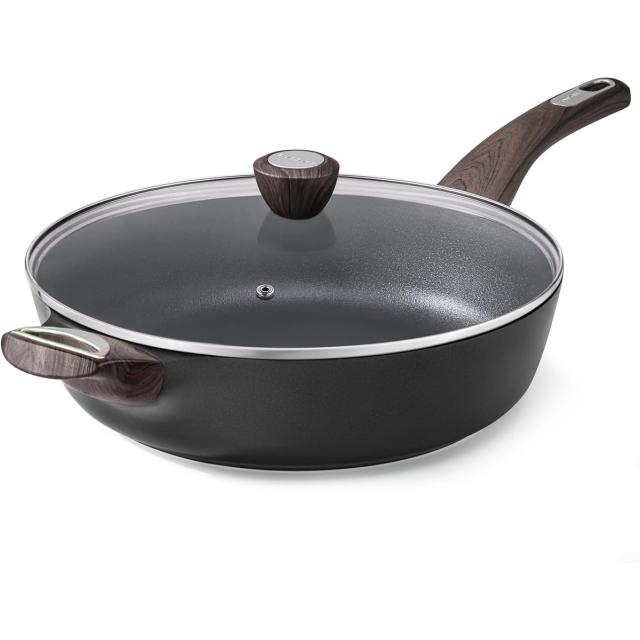
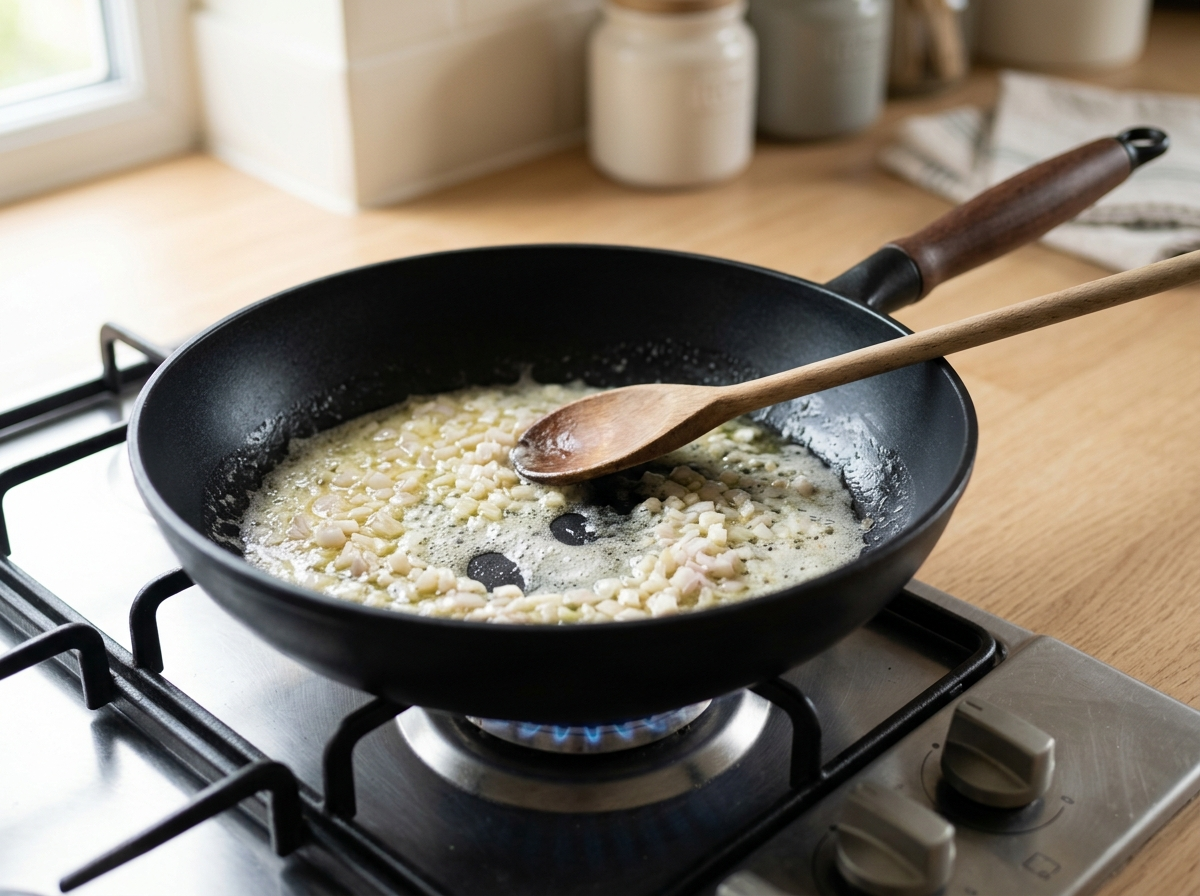
Melt the vegan butter in a large skillet over medium heat. Add the diced shallot and a pinch of the salt and cook, stirring, for 3 to 4 minutes, until it turns translucent and smells sweet. Do not let it take on any color, which would pull the dish towards a chowder.
- 5
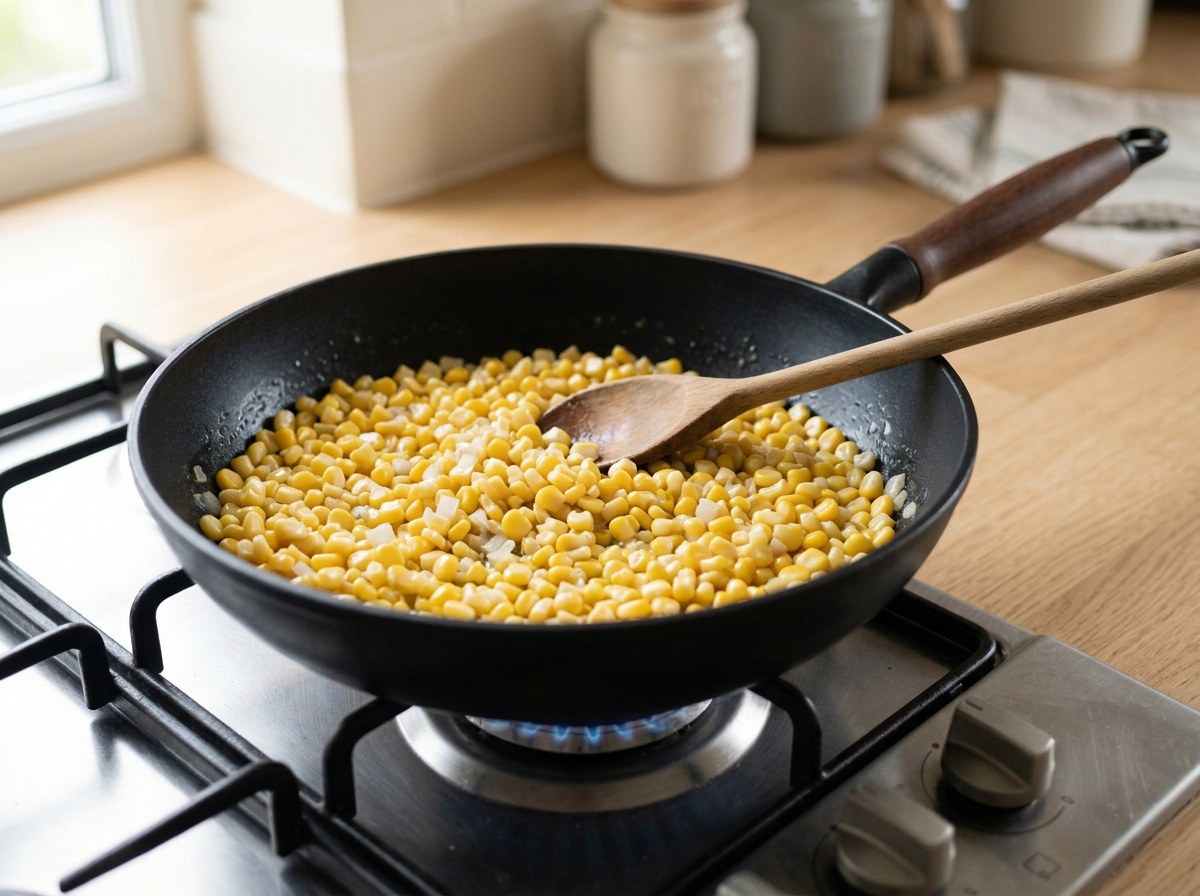
Warm the whole kernels
Add the reserved whole kernels and stir them through the butter. Give them 3 minutes, just long enough to heat through and turn a shade brighter yellow, then stop. They should still have a definite bite, since the simmer to come will finish them.
- 6
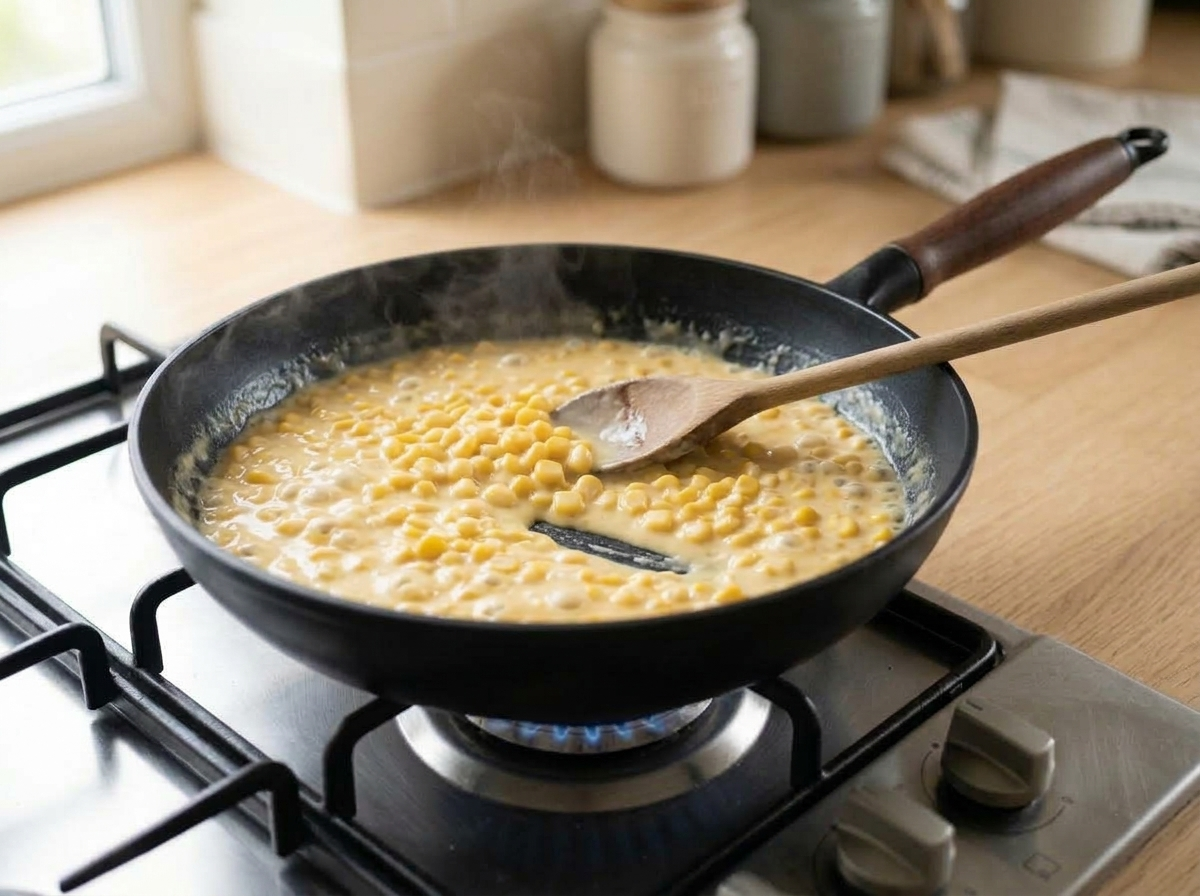
Pour in the purée and simmer
Pour the blended corn into the pan and stir it through. Bring it up until bubbles are genuinely breaking the surface, then lower the heat and cook for 8 to 10 minutes, stirring often and scraping the base of the pan. It thickens visibly as the corn starch takes hold and loses the chalky, raw edge it has going in.
- 7
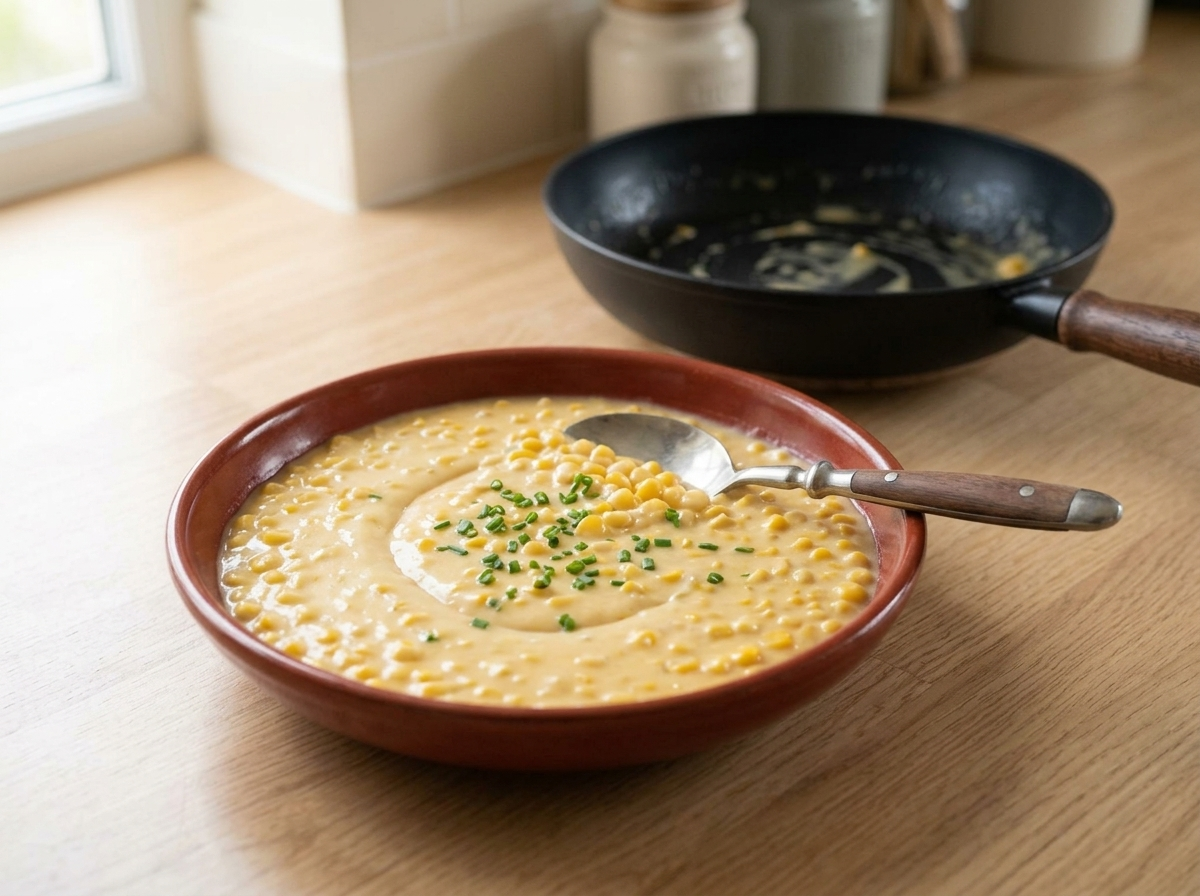
Season and finish
Take the pan off the heat. Stir in the remaining salt and the white pepper and taste. It should be loose enough that a spoon dragged through it closes over slowly, because it sets further as it cools, so add a splash of oat milk if it has tightened past that. Scatter the chives over and serve warm.
Notes
White pepper is the traditional choice for a pale dish like this and keeps it looking clean. Black pepper tastes the same and speckles it, which matters only if you care.
Stand the ear upright in a wide, deep bowl before cutting, or wedge it in the hole of a bundt pan. Cutting corn on a flat board sends kernels across the kitchen.
Do not throw the stripped cobs away. Simmering them in the oat milk for 10 minutes before you blend, then lifting them out, gives a deeper corn flavor for no extra ingredients. It is the upgrade worth making if this becomes a regular.
For a version that is not remotely traditional and very good, whisk 2 teaspoons of white miso into the vegan butter as it melts.
Nutrition Facts
6 servings · 133 g per serving
- Calories
- 152 kcal
% Daily Value*
- Total Fat
- 7.2 g9%
- Saturated Fat
- 1.5 g8%
- Sodium
- 385 mg17%
- Total Carbohydrate
- 21.9 g8%
- Dietary Fiber
- 2.2 g8%
- Sugars
- 8.3 g—
- Protein
- 3.6 g7%
Recipe from veggierecipes.blog
When it goes wrong
Troubleshooting
It is watery and will not thicken
Almost always heat. Corn starch does not set until it actually reaches a simmer, and a pan kept at a bare steam will sit there thin for as long as you stir it. Bring it up until bubbles are genuinely breaking the surface, then hold it there for the full 8 to 10 minutes. The other cause is water you brought in yourself: frozen corn carries a surprising amount, so drain it properly rather than tipping the bag straight in.
It went gluey and stiff
Too much starch, or too long over the heat after it had already thickened. Corn starch also keeps setting as the dish cools, so a pan that looks right on the stove will be noticeably stiffer in the serving dish. Take it off while it is still a little looser than you want. If it has already gone past that, stir in oat milk a tablespoon at a time off the heat until it slackens; it comes back.
It tastes starchy and flat, not sweet
Raw corn purée has a chalky edge that only cooks out with time, so the first suspect is a simmer cut short. If it has had its ten minutes and still tastes dull, the corn itself is the problem: sugar in sweet corn starts converting to starch the moment it is picked, and supermarket ears in winter can be days old. Salt harder than feels right, and a small pinch of sugar is a fair repair rather than a cheat.
There are little skins in it
Those are the kernel hulls, and they are the usual sign of a blender that could not quite finish the job. Give the purée a full minute rather than a few pulses, and stop when it looks pale and smooth instead of flecked. If it is already in the pan, an immersion blender pushed into the finished dish for a few seconds fixes it. Do not strain it: the hulls come out and so does most of the body you spent the scraping on.
It does not taste rich enough
There is no cream coming, so richness here is fat and salt, and one of the two is usually short. The reliable fix is to hold back a tablespoon of the vegan butter and stir it in off the heat at the very end, where it stays emulsified and coats the kernels instead of cooking into the sauce. Then taste for salt again, because a thickened starchy dish absorbs far more of it than the same ingredients would loose in a pan.
I scraped the cobs and got almost nothing
Check how you cut first. Cutting flush against the cob takes the kernel bases with it, and those bases are where the milk is, so there is nothing left for the scrape to release. Cut higher, at about three quarters depth. After that it is pressure: use the back of the knife, not the blade, and lean on it hard enough that the cob squeaks. A soup spoon works if that feels safer. Older, drier corn genuinely yields less, and that is when the cornstarch earns its place.
Before you serve
Serving & Storage
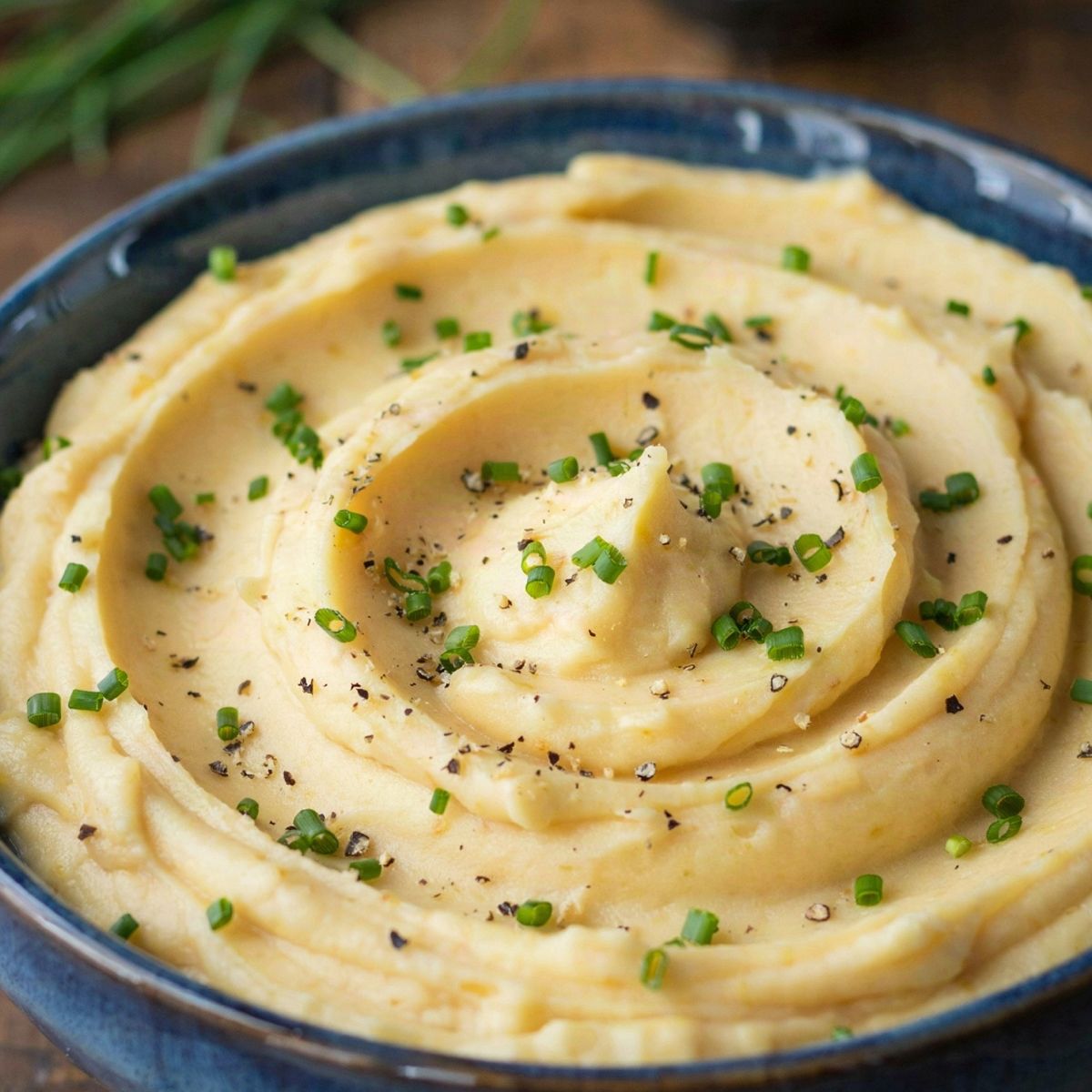
Creamed corn is a side that wants to sit next to something plain. On a Thanksgiving table that means it goes between the green bean casserole and the mashed potatoes and holds its own against both. Away from November it is a steakhouse side, and it is very good under things: spoon it flat onto a warm plate and put roasted mushrooms, a crisp cake of polenta or a piece of blackened cabbage on top of it, and it works as a sauce that happens to have kernels in it.
Serve it warm rather than hot, and serve it looser than looks right in the pan. It stiffens as it cools and it will keep stiffening in the dish, so the version that looks perfect on the stove is the version that arrives at the table too thick. A warmed serving bowl buys you a few minutes.
Making it ahead
It is a good make ahead dish, which is most of why it belongs on a holiday menu. Cook it completely, cool it, and refrigerate for up to two days. It will set almost solid in the fridge, which is alarming the first time and entirely normal: that is the corn starch, and it reverses with heat. Reheat it gently in a pan with a splash of oat milk, stirring, and it comes back to the texture it had. What does not work is doing the prep and holding it raw. Blended raw corn separates within hours and sours faster than you would expect, so either cook it or leave the cobs whole until you do.
Storing leftovers
Three to four days in a sealed container in the fridge, reheated the same way, with oat milk to loosen. Freezing is where it is worth being honest: it survives, but not cleanly. The starch network breaks on thawing and the dish weeps a thin liquid that looks like it has split. It has not, and whisking it hard over low heat pulls it back together, but the texture ends up grainier than fresh. If you know you are freezing it, freeze it slightly under thickened.
Leftovers have a better second life than a reheat. Stir a cup of cold creamed corn into cornbread batter in place of some of the liquid, or thin it with vegetable stock and a diced potato and let it become the chowder it is already two thirds of the way to being.
Still wondering
Frequently Asked Questions
Can I just use canned cream style corn?
You can, and it is vegan, which surprises people. It is also a different dish. What is in the can is corn suspended in a cooked starch gel, so heating it gives you exactly that and none of the fresh corn flavor this recipe is built around. If you want to use it, treat it as one component rather than the whole thing: replace about a third of the volume with a can, keep the rest as fresh or frozen kernels, and skip the cornstarch entirely since the can has brought its own.
Is this the same thing as corn pudding?
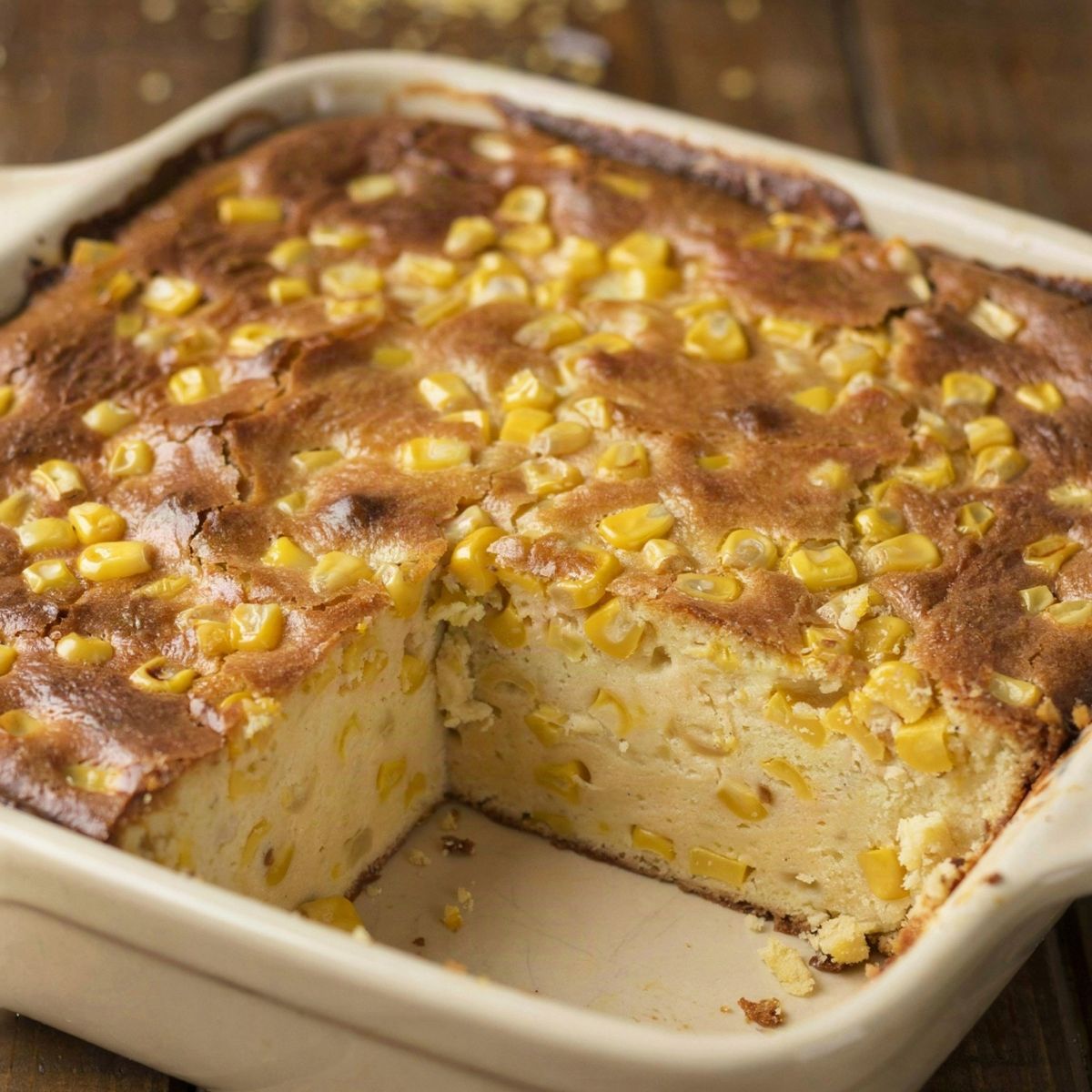
No, though they share a parent. Corn pudding is baked and set with egg, so it holds a shape and you cut it with a spoon. Creamed corn is cooked on the stove, thickened only with starch, and stays loose enough to pour. Corn pudding came out of creamed corn when settlers started adding eggs to it, which is why the two recipes look so similar on paper and behave nothing alike.
How do I scale this up for a crowd?
Count one ear of corn per person as a side dish and the quantities scale straight up from there. Two things do not scale, though. Blend the purée in batches rather than filling the jug, because a full blender will not circulate and you get a mix of purée and whole kernels. And move to a wider pan or split it across two: doubling the volume in the same skillet doubles the depth without changing the surface area, and it will take far longer than ten minutes to thicken.
Is creamed corn gluten free?
This version is, because it is thickened with cornstarch rather than a flour roux. The one thing to check is the oat milk, since oats are naturally gluten free but are usually milled on shared equipment, so buy a brand labeled gluten free or use soy milk instead. Be careful assuming it elsewhere: restaurant and old fashioned home versions very often start with a butter and flour roux, and canned cream style corn is thickened with modified corn starch and is fine.
Featured In
More Vegan Sides For The Holiday Table
Made this?