
Vegan Eggnog Recipe
Published · Updated
Warm up the holidays with this ultra-creamy, perfectly spiced vegan eggnog, a festive favorite made totally plant-based, and just as indulgent.
Jump To Recipe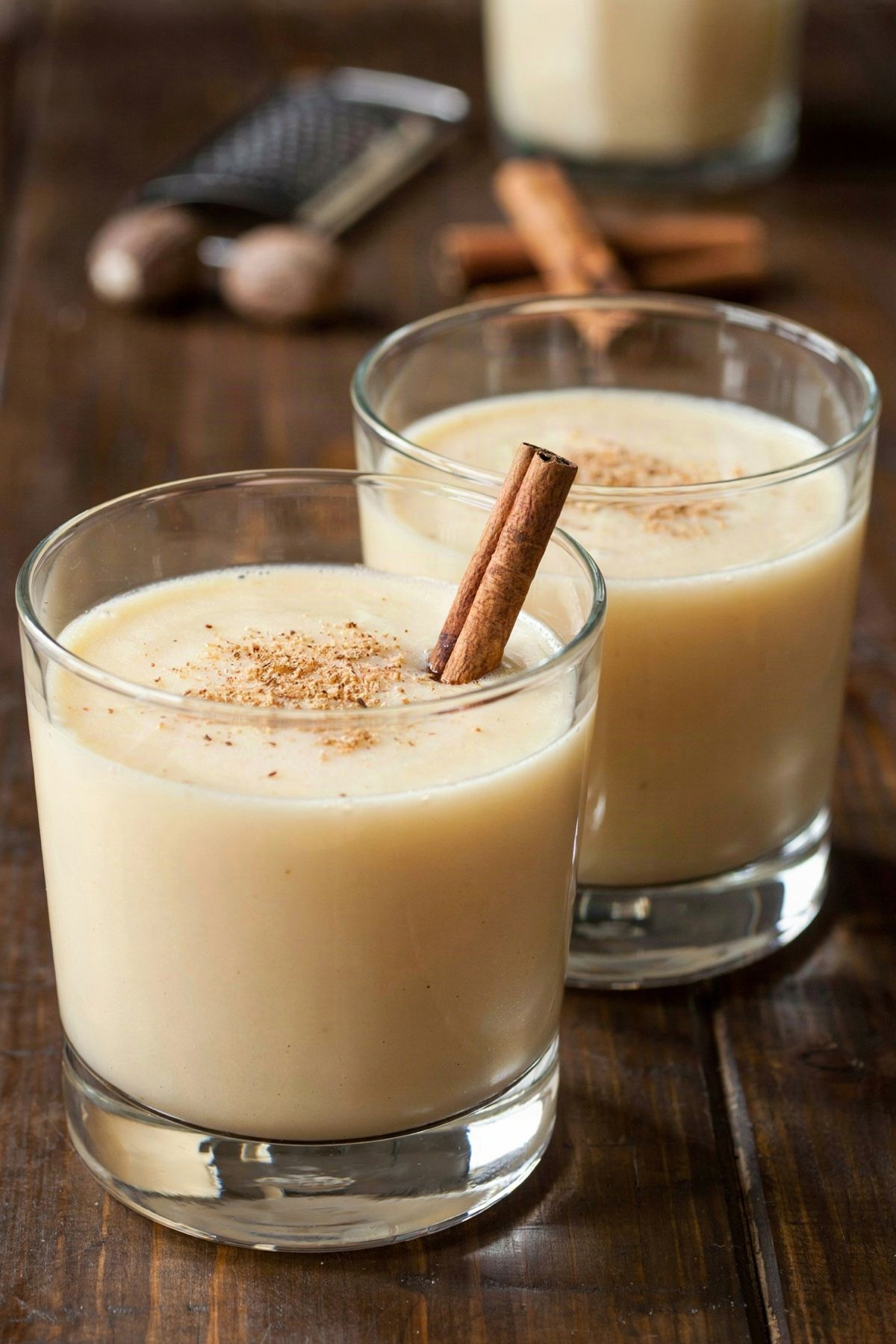
Why I Love Vegan Eggnog
Eggnog has always been a holiday drink in my book. Finding a plant-based eggnog that fulfilled all the same comforting flavors was a game-changer. This drink comes with the same nostalgic taste without the heaviness or stomachache from eggs or dairy.
The texture of this vegan eggnog is what really sets it apart. It’s thick and rich, thanks to the coconut milk and a cup of blended cashews. You still get that signature eggnog creaminess. Plus, warm spices like nutmeg and cinnamon send a reminder of winter nights at every sip.
Personally, I love how customizable this drink is. You want more nutmeg? Go for it. Like it a touch less sweet? Just cut back the maple syrup. When friends come over to play games, I like to put some rum in it and make it a little grown-up treat.
Things I love pairing this vegan eggnog with:
- Freshly baked gingerbread cookies
- Holiday movie marathons
- Quiet time by the fire with a good book
If you’re after a classic holiday drink but want to keep it dairy-free, this is honestly unbeatable. No one ever misses the eggs or the milk. Here’s to new traditions and really good eggnog.
The story
Vegan Eggnog Is Closer to the Original Than the Carton Is
Eggnog started without the egg. The medieval English posset was hot milk curdled with ale or wine, sweetened and spiced, and drunk as a nightcap and as a cold cure. Eggs and sherry joined it over the following centuries, and by the 1600s the drink had become a marker of wealth, because milk, eggs and imported fortified wine were all expensive. It was a drink for toasting the health of people who could afford it.
The name and the holiday habit are American. “Eggnog” first turns up in print in the colonies in 1775, and nobody is sure what the “nog” is. It may be “noggin”, a small wooden cup, or a corruption of “grog”. Caribbean rum was cheaper than sherry and the farms had chickens and cows, so the drink went from aristocratic to ordinary, and picked up a reputation on the way. On Christmas Eve 1826 cadets at West Point smuggled gallons of whiskey into the barracks for an eggnog party. The night ended in a riot, a court of inquiry and nineteen expulsions. A young Jefferson Davis was among the drinkers and got away with it.
Which brings us to the egg. What the yolk contributes is body, a pale yellow color and the emulsion that holds fat and milk together, and for most of the drink’s history the egg was the luxury in the glass. Today the US standard of identity lets a carton labeled eggnog contain as little as 1 percent egg yolk solids by weight, with the texture made up from milk solids, sugar and gums. Most people’s idea of eggnog is already a drink in which the egg does almost nothing. Soaked cashews blended with coconut milk do the yolk’s three jobs, and a pinch of turmeric supplies the color, which is why this version reads as eggnog rather than as spiced coconut milk.
What to buy
Ingredient Notes
Raw cashews
Raw and unsalted, whole or in pieces, it makes no difference once they are blended. Pieces are cheaper and soak faster. Roasted cashews taste toasty and turn the drink beige, and salted ones cannot be corrected. Soaked and blended, cashews form an emulsion with real body, and that body is what stands in for the yolk.
Full-fat coconut milk
One can, not two. Two cans chilled for two hours set into a layer of solid coconut fat over thin water, which is how the old version of this recipe went wrong. One can, thinned with oat milk and bound by the cashews, gives the richness without the drink setting. Use the whole can, the thick cream and the water under it. “Light” coconut milk is that water with a little cream stirred back in, and it makes a thin drink.
Oat milk
Unsweetened, and the barista or “full” style if you can get it, because it carries more fat and does not water the base down the way a thin almond milk does. Almond milk works and makes a lighter drink. Skip anything flavored, and read the label for added sugar so the maple syrup stays the only sweetener you are measuring.
Maple syrup
Half a cup sounds like a lot. It is roughly the sugar level of a classic eggnog, which is a sweet drink by design. Grade A dark, the grade that used to be called B, has more flavor than the pale amber. Agave is a fair swap and a touch sweeter, and brown sugar dissolves in the blender with a caramel edge. If you want it less sweet, start with a third of a cup and add after tasting, because you cannot take it out.
Nutmeg
The defining spice. Buy whole nutmegs and grate them on a microplane, because pre-ground nutmeg loses most of its aroma within weeks of the jar being opened. A teaspoon freshly grated is a clear, warm note. The same spoon from an old jar tastes of dust, and the drink then tastes of coconut. Cinnamon is a supporting spice and a modern addition; older recipes use nutmeg alone, sometimes with a scrape of clove or a little mace.
Turmeric
Optional and not there for flavor. A small pinch turns the ivory drink the soft primrose yellow a yolk would give it. Measure it on the tip of a teaspoon, an amount you can barely see. At a quarter teaspoon it tastes earthy and the color heads towards mustard.
Rum or bourbon
Traditional and optional. Dark rum is the colonial choice, bourbon the modern one, and brandy the third classic; George Washington’s recipe at Mount Vernon used all three. Add the spirit to the glass rather than the pitcher, so the batch stays family-friendly and everyone sets their own strength.
Creamy Vegan Eggnog
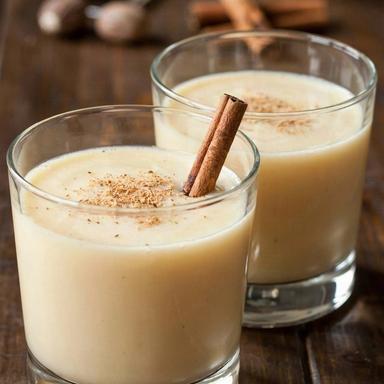
A thick, cold, nutmeg-led vegan eggnog blended from soaked cashews and one can of coconut milk, then chilled until it pours like custard. Add rum or bourbon by the glass.
Ingredients
Equipment
As an Amazon Associate I earn from qualifying purchases, at no extra cost to you.
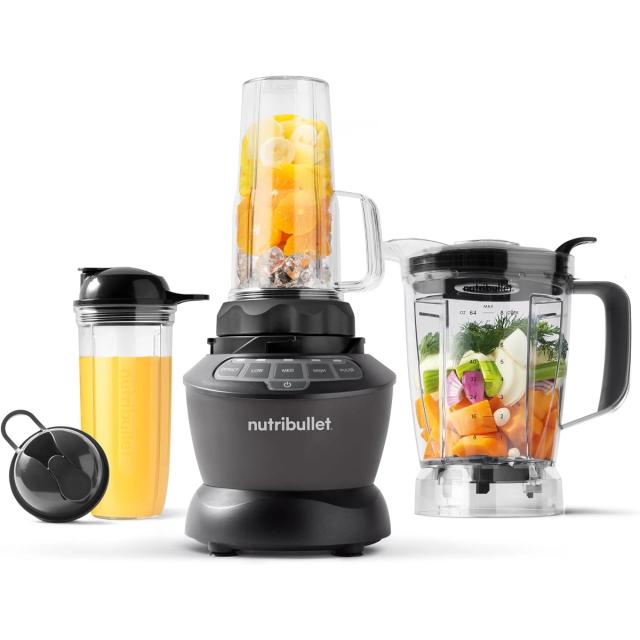
- BlenderBuy Now
- Glass jar (2-quart)
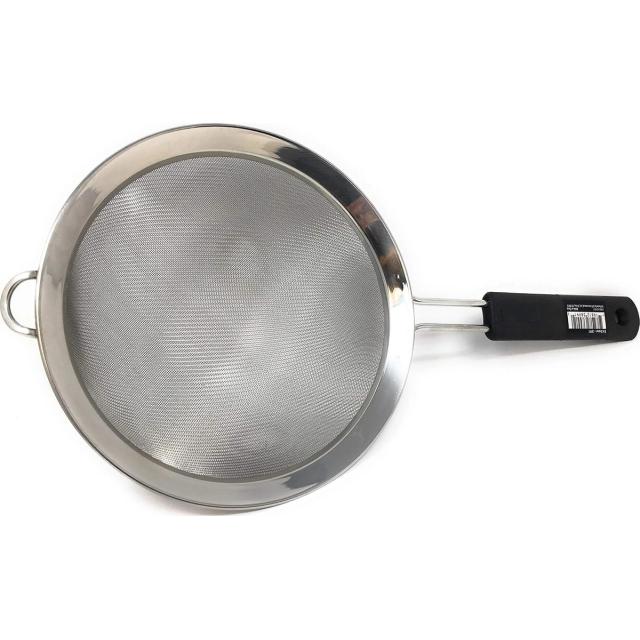
- Fine mesh straineroptionalBuy Now
Instructions
- 1
Soak the cashews
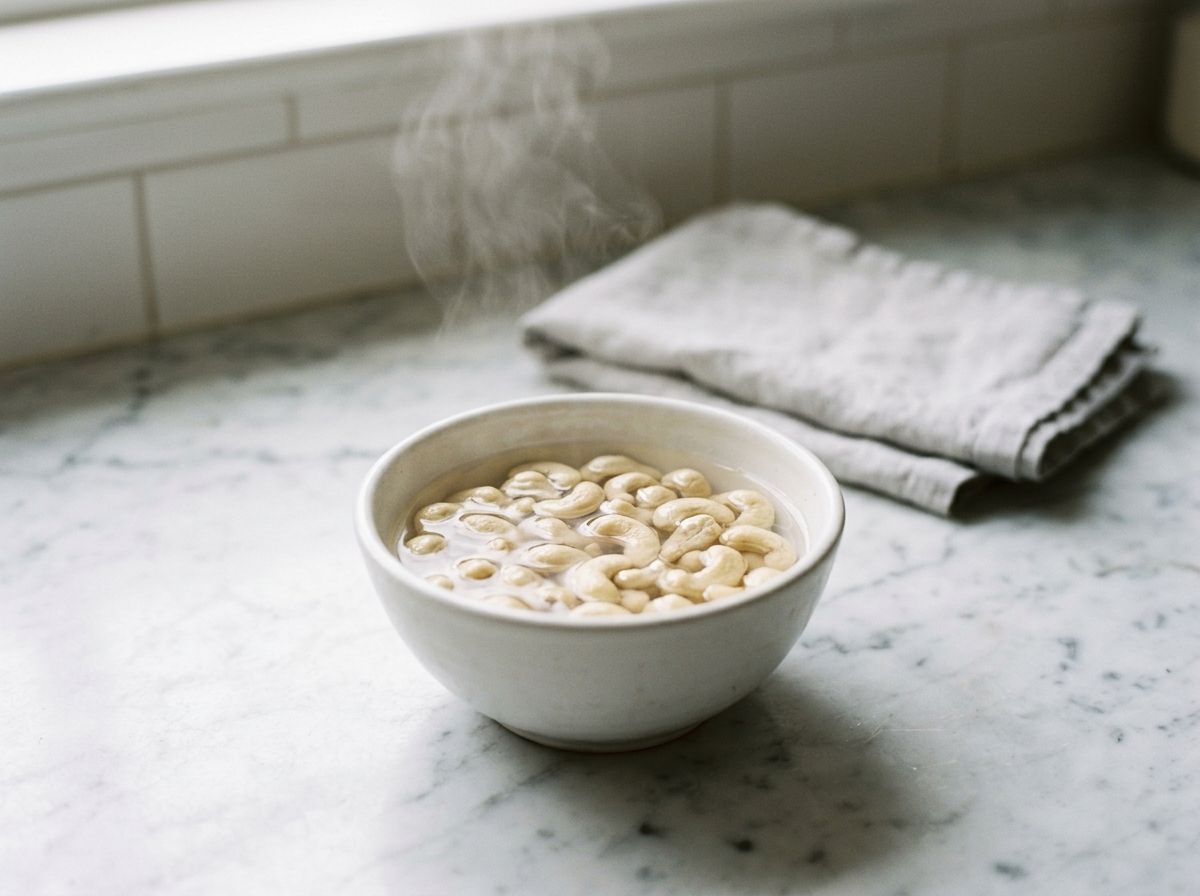
Put the cashews in a bowl and cover them with boiling water from the kettle. Leave them for 30 minutes, then drain and rinse. A soaked cashew bends and snaps softly rather than crunching. If you have the time, a cold soak of 4 hours or overnight softens them further, which matters most in a standard blender.
- 2
Blend the cashews with the coconut milk
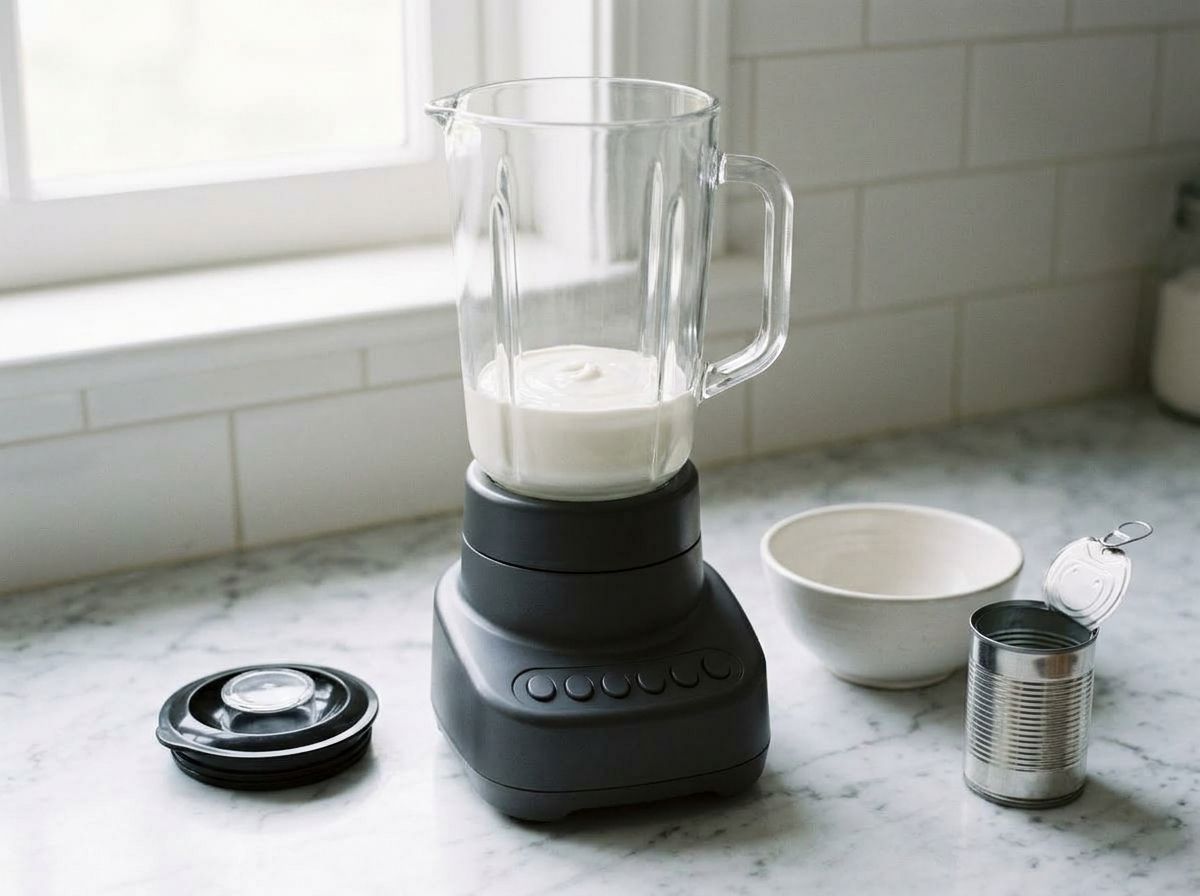
Tip the drained cashews into the blender with the whole can of coconut milk, the thick cream and the thin water both. Blend on high for a full 2 minutes, until a drop rubbed between finger and thumb feels completely smooth. Blending the cashews in this small volume first is what gets them silky. In the full batch the blades throw them around and grit survives.
- 3
Add the milk, sweetener and spices
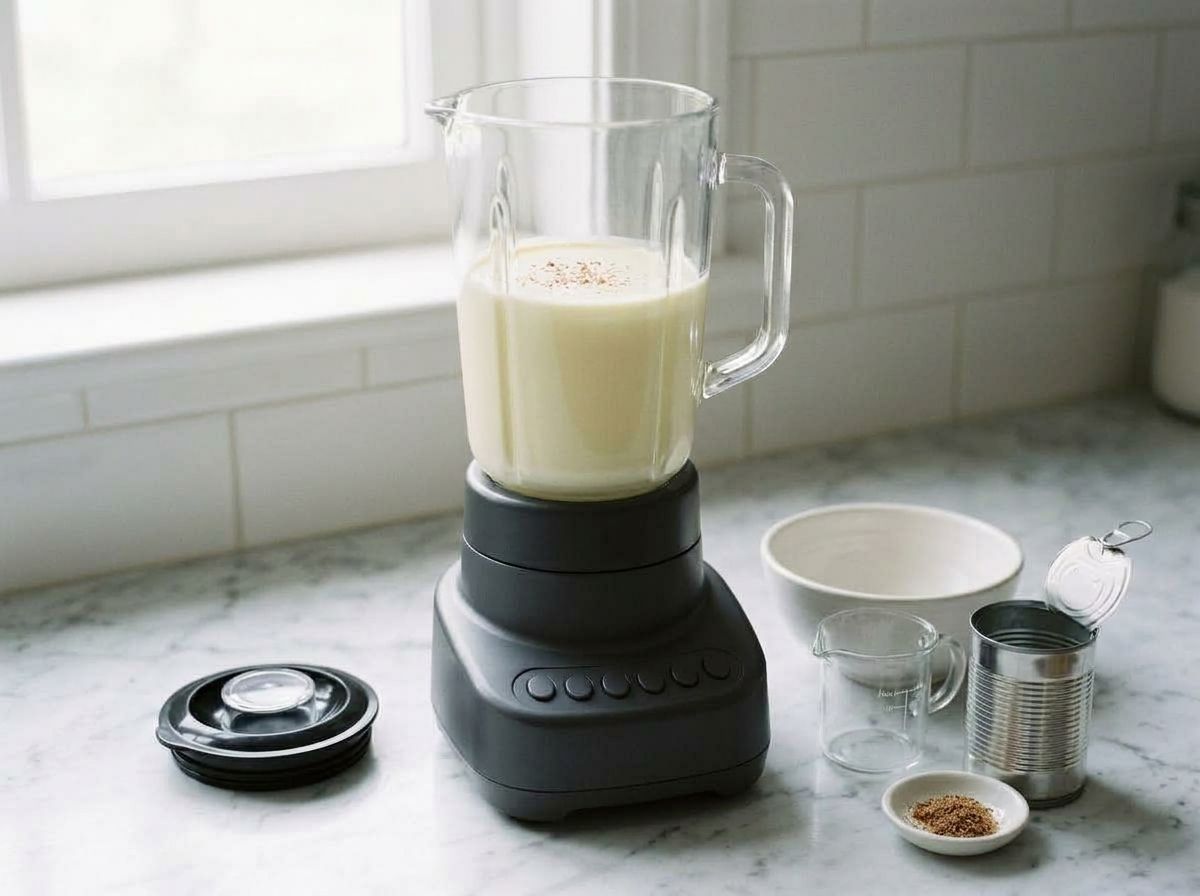
Pour in the oat milk, maple syrup, vanilla, nutmeg, cinnamon, salt and the turmeric if you are using it. Blend for another 30 seconds. At this stage it looks like thin pouring cream, pale ivory, or a soft primrose yellow with the turmeric. It thickens in the fridge, so do not judge the texture yet.
- 4
Taste, adjust and strain if needed
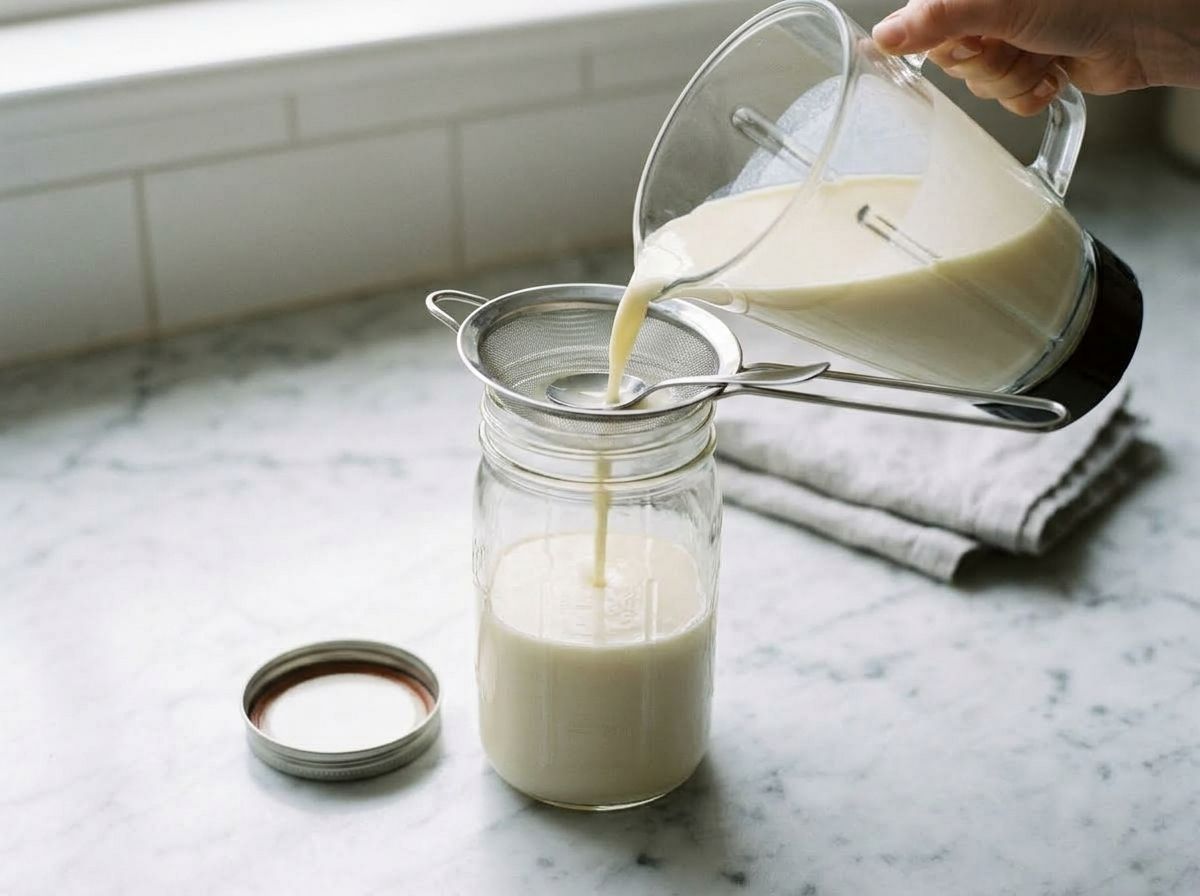
Taste it. Add more maple syrup a tablespoon at a time if it is not sweet enough, and more nutmeg if you cannot taste it clearly over the coconut. If your blender left any grain at all, pour the eggnog through a fine-mesh strainer into a jar or pitcher, pressing the last of it through with the back of a spoon.
- 5
Chill for at least 2 hours
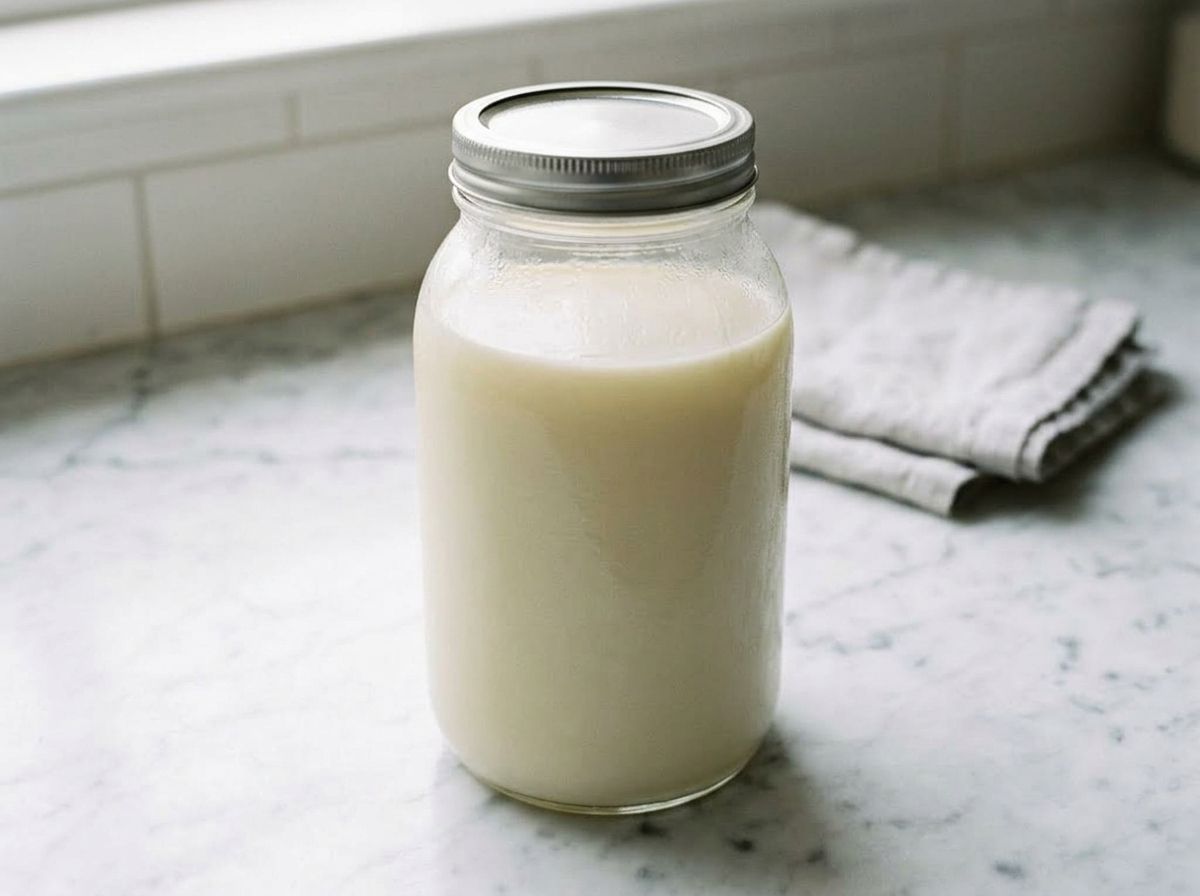
Cover and refrigerate for at least 2 hours and up to overnight. The coconut fat firms a little and the cashews swell, and it comes out noticeably thicker than it went in, with the body of a pouring custard that coats the back of a spoon.
- 6
Stir, pour and finish
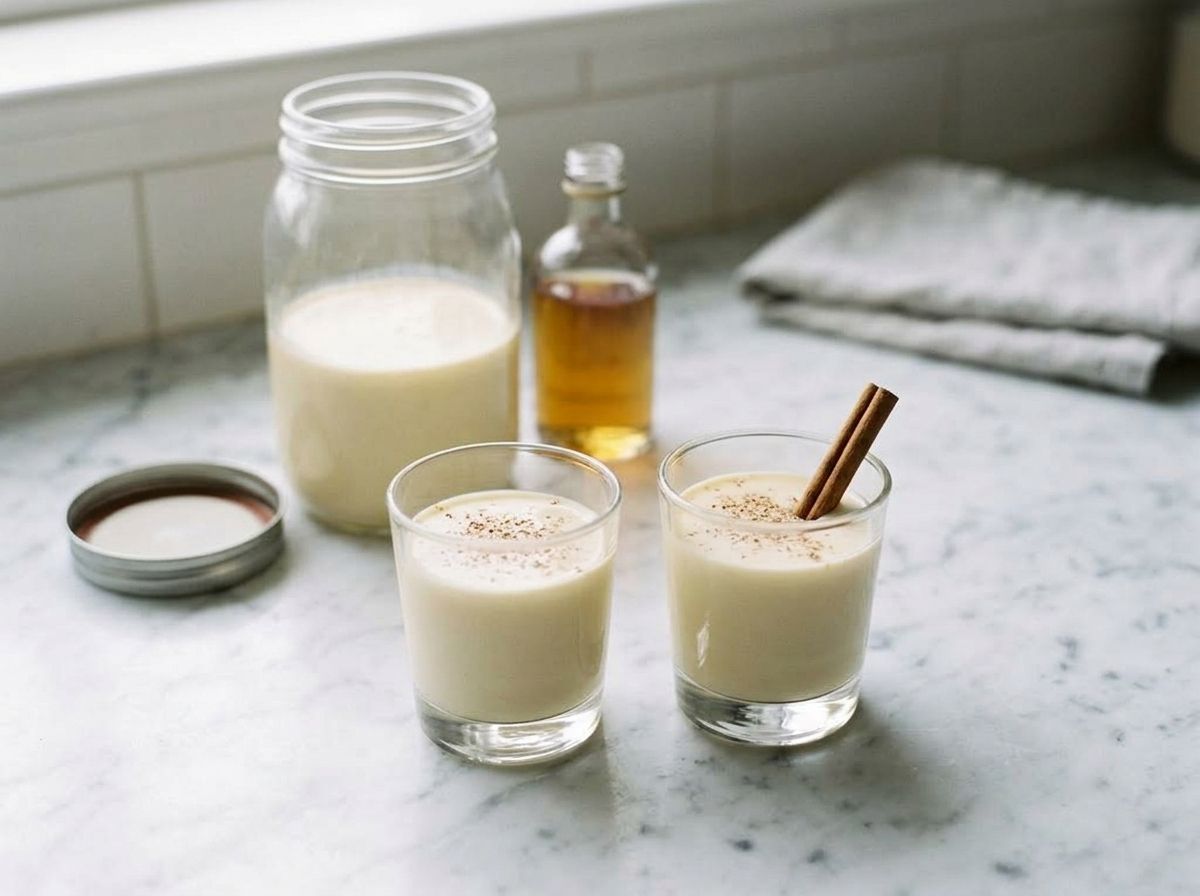
Stir or shake well, because a thin layer of coconut cream rises to the top as it sits. Pour into glasses over the rum or bourbon if you are using it, about 1 oz (30 ml) a glass, and grate a little fresh nutmeg over each. Add a cinnamon stick if you like. To serve it warm, heat gently in a saucepan until steaming, never boiling.
Notes
It thickens as it chills, so judge the texture after two hours in the fridge, not straight from the blender.
A thin layer of coconut cream rises to the top in the fridge. Stir or shake before pouring. It is not a sign anything went wrong.
Start with the 1 teaspoon of nutmeg and taste. Freshly grated is stronger and cleaner than pre-ground, and this drink is meant to taste of it.
Nutrition Facts
6 servings (about 5 cups) · 197 g per serving
- Calories
- 333 kcal
% Daily Value*
- Total Fat
- 24.2 g31%
- Saturated Fat
- 13.8 g69%
- Sodium
- 128 mg6%
- Total Carbohydrate
- 27.1 g10%
- Dietary Fiber
- 1.1 g4%
- Sugars
- 17.6 g—
- Protein
- 5.7 g11%
Recipe from veggierecipes.blog
When it goes wrong
Troubleshooting
It set solid in the fridge
Too much coconut milk and not enough of anything else. The fat in canned coconut milk is solid below about 76°F (24°C), so a drink that is mostly coconut milk firms into a paste when it is chilled. At one can to two cups of oat milk, bound by the cashews, it thickens instead of setting. If you are already looking at a solid jar, stand it in warm water for ten minutes and whisk or re-blend it.
It is gritty
The cashews were under-soaked, or they went into the blender with the full volume of liquid, where the blades throw them around instead of cutting them. Blend the cashews with the coconut milk alone first, for a full two minutes, and only then add the oat milk. In a standard blender, soak overnight rather than thirty minutes and strain the finished drink through a fine-mesh strainer.
It tastes of coconut, not of eggnog
Nutmeg and vanilla are what say eggnog to the tongue, and pre-ground nutmeg from an opened jar does not deliver them. Grate it fresh and add another half teaspoon, then let the batch chill overnight, because spices take hours to bloom in a cold liquid. The cashews and oat milk also dilute the coconut, which is the other reason not to use two cans.
It is thin
It was judged straight out of the blender. The drink thickens in the fridge as the coconut fat firms and the cashews swell, so give it the two hours. If it is still thin after chilling, the oat milk was a watery brand or the cashews were short. Blend in another quarter cup of soaked cashews, or for a custard-thick version, warm the batch in a saucepan with a teaspoon of cornstarch stirred into a little cold oat milk until it just coats the back of a spoon, then chill it again.
There is a layer on top and it looks separated
That is coconut cream rising, not curdling, and a stir or a shake puts it back. Real curdling, a grainy look that a stir does not fix, happens when a strong spirit is mixed into the whole batch and left overnight, because the alcohol tightens the cashew emulsion. Add the rum or bourbon to the glass instead.
It is too sweet
The maple syrup went in at the full half cup before anyone tasted. Thin the batch with more oat milk, which lightens it as well, and add a second pinch of salt, which sharpens the sweetness rather than hiding it. Next time start at a third of a cup and add to taste.
Before you serve
Serving & Storage
Serve it cold, in small glasses, with nutmeg grated over the top at the table. It is rich, and a 6 oz (180 ml) pour is a serving, not a mean one. The traditional American way is a punch bowl with a ladle, guests helping themselves, and a bottle of rum or bourbon standing beside it for those who want it. A cinnamon stick in the glass looks the part and adds little; the nutmeg is doing the work.
It also serves warm. Heat it gently in a saucepan until it steams, stirring, and take it off before it bubbles, because a boil breaks the emulsion and leaves it grainy. Warm, it is closer to a spiced drinking custard and suits a cold evening better than a party.
Alongside, anything with ginger or brown sugar: gingerbread, shortbread, a slice of vegan pumpkin pie. Leftover eggnog is worth keeping for other jobs. A splash in coffee makes an eggnog latte, half a cup soaks the bread for French toast, and it pours over oatmeal in place of milk.
Making it ahead
It is better on the second day, once the nutmeg has had time to bloom in the cold liquid, so make it the day before a party rather than the morning of. Up to three days ahead is fine. Keep the spirit out of the batch until serving. A whole batch mixed with rum and left overnight can turn grainy, and a batch without it stays smooth and stays family-friendly.
Storing leftovers
In a sealed jar in the fridge it keeps for four days. Shake before pouring, because a layer of coconut cream rises to the top. It thickens further each day, so loosen it with a splash of oat milk if it has gone past pouring. Freezing is not worth it. The emulsion breaks as it thaws and the texture comes back grainy, and no amount of re-blending fully brings it back. If you must, freeze it in an ice cube tray and drop the cubes into a blender with coffee or a banana, where the texture does not matter.
Still wondering
Frequently Asked Questions
Is this vegan eggnog gluten-free and dairy-free?
Yes. Nothing in it contains dairy or gluten as written. If gluten matters to you, check that the oat milk is labeled gluten-free, because oats are often processed on the same lines as wheat and many oat milks are not certified.
Can I make it without coconut milk?
Yes. Replace the can with 1½ cups (360 ml) more oat milk and add ¼ cup (35 g) more cashews to make up the body. It comes out lighter and less rich, closer to a spiced cashew milk than a custard, and it will not thicken as much in the fridge.
Can I double it for a party?
Yes, but blend in two batches. A standard blender jug holds 6 to 8 cups and one batch is already about 5, so a doubled batch overflows or blends unevenly. Blend each batch’s cashews with its own can of coconut milk, then combine everything in a large pitcher or punch bowl to chill.
More Festive & Creamy Sips and Treats
Made this?