
Vegetarian Kimchi Recipe
The jar at the store is almost always seasoned with salted shrimp and anchovy sauce, and the fix is a cabbage, a bowl and one afternoon.
Jump To Recipe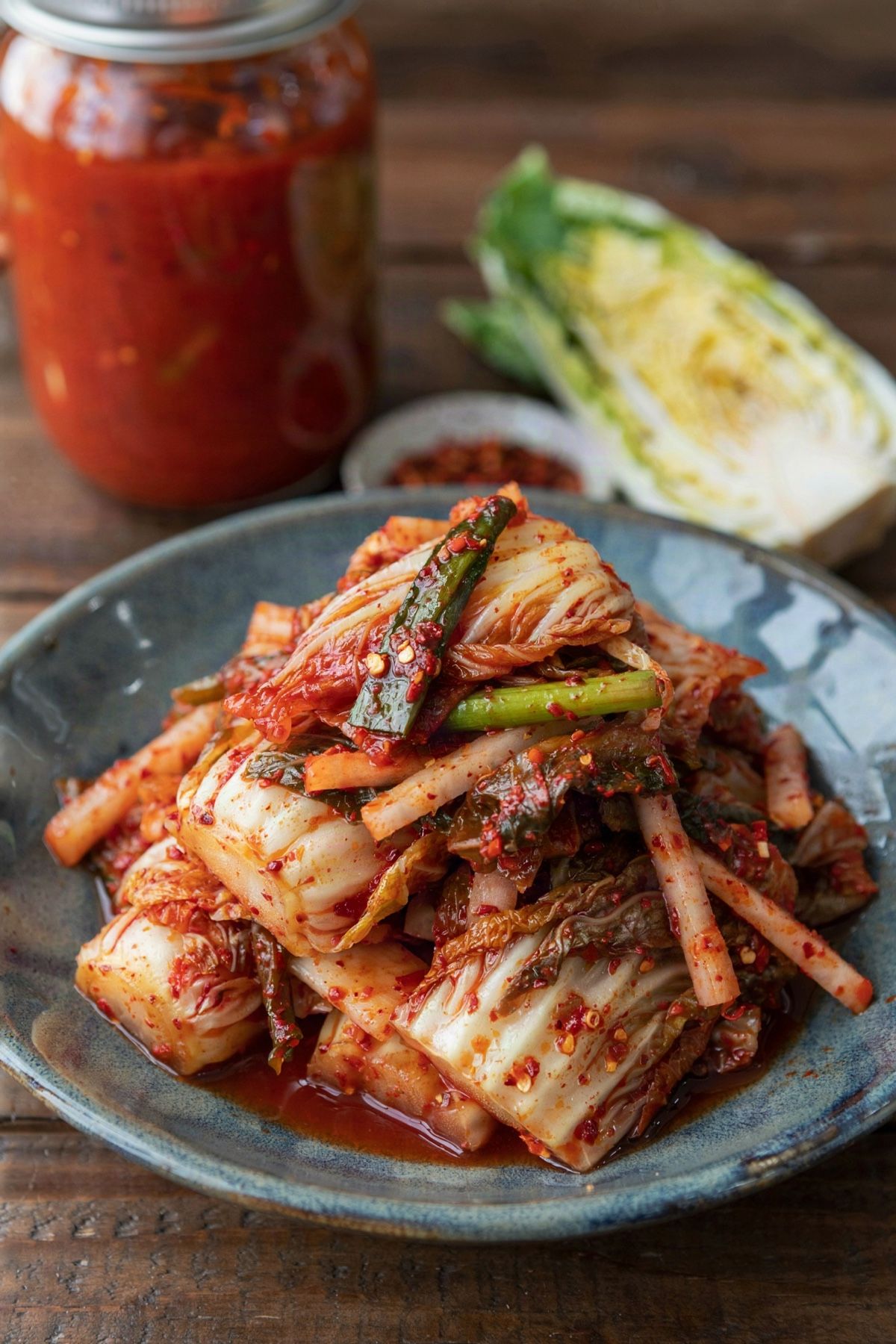
Why I Weigh The Salt Now
My first batch went wrong before the cabbage was even cut, because I measured the salt with a cup. The recipe I was following said half a cup of coarse salt and I had a box of fine table salt, and half a cup of that is nearly twice the salt. Two hours later the leaves were limp, rinsed three times and still tasted like the sea, and no amount of radish stirred in afterwards brought them back. It fermented, technically. Nobody ate it.
The second batch I weighed the salt, and that was the whole difference. Fifty grams for a large cabbage, whatever the salt looks like, and the leaves came out bendy and pleasantly salty, the way a cucumber tastes after an hour in a dressed salad. I have weighed it ever since, and the weight sits next to the cup measure in this recipe for the same reason.
The other thing I learned was a small kind of patience. Fresh kimchi on the day it is made is a crisp, hot salad, and it is good like that; I eat a bowl of it with rice the same evening every time. But the jar on the counter does something on the second day that nothing else in my kitchen does. It starts to fizz, faintly, when you press it down, and the smell shifts from raw garlic to something rounder and sour. That is the day it goes into the fridge, and a week later it is the kimchi that goes into the fried rice.
The story
Vegetarian Kimchi Is Older Than The Fish Sauce
The kimchi in the jar at the store, red with chili, heavy with garlic and seasoned with salted shrimp and anchovy sauce, is about 150 years old. Kimchi itself is far older than that, and for most of its life it had none of those things in it. The early word for it was chimchae, submerged vegetables: cabbage, radish and cucumber salted and left in brine to keep through the winter. The early records do not mention garlic, and they do not mention chili, because there was none. Chili peppers reached Korea from the Americas and are first recorded in the Jibong yuseol, an encyclopedia of 1614, and it took another century for them to find their way into a kimchi crock.
The eighteenth century is when the modern dish took shape. The Jeungbo sallim gyeongje of 1766, a farming manual from the reign of King Yeongjo, describes more than twenty kinds of kimchi and is the first Korean book to explain how to grow chili. The same period is when jeotgal, salted and fermented seafood, went into the paste, adding the depth of flavor that fish sauce and salted shrimp still supply today. Even then the red kimchi did not become the everyday kind until the nineteenth century, and napa cabbage, the vegetable the word kimchi now brings to mind, only arrived at the end of it. Whole-cabbage kimchi in its present form appears in the Siuijeonseo, a cookbook from around that time. So the seafood is among the newest parts of the dish, not the foundation of it.
A kimchi without it has also never gone away. Korean Buddhist temples have made theirs for centuries with no jeotgal and, stricter still, none of the osinchae, the five pungent vegetables: garlic, onion, scallion, chives and leek. Temple kitchens build the savory depth from a stock of dasima, dried kelp, from soy sauce and mushrooms, and the sweetness from fruit such as persimmon or pear. Jeong Kwan, the nun at Baegyangsa whose cooking reached the world through Chef’s Table, makes her kimchi that way every winter. Outside the temples, the ordinary Korean name for kimchi made without seafood is chaesik kimchi, vegetarian-diet kimchi, and it is a normal thing to ask for, not a Western adaptation.
This recipe is a chaesik kimchi that borrows the temple kitchen’s stock. It keeps the garlic and scallion, and it takes the savory weight the fish sauce would have carried from kelp and dried shiitake simmered together, then cooked into the rice porridge that binds the paste. It is also a mak kimchi, cut kimchi, made from cabbage sliced into pieces before salting rather than the whole quarters of pogi kimchi. Mak means roughly, and cut kimchi is the kind that goes straight into kimchi fried rice, tteokbokki and stew without another board and knife. For a vegetarian cook the seafood was the only thing in the way of the dish. It turns out to have been the last thing added.
What to buy
Ingredient Notes
Napa cabbage
One large head, about 2½ pounds. Pick one that feels heavy for its size with tightly packed leaves and a pale yellow heart; a loose, dark green head is older and salts unevenly. It is cut into 2-inch pieces before salting, which is what makes this mak kimchi rather than the whole-quarter kind, and it means the pieces are the right size for fried rice and stew without any further chopping.
Salt
Coarse sea salt or kosher salt, and weigh it if you possibly can: 50 grams. Salt crystals vary so much in size that a quarter cup can be anything from 36 grams of Diamond Crystal to 70 grams of coarse sea salt, and fine table salt packs nearly twice the salt into the same cup as well as carrying iodine and anti-caking agents that cloud the brine and can slow the ferment.
Gochugaru
Korean red pepper flakes, sun-dried, coarsely ground and a bright, slightly orange red. They are milder and sweeter than they look, which is why half a cup goes into one cabbage. Crushed red pepper from the pizza shelf is the wrong thing: it is full of seeds, much hotter, and turns the paste a dull brown-red. Use a third of a cup for a mild batch, and keep the rest in the freezer, where it holds its color for a year.
Dried kelp and dried shiitake
These two do the job the fish sauce and salted shrimp do in a traditional paste. Kelp, sold as dasima in Korean stores and kombu in Japanese ones, is rich in the glutamates that make broth taste savory, and dried shiitake carry guanylates that amplify them. Bring the kelp up slowly and lift it out at the first bubble; boiled hard it turns the stock bitter and slimy. The softened mushrooms go into the paste too, so nothing is wasted.
Sweet rice flour
Glutinous rice flour, sold as chapssal-garu in Korean stores or under the Mochiko brand elsewhere. Cooked into a thin porridge with the stock it gives the lactic bacteria a starch to feed on, which gets the ferment going faster, and it thickens the paste so it clings to the cabbage instead of sliding off. Plain rice flour works if it is all you have, a little grittier. Cool the porridge completely before it meets the garlic and onion, or it cooks them and the paste tastes of stewed onion rather than raw.
Soy sauce
The salt and savory that would otherwise come from fish sauce. Use an ordinary Korean or Japanese soy sauce, not dark soy or a sweet one, and tamari if the batch needs to be gluten free. A tablespoon of white miso stirred into the blended paste is a good addition if you have it open, adding a rounder, slightly sweet depth, but it is not needed.
Korean radish, scallions and carrot
Korean radish, mu, is the squat, pale green-shouldered one, denser and sweeter than daikon; daikon is fine in its place. The radish matchsticks give up their juice in the jar and that juice becomes most of the brine. Scallions go in as 2-inch lengths so they stay recognisable. The carrot is there for color and is optional; some Korean cooks think it has no place in kimchi at all.

Vegetarian Kimchi
Cut napa cabbage kimchi with no fish sauce or salted shrimp: cabbage salted until it bends, tossed with radish and scallion in a gochugaru paste built on a kelp and shiitake stock, then fermented in a jar. Vegan, good fresh, better after a week.
Ingredients
Equipment
As an Amazon Associate I earn from qualifying purchases, at no extra cost to you.
- Mixing bowlsBuy Now
- SaucepanBuy Now
- WhiskBuy Now
- BlenderBuy Now

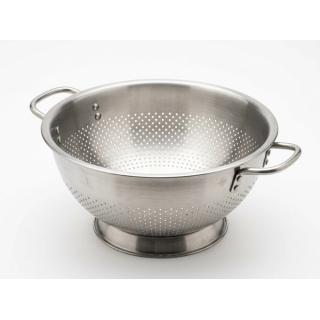
- Colander
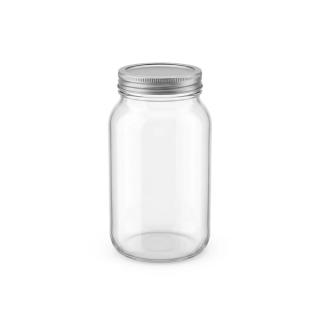
- Glass jar (2-quart)
Instructions
- 1
Cut the cabbage
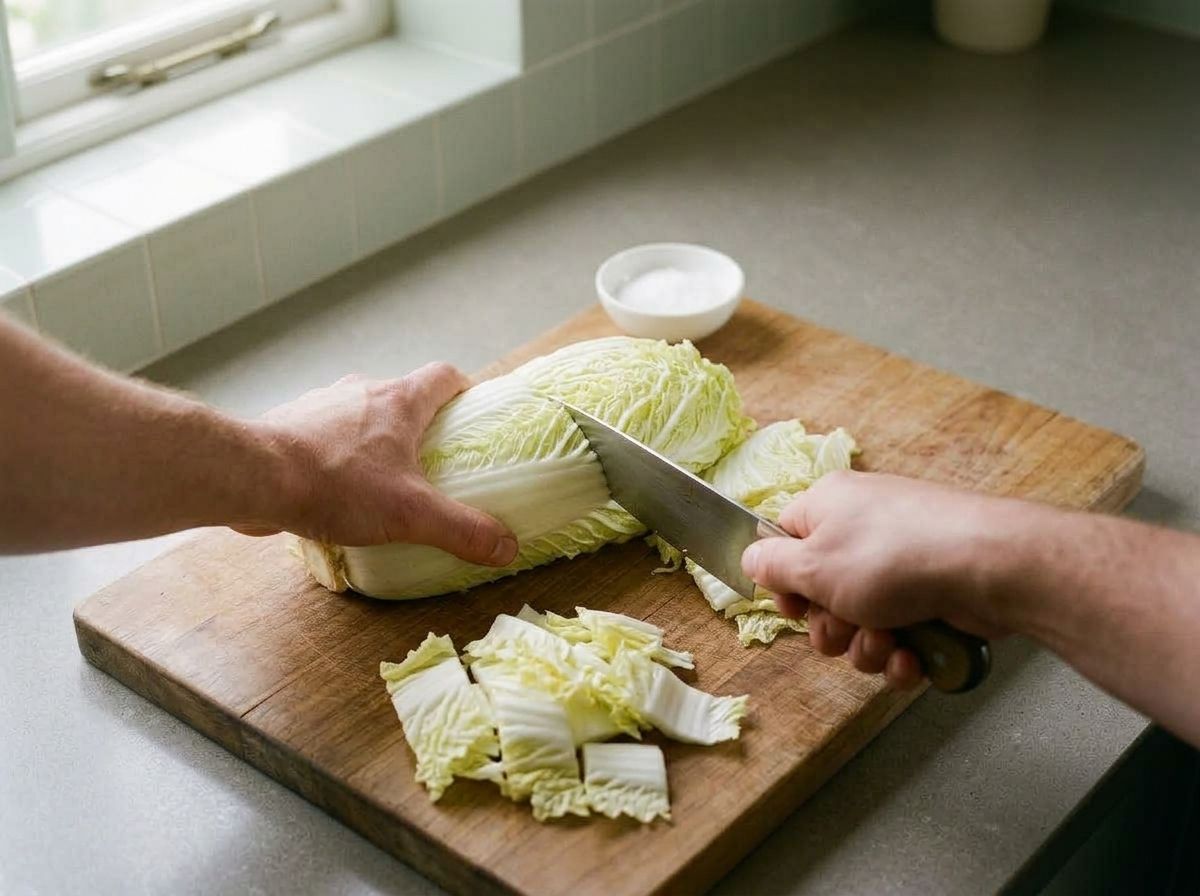
Pull off any bruised outer leaves. Cut the cabbage in half lengthwise, cut a wedge out of the core, and cut each half crosswise into 2-inch pieces, separating the layers as you go. Rinse the pieces in a large bowl of cold water and drain them.
- 2
Salt the cabbage
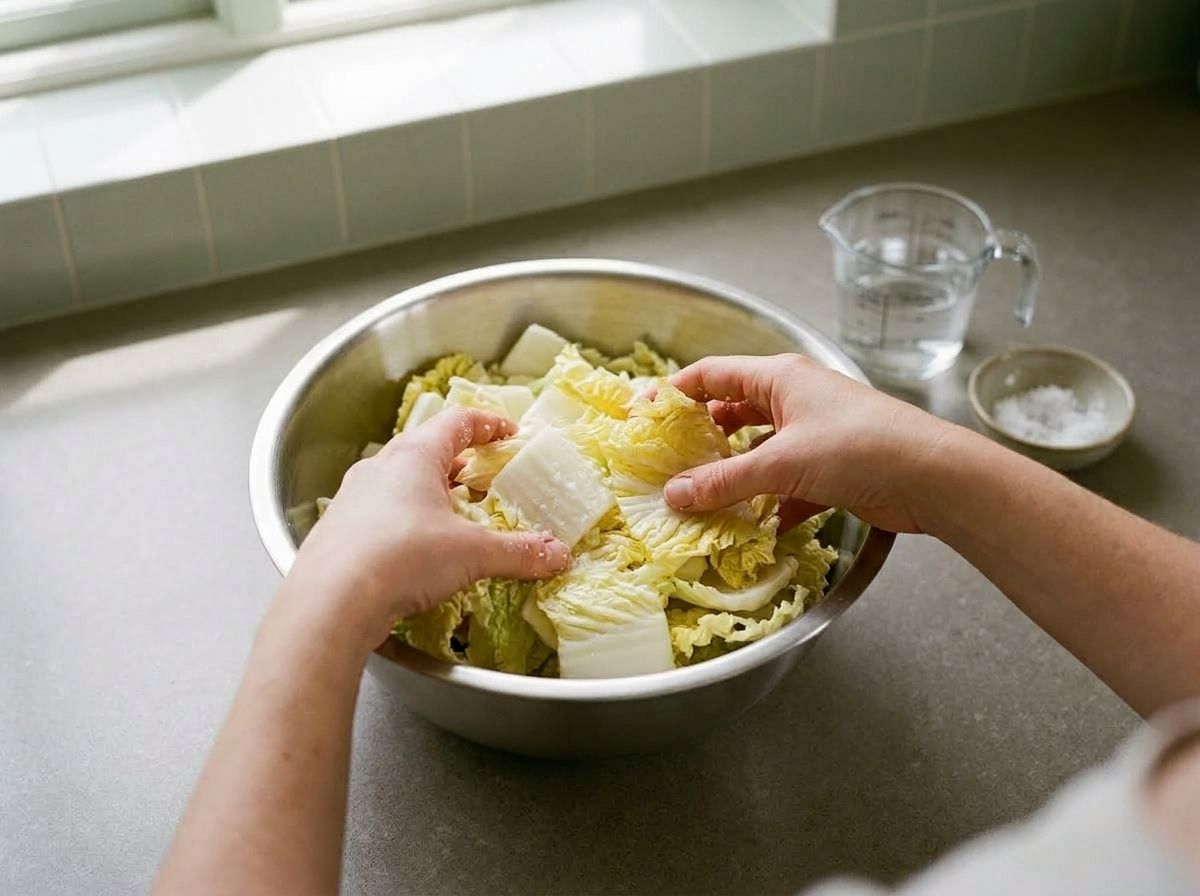
Put the cabbage in your largest bowl, sprinkle over the salt and toss with your hands until every piece has some. Pour in the 1 cup of water, toss again and leave it for 2 hours, turning the cabbage over every 30 minutes so the pieces on top go to the bottom.
- 3
Make the kelp and shiitake stock
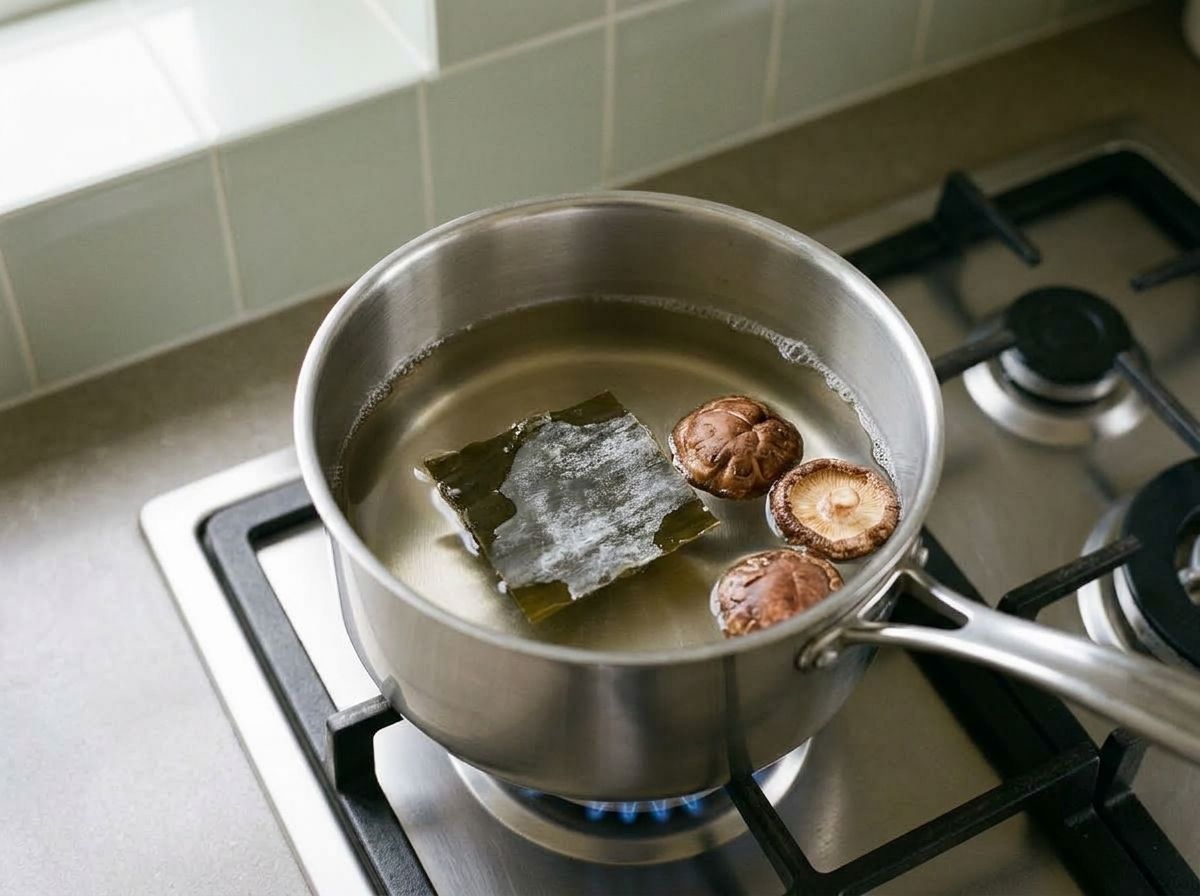
Put the kelp, the shiitake and the 1 1/4 cups of water in a saucepan and bring it slowly to a bare simmer. Lift the kelp out as soon as the first bubbles appear, then simmer the mushrooms gently for 10 minutes. Lift the mushrooms out, squeeze their liquid back into the pan, and set them aside.
- 4
Cook the porridge
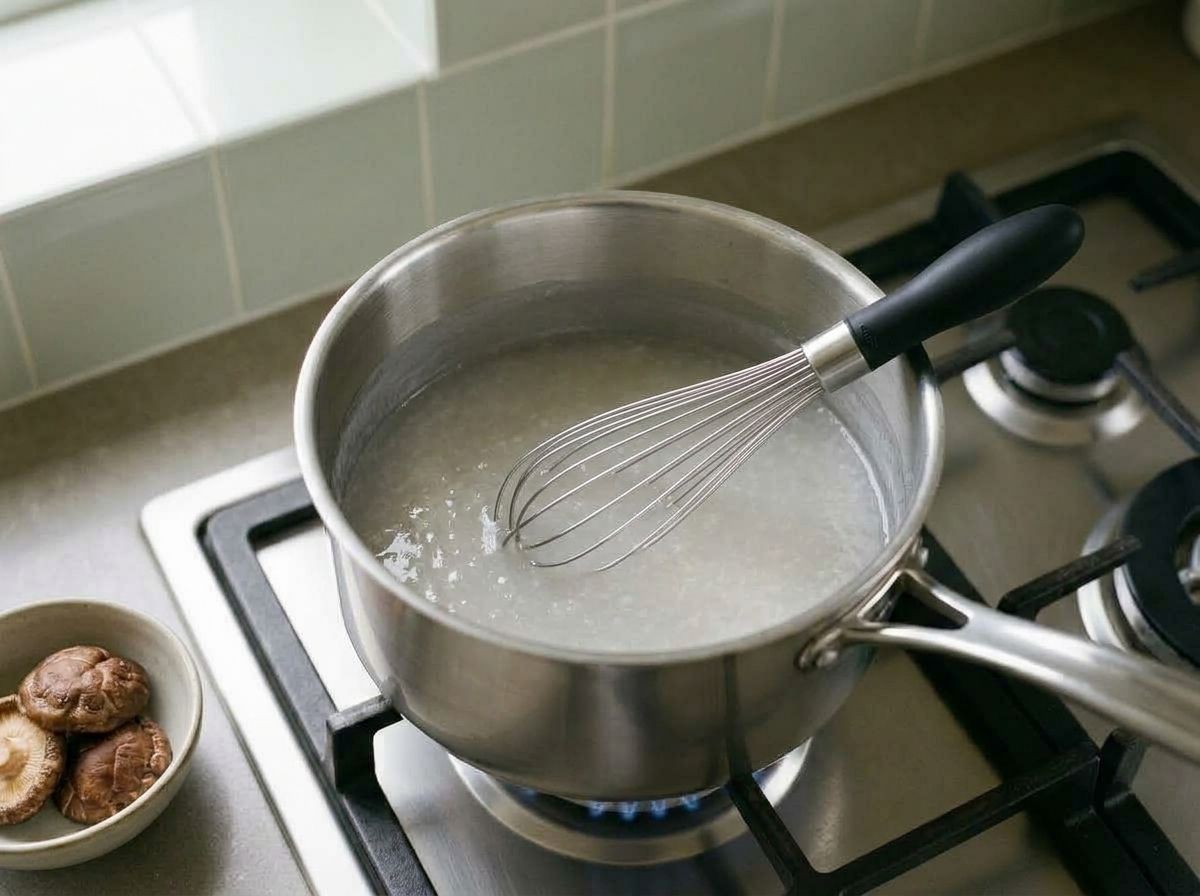
Whisk the sweet rice flour into the warm stock until there are no lumps, then cook it over medium heat, stirring all the time, for 2 to 3 minutes until it thickens to the consistency of thin glue and turns translucent. Stir in the sugar, take the pan off the heat and let the porridge cool completely.
- 5
Blend the paste base
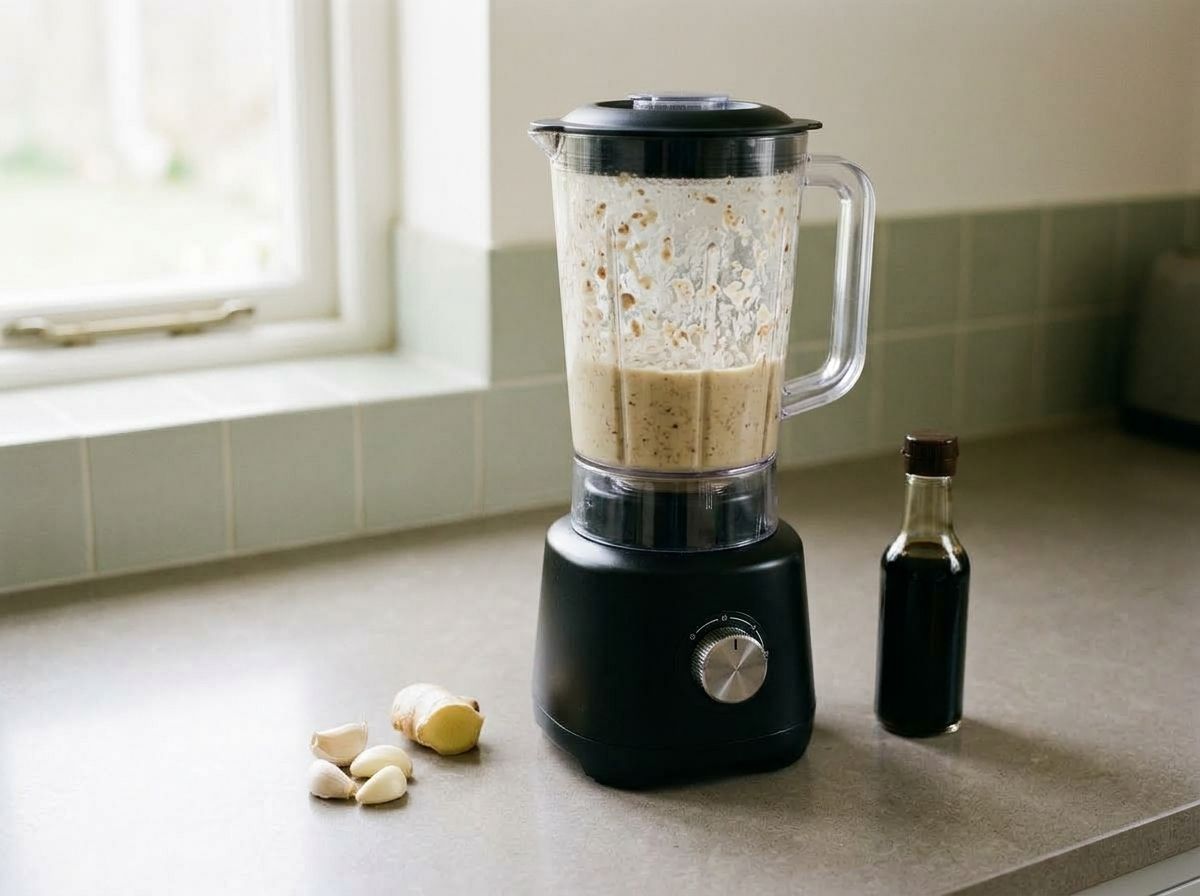
Trim the stems off the softened shiitake. Put the cooled porridge, the mushrooms, the garlic, ginger, onion and soy sauce in a blender and blend until smooth, scraping down the sides once.
- 6
Stir in the gochugaru
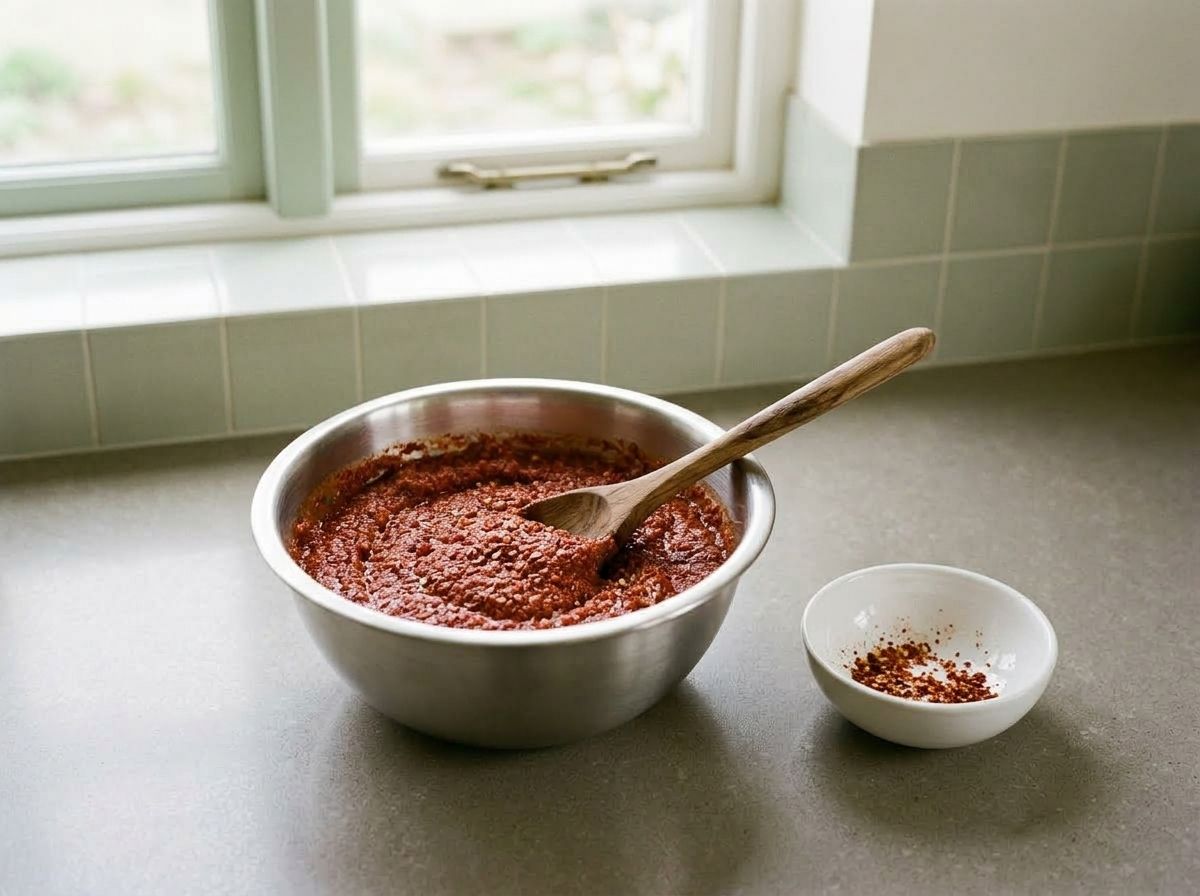
Pour the blended base into a bowl and stir in the gochugaru until it becomes a thick, brick-red paste. Leave it for 10 minutes so the flakes swell and the color deepens.
- 7
Test, rinse and drain the cabbage
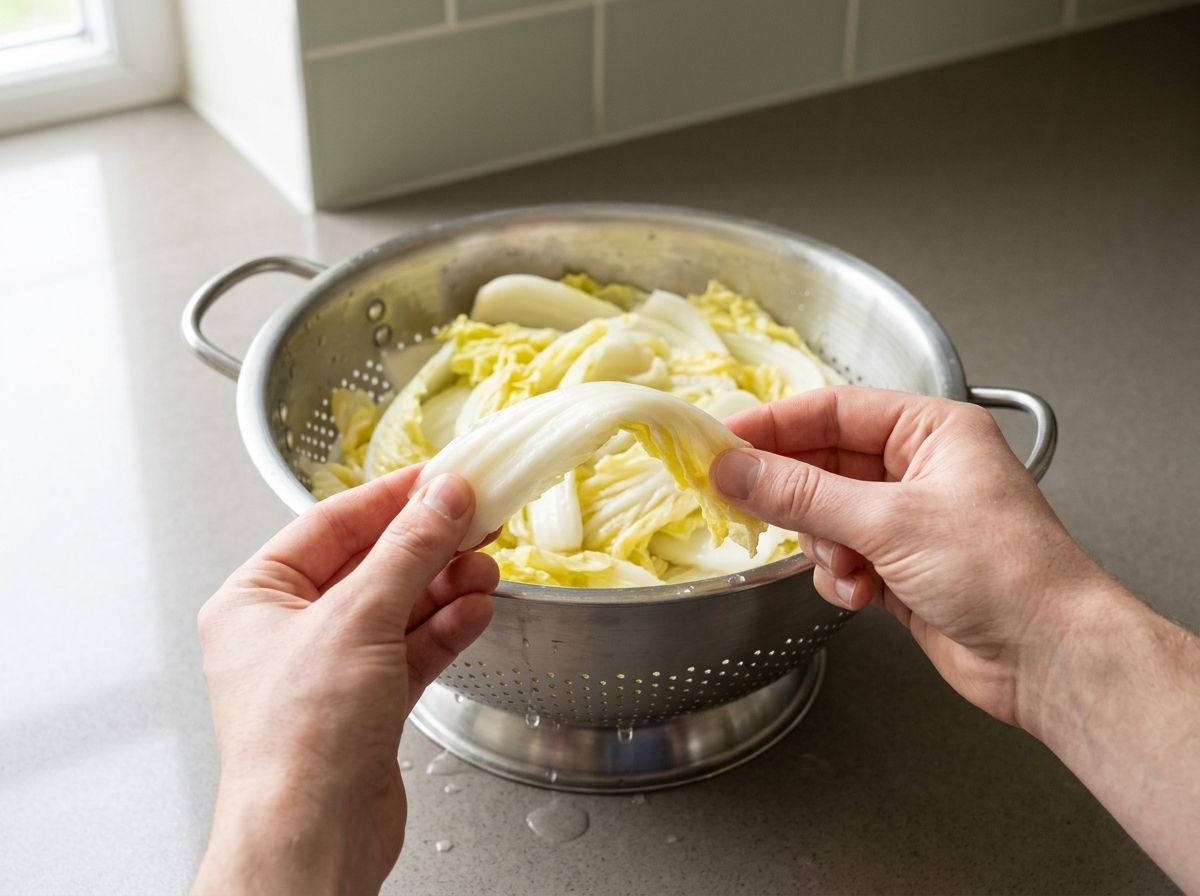
Bend the thick white base of a piece of cabbage: it should fold over without snapping, and a piece should taste pleasantly salty rather than like seawater. Rinse the cabbage in three changes of cold water, then tip it into a colander and leave it to drain for 30 minutes, tossing it once.
- 8
Mix everything with the paste
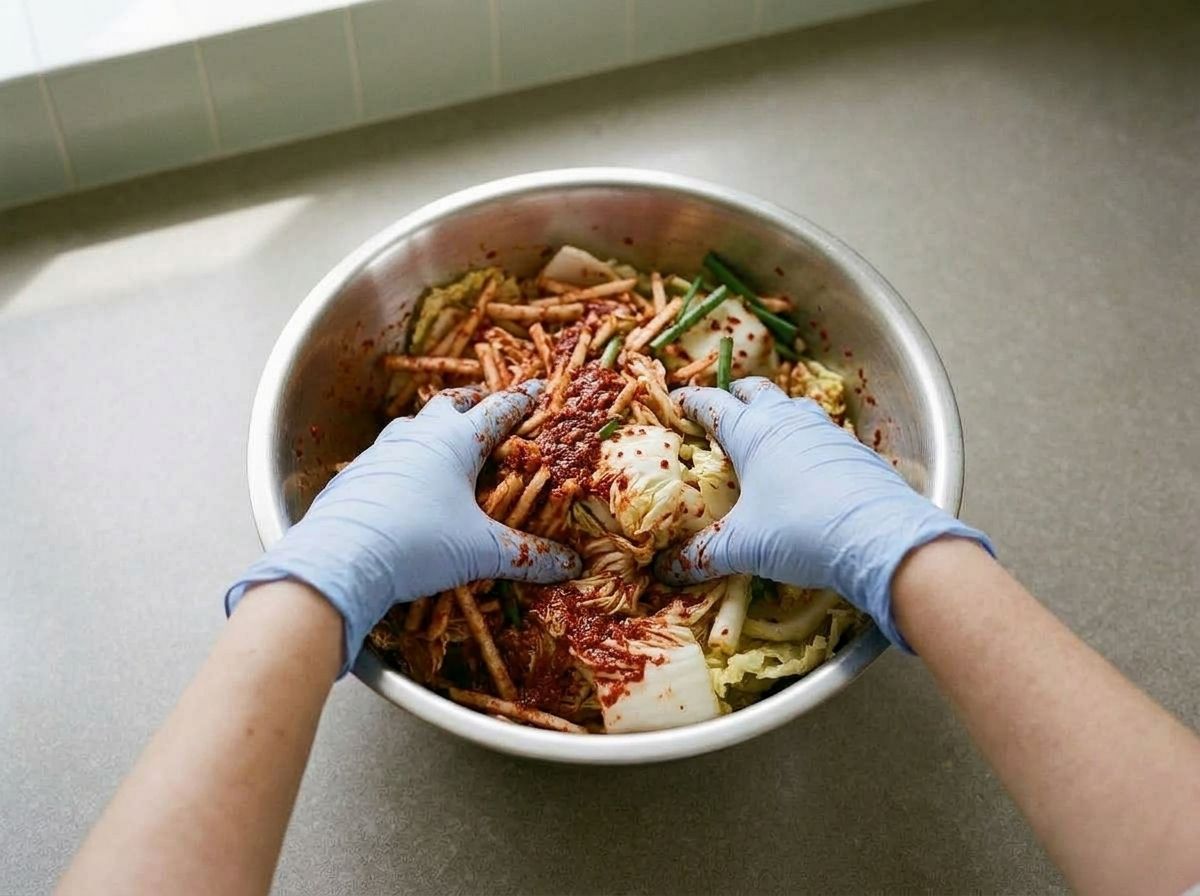
Squeeze the cabbage gently, a handful at a time, and put it back in the dried bowl with the radish, the scallions and the carrot. Add the paste and, wearing gloves, rub it into every piece until nothing pale is left showing.
- 9
Pack the jar
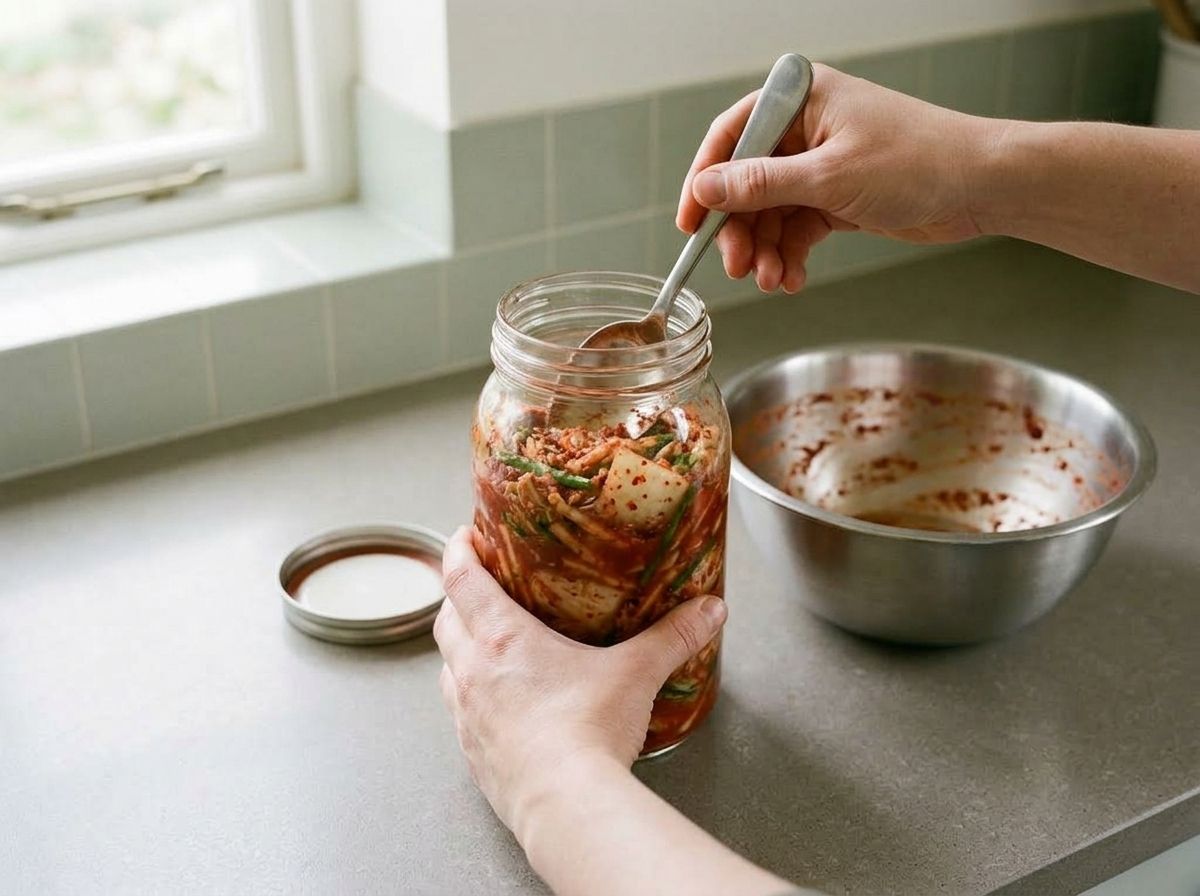
Pack the kimchi into a clean 2-quart glass jar a handful at a time, pressing each one down firmly so no air pockets are left and the brine rises over the cabbage. Leave 2 inches of space at the top, swirl 2 tablespoons of water around the empty bowl and pour that in, wipe the rim, and close the lid without tightening it.
- 10
Ferment, then refrigerate
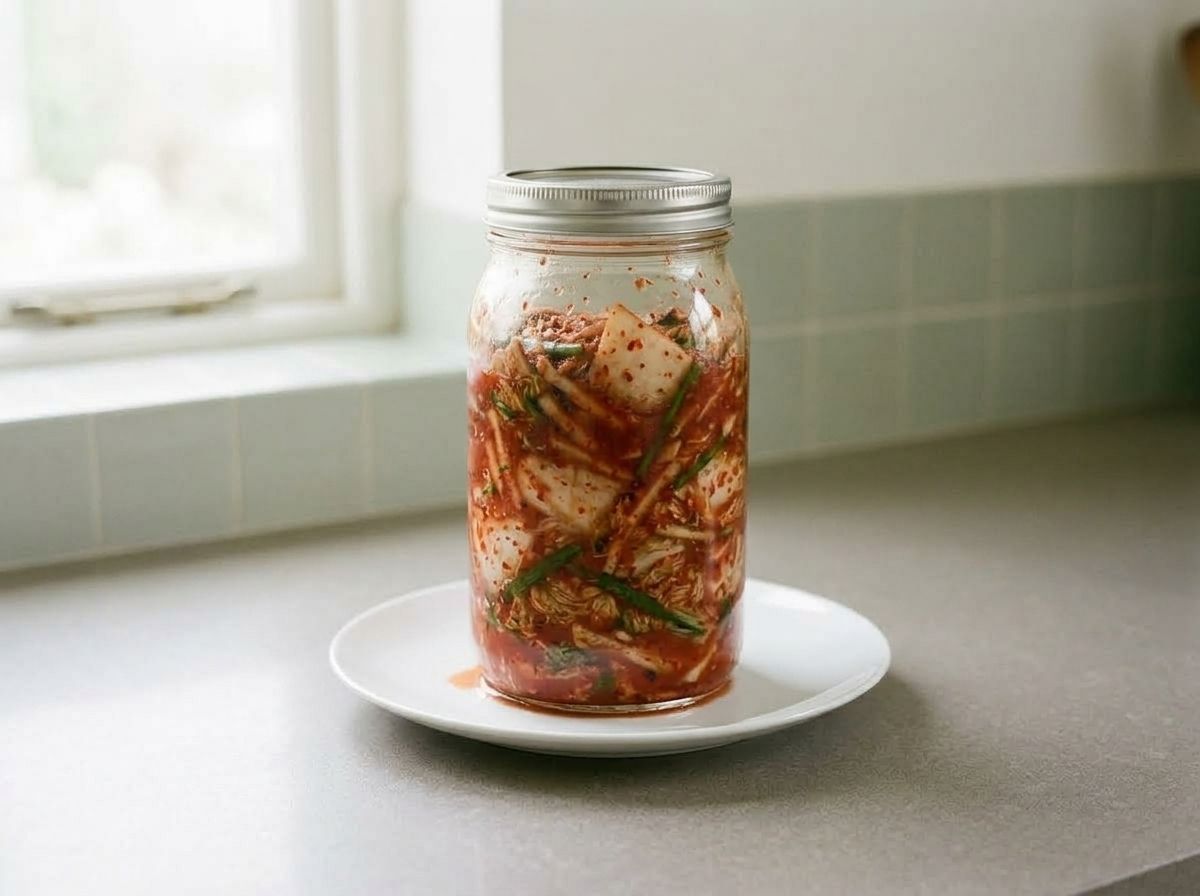
Stand the jar on a plate at room temperature, out of the sun, for 1 to 3 days. Once a day open it, press the cabbage back under the brine with a clean spoon and taste a piece. When it tastes sour and fizzes faintly as you press it, screw the lid on tight and move it to the fridge. It is at its best after another 1 to 2 weeks.
Notes
Wear disposable gloves to mix the paste in. Gochugaru stings broken skin and stains fingers for a day.
Fresh kimchi is eaten on the day: a bowl of it with a teaspoon of toasted sesame oil and a pinch of sesame seeds, beside rice.
For a milder batch use 1/3 cup of gochugaru. The color stays nearly as deep.
Gluten free: swap the soy sauce for the same amount of tamari.
Stand the jar on a plate and loosen the lid once a day while it is on the counter. A lively batch pushes brine over the top.
Nutrition Facts
12 servings (about 7 cups) · 161 g per serving
- Calories
- 64 kcal
% Daily Value*
- Total Fat
- 1.7 g2%
- Saturated Fat
- 0.3 g2%
- Sodium
- 1206 mg52%
- Total Carbohydrate
- 12.4 g5%
- Dietary Fiber
- 5.1 g18%
- Sugars
- 3.8 g—
- Protein
- 3.4 g7%
Recipe from veggierecipes.blog
When it goes wrong
Troubleshooting
It came out far too salty
Either the salt was measured by volume with a fine salt, or the cabbage was left in it for much longer than 2 hours, or it was not rinsed enough. Rinse it once more, then stir a big handful of extra radish matchsticks through the finished kimchi; radish pulls salt out of the brine as it gives up its own juice, and a day in the jar evens things out. Next time, weigh the salt.
After 2 hours the cabbage still snaps and there is hardly any brine
It has not salted long enough, and a cold kitchen or a very fresh, tightly packed cabbage both slow it down. Give it another 30 to 60 minutes, turning it over so the pieces on top go to the bottom, and check again. The test is the thick white base of a piece: it should fold over between your fingers without breaking. Do not add more salt to hurry it, that only makes the first problem.
Three days on the counter and nothing is bubbling
Usually the room is too cold. Lactic fermentation slows sharply below about 65°F, so a jar on a cool windowsill in winter can look asleep for a week; move it somewhere around 70°F and it will wake up. It may also be fermenting quietly without visible bubbles, so taste it rather than looking at it: sourness is the sign. And check the lid is not screwed down tight, which traps the gas and makes a fizzing jar look still.
There is a white film on the surface
A flat, white, slightly wrinkled film is kahm yeast, which grows where the cabbage has poked up out of the brine and met the air. It is harmless: lift it off with a spoon, discard the top layer of cabbage if it has gone soft, press the rest firmly back under the brine and carry on. Fuzzy mold, anything blue, green, black or pink, is a different thing, and that jar goes in the bin. The prevention is the same for both: keep every piece under the liquid, and keep the jar cold once it is sour.
It went soft and slimy
Not enough salt, or too long at room temperature, or a warm room, and sometimes all three. The salt is what keeps the pectin in the cabbage firm while the bacteria work, and warmth speeds the bacteria past the point where the texture can keep up. Three days on the counter is the most this recipe should ever need, and in summer it can be one. Soft kimchi cannot be firmed up again, but it makes a good kimchi stew, where the softness is the point.
It tastes flat, like a spicy cabbage salad
It is fresh. On the day it is made kimchi is a salad, and the sour, deep flavor people expect only arrives with fermentation, so give it its days on the counter and then a week in the fridge before judging it. If it is still flat after that, the gochugaru is the likeliest cause: flakes that have gone brownish and smell like dusty paprika have lost most of their flavor. The kelp stock matters too; a paste made with plain water is noticeably thinner in flavor.
Before you serve
Serving & Storage
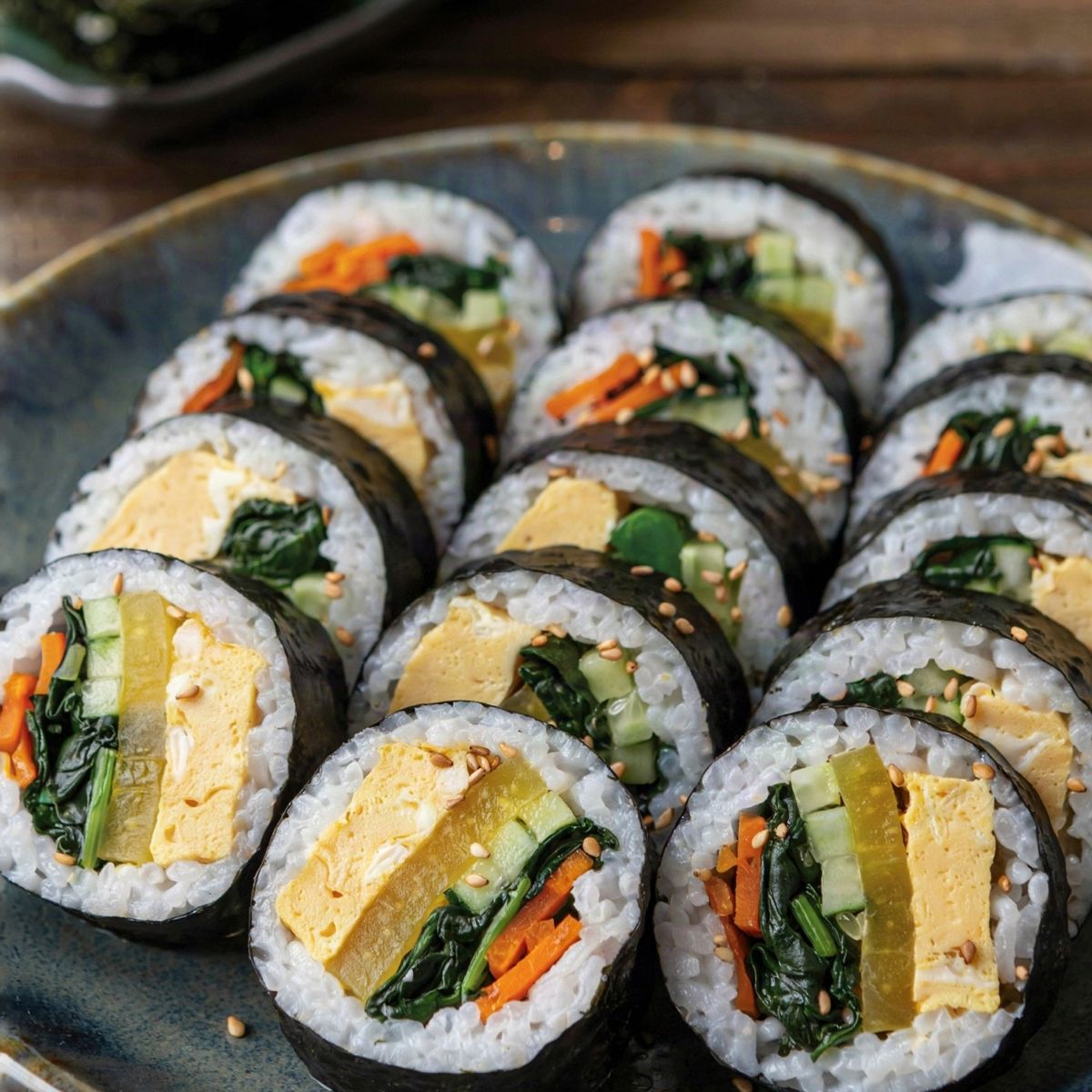
Kimchi is a banchan, one of the small dishes that sit in the middle of a Korean table beside a bowl of rice, and that is the first way to eat this one. On the day it is made it is geotjeori-style fresh kimchi: crisp, hot and salty rather than sour, and a bowl of it dressed with a teaspoon of toasted sesame oil and a pinch of sesame seeds is the cook’s reward for the afternoon. After a week in the fridge it is ripe, gently sour and fizzy, which is how it belongs beside rice, in a bowl of vegan ramen, or laid along a roll of vegetarian kimbap. After three or four weeks it is properly sour, the cabbage softened and translucent, and that is cooking kimchi: it goes into kimchi fried rice, into a pan of vegetarian tteokbokki, or into a stew with tofu.
Two things do not work. Cooking with fresh kimchi gives you hot cabbage with no depth, because the sourness that makes fried rice taste of anything has not developed yet, so use the young batch raw and cook with the old. And freezing turns the cabbage to wet string; the fridge is the only place for it.
Making it ahead
The whole recipe is a make-ahead one: the jar is at its best 1 to 2 weeks after the day it was packed, so make it the weekend before you want it. If the afternoon is the problem rather than the wait, the paste can be blended a day early and kept covered in the fridge, and the cabbage can be salted in the evening and rinsed and mixed the next morning; leave it in the salt for 2 hours as written, then rinse, drain and refrigerate it in a covered bowl overnight. Everything then takes 20 minutes.
Storing leftovers
Once it has soured, keep it in the fridge in its glass jar with the lid tight. It will go on fermenting there, slowly, so the flavor keeps moving from fresh toward sour over the weeks, and after two or three months it is mugeunji, aged kimchi, too strong for most people to eat raw and the best kimchi there is for a stew. Every time you take some out, press what is left back under the brine with a clean spoon, and never dip in a spoon that has been in something else. Use a jar rather than a plastic tub; the smell gets into plastic and stays there, and a jar of kimchi is polite enough in a fridge as long as the lid is tight.
Still wondering
Frequently Asked Questions
Is store-bought kimchi vegetarian?
Usually not. Most commercial kimchi is seasoned with salted shrimp, saeujeot, and anchovy fish sauce, myeolchi aekjeot, and they are often listed only as ‘salted shrimp’ or ‘fish sauce’ deep in the ingredient list rather than on the front. A few brands now make a vegan line and label it clearly; if the label does not say vegan, assume the jar contains seafood. This recipe is the alternative, and it is vegan as well as vegetarian.
Is this kimchi gluten free?
Not as written, because of the soy sauce, which is brewed with wheat. Swap it for the same amount of tamari and it is. Gochugaru is plain dried chili and contains no gluten, though it is worth reading the bag, since a few brands are packed on shared lines.
How much does this make, and can I double it?
About 7 cups, which fills a 2-quart jar with room to ferment, and counts as 12 side-dish servings of a generous half cup. Doubling is easy: two cabbages, twice everything, your largest bowl for the salting and two jars rather than one very large one. The salting time stays at 2 hours, and the jars ferment at the same pace.
Korean Dishes To Eat It With


Made this?