
Vegan Tomato Soup Recipe
Published · Updated
A creamy vegan tomato soup that tastes of tomato rather than of the can, built on two minutes of browned tomato paste and finished with coconut milk.
Jump To Recipe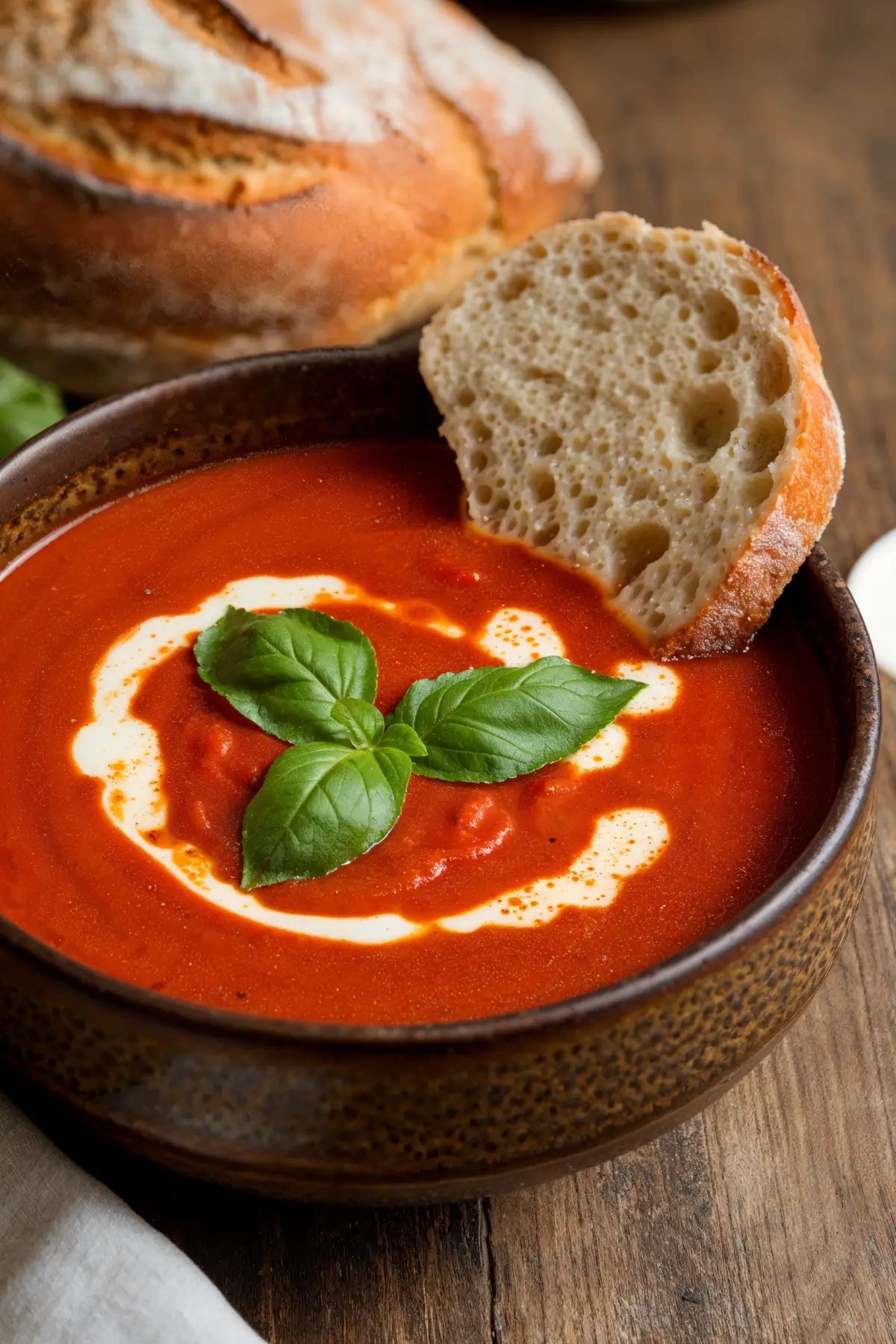
Why I Keep Coming Back to This Tomato Soup
Sometimes there is nothing more satisfying than a bowl of tomato soup you made yourself. I keep coming back to this vegan version because it tastes of tomato rather than of the can, and that comes down to two minutes of browning tomato paste before anything else goes in the pot.
There are a few reasons this soup is a staple in my kitchen:
- It is one pot and about an hour, most of which is the pot working on its own.
- Two thirds of a cup of full-fat coconut milk carries the creaminess, so there is no dairy and no blender full of cashews to soak first.
- Ripe summer tomatoes and a can of whole peeled tomatoes both work, so it is not an August-only recipe.
- Nothing on the ingredient list is hard to find.
I make it most often in late summer, when the tomatoes on the counter have gone one day past the point where anyone wants to eat them raw. That is exactly the tomato this soup wants.
If you grew up on the red-and-white can and want the grown-up version without the dairy, this is the one I make.
The story
Campbell’s Made Tomato Soup Vegan By Accident
Tomato soup arrived late and under suspicion. The first published American recipe is usually traced to N. K. M. Lee’s The Cook’s Own Book in 1832, at a point when plenty of people still believed tomatoes were poisonous, and it took Eliza Leslie’s New Cookery Book in 1857 to make the dish look normal on an American table. Those versions were not vegetarian in any sense. They were built on beef stock, and the tomato was a souring agent rather than the point.
What changed that was a can. In 1897 John T. Dorrance, a 24-year-old chemist working for his uncle’s company, worked out how to condense soup by taking most of the water out, and the first one Campbell’s sold was tomato. Read the classic condensed can today and there is still no dairy in it: tomato puree, water, wheat flour, sugar, salt, citric and ascorbic acid, celery extract, garlic oil. The most recognizable tomato soup in America has been accidentally vegan for well over a century. What is not vegan is the line on the label telling you to prepare it with milk, which is where the dairy in cream of tomato always came from.
So a tomato soup without dairy is not a substitution. It is the older habit, and cream of tomato is the variant. That changes what the coconut milk here has to do. It is not standing in for anything structural, since the body comes from tomatoes cooked down and from tomato paste browned in oil, which is roughly what the can does too. The coconut milk is doing what the milk did at the stove: taking the edge off the acid and making the soup read opaque instead of translucent. That is why it goes in last, off the boil, and why the method below is fussier about how the tomatoes are cooked than about what gets stirred in at the end.
What to buy
Ingredient Notes
Ripe fresh tomatoes
Ripeness matters more than variety. Look for deep red fruit that gives under a thumb, usually the box marked down because nobody wants to slice them. Plum and Roma have the most flesh and the least water; big beefsteaks need a few minutes longer in step 4. Pale February supermarket tomatoes make a pale, sharp soup that no amount of cooking rescues. In winter, use the can.
Canned whole peeled tomatoes, if you swap
Buy whole peeled, not diced. Diced tomatoes are treated with calcium chloride, a firming salt that keeps the cubes square in the can, which is the opposite of what a soup meant to collapse needs: they stay in stubborn pieces however long you simmer. Crushed works too. One 800 g (28 oz) can with its juice replaces the 900 g of fresh, and step 4 drops to about 5 minutes. Leave the broth as it is.
Tomato paste
The two tablespoons this recipe did not used to have, and the biggest single change in the pot. The naming causes real mix-ups: in the US, tomato purée is a thin uncooked sauce and is not a substitute, while in the UK and Ireland the small tube labeled tomato purée is exactly what an American recipe means by tomato paste. Buy the tube if you use it rarely, since it keeps for months and an open can does not.
Full-fat canned coconut milk
The can from the world foods aisle, not the carton in the chiller. Cartons labeled coconut milk drink are mostly water and will thin the soup rather than enrich it. Shake the can hard, or scrape the solid cream and thin liquid out together, because the fat is the point. Light coconut milk gives roughly half the richness, and it is where nearly all the saturated fat below comes from.
Dried basil and dried oregano
Not equals. Oregano dries well and some cooks prefer it dried. Basil is the opposite: most of what makes it smell like basil is volatile and largely gone by the time it reaches the jar, so the dried basil is doing quiet background work rather than tasting of basil. The leaves torn over the bowl do the real job. If you buy one, buy the fresh bunch.
Sugar
One teaspoon across four servings is not there to sweeten anything, and nobody will taste it as sweetness. Sugar does not neutralize acid, it changes how sharply you register it, which is enough. Canned tomatoes almost always need it and peak-season fresh ones sometimes do not, so taste again at the end.
Creamy Vegan Tomato Soup
Creamy vegan tomato soup built on browned tomato paste and ripe fresh tomatoes, blended smooth and finished with coconut milk.
Ingredients
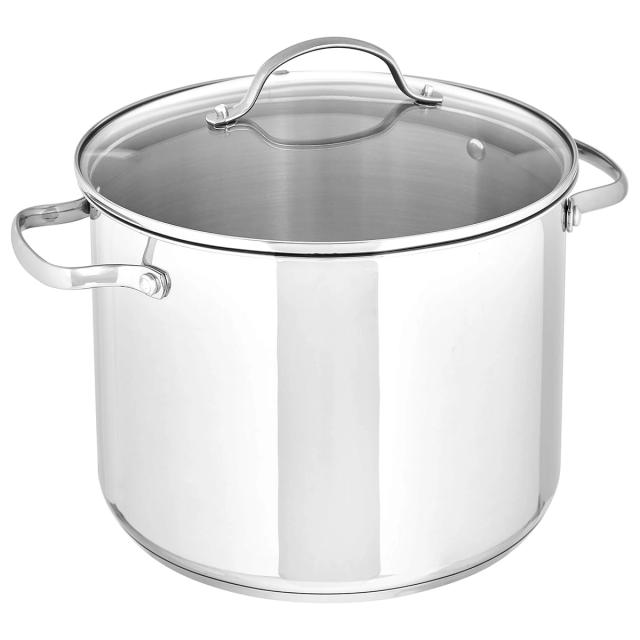
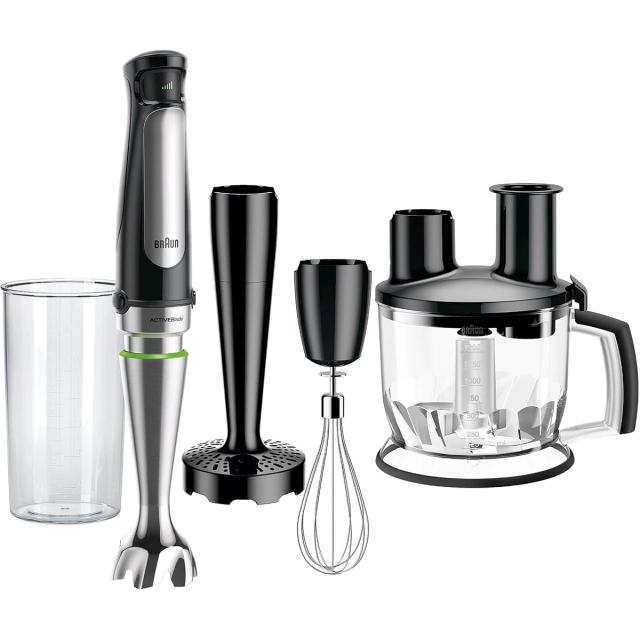
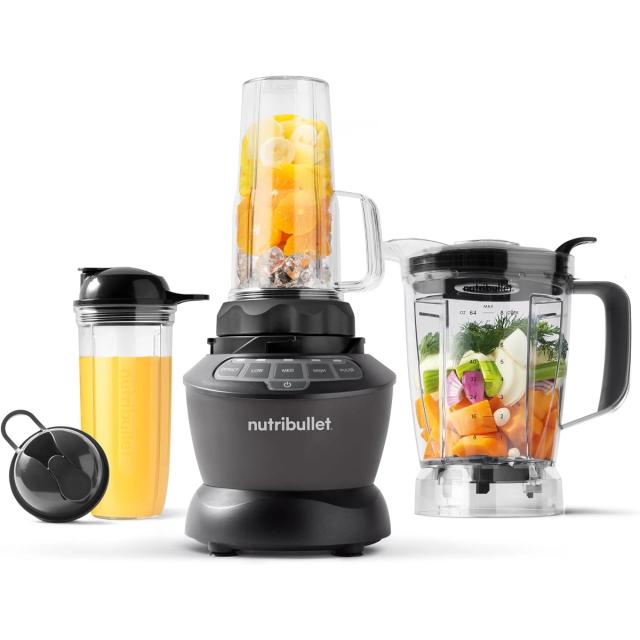
Equipment
As an Amazon Associate I earn from qualifying purchases, at no extra cost to you.
Instructions
- 1
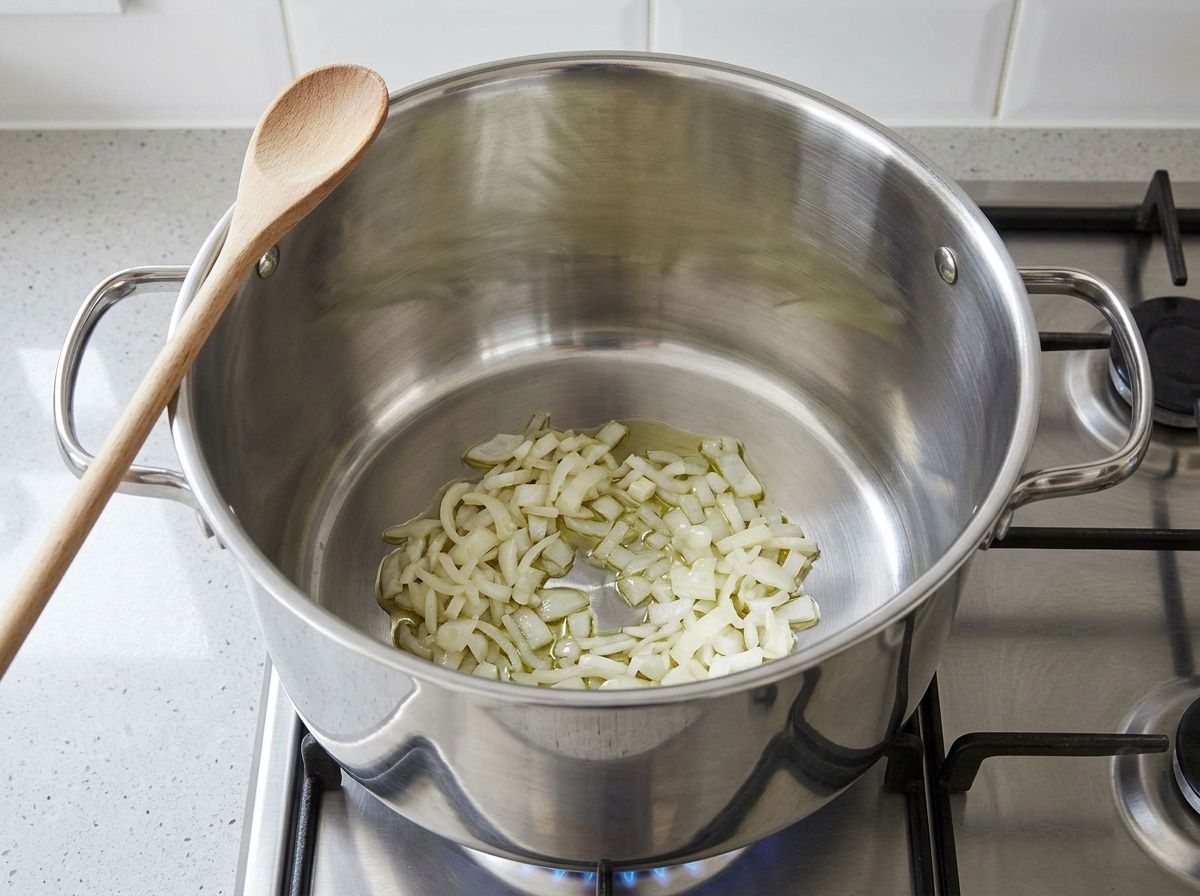
Sweat the onion
Heat the olive oil in a large pot over medium heat. Add the onion with a pinch of salt and cook for 8 minutes, stirring now and then, until it is floppy and translucent right through. It should not take on any color.
- 2
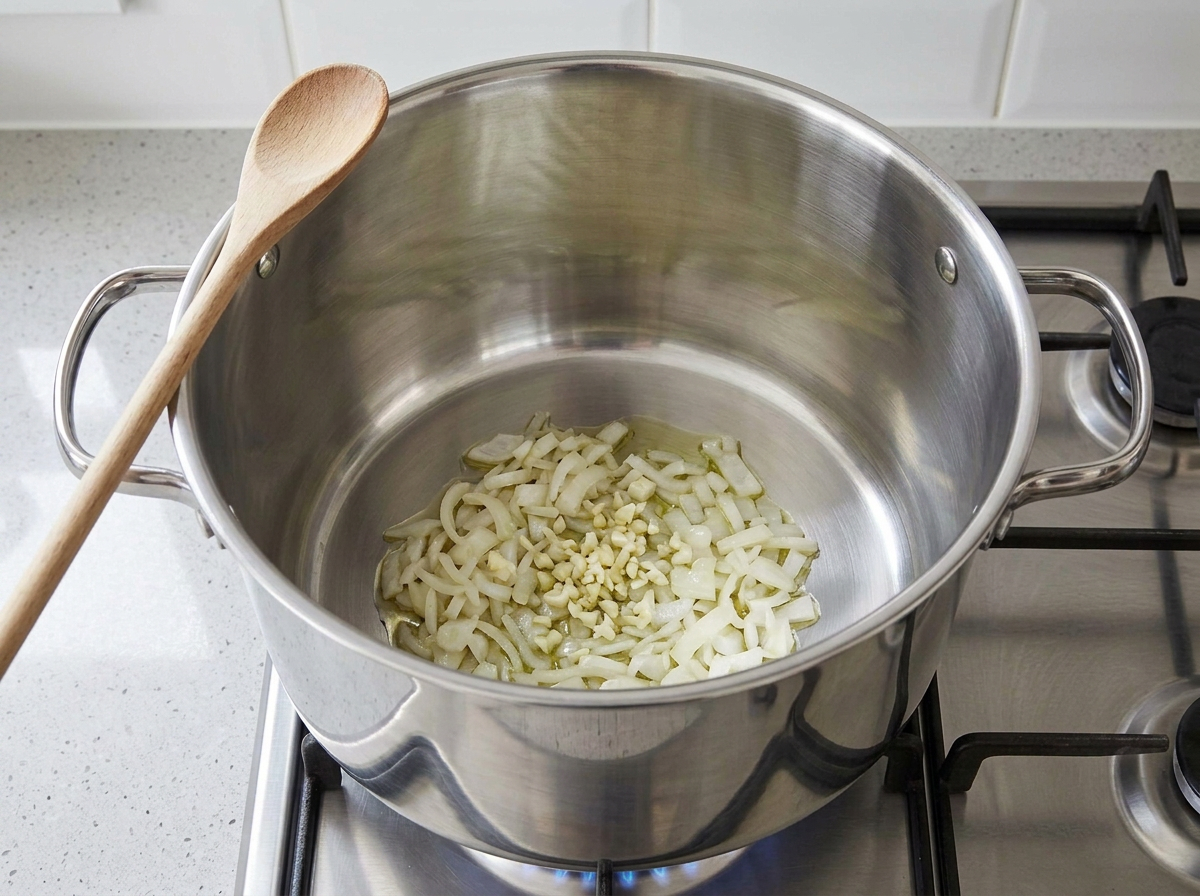
Add the garlic last
Add the garlic and cook for 1 minute more, just until it smells sweet rather than raw. Minced garlic scorches in around three minutes at this heat and turns bitter, which is why it goes in this late rather than alongside the onion.
- 3
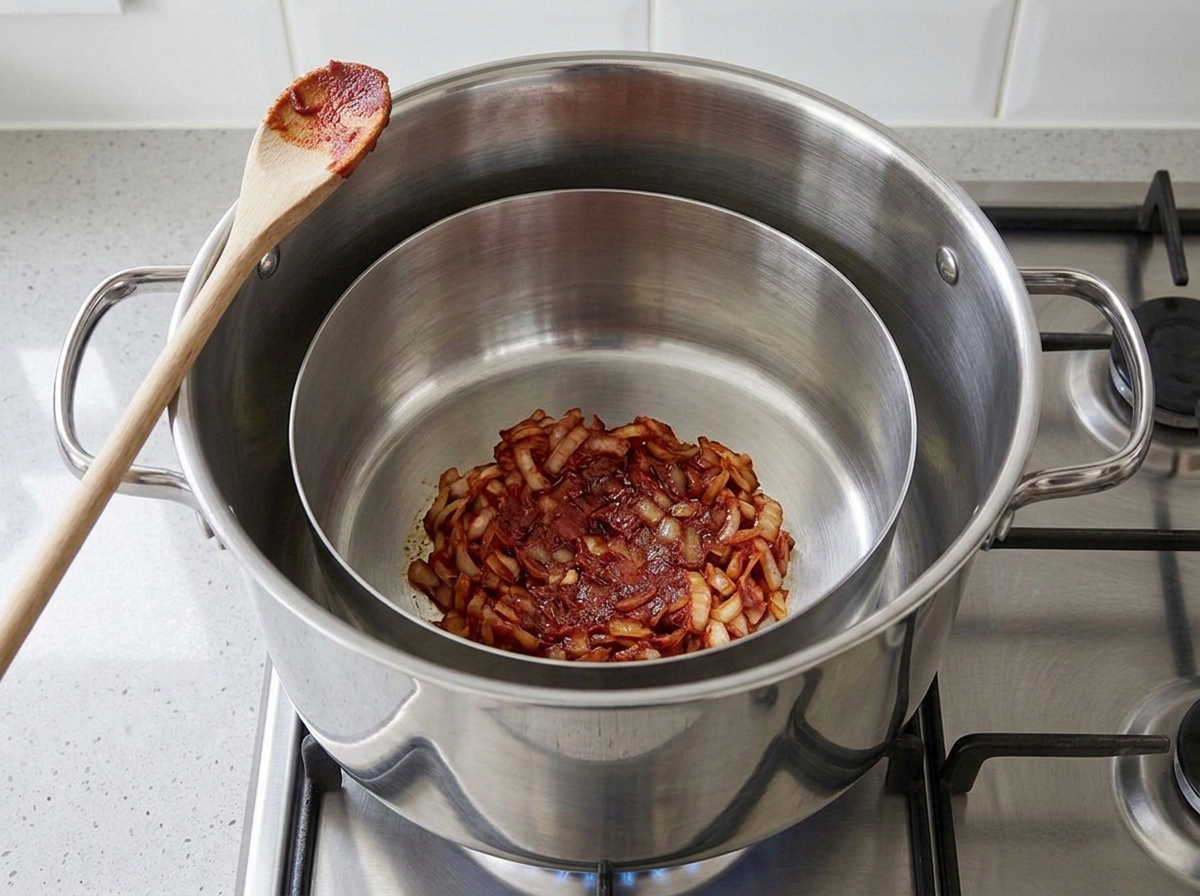
Brown the tomato paste
Stir in the tomato paste and cook for 2 minutes, scraping it across the base of the pot, until it darkens from bright red to brick. This is where most of the depth in the finished soup comes from: browning drives off the raw, tinny note and leaves the paste sweeter and more savory.
- 4
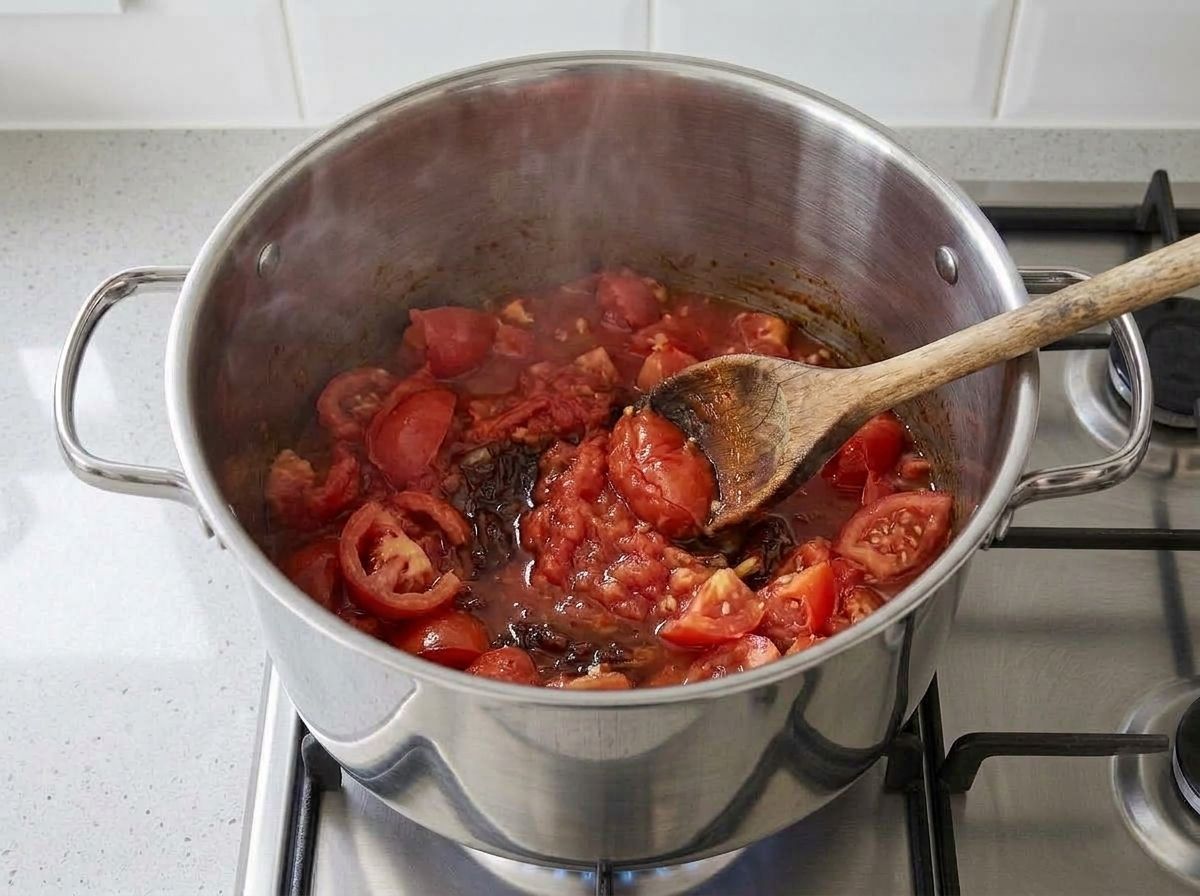
Cook the tomatoes down
Add the chopped tomatoes and cook uncovered for 8 to 10 minutes, pressing them against the side of the pot as they go, until they have collapsed and the pot looks glossy rather than watery. Fresh tomatoes are almost all water, and this is where some of it leaves.
- 5
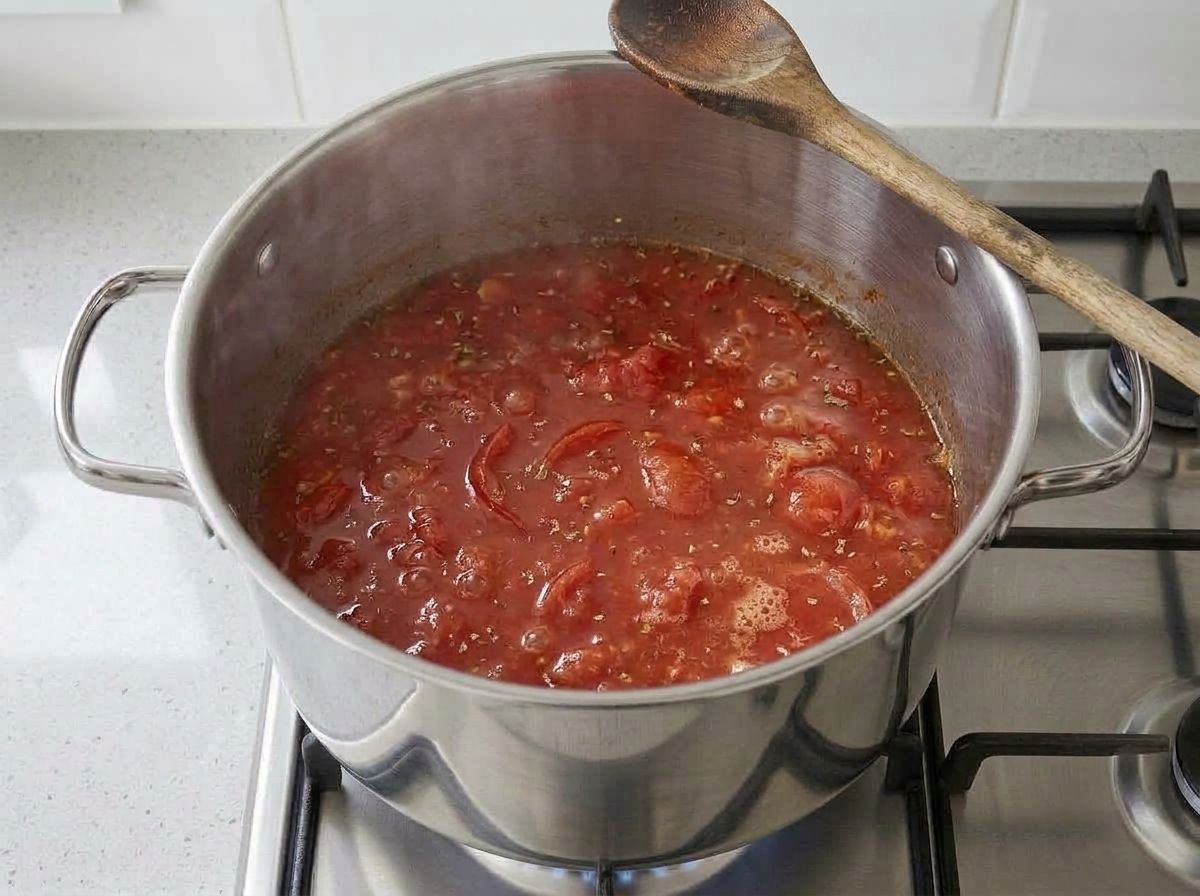
Simmer with the herbs
Pour in the broth and add the dried basil, oregano, sugar and a good grind of black pepper. Bring to a boil, then turn the heat down and simmer uncovered for 15 minutes. Dried herbs need that long in hot liquid to give anything up.
- 6
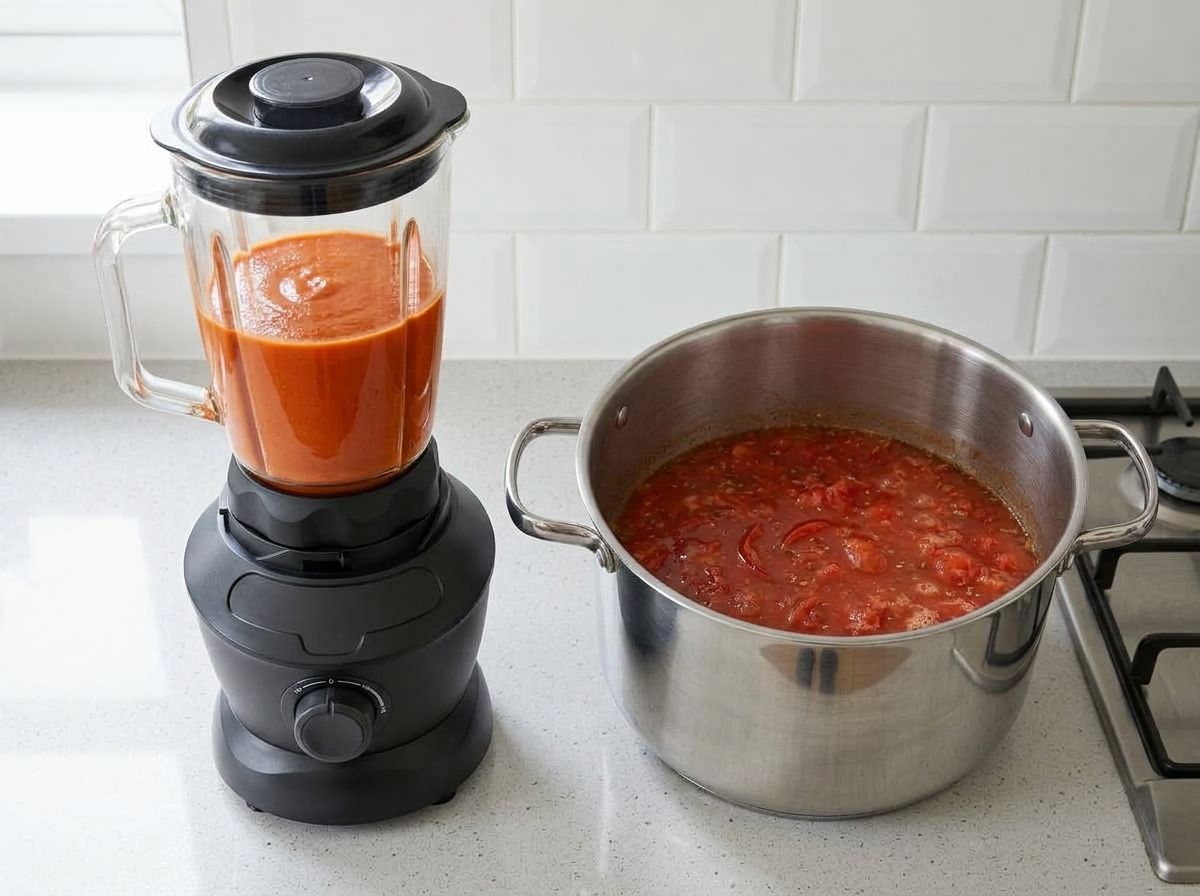
Blend until smooth
Blend the soup completely smooth. In an upright blender, fill it no more than halfway, hold the lid down with a folded towel and run it a full minute per batch. An immersion blender is quicker but leaves flecks of tomato skin behind, because skin is tough enough to dodge the blade. For a soup with no flecks at all, push it through a sieve afterwards.
- 7
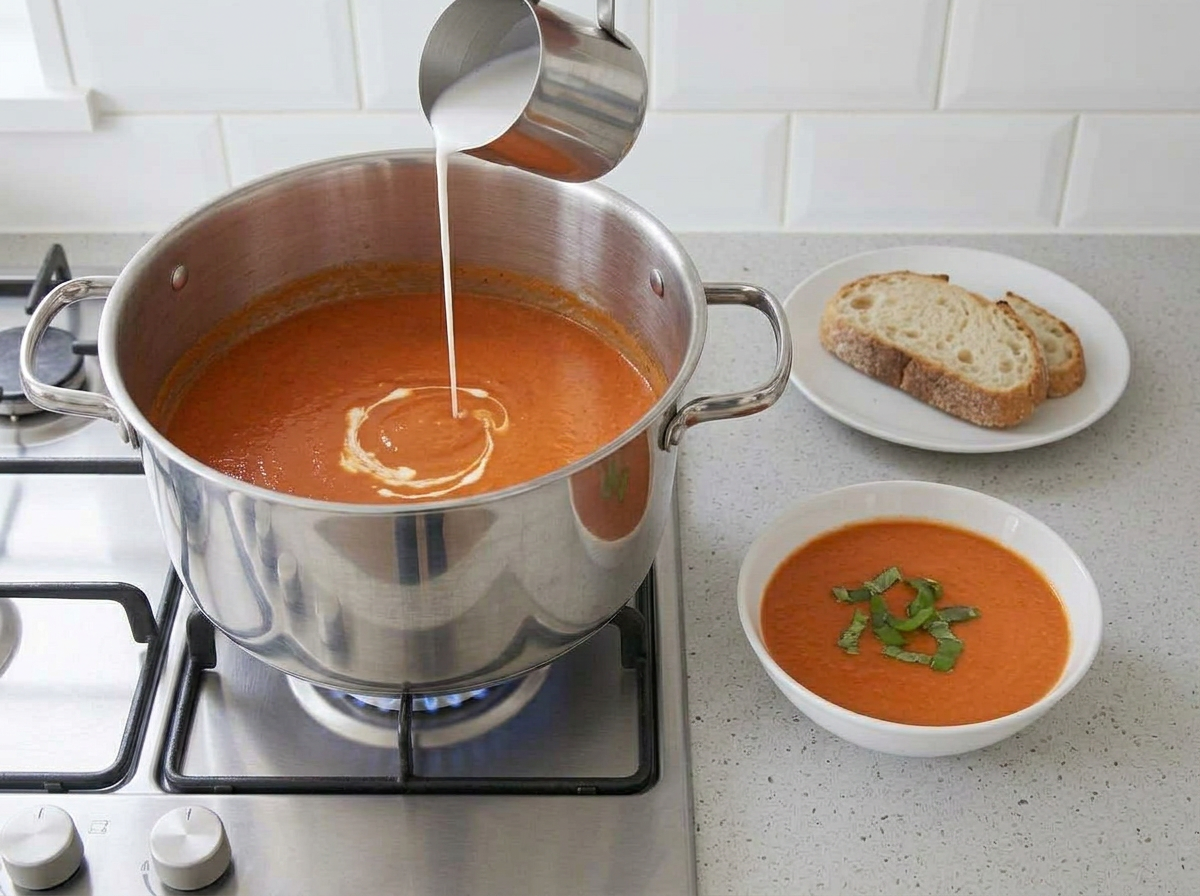
Stir in the coconut milk
Return the soup to the pot, stir in the coconut milk and warm it through over low heat without letting it boil. Taste and adjust: salt first, then another pinch of sugar if the tomatoes read sharp. Ladle into bowls, tear over the basil and serve hot with crusty bread.
Notes
Ripe, deep-red tomatoes matter more than the variety. Pale winter tomatoes make a pale, sharp soup no amount of simmering fixes; reach for the can instead.
The soup is smoothest straight from an upright blender. A sieve afterwards turns it velvety and costs you about a cup of pulp.
For a thicker soup, simmer uncovered for 10 minutes longer before blending rather than cutting the broth further, which leaves the herbs under-extracted.
Nutrition Facts
4 bowls · 400 g per serving
- Calories
- 206 kcal
% Daily Value*
- Total Fat
- 15.4 g20%
- Saturated Fat
- 8.2 g41%
- Sodium
- 941 mg41%
- Total Carbohydrate
- 17.5 g6%
- Dietary Fiber
- 3.4 g12%
- Sugars
- 9.3 g—
- Protein
- 3.4 g7%
Recipe from veggierecipes.blog
When it goes wrong
Troubleshooting
It came out thin and watery
Usually the tomatoes never cooked down. Step 4 is finished when the pot looks glossy rather than sloshing, and watery beefsteaks can take 13 minutes instead of 8. The other causes are a lid on during the simmer, trapping the steam that was meant to leave, and out-of-season tomatoes. Keep simmering uncovered, 10 minutes at a time. Cornstarch reads as gravy, not soup.
It tastes sharp and sour, and more salt is making it worse
Salt cannot fix acid, and past a point it makes sourness louder. Add sugar a quarter teaspoon at a time off the heat, tasting between each. If it is still sharp after a full extra teaspoon, an eighth of a teaspoon of baking soda stirred into a spoon of water neutralizes the acid outright, and you will see it foam as it goes in. Too much leaves the soup soapy and flat, which is worse than sour.
There are little curls of tomato skin in it
An immersion blender did the blending. Tomato skin is tough and slippery enough to slide around the blade rather than through it, so a stick blender that handles potato soup perfectly well leaves visible flecks here. Run it in an upright blender for a full minute, or push it through a sieve. Next time, blanch and skin the tomatoes, or use the can, which is already peeled.
It tastes of coconut rather than tomato
A fair complaint and not a mistake on your part. Full-fat coconut milk is assertive and two thirds of a cup across four bowls is enough for some people to name it. Half a cup lets the coconut recede without thinning the soup much. To lose it altogether, blend half a cup of raw cashews in at step 6 instead, or use unsweetened oat cream.
It looks grainy or split once the coconut milk went in
It boiled. Coconut milk is an emulsion of fat in water, and heat plus the acid already in the pot breaks it, for the same reason dairy curdles in tomato soup. Keep the pot below a simmer once it is in. The reliable trick is to temper: stir a ladle of hot soup into the measured coconut milk first, then pour that back. If it has split, a short blast with a blender pulls it together.
It does not taste like the tomato soup I grew up on
It will not, and that is worth naming rather than treating as a failure. The condensed can is sweetened, with sugar listed fourth on the label, and sharpened with added citric acid, so it is both sweeter and tangier than a soup made from actual tomatoes. It is also thickened with wheat flour, which gives that slightly starchy coat. Another teaspoon of sugar and a squeeze of lemon gets you most of the way.
Before you serve
Serving & Storage
In Poland this soup does not arrive as something to sip. Zupa pomidorowa is poured over a scoop of cooked rice or a nest of fine noodles already sitting in the bowl, which turns a first course into lunch, and it works just as well here. Rice is the better of the two, since the grains hold their shape and soak up the soup instead of going soft in it. It is also the cheapest way to stretch four bowls into six.
Otherwise the soup is completely smooth, so anything to chew has to arrive from outside the pot: croutons fried in olive oil, crisp roasted chickpeas, toasted pumpkin seeds, or a spoonful of the coconut milk held back and swirled on top. A grilled cheese made with plant-based cheese earns its place. What does not work is a second smooth thing beside it, so skip the creamy side salad. Keep the fresh basil for the bowl, since it blackens within a minute of hitting hot liquid.
Making it ahead
Unlike potato soup, this one is genuinely better on the second day, because the acid softens overnight and the dried herbs finish opening up. Making it a day or two out, stop at the end of step 5, refrigerate the base unblended, then blend and stir in the coconut milk on the day. The coconut milk is the only part that dislikes sitting around, and adding it fresh rules out a split on reheating.
Storing leftovers
Sealed in the fridge it keeps four days and thickens as it sits; loosen it with a splash of broth over low heat. Reheat gently and stop short of a simmer, and skip the microwave on full power, which is the most reliable way to split the coconut milk after the fact. Taste for salt and sugar again once it is hot, because both fade in the cold.
It freezes for three months with one caveat: coconut fat separates as it thaws, so the soup comes out looking curdled and speckled. It is not spoiled, and a short blast with a blender after reheating brings it back. Better still, freeze the base from the end of step 5 and finish each batch fresh.
Still wondering
Frequently Asked Questions
Is this tomato soup gluten-free?
Yes, and the only label worth reading is the vegetable broth, where wheat occasionally turns up in the flavorings. Worth knowing if you are switching from the can: Campbell’s condensed tomato soup is thickened with wheat flour and carries a contains-wheat allergen line, so it is vegan but not gluten-free.
Can I double this recipe?
Yes, but three things do not scale straight. Use a pot of at least 5 quarts (5 liters), because tomatoes need surface area to cook down and a crowded pot steams them. Add 5 to 8 minutes to step 4. Blend in three batches, not two. And start at 1½ teaspoons of sugar rather than 2, since acidity does not double as neatly as volume.
Is this a tomato bisque?
By the original meaning, no: bisque described a soup thickened with the ground shells of shellfish, which makes a vegan bisque a contradiction at the root of the word. American menus loosened it long ago to mean any smooth soup enriched with cream, and by that definition it qualifies.
Featured In
More Cozy Vegan Soups and Sides
Made this?