
Vegetable Crock Pot Soup Recipe
Published · Updated
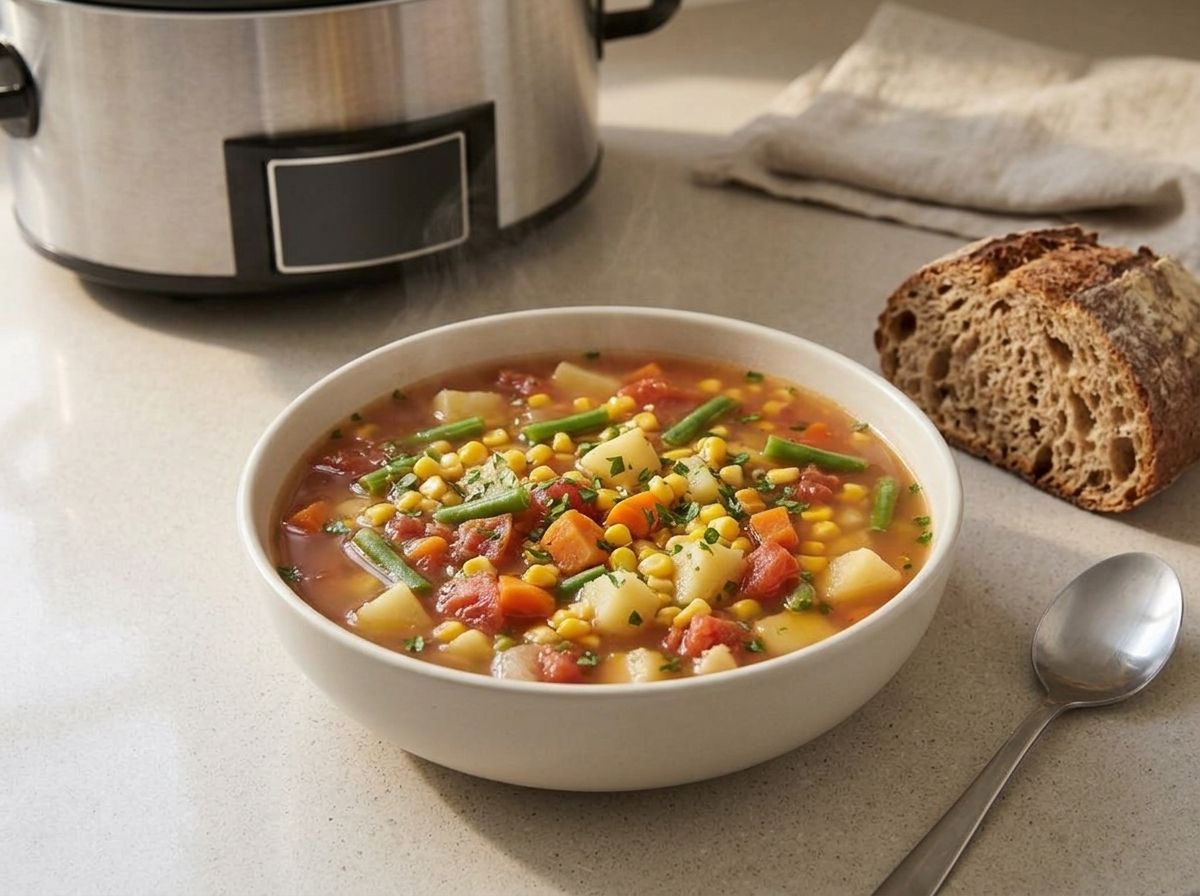
Warm up with a bowl of comforting vegetable crock pot soup, made with fresh, wholesome ingredients and minimal effort.
Jump To Recipe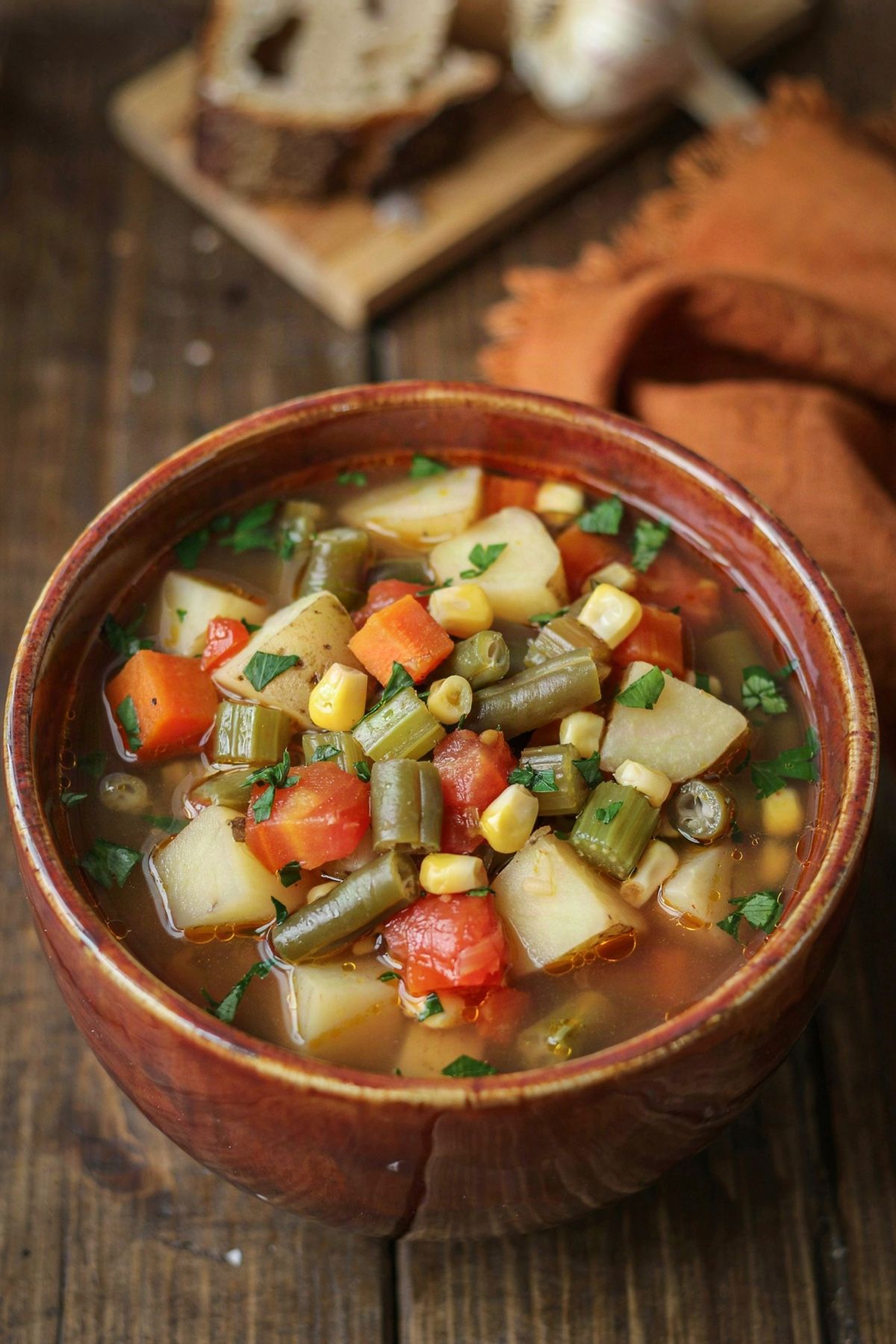
Why I Love This Crock Pot Vegetable Soup
I’m a big fan of recipes that let me put in the minimum effort for maximum reward, which is exactly what this slow cooker vegetable soup does. Ten minutes at the stove in the morning, and then I come back hours later to a fragrant, hearty meal I did nothing else to. Plus, knowing that what I’m eating is healthy and loaded with nutrients makes it even better.
The best part? This recipe is super flexible. I love clearing out the fridge and tossing in whatever vegetables are hanging around, sometimes a handful of spinach or even a can of beans for some extra plant-based protein. The one thing worth keeping straight is when things go in: anything soft or green belongs in the last half hour, not the first.
What I recommend enjoying with this soup:
- A thick slice of crusty bread
- A sprinkle of nutritional yeast, or a vegetarian hard cheese if you are not keeping it vegan
- Leftovers packed for easy work lunches
If you want a bit more body, stirring in cooked pasta or rice before serving really completes the meal. This is just straight-up comfort food, perfect for staying cozy during cold months or just getting an easy, nourishing dinner on the table.
The story
The Crock Pot Was Invented for Beans, Not Pot Roast
Most kitchen appliances are built for a job that already exists. The slow cooker went the other way round: the machine came first, and American home cooking rearranged itself around it. The job it was patented for was cooking beans. Irving Naxon, a Chicago inventor born Irving Nachumsohn, filed in May 1936, was granted the patent in January 1940, and called the result the Naxon Beanery.
The idea came from his mother. Tamara Nachumsohn grew up in Vilna, the Jewish quarter of Vilnius, and on Friday afternoons she carried the family’s crock to the neighborhood bakery, packed with beans, barley and whatever meat there was. Jewish law forbids lighting a fire on the Sabbath, so the pot went into the bread oven after the last bake, alongside dozens of other families’ pots, and lived overnight off the oven’s falling heat. What came out on Saturday was cholent, a stew defined less by what is in it than by the fact that nobody may touch it while it cooks.
Naxon retired in 1970 and sold the company to Rival Manufacturing of Kansas City, who renamed the Beanery the Crock-Pot and showed it at the 1971 National Housewares Show. The timing was everything. American women were moving into paid work in numbers, and Rival sold the machine on the one line that mattered, which was that it cooks all day while the cook’s away. Sales went from around $2 million in 1971 to $93 million four years later.
The pot roast came afterwards, out of the marketing rather than the engineering. What a sealed crock at a bare simmer is actually good at is the thing Naxon named it for: beans, roots and vegetables, which want hours of gentle wet heat with no chance to catch or dry. A pot of vegetables in one is not a workaround. It is the machine doing its patented job.
That machine also explains most of what goes wrong inside it. On low and on high a Crock-Pot climbs to roughly 209°F (98°C) and stops there; the settings differ in how fast they arrive, not where they end up, which is why high reaches in three or four hours what low reaches in seven or eight. The lid seals, so almost nothing evaporates and the soup never concentrates the way a pan on the hob does. And 209°F is far too cool for the Maillard reaction, so nothing that goes in raw will ever brown. Every change to the method below follows from those three facts.
What to buy
Ingredient Notes
Olive oil
It looks like the skippable line and it is the one that changes this soup most. The aromatics in onion, garlic, thyme and basil are largely fat-soluble, so with no fat in the pot they have nothing to dissolve into, and the soup reads thin however much salt you add.
Waxy potatoes
Yukon Gold, red, charlotte, anything sold as waxy. Eight hours is long enough for a floury russet to give up completely: the pectin between its cells fails, the pieces round off, and you are left with cloudy broth and no potato. Waxy varieties hold their edges. Cut them to about three-quarters of an inch (2 cm).
Vegetable broth
Four cups of it is most of what this soup tastes of, and nothing added at the end rescues a weak one. Two things on the label. Salt varies enormously between brands, so if yours is salted, season at step 5 rather than at the start. And many bouillon cubes are bulked out with wheat, which matters if you came here for the gluten-free label.
Canned diced tomatoes
Use the juice, it is a good share of the liquid. The dice survive eight hours intact while everything around them collapses for a reason: almost every brand adds calcium chloride, a firming agent that reinforces the pectin in the cell walls so the pieces hold their shape in the can. For tomato that melts into the broth, buy crushed instead.
Dried thyme and dried basil
They go in at opposite ends of the day, deliberately. Thyme is woody and its oils survive eight hours; it gets rounder for the long cook. Basil is a soft leaf, and the same hours reduce it to hay, so it goes in at the end, where a teaspoon still tastes like basil. Two tablespoons of chopped fresh basil is better again.
Green beans
Fresh or frozen both work and neither goes in before the last half hour. Frozen ones go in still frozen, since thawing only makes them watery. Canned green beans are already cooked and fall into threads even in thirty minutes, so stir those in after the cooker is off.
Lemon juice or red wine vinegar
The last thing in and the first thing left out. Hours of heat flatten acidity, the tomatoes’ included, so what comes out of a slow cooker is reliably duller than what went in. A tablespoon off the heat is not meant to taste of lemon. It is meant to make everything else taste like itself.
Hearty Vegetable Crock Pot Soup
A simple and nutritious crock pot soup loaded with carrots, potatoes, green beans, and more in a savory vegetable broth.
Ingredients
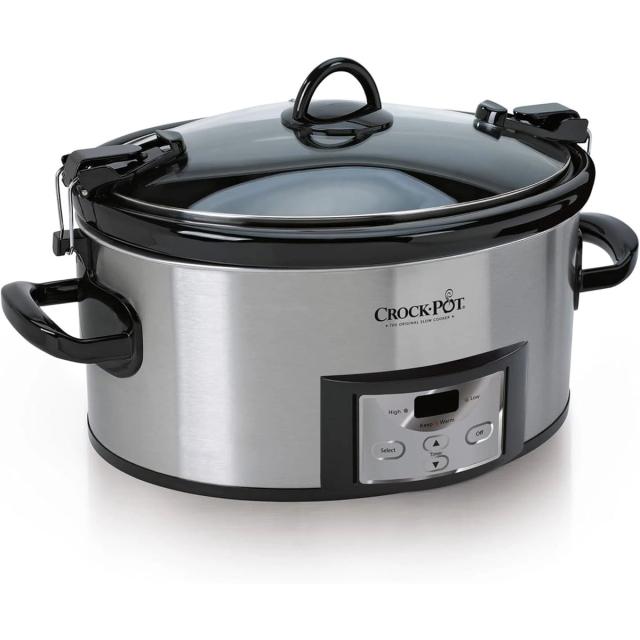
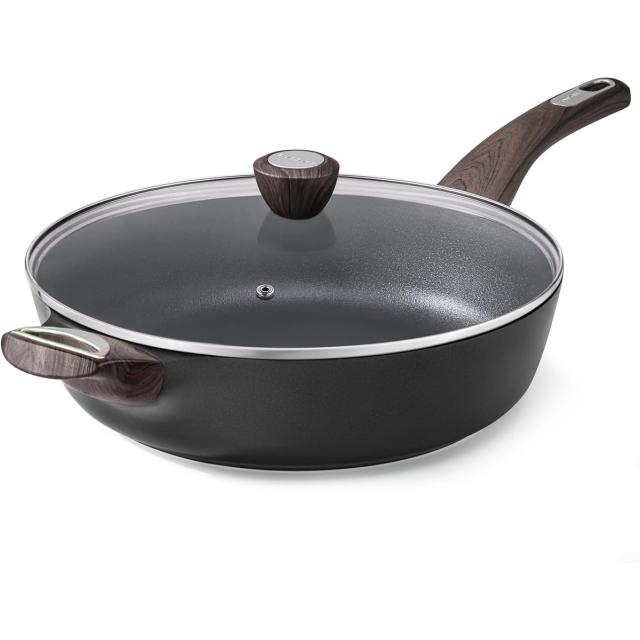
Equipment
As an Amazon Associate I earn from qualifying purchases, at no extra cost to you.
Instructions
- 1
Soften the aromatics
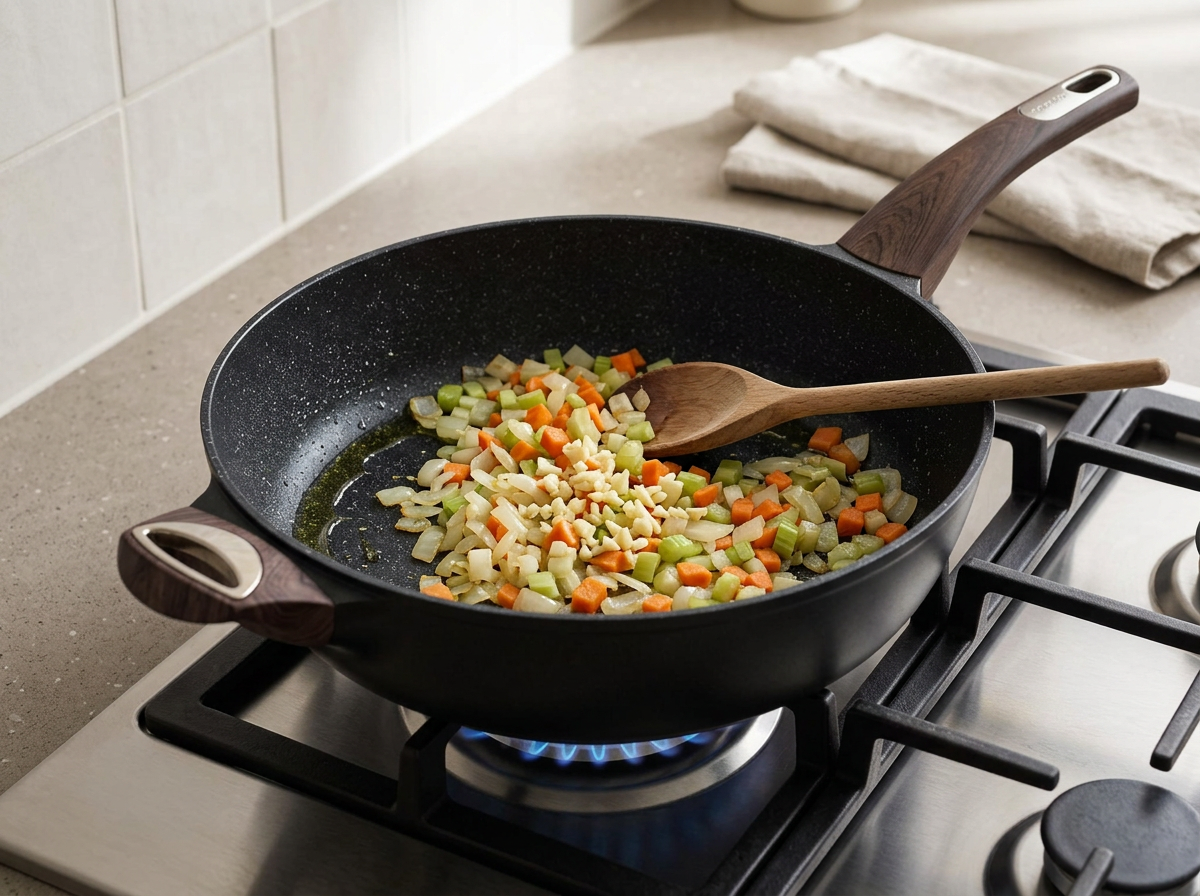
Heat the olive oil in a skillet over medium heat. Add the onion, carrots and celery with a pinch of salt and cook for 8 to 10 minutes, stirring now and then, until the onion is translucent and just starting to color at the edges. Stir in the garlic and cook 30 seconds more, until it smells sweet rather than raw. A slow cooker never gets hot enough to brown anything, so this pan is the only browning the soup will ever get.
- 2
Fill the slow cooker
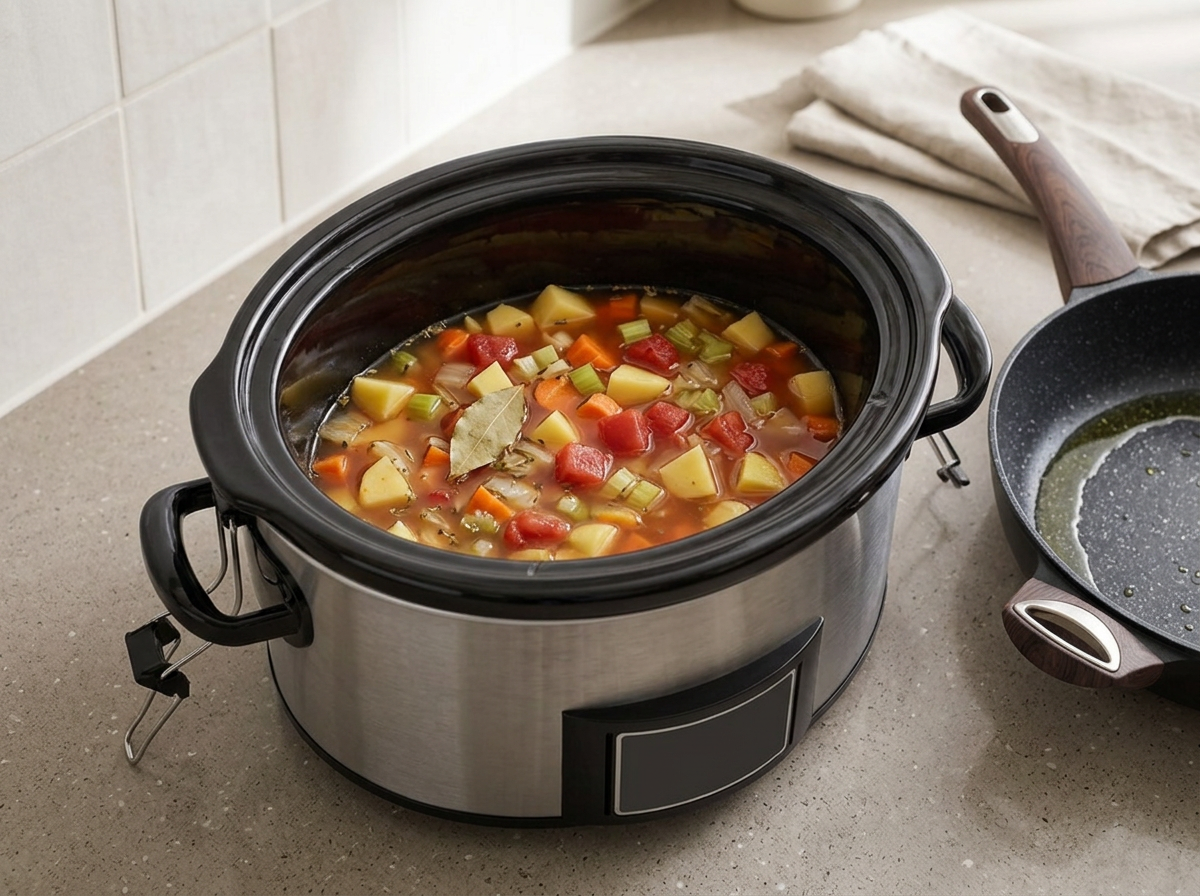
Scrape everything in the pan into the crock pot, oil included. Add the potatoes, broth, tomatoes and their juice, thyme, bay leaf, and a good pinch each of salt and pepper. Stir once to settle it. The crock should be between half and three-quarters full.
- 3
Cook it low and slow
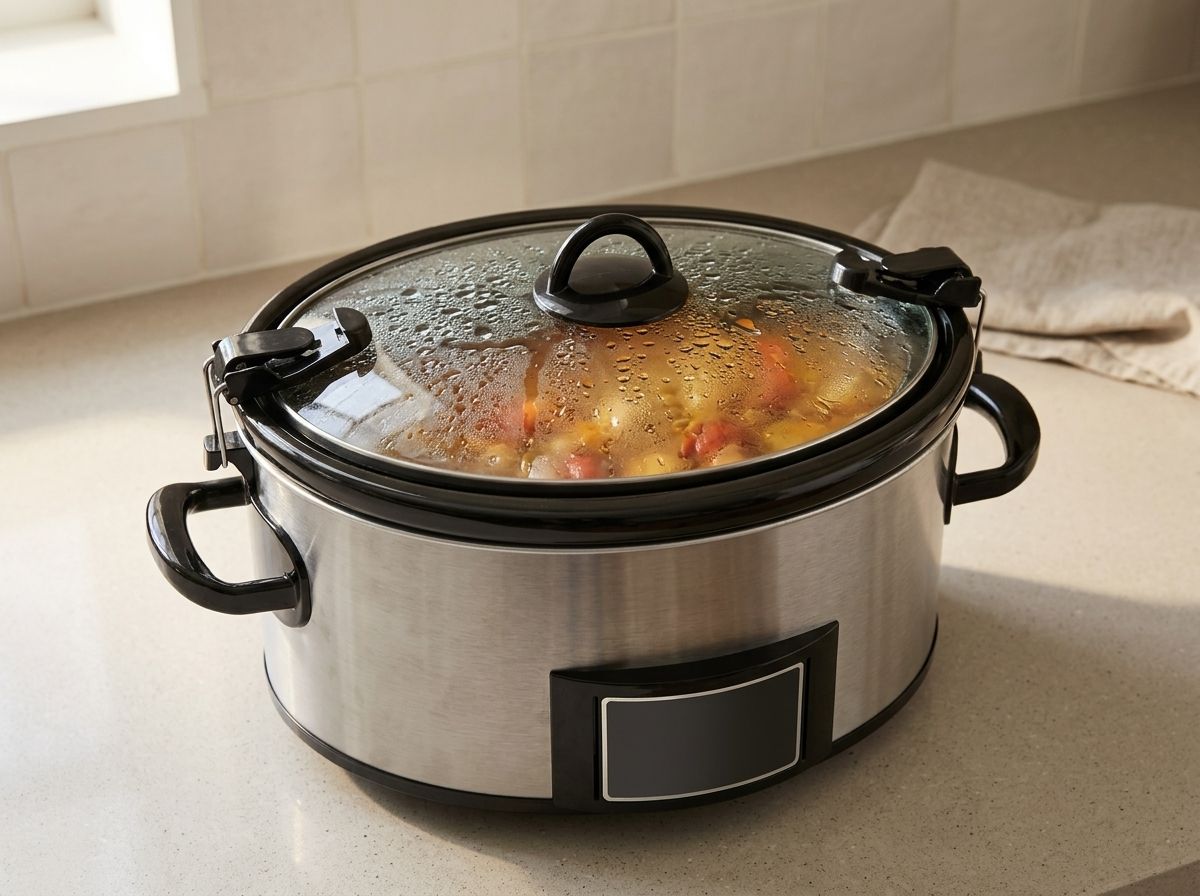
Cover and cook on low for 6 to 8 hours, or on high for 3 to 4, until the potatoes and carrots give way easily to a fork. Leave the lid alone while it cooks. Every look lets out the trapped steam and costs roughly 20 minutes while the pot climbs back to temperature.
- 4
Add the quick vegetables
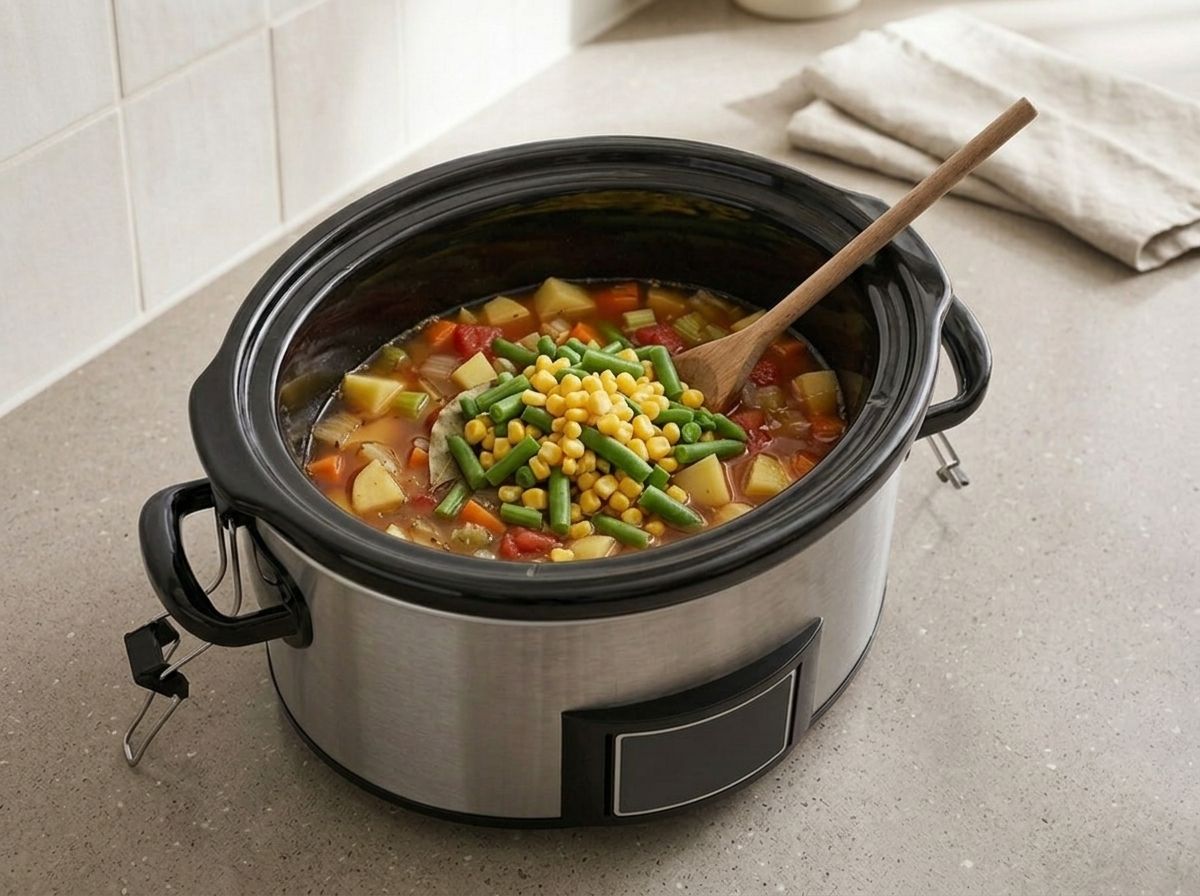
Thirty minutes before the end, stir in the green beans and corn. Frozen ones go in straight from the freezer. Both only need to heat through and soften slightly; going in at the start they would spend eight hours turning olive-brown and stringy.
- 5
Season it off the heat
Fish out the bay leaf. Switch the cooker off, then stir in the dried basil and the lemon juice and taste. This is where the soup stops tasting like cooked vegetables and starts tasting seasoned, so keep going with salt and a little more acid until it does. Ladle into bowls, scatter with parsley, and serve hot with crusty bread.
Notes
If you genuinely have no morning, everything can go in raw. Put the oil in anyway, and expect a flatter soup.
For more body, stir cooked pasta or rice into the bowls at the end rather than cooking it in the pot, where it swells and drinks the broth.
Frozen green beans and corn go in frozen at the 30-minute mark. Thawing them first only makes them watery.
Nutrition Facts
6 bowls · 389 g per serving
- Calories
- 158 kcal
% Daily Value*
- Total Fat
- 5.4 g7%
- Saturated Fat
- 0.8 g4%
- Sodium
- 858 mg37%
- Total Carbohydrate
- 26.3 g10%
- Dietary Fiber
- 4.1 g15%
- Sugars
- 7.9 g—
- Protein
- 3.6 g7%
Recipe from veggierecipes.blog
When it goes wrong
Troubleshooting
It tastes like hot water with vegetables in it
Almost never one cause, so work through it in order. Salt first, because six bowls of vegetables take more than you expect. Then acid, a tablespoon of lemon juice or vinegar off the heat, which makes a long-cooked soup taste sharpened rather than sour. Then fat, stirred in or drizzled over, because without it the herbs cannot reach you.
The green beans came out olive-brown and stringy
They went in at the start. Green beans hold their color for about twenty minutes, after which the chlorophyll converts to pheophytin, the drab olive pigment, and the acid from the canned tomatoes hurries it along. Eight hours also breaks down enough of the bean to leave the fibrous strands behind. The fix costs nothing: in with the corn, thirty minutes from the end.
The potatoes dissolved and the soup went cloudy
Floury potatoes, almost certainly russets. Over six to eight hours the pectin holding their cells together fails and the starch disperses into the broth. Cutting the cook short will not help, since they need the full run to be tender at all. Use a waxy variety instead. If it has already happened, the soup tastes right and is simply a thicker one now.
There is far too much liquid and it tastes diluted
A slow cooker evaporates almost nothing while the vegetables inside give up water all day. A pan on the hob loses a real fraction of its liquid in an hour and concentrates as it goes; this one only gets wetter, which is why four cups here would be six or seven on the stove. Lid off, high, 30 to 45 minutes, or mash some potato against the side of the crock.
The garlic and the herbs taste like nothing
Both are behaving as chemistry says they should. Garlic’s pungency comes from allicin, which forms when the clove is cut and is destroyed by sustained heat, so eight hours leaves a mild sweetness rather than anything you would name as garlic. That is why this uses four cloves where a stovetop soup uses two. For garlic you can taste, grate half a raw clove in at the end.
Six hours in and the vegetables are still hard
Three ordinary causes and one that surprises people. The lid came off, and every look costs around twenty minutes while that mass of ceramic and liquid climbs back; the crock was filled past three-quarters; everything went in fridge-cold. The fourth is the tomatoes. Acid reinforces the pectin holding vegetable cells together, so a pot with a can in it softens measurably more slowly than one without. Another hour on high, lid on.
Before you serve
Serving & Storage
A bowl of this carries about 3.6 grams of protein, which is fine for a first course and thin for dinner. Bread is the traditional answer and the right one, something with a crust, torn rather than sliced. If you want the soup to carry the weight itself, a drained can of white beans or chickpeas stirred in for the last thirty minutes adds roughly six grams a bowl and changes nothing else.
The toppings worth bothering with supply what six hours of wet heat cannot: fat, salt and something sharp. Olive oil drizzled hard over each bowl. A spoonful of pesto, which is all three at once. Nutritional yeast, which keeps it vegan. One caution if you are reaching for grated parmesan: Parmigiano-Reggiano proper is made with calf rennet and is not vegetarian, so look for a hard Italian-style cheese labeled vegetarian.
Making it ahead
Chop the vegetables and do the step 1 sauté the night before, then keep it covered in the fridge; in the morning the whole thing tips into the crock in two minutes. Add half an hour to the cook, since it starts cold. What not to do is refrigerate the loaded stoneware insert and drop it onto a hot base: the insert is ceramic and a temperature swing that large cracks them. Like most vegetable soups this is better on day two, so season it again after reheating.
Storing leftovers
Four to five days in a sealed container in the refrigerator. Freezing is where the honest answer differs from the usual one: this is a potato soup, and cooked potato freezes poorly, because ice crystals rupture the swollen starch cells and what thaws is grainy. Everything else comes through fine. If a batch is destined for the freezer, leave the potatoes out and boil fresh ones on reheating. Otherwise three months is the limit and the texture is the price.
Reheat on the stove over medium-low, stirring. Do not reheat it in the slow cooker: the appliance is built to bring food up to temperature slowly, which is the wrong property for something already cooked and chilled, and it will sit for hours in the range where bacteria are happiest. The warm setting holds hot soup hot, it does not bring cold soup back.
Still wondering
Frequently Asked Questions
Is this vegetable soup vegan?
Yes, as written. The two things to watch sit outside the ingredient list: check the vegetable broth for butter, honey or dairy powder, and keep the toppings dairy-free. Nutritional yeast or vegan pesto covers the savory hit that cheese would otherwise give.
Can I add beans or lentils for extra protein?
Both, at different moments. One drained 15 oz (425 g) can of cannellini, kidney or chickpeas goes in for the last thirty minutes and adds roughly six grams of protein a bowl. Dried lentils go in at the very start instead: about 3/4 cup (150 g) of brown or green, plus an extra cup (240 ml) of broth, because they will drink it. Red lentils dissolve entirely and thicken the soup rather than staying whole.
Can I make this on the stovetop instead?
Yes, in about an hour, but the quantities change. Do step 1 in a large pot, add the potatoes, tomatoes, thyme and bay leaf, then use six cups (1.4 L) of broth rather than four, since a pan on the hob loses to evaporation where a slow cooker loses almost none. Simmer partly covered for 35 to 45 minutes, add the green beans and corn for the last ten, and finish as in step 5.
Featured In
More Cozy Soups for a Comforting Meal

Made this?